New York City Voters Give Mamdani A Green Light to Transform City Streets
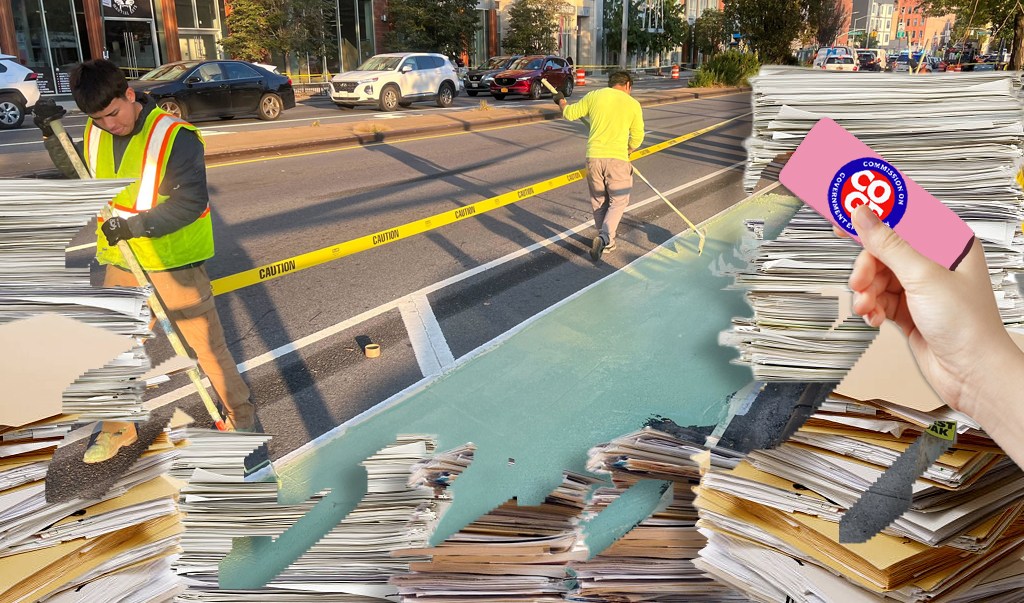
New York City voters on Tuesday overwhelmingly cast their ballots for faster implementation of new bike and bus lanes, along with making it easier to set up outdoor dining, according to preliminary election results for Mayor Mamdani’s ballot proposals.
New Yorkers approved all five proposals from Hizzoner’s Commission on Government Efficiency, or COGE, with 66 percent for Proposal 3 to repeal bureaucratic hurdles to redesign streets for safety, and 64 percent for Proposal 1 to accelerate the al fresco dining application process.
“Tonight, New Yorkers voted for a government that moves as fast as they do,” the mayor said in a statement following Tuesday’s vote. “From opening outdoor dining faster to speeding up street safety projects to accelerating housing production, we are cutting red tape that will directly address the affordability crisis and help New Yorkers stay in the city they love. Now comes the work of turning these votes into results.”
Prop. 3 in particular will reform the city’s “major transportation projects” law, which opponents of bike lanes and bus lanes have repeatedly used to justify spurious legal challenges to the Department of Transportation’s street safety work. The lawsuits always fail, but not without forcing project delays that cost both money and lives.
The results served as proof of the popularity of livable streets, and that the city shouldn’t bow to a loud minority of critics, advocates said.
“This fairly can be considered a referendum on redesigning our streets to make them safer,” said Queens-based attorney and street safety activist Peter Beadle. “The voters are saying, ‘get to work.’”
The City Council enacted the major transportation projects law in 2009 when Michael Bloomberg was mayor, and has expanded its mandate several times since — creating significant bureaucratic hurdles to any street redesign exceeding three blocks or 1,000 feet.
Most recently, lawmakers last year passed legislation from Council Member Joanne Ariola (R-Queens) that required DOT to not only get the sign-off from the Fire Department headquarters, but also written confirmation that FDNY officials got feedback from all affected firehouses in the area of any three-plus-block project or open street.
Prop. 3 eliminates that requirement by giving agency heads discretion over who must be consulted during the street redesign process. It also explicitly gives DOT the power to redesign a street regardless of whether those consultations have occurred. COGE officials say the changes will speed up live-saving street redesigns by “at least” 33 percent.
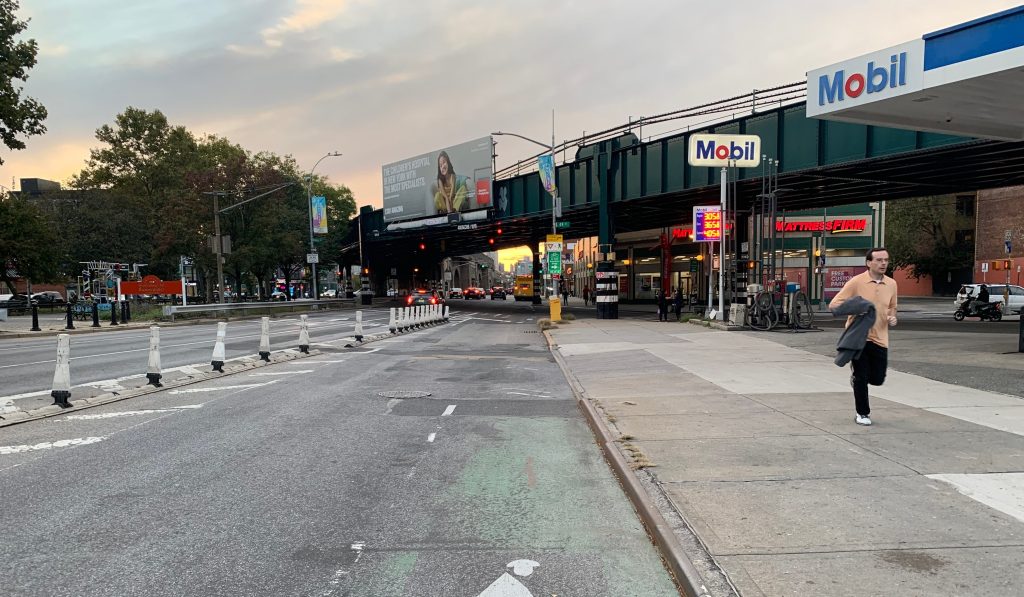
The mountain of paperwork required under the 2009 law leaves the city vulnerable to litigation. In one recent glaring case, a Queens judge last year halted a partially installed protected bike lane in Astoria because she deemed DOT’s paperwork incomplete.
There have been similar lawsuits on Court Street and 72nd Street — all brought by the same lawyer, Hartley Bernstein, who has formed a one-man cottage industry out of challenging bike lanes in court. COGE leaders said Prop. 3 would short-circuit these kinds of bad-faith lawsuits, by allowing the city to fix errors without having to stall entire projects.
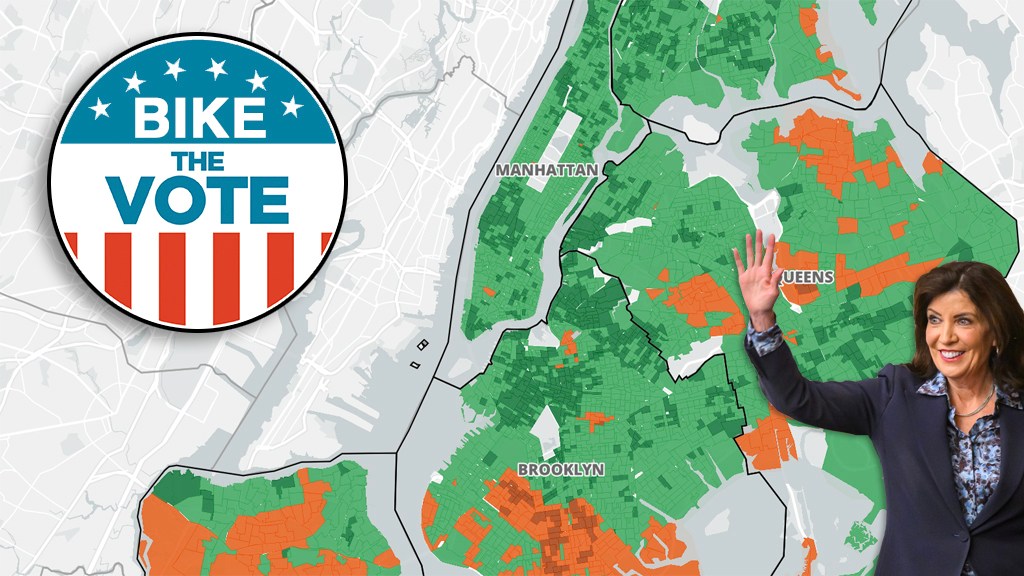
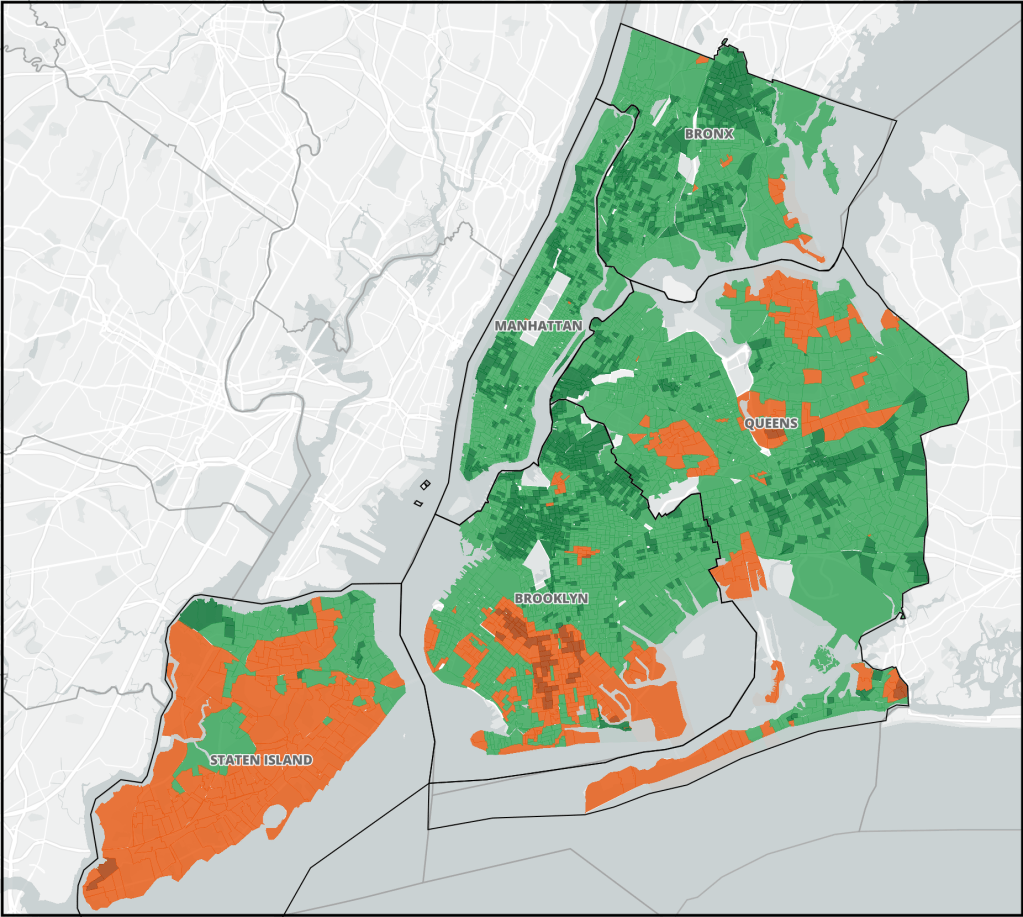
The ballot question found broad support, including in areas where opponents sued to stop bike lanes, according to a block-level breakdown of results by CUNY Graduate Center’s Center for Urban Research:
City voters also approved measures to cut application timelines for outdoor dining by 75 percent, after the last mayor and City Council speaker decimated the popular pandemic-era program with unnecessary and burdensome bureaucratic red tape.
Mamdani pledged to streamline the outdoor dining application process on the campaign trail, and the new reforms will create a single permit for sidewalk and roadway dining applications, and “modernize” requirements to give public notice for the permits.
After booming in the initial years of the pandemic, outdoor dining declined drastically after former mayor Eric Adams and former council speaker Adrienne Adams banned roadway cafés in the winter, gave local Council members veto power over proposed al fresco set-ups and empowered community boards to stall approvals while demanding significant documentation from restaurants.
More than half of outdoor dining applicants waited more than 19 months for their approvals, and many were stuck in the bureaucratic limbo, recent reports by Comptroller Mark Levine revealed.
The changes will also save restaurateurs thousand of dollars in fees and staff time, COGE have said.
Advocates hailed Mamdani for tackling the road violence crisis, and urged his administration to channel the new mandate into results.
“New Yorkers voted to change that status quo, ensuring critical safety infrastructure gets into the ground before there’s another crash,” said Transportation Alternatives’ Executive Director Ben Furnas in a statement on Tuesday night. “Make no mistake: this vote will save lives, ensuring more of our neighbors get home safely at the end of the day.”