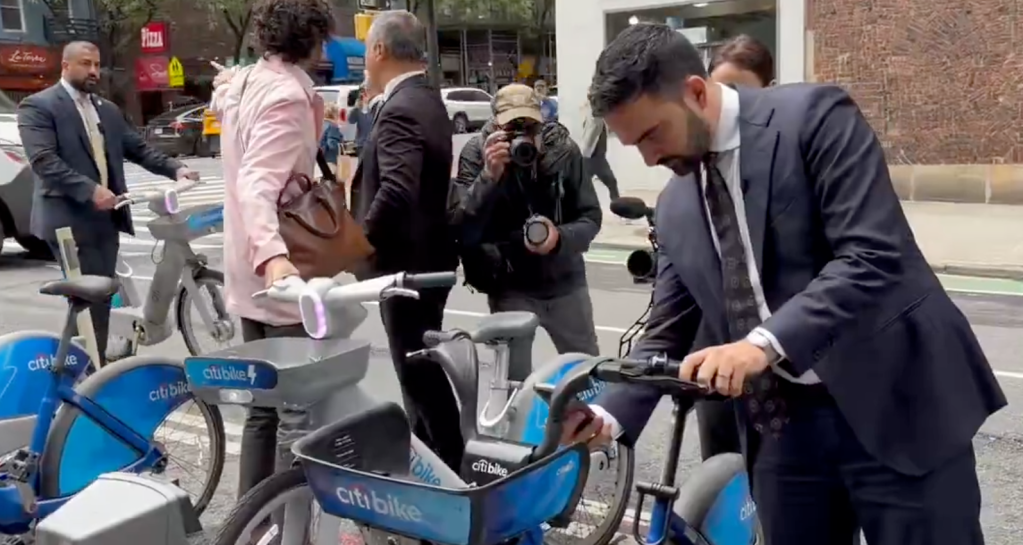
Mamdani Won’t Guarantee Better Citi Bike Service As Lyft Commits to Fare Cap

Mayor Mamdani would not commit to increasing Citi Bike service as part of his new plan to slash the cost of a ride — even as experts warned lower costs would increase demand and add strain to the already strained system.
On Monday, the city and bike share operator Lyft agreed to immediately freeze Citi Bike’s annual subscription at $239 and cap e-bike rides for members at $3.65 for the first 45 minutes starting on Jan. 19.
The announcement garnered praise from lawmakers and advocates who have amped up their fight in recent months for more affordable fares from the largest docked bike system in the Western hemisphere.
The deal will be in force until the current bike share contract expires in 2029, but the price cuts could strand riders as more and more New Yorkers choose to ride — but only if officials don’t push the tech company behind Citi Bike to deliver more service as well, according to a former city transportation leader.
“There’s tunnel vision on price, and not on operation or quality of experience,” said Jon Orcutt, director of policy at DOT during the Bloomberg and de Blasio administrations, who spearheaded the launch of Citi Bike in 2013. “It could create some more stresses on the system if more people use it.”
Mamdani said the city recently completed an expansion of the network to 3,700 stations in parts of Brooklyn, Queens and the Bronx — but that work dates back to an Adams-era plan from nearly two years ago.
The mayor added that the Department of Transportation will work with utilities to make it easier for Lyft to electrify 130 docking locations next year, though officials did not share a specific plan. Dock electrification reduces the necessity of manually swapping out batteries, a process that requires workers to drive vans around the city.
“We have been working with Lyft on increasing supply across the network,” Mamdani told Streetsblog at a press conference in Prospect Lefferts Gardens. “And in early 2027, we’re going to be delivering new charging stations that will also help to keep [up] with growing demand.”
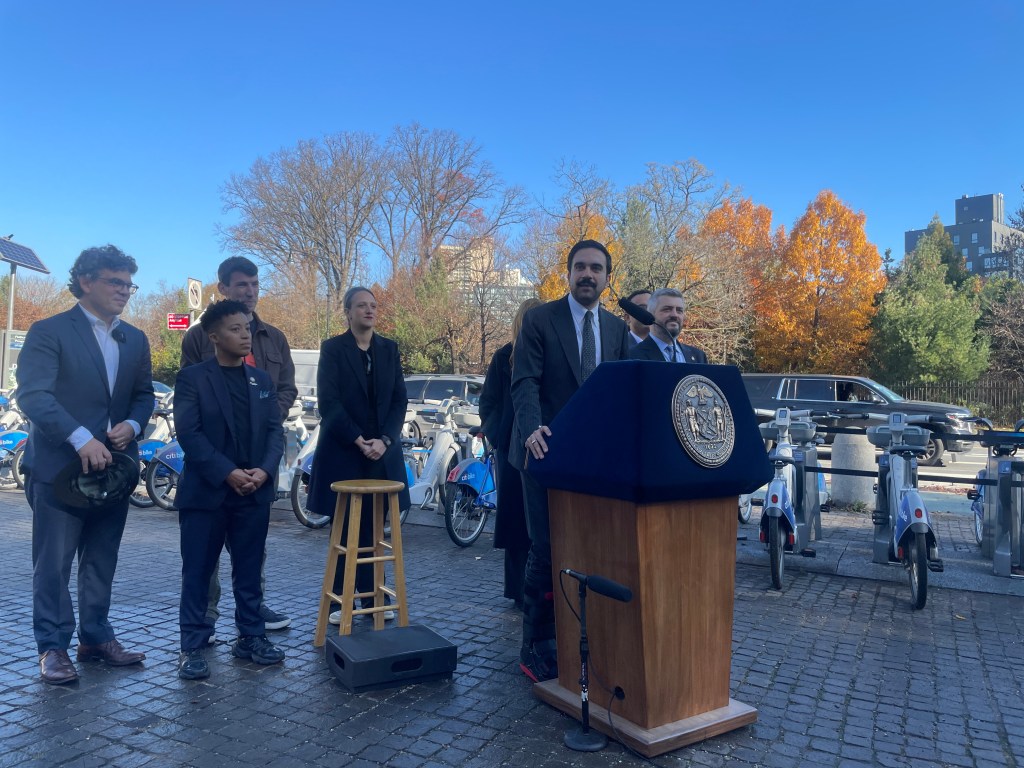
Hizzoner said the price cap will also allow riders more time to search for open docks without incurring extra charges. “I also think it will reduce in anxiety… for New Yorkers who have ended their ride, and yet are then looking for a place to dock it, and know that the price is going up,” he said. “Now you have through 45 minutes to find that dock.”
Orcutt disagreed. “That’s still not helpful to someone who’s missing a doctor’s appointment they waited six months to get,” he said.
Citi Bike ridership surpasses 200,000 daily trips during the warmer months — on par with the PATH train — but both completely full and completely empty docks continue to plague New Yorkers. This problem is particularly acute in high-demand areas, such as Downtown Manhattan, and the edge of the system in neighborhoods such as Red Hook in Brooklyn. Moving bikes around to ensure availability — a process known as “rebalancing” — plummeted after Lyft took over the bike share contract in 2018.
One rider told Streetsblog that he often has trouble finding a bike for his commutes between Brooklyn and Lower Manhattan, and urged officials address those shortages before they open the floodgates to more users.
“I think they have a logistical issue,” said Morgan, who declined to give his last name, at a dock at Broadway and Reade Street in Tribeca “There’s hardly any open docks when I need a bike in Brooklyn.”
Rebalancing will always cost time and money, Orcutt said, but the city should also pressure Lyft to station more valet attendants to handle overflow bikes. “That’s the answer, really, is staffing a set of key nodes where you know those tidal flows are really bad,” Orcutt said. “That costs money, so that’s one of the questions that’s always gonna be out there with bike share operations in a big city.”
Lyft representatives did not attend Monday’s press conference, but spokesperson CJ Macklin said the company is working with DOT to “add incremental docks” to hotspots like Midtown, where many of its valet-staffed stations operate, and that they will evaluate demand patterns monthly.
Both Lyft and Mamdani touted the addition of 130 charging docks starting next year, which will be installed by early 2028, according to the company. But Lyft already committed to hooking up at least 160 docks back in August, which is about that same number of supposedly new docks on top of the existing 33 in operation.
Those docks will still account for only 4 percent of the network. Lyft previously told Streetsblog that it would need to electrify between 10 and 20 percent of its busiest stations to “materially reduce” its costs.
Indeed, DOT officials and Lyft set a 20-percent electrification target in a 2023 amendment to its current contract. That would amount to around 740 stations in today’s network. The city said at the time it would engage in “good faith negotiations” to reach that goal and discuss possible public subsidies, but that never happened. The city has not published any updated contract amendments relating to Mamdani’s latest announcement.
Unlike other cities, New York City’s bike share runs without a public subsidy, and Lyft’s largest expense is field operations, which includes fleet maintenance, charging, redistribution, and renting space, which made up $87 million out of its $203 million in total expenses last year.
Last year, the company reported nearly $25 million in profits from Citi Bike, driven by surging membership prices and fares, which together account for 85 percent of its revenue, according to the latest monthly operating report from September.
To make up for lost income, the Mamdani administration agreed to ditch an annual $1 million reimbursement fee the city has charged bike share operators for lost parking meter money, and allowed Lyft to keep more of its earnings under its revenue sharing agreement.
“When it comes to revenue share, we’re saying that the city will be paid whatever exceeds $5.25 million a year, and that threshold will be modified annually according to the consumer price index,” Mamdani explained at the Monday press conference.
The price cap came with other changes. Lyft will no longer provide 60 free e-bike minutes to members who renew their membership. The city will also allow Lyft to install more advertisements on docks and bikes.
Bike share experts had previously warned that Lyft was gaining enough leverage to dictate the terms of its 2029 contract renewal. The San Fransisco-based rideshare giant absorbed the company that builds the Citi Bike fleet and has amassed more bikeshare systems across the globe.
The company’s rep noted the new agreement will deliver good service and system growth, despite the lower fares.
“Reliable service is what makes an affordable fare worth having, and we’re investing to keep up with demand as more New Yorkers ride,” Macklin told Streetsblog in a statement. “Charging at the dock keeps more ebikes available, especially at the busiest stations and during peak commutes, and means fewer vans on city streets. Citi Bike also operates without taxpayer funding, so this agreement was designed so the system can deliver lower fares while continuing to grow and improve.”
Additional reporting by Sam Brule