The Big Lyft: Mamdani Faces Tough Fight for Cheaper Citi Bikes
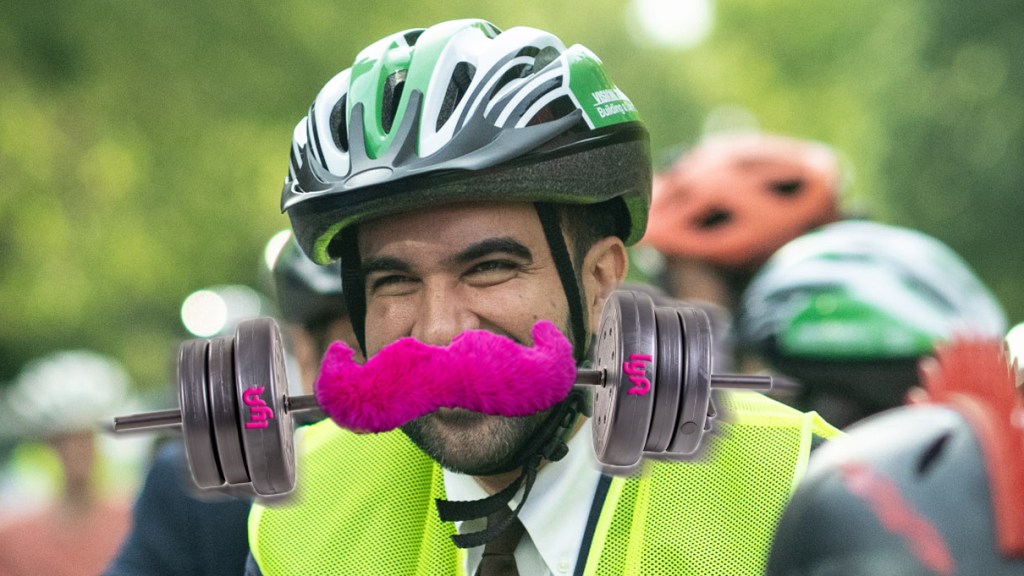
The cards are stacked against Mayor Mamdani if he wants to rein in the rising cost to ride a Citi Bike, experts warned — as bike-share operator Lyft has amassed considerable leverage over the city as the two entities gear up for negotiations over the 13-year-old system’s future.
The San Francisco-based ride-hail giant became the largest bike-share provider in North America when it took over Citi Bike nearly eight years ago. In 2022, the company acquired the manufacturer of its massive fleet of blue and silver bikes. Both factors cement Lyft’s incumbent advantage and make things more difficult for any potential competitor.
“You want to make it as competitive as possible, try to have a level playing field,” said Jim Sebastian, a transportation consultant who helped launch the nation’s first docked bike-share system in Washington, D.C. in 2008. “And I just don’t know how that would work in New York right now.”
The city’s awareness of Lyft’s upper hand has grown just as the system’s most recent expansion comes to an end. Yet Mayor Mamdani, who turned his frequent use of electric Citi Bikes into a campaign asset, has yet to reveal his plans for the future of the largest bike-share system outside of Asia.
Bike-share insiders who spoke to Streetsblog all agreed that the mayor has a generational opportunity to refashion the city’s Bloomberg-era program into a more affordable and expansive one, but Hizzoner needs to figure out how to get the best deal for New Yorkers. The problem is that Lyft holds all of the most important cards.
“Landed capital on the ground” — i.e., existing bikes and stations — “is a huge advantage for Lyft, and if the city does not create an environment that allows for another company to bid on equal footing … I don’t think they’re gonna have much of any negotiating leverage on Lyft,” said an industry expert who requested anonymity to discuss a potential rival.
“The number of potential bidders is very small, because there are very few docked bike-share companies in the world, let alone ones who have already operated in the U.S.”
Acquiring Citi Bike’s fleet of bikes and stations, or launching a new set of bikes and stations, could cost as much as $250 million, according to an estimate by the person closely familiar with the bike-share market.
Another source at a competing company, who also requested anonymity to discuss the industry’s biggest player, said the current conditions have prevented other companies from entering the city’s bike-share market.
“Lyft enjoys an extremely high-leverage position in any negotiation with the city,” the competitor told Streetsblog. “They [city negotiators] are walking into a more difficult situation absent any change.”
The city’s political firmament is beginning to pay attention. Since calls for cheaper Citi Bikes began heating up earlier this year, Department of Transportation officials have said they’re focused on getting a better deal for New Yorkers when they negotiate a new deal with a private operator in 2029.
One lawmaker, Brooklyn Council Member Chi Ossé, recently published a video about Lyft gaining an increasing hold on the market, while breaking down the longstanding debate over how to lower the system’s prices with a public subsidy.
“These are ideas we ought to be considering right now, so when 2029 shows up, the city has a coalition of electeds and advocacy groups to demand the changes that we [want to] see in the contract,” Ossé told Streetsblog. “Starting our asks campaign now will aid us in lowering costs for this program.”
Bigger, more expensive
Lyft has operated Citi Bike since 2018, when the cab company acquired bike-share company Motivate. It currently runs the entire operations of four other American bike-share networks: Divvy in Chicago, Capital Bikeshare in Washington, D.C., Biketown in Portland and Lyft Bike in San Francisco. It also supplies software and hardware for 51 more bike-share systems in 14 countries.
In New York City, the company has grown the Citi Bike system substantially over the last eight years, expanding its reach to all boroughs except Staten Island, and rolling out the hugely popular e-bikes. Citi Bike today boasts 37,453 bikes and 2,400 stations. Daily trips peaked at a record 206,000 last September, 71 percent of which took place on e-bikes. That ridership is on par with regional mass transit systems like the PATH train.
Comparing Citi Bike to other bike-share systems is tricky. No other North American system approaches its size, but some systems in East Asia are bigger.
The closest comparison is likely Ddareungi in Seoul, which lacks e-bikes but otherwise boasts a larger fleet of 2,800 stations and 45,000 bikes. An annual pass costs between about $22 and $30, or as low as one-tenth of Citi Bike’s membership. (Citi Bike’s e-bikes cost more to maintain, of course, but the cost of Citi Bike membership when its fleet was entirely “acoustic” still exceeded the cost of Ddareungi several-fold.)
In 2022, Lyft acquired the bike and dock supplier PBSC Urban Solutions, thereby seizing control of the sole supplier for Citi Bike and many other bike-share systems. That put Lyft in the powerful position of controlling both the software and hardware of many bike-share systems. That could devastate New York if the company ever pulled out.
“If you can’t use the current equipment, that’s going to be a heavy lift, and what do you do about the transition from one set of equipment to another … the member database, and software, [things] like that,” said Sebastian.
Difficult negotiations
A year after the PBSC acquisition, former Mayor Eric Adams’s administration tried to negotiate with Lyft to electrify 20 percent of existing stations, divert operational savings back toward cheaper fares and establish some sort of public subsidy.
The effort was certainly promising. After all, Lyft publicly supports dock electrification; in 2025, the company estimated that hooking up the busiest docks would cut Lyft’s manual battery swaps by 90 percent and slash 300,000 in driving miles by its vans each year. But DOT officials and Lyft never reached another agreement to codify any of those benchmarks and how to reinvest the savings into cheaper fares.
Instead, the 2023 contract amendment essentially gave Lyft everything it wanted. The Adams administration allowed repeated increases of per-minute charges on e-bikes, indicating that officials either didn’t want to — or felt like they couldn’t — bargain for more out of the company.
Following that contract update, profits from the bike-share system grew to $24 million last year. That came after years of deficits or marginal gains, but those gains seemingly didn’t translate into better service.
The only expansion secured by Adams, which his administration dubbed Phase 3.5, added docks to new neighborhoods in the north Bronx, further south and east in Brooklyn, and in eastern Queens. But those were stations that Lyft had already agreed to install under a de Blasio-era contract amendment.
Auditors have repeatedly criticized the city’s arrangement with Lyft. A 2025 review by State Comptroller Tom DiNapoli found several missing revenues and glaring gaps in reporting by DOT, calling its oversight of the bike-share program “passive.” And an earlier investigation from 2023 by then-city Comptroller Brad Lander said Lyft neglected to move bikes around the system to ensure the availability of both bikes and open docks. These “rebalancing” efforts plummeted under Lyft’s tenure, and full docks persist in hotspots like Lower Manhattan, Greenpoint and Red Hook.
More concerning, Lyft has sought to funnel more bike riders into its larger car-share portfolio.
In 2021, the company added a Citi Bike membership to its flagship subscription service, Lyft Pink — and has priced it $40 less than the standalone Citi Bike membership, despite the former offering an added benefit of cheaper car rides.
Council Member Lincoln Restler, an avid Citi Bike rider as well as one of its most vocal critics, said that the city has failed to hold its operator to account and keep fares affordable.
In 2024, the Brooklyn lawmaker introduced a bill that would impose a price cap equal to the subway and bus fare on e-bike trips under an hour and acoustic trips under two hours. Today members can ride about 11 minutes before crossing that $3 threshold, while non-members pay $4.99 just to unlock a bike and shell out double the cost of riding a train or bus within two-and-a-half minutes.
“When Lyft is gifted a monopoly to operate a bike-share program in New York City, it comes with a degree of scrutiny that should guarantee the best price for New Yorkers,” Restler told Streetsblog. “That’s not happening right now. It’s outrageous that we have the most expensive bike-share program in the world.”
This summer, the advocacy group Transportation Alternatives launched a similar campaign calling for a $3 cap for e-bike rides up to 45 minutes for members, which currently costs $12, as much as 10 times more expensive systems in peer cities like London or Tokyo.
“The sheer number of rides and potential customers makes New York City very attractive for any bike-share operator,” Alexa Sledge, the organization’s senior communications director, told Streetsblog. “That said, today’s prices are entirely unsustainable, and the city has an obligation to work towards rides that are more in line with what riders pay in cities across the country.”
Still, it’s unclear whether the Council could impose price caps on Lyft’s existing contract before it expires — potentially spooking other operators from playing ball in 2029. Streetsblog could not find an example of a municipal legislature unilaterally changing their city’s existing contract with a bike-share operator after the negotiations around the contract concluded.
Subsidies and control
Citi Bike came to New York City during the height of the Bloomberg-era bikelash. After successful bike-share launches cities across the U.S. and abroad, Big Apple officials pitched the blue bicycles as a “low-cost transportation option” that would not cost the city a dime.
“We had just been sued over [the] Prospect Park West [protected bike lane] and were taking all kinds of crap from the City Council,” said Jon Orcutt, director of policy at DOT during the Bloomberg and de Blasio administrations, who led the launch of Citi Bike. “You could make a different case today, but the mayor being able to find new money for new things seems to be a real issue right now.”
The original 2014 Citi Bike contract formally enshrined the city’s reluctance to pay for any part of the system, but a number of politicians and advocates have repeatedly pressed a string of mayors to cajole Citi Bike’s operators into accepting city funding as a way to lower costs.
Behind the scenes, DOT officials have not been able to get favorable terms out of their private counterparts at Lyft in recent negotiations around contract amendments, so the company may not feel a need to concede to any demands.
Subsidies are commonplace in other bike-share systems, and they have kept fares lower while allowing city leaders more control over the public side of funding, according to people who have worked on rental bikes. Leaving all of the funding to the private market may avoid political volatility, but it also gives Lyft more control over the program’s finances.
In 2023, researchers at the Institute for Transportation Development and Policy published a report arguing that bike-shares can be affordable, unsubsidized and equitably distributed — but not all three at once. The researchers cited successful examples in Mexico City and Paris, where the government kicks in as much as 70 percent.
Alison Cohen has worked in the bike-share space since 2007. She co-founded Citi Bike’s first operator, Alta Bicycle Share, in 2009 and launched a second bike-share company, Revolution BTS, in 2013. She said Citi Bike succeeded without public funding for so long because of the density of people, jobs and mass transportation in Manhattan and some parts of the other boroughs. But once the system reached into more spread-out neighborhoods, it had to pay the costs of growing operations with higher fares.
“In general, transportation is not profitable,” Cohen told Streetsblog. “If you’re going to price it like public transit — which is what a lot of our systems have and what New Yorkers want, then every vehicle you put on the ground — it requires operations, and it doesn’t make money when you’re not in a community like Manhattan.”
The city already provides substantial subsidies for public transportation. These include $56.5 million a year for its other public-private partnership, the NYC Ferry, which de Blasio established in 2017 and logs only about one-quarter of Citi Bike’s daily ridership. The city owns the fleet of 38 boats, and solicits a wide range of sponsorships for extra revenue.
The city also covers the entire cost to ride the Staten Island Ferry, which former mayor Rudy Giuliani made fare-free in 1997. The current cost of subsidy amounts to $12 per passenger. The Rock’s only rapid transit train, the Staten Island Railway, has no fare control gates on the majority of its stations; the only exceptions are the two stations closest to the ferry terminal in St. George.

What could go wrong?
The upcoming negotiations are particularly important because of the considerable price of fumbling them. Consider the case of Paris, where the pioneering bike-share service Vélib nearly collapsed when the city replaced its operator in 2017. The botched transition forced the French capital to rip out and reinstall docks in the street. The subsequent roll-out fell far behind schedule, and ridership and subscriptions plummeted.
“The system was a shitshow at the time,” said Orcutt, who visited Paris during the transfer of operators. “If you don’t somehow just hand it off to Lyft once again it’s going to be a big deal and you’re going to need some real logistical thinking and lead time.”
So-called “Vélibgate” marked a major setback in then-Mayor Anne Hidalgo’s efforts to make Paris more bike-friendly, though she later made up for it during the pandemic by expanding safe cycling infrastructure at a fast clip.
How to get a better contract
Bike-share systems are now around two decades old, and offer many lessons for Mamdani to heed in anticipation of the upcoming contract.
They receive varying degrees of public funding in North American cities, but Citi Bike is an outlier at the fully privatized end of the scale. Taxpayer resources still go toward funding DOT staff monitoring and regulating the program.
On the other end of the scale are systems like BIXI in the Canadian province of Quebec. Montréal’s government bought the assets from its operator, PBSC, when that company filed for bankruptcy in 2014, and the city began running it as a non-profit, BIXI Montréal. It has grown to become one of the largest systems in North America, while maintaining costs that are between a third and half as expensive as Citi Bike’s — along with nice perks like bike trailers.
Even if New York City decides to maintain its privatized model, it could still level the playing field for the new contract by funding capital costs like bikes and docks, which could unlock benefits like price caps for riders, said Cohen. The city could also add more opportunities for sponsorship and advertising online as is the case with NYC Ferry.
“If there is the opportunity to potentially at least contribute to capital funding, I think a price cap 100 percent works,” she said.
Another route would involve ending Citi Bike’s contractual monopoly on docked bike-share. DOT has allowed Bird, Lime and Veo to operate dockless scooter share programs since 2021 — but only outside of the Citi Bike zone in the East Bronx and Eastern Queens. Some of those operators are eager to break into the more lucrative markets closer to the city’s core.
“If the city wants to bring down costs for New Yorkers, ending the bike-share monopoly should be high on its list,” said Lime’s senior government relations manager for New York City, Juan Restrepo, in a statement to Streetsblog. “Leveling the playing field now would allow other providers to demonstrate capacity ahead of the 2029 procurement and give NYC DOT in the best possible negotiating position.”
To accomplish this, the city could require Lyft to open its docks to accommodate vehicles from other companies. The current docks have a special triangular latch that locks onto Citi Bikes — and no other kind of bike.
Having more options can be especially helpful when there’s a high demand for rides, said Gabe Klein, a former DOT commissioner in Chicago and Washington, D.C., where he helped launch bike-shares.
“I don’t want to take an Uber because I can’t get a Capital Bikeshare bike. I want my backup to be another micromobility option,” said Klein. “The dockless private side also needs to be allowed to grow dramatically, and it’s not going to hurt a city program.”
Klein encouraged the city to work with utility company Con Edison to expand curb electrification for bike docks, along with other purposes like outdoor dining and electric car charging.
“Often the public utilities commission, the actual utility, and the Department of Transportation are not on the same page, and that can lead to delays,” he said.
Orcutt added that DOT should demand more granular ridership information from whichever operator it chooses, so it can figure out what is working and what is not. “We don’t know how well it’s working in Queens, or parts of Queens, or parts of the Bronx,” he said.
DOT will likely launch a fresh procurement for a bike-share operator ahead of the contract expiring in 2029. But since that process tends to take more than a year on average, the city needs to lay the groundwork as soon as next year.
“That contract negotiation is going to be difficult, so I think you should get an early jump on this,” Orcutt added. “I would hope they would have this thing shaped up by next year.”
DOT spokesperson Will Livingston said the Mamdani administration “remains committed to creating a more affordable city, including through transit options like Citi Bike.”
Lyft representative George Flynn told Streetsblog the company is proud of the system it has built with the city, and that it wants to grow the system while maintaining an affordable price.
“We remain committed to working with the city toward our shared goals of growing the system and keeping it affordable for riders,” Flynn said in a statement. “The systems that Lyft operates around the country are supported by a range of funding models, including public funding, and we’re open to exploring with the city what would serve New Yorkers best.”

Read More:
Streetsblog has migrated to a new comment system. New commenters can register directly in the comments section of any article. Returning commenters: your previous comments and display name have been preserved, but you'll need to reclaim your account by clicking "Forgot your password?" on the sign-in form, entering your email, and following the verification link to set a new password — this is required because passwords could not be carried over during the migration. For questions, contact tips@streetsblog.org.