Citi Bike Is Stranding Cyclists in Greenpoint During G Train Shutdowns
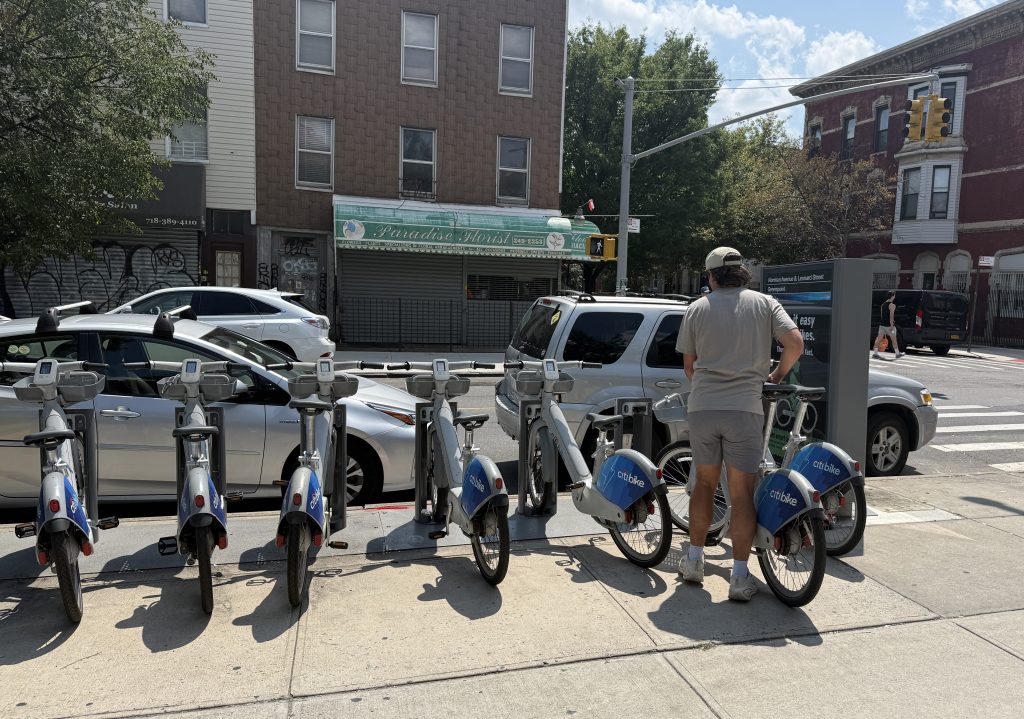
Citi Bike is struggling to accommodate the surging number of cyclists who ride its bikes to access and navigate Greenpoint amid this year’s repeated closures of the neighborhood’s only subway line, as local officials call on Citi Bike’s parent company to fix the bike-share system for good.
“There is no reliable way to get in and out of the neighborhood, so people want to bike, and then there’s no place to get rid of your bike,” said Lincoln Restler, who represents Brooklyn’s northernmost neighborhood in the City Council. He added that G train closures exacerbate a problem that Citi Bike users already encounter too often: failing to locate an empty dock to end their trip at one of Greenpoint’s 31 docking stations.
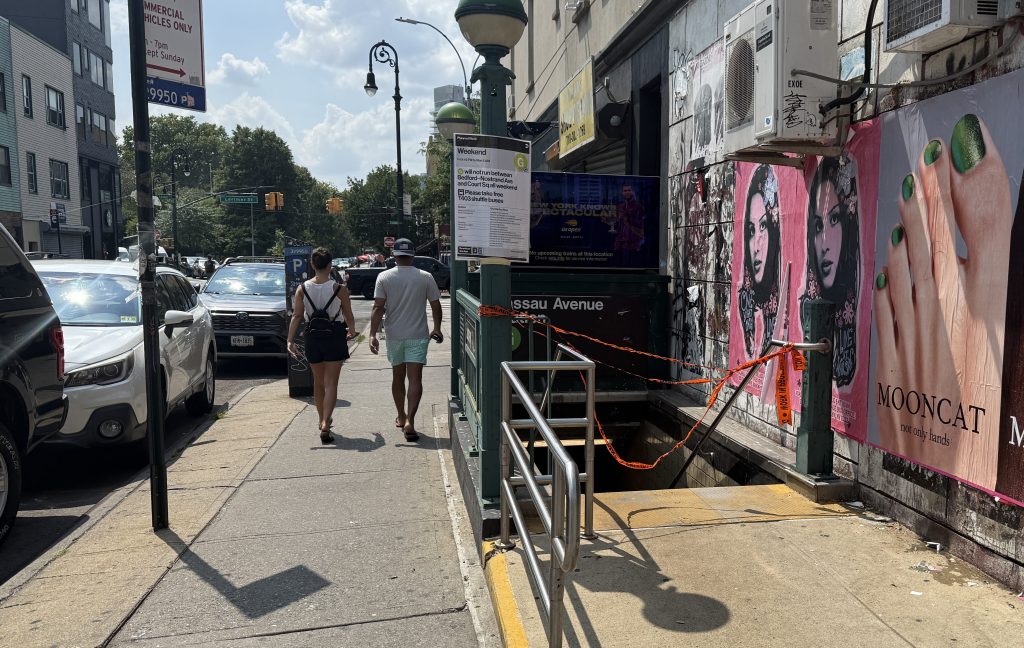
In this year alone, the MTA has suspended sections of the G train on 16 weekends for repairs and signal modernization. The agency shut down the specific section between the Bedford-Nostrand and Court Square stations — the only segment of the entire subway system that connects Greenpoint to the rest of the city — for nine of those weekends.
During shutdowns, the MTA runs free shuttle buses along the G train route, but the buses are notorious for being too crowded and moving too slowly. The shuttle buses lack enough street space to maneuver north Brooklyn’s narrow streets, where drivers typically refuse to get out of the buses’ way.
Between drivers preventing buses from making turns by parking in crosswalks, parking at designated temporary bus stops, and rampant double-parking, the lack of designated space for shuttle buses forces them to move at a snail’s pace.
Faced with no subway service and unreliable buses, many Greenpointers have turned to Citi Bikes, but the neighborhood’s increased dependence on them is sparking commuting chaos.
Not enough docks
“We have so many people using [Citi Bikes] and we don’t have the infrastructure to actually make that useful for everyone during the shutdown,” said Emily Gallagher, the neighborhood’s state assembly member.
Somewhat counterintuitively, full stations consistently indicate that Citi Bikes are very popular in the surrounding area. They are the result of cyclists docking their bikes during peak hours. In Greenpoint, however, those peak hours simply never end during G train shutdowns.
“I expected this dock to be completely full because the G train is down,” said Lizzy Berdoff as she looked for a spot at a full docking station next to McCarren Park. She added that she would have preferred to ride the G train into the neighborhood.
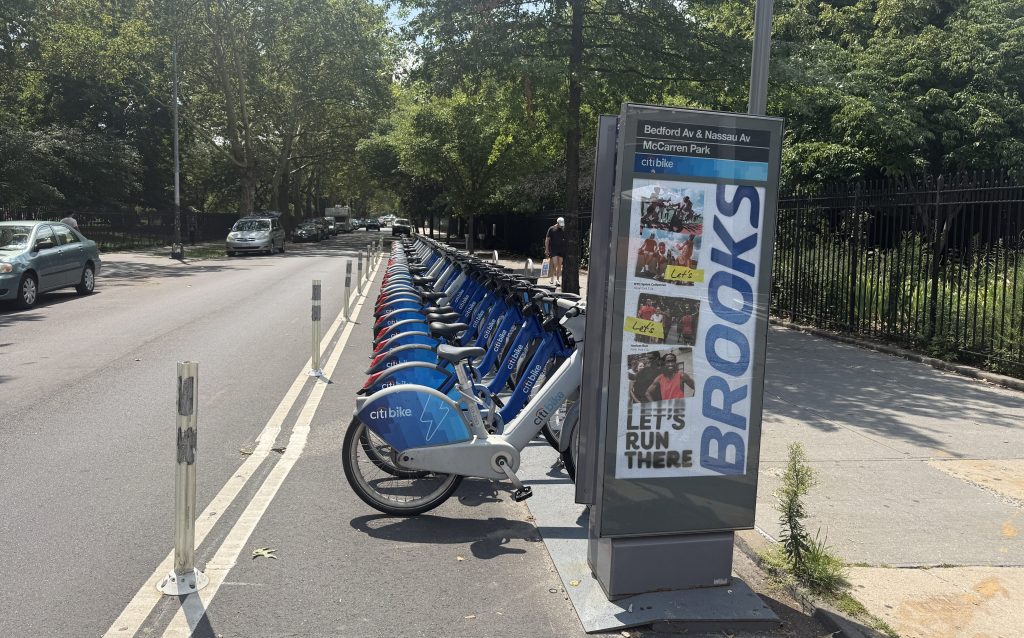
Another cyclist said that he noticed the problem worsened this summer. “Finding a bike is never a problem,” said Dennis Green, who lives in Greenpoint. “It’s docking it.”
Some of the issues with docking stations in Greenpoint are inherent to their design. Every station contains a relatively limited and static number of docks, while the number of open docks fluctuates by the minute. The station locations are also subject to change: Citi Bike can move them, and remove them entirely, without warning. These circumstances, combined with an influx of G train riders, make open docks incredibly scarce during peak hours.
Lyft, which owns Citi Bike, removed six Greenpoint stations for construction this summer, according to Citi Bike spokesperson C.J. Macklin. Lyft reinstalled five of them by the time last weekend’s train shutdown rolled around, when Streetsblog spoke with these cyclists.
Macklin said Lyft is collaborating with the Department of Transportation to add more stations. He added that Citi Bike has already increased “rebalancing” runs in the neighborhood — where the company uses vans to relocate bikes from stations with few empty docks to stations with a lot of them.
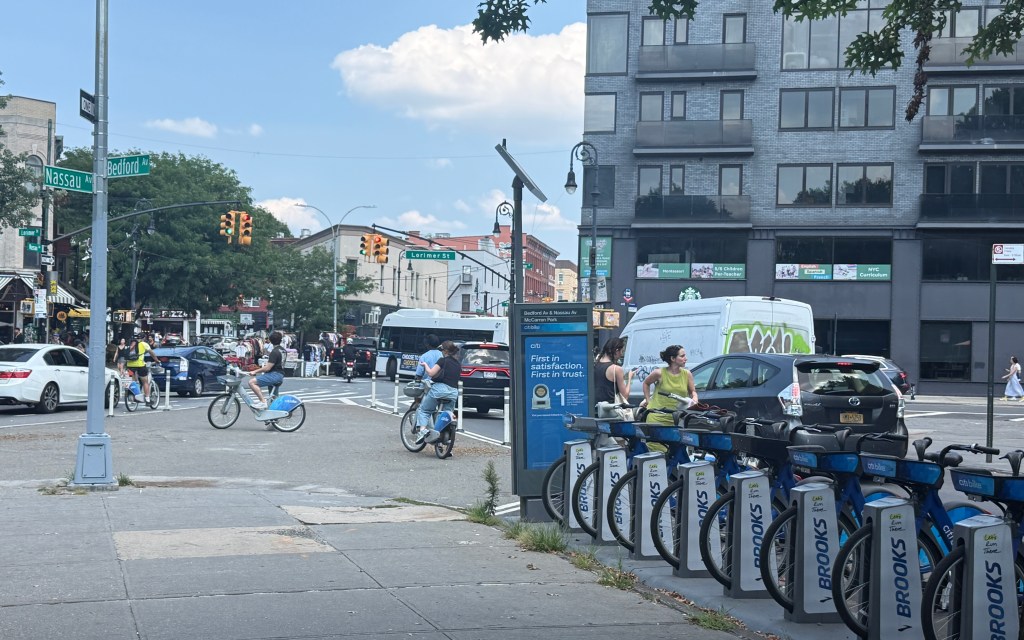
This isn’t the first summer that G train closures have sent Brooklynites out on two wheels. The MTA partially shut down the G train throughout the summer of 2024 and on four summer weekends in 2025, when usage at the 21 stations surveyed by Streetsblog increased by an average of nearly 14 percent.
So what can be done?
Apart from the MTA finally finishing the seemingly endless modernization of the G train, and Lyft adding more stations throughout Greenpoint, Gallagher and Restler offered a few solutions — some more realistic than others.
Gallagher underscored the need for more rebalancing runs, and encouraged city agencies to more proactively assist Greenpointers during shutdowns. She wants entities like Lyft and the city’s ferry system to work together more effectively. “There should just be more coordination across all forms of transit to fill the gaps,” she said.
Restler, meanwhile, called for two unrelated policies: “During G train shutdowns, not only should there be reduced prices so that it’s accessible, but Lyft should add valet parking so that we’re not constrained by the limited dock capacity.”
It is not clear why temporarily lower prices would ease the Citi Bike dock shortage in Greenpoint, because the entire problem is that too many people are paying for Citi Bikes but not finding enough docks to end their rides. Reducing the cost of Citi Bikes would worsen the dock shortage, not alleviate it. Citi Bikes would be less accessible, not more so.
Valet parking is a different story. Employed by Citi Bike at high-traffic stations throughout the city, valet parking allows bike-share riders to leave their bikes in a designated space — unconfined by the number of docks available — where Lyft picks them up and brings them to an empty station further away.
Calvin Thigpen, who leads the mobility practice at Toole Designs, said bike-share operators beyond New York frequently incorporate valet parking for planned, temporary events, which could include train suspensions.
“What New York City DOT and [Lyft] can do for this situation in Greenpoint, and elsewhere in the system too, is essentially develop these ‘event plans’ for these commonly recurring situations,” he said.
Thigpen said that these “event plans” would follow the same formula implemented by other bike-share systems and city agencies during big events. He pointed to Seattle, where the city’s Department of Transportation set up valet bike-share parking and more than 200 extra “corrals” for bike-share users to park their wheels during this summer’s FIFA World Cup.
The fundamental issue with these fixes, however, is that they do not address the source of the problem: The present inability of the MTA to run reliable shuttle buses parallel to the route of the G train, because the city refuses to ban private cars from the route. If the MTA were able to run fast and frequent shuttle buses, significantly fewer Greenpointers would resort to Citi Bike.
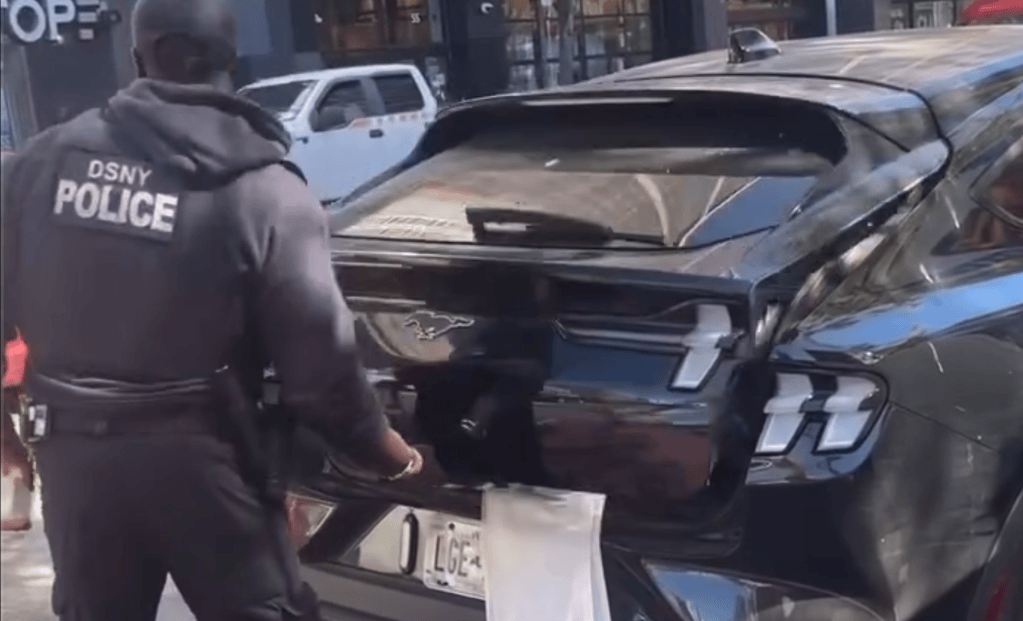
“The MTA is committed to working with community members and local businesses to minimize impact,” said agency spokesperson Kayla Shults, who added that the agency increases shuttle service based on demand, monitors signage that mark temporary bus stops and works with the New York Police Department to resolve reports of double-parking.
DOT, for its part, has experimented with temporary traffic restrictions during past G train shutdowns. Two years ago, the agency banned left turns on Bedford Avenue between Nassau and Manhattan Avenues to reduce traffic congestion that held up shuttle buses. But when Streetsblog asked the agency whether it would consider closing streets to private traffic in order to speed up shuttle buses, the agency did not respond.

Read More:
Streetsblog has migrated to a new comment system. New commenters can register directly in the comments section of any article. Returning commenters: your previous comments and display name have been preserved, but you'll need to reclaim your account by clicking "Forgot your password?" on the sign-in form, entering your email, and following the verification link to set a new password — this is required because passwords could not be carried over during the migration. For questions, contact tips@streetsblog.org.