‘It’s Predatory’: Citi Bikers Had Nowhere to Park in Lower Manhattan on Wednesday
Parking nots.
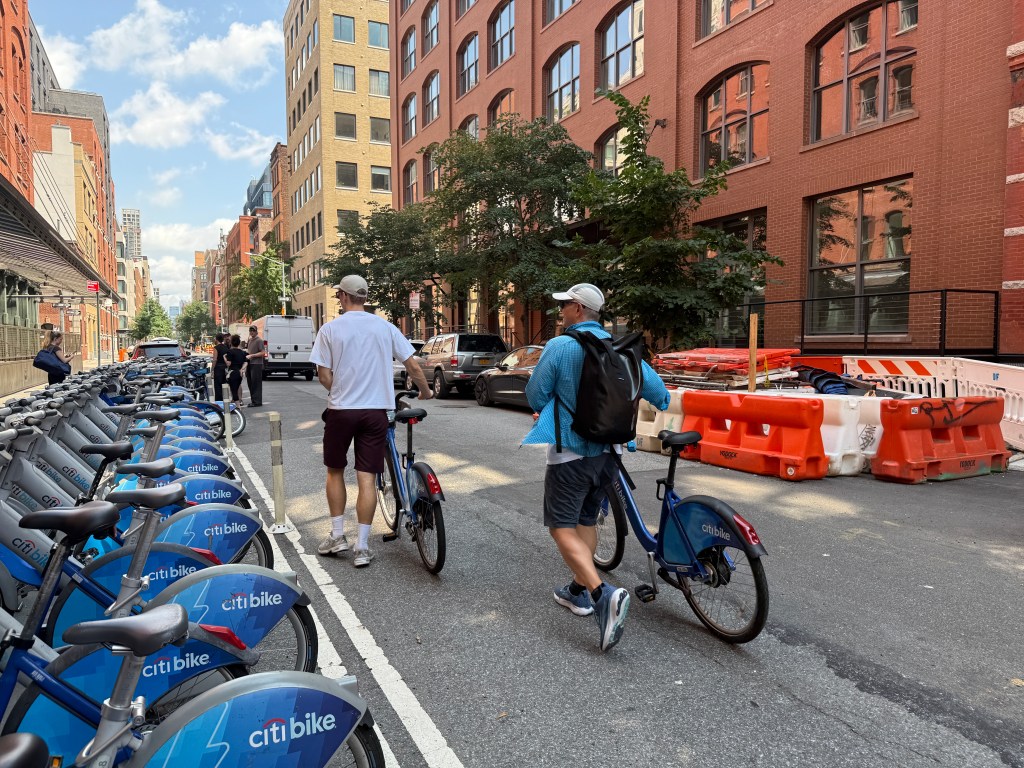
Countless Citi Bike commuters were late to work on Wednesday thanks to a lack of available docks for them to park their bikes in Lower Manhattan — a situation that one rider called “predatory” because he and the others were subject to mounting per-minute fees for all the time spent looking for a spot.
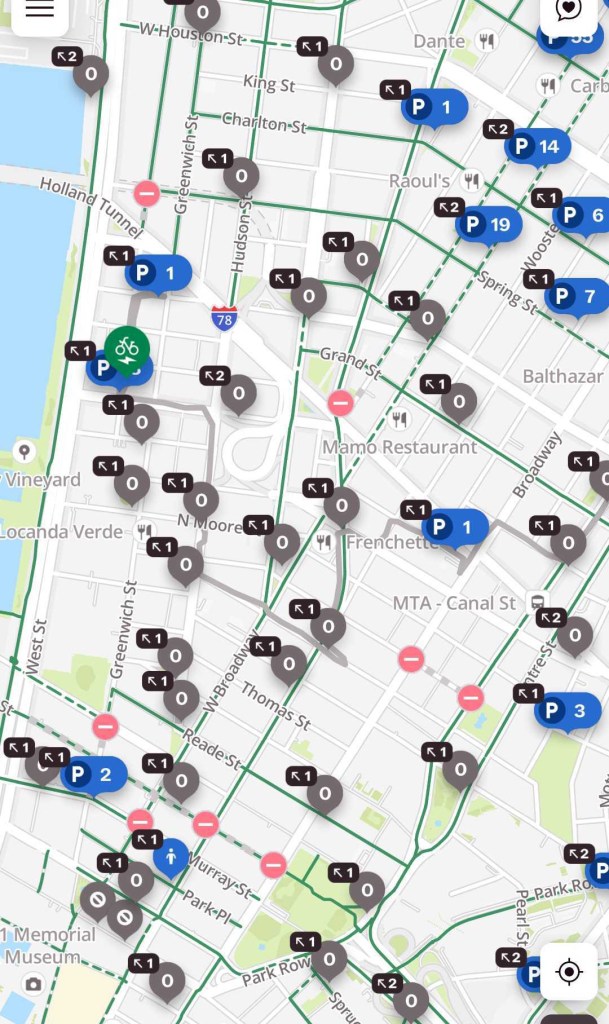
Bike-share users hoping to “dock” in Lower Manhattan found themselves out of luck during the morning commute as all but one Citi Bike station in Tribeca and the southern half of SoHo showed zero available spots by around 10 a.m.
But even that was a ruse: the Tribeca dock, at Laight and Hudson streets, showed 18 available parking spaces on the Citi Bike app, but a succession of frustrated riders quickly discovered that there were none because they were blocked by dozens of chain-locked out-of-service bikes. Nearly every other dock from Canal Street to the southern tip of Manhattan was full.
“It’s been like 30 minutes, there’s zero open docks,” said commuter Marvin Pichardo, who arrived at Laight and Hudson after circling the area for 30 minutes trying to find a spot. “I’m sitting here paying 41 cents a minute and there’s no where to park. … It’s pretty predatory.”
Frustrated Citi Bikers ditched their bikes at stations without docking them, giving up after going station-to-station in hopes of finding somewhere to end their rides. Yet the city Department of Transportation, which oversees the bike-share program and enforces its contract, referred questions to Lyft and declined to say if it would hold the company responsible.
A spokesman for Lyft blamed Tuesday night’s rainstorm for throwing off the bike-share system’s usual pattern of commuters bringing bikes into Manhattan’s employment centers in the morning and bringing them out of those areas in the evening.
“Yesterday’s storm meant many commuters who biked into Manhattan didn’t bike home, which left some docks fuller than usual this morning. Our team relocated hundreds of bikes overnight, but we know riders still felt that crunch,” CJ Macklin, Citi Bike’s communications director, said in a statement.
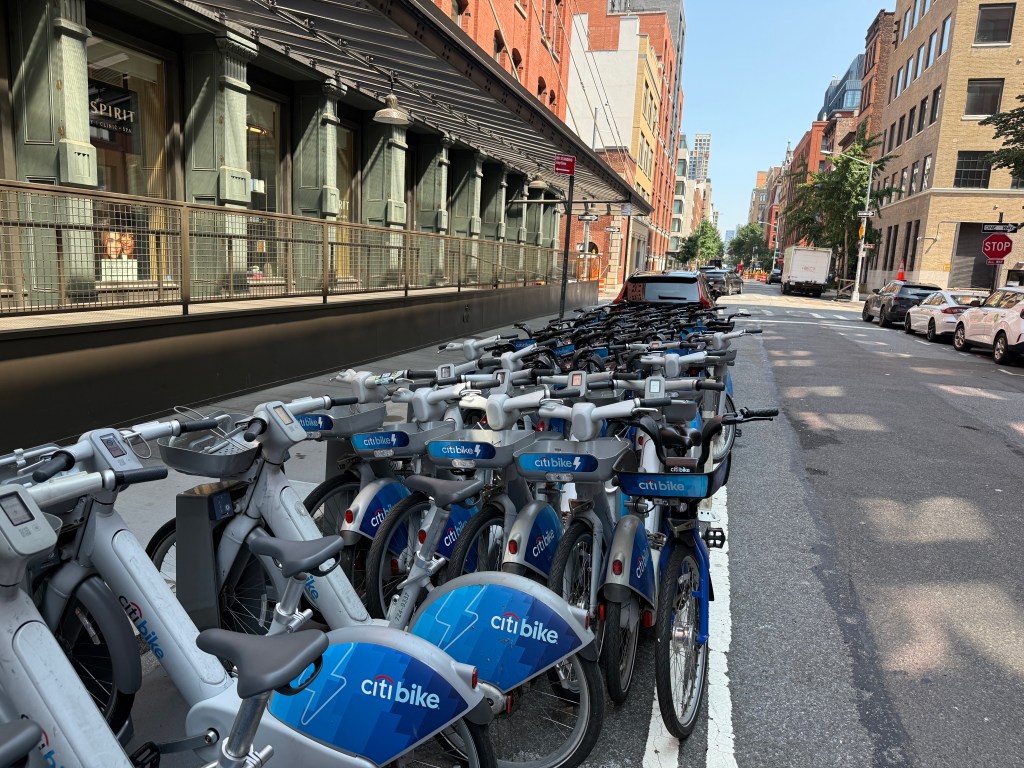
Citi Bike’s recurring price hikes mean that every minute counts for riders’ bottom lines. In fact, New Yorkers pay 10 times what bike-share users pay in comparable cities. Citi Bike members pay 27 cents per minute for an e-bike ride, which means they shell out $12.15 for 45 minutes. In Tokyo, that ride would be just $1.05, and in London, it would be just $1.35. Even in car-dominant Los Angeles, a Metro Bike Share ride is free for the first 30 minutes and then costs an additional $1.75 for each half hour.
The situation in Lower Manhattan recalled a similar fiasco on May 1, 2024, when Streetsblog counted just five open docks at 10:30 a.m. in all of Manhattan south of Houston Street and east of Bowery. While Citi Bike’s detractors often cite docks full of bikes as evidence that no one uses the service, the opposite it true — full docks at any particular Citi Bike are often a sign that station is in high demand, as Streetsblog has documented.
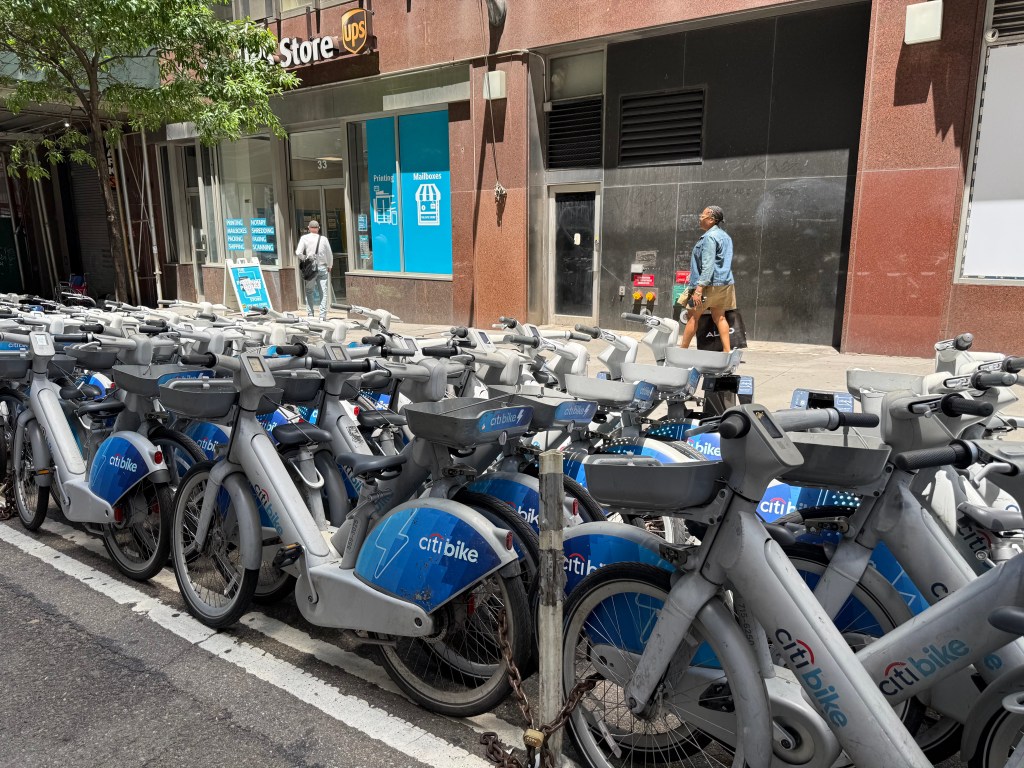
Lyft blocking empty docks with unusable Citi Bikes is also not new phenomenon. In June, Streetsblog observed the same thing at the Brooklyn Navy Yard and at Park Place and Church Street in Manhattan:
Lower Manhattan wasn’t even the only neighborhood on Wednesday with a shortage of available Citi Bike racks — social media users reported similar experiences in DUMBO.
Macklin acknowledged the gaps in service and said Citi Bike apologized to customers for falsely showing availability at Laight Street.
But Lyft declined to say whether it would refund frustrated commuters — who didn’t seem inclined to show the bike-share provider grace for the shortcomings of its costly service.
“This happens all the time. I feel like they purposefully fill them up so we have to spend longer on them,” said one customer who fled to find more parking before Streetsblog could get her name.
Another rider said she has to circle to find parking every time she ends a ride.
“All over the city, even Uptown, I circle around for a little bit,” said Brianna P., who declined to share her full last name. “It’s a little bit of a waste of money because I’m circling, I’ve been late to work before. It would be good to have more parking spots.”
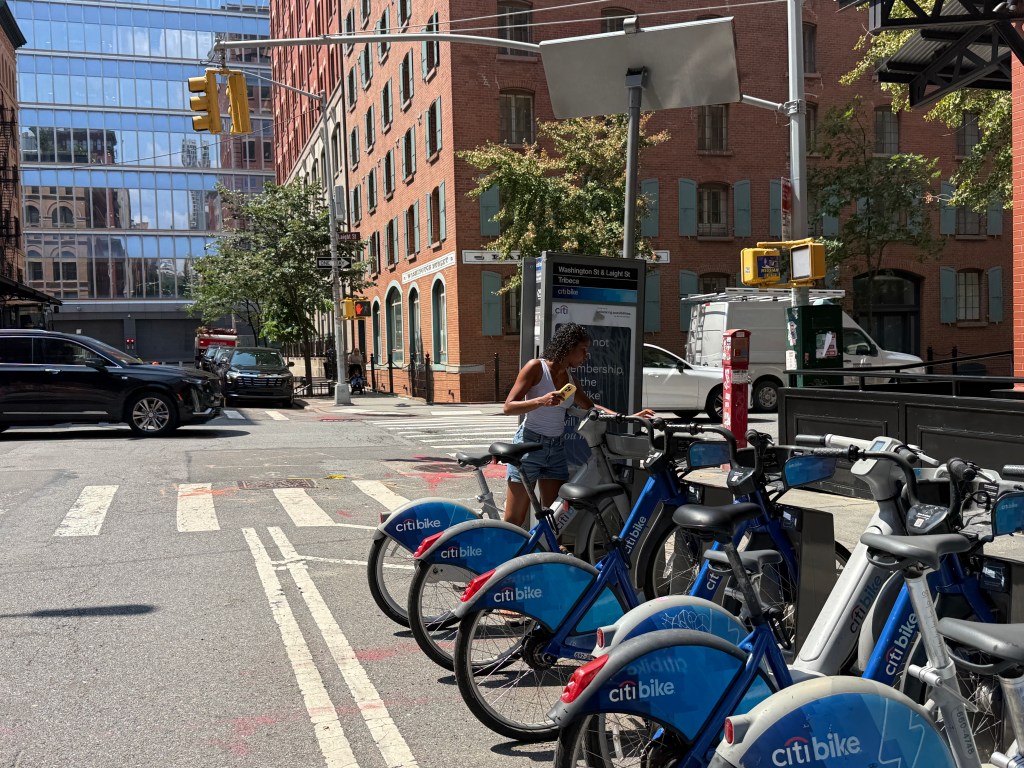
Weather interruptions often cause problems for the Citi Bike system, something bike-share users learned the hard way this winter when back-to-back snowstorms left much of the system unusable for weeks.
Lyft’s trove of Citi Bike data should allow the company to make adjustments in real time — or avoid similar problems down the line, said one expert.
“They’ve got immense data at their fingertips, they can see that the bikes are still there,” said Calvin Thigpen, the new mobility practice lead at Toole Designs. “Citi Bike the operator and [the DOT] are not going to be happy with this outage and the service disruption. They’ve now got dissatisfied customers and are missing out on trips. I think the city and the operator are going to be looking really closely to understand what went wrong.”
Looking closely, but in the case of DOT probably not doing anything. Under the current contract, DOT can only fine Lyft if customers can’t use a station for four uninterrupted hours, after which the company pays a $30 penalty per hour per station. The contract says around 10 percent of the system are so-called “never die” stations that cannot be completely empty or completely full between 6 a.m. and 12 a.m. for more than 3 percent of the time in a single month — but it does not say which stations are on the “never die” list.
The contract is up for renewal in 2029. To address the practice of storing inactive bikes in front of open docks, Thigpen suggested the city compel Lyft to use separate staging areas.
Other cities have managed to compel Lyft to give riders more leeway when bike-share parking is scarce, Thigpen said. In Jersey City and Hoboken, where Lyft also operates Citi Bike, the company has started offering overflow parking: When customers arrive on an e-bike at a station that’s full, they can park right next to the dock and take a picture with the app — an option not afforded to Citi Bike riders in the five boroughs.
Business as usual may not be an option for Lyft, considering extreme weather that disrupts predictable usage patterns is becoming more common.
“If [outages] are something thats going to happen, the system should be more permissive and flexible ahead of time instead of people going through that process afterwards,” Thigpen said.
— With Emily Smith
Correction: Due to an editing error, this story misstated the price that Citi Bike member pay to ride e-bikes. The price is 27 cents per minute, not 41 cents per minute.

Streetsblog has migrated to a new comment system. New commenters can register directly in the comments section of any article. Returning commenters: your previous comments and display name have been preserved, but you'll need to reclaim your account by clicking "Forgot your password?" on the sign-in form, entering your email, and following the verification link to set a new password — this is required because passwords could not be carried over during the migration. For questions, contact tips@streetsblog.org.