Eyes On The Street: How Will Bus Rapid Transit Fit On Flatbush Avenue’s Narrowest Stretch?
They’re in a tight spot.
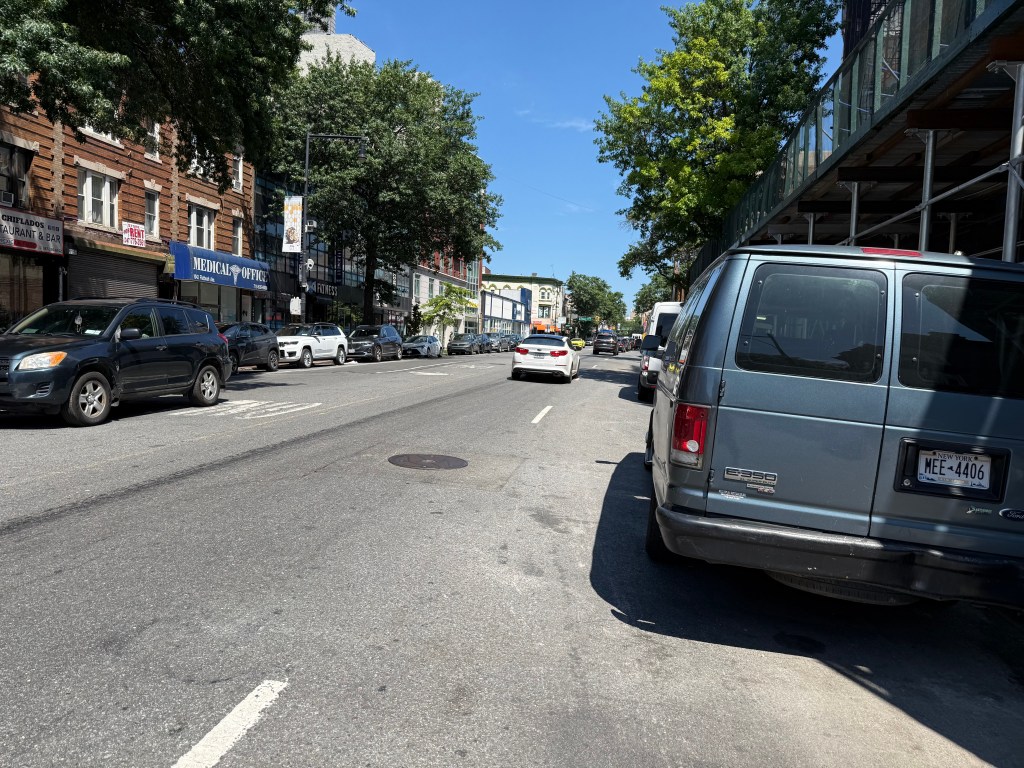
The Department of Transportation will have to squeeze a bus rapid transit system into just five lanes of traffic on the central section of Flatbush Avenue if it’s going to deliver on the promise of real-deal bus priority on the key Brooklyn thoroughfare.
Flatbush Avenue is the first place where DOT plans to implement bus rapid transit service on an entire corridor, according to the bus improvement plan jointly issued by the city and the MTA. Bus priority plans have been kicked around on Flatbush Avenue since 2022, but the latest one puts real teeth into the effort by promising fast and efficient rapid bus service.
The work has already started on Flatbush Avenue north of Grand Army Plaza, with center-running bus lanes, boarding islands and a redesign that reduced Flatbush Avenue from six lanes for cars to just two. But, south of Grand Army Plaza, DOT planners confront a challenge presented by different types of roads.
For instance, the southernmost piece of Flatbush Avenue between Kings Plaza and Nostrand Avenue isn’t dissimilar to the part north of Grand Army Plaza, with four travel and two parking lanes. The street also widens significantly south of Avenue S, to six travel and two parking lanes, all of which will give planners room for bells and whistles like physically separated bus lanes and bus boarding stations.
But the strip of Flatbush between Prospect-Lefferts Gardens and Midwood seemed designed intentionally to deter even the most-committed bus planner:
Welcome to the sluice
Between Lincoln Road and East 26th Street, Flatbush Avenue narrows to five lanes for traffic, generally comprised of one moving lane and a metered parking lane in each direction, plus left turn lanes at some intersections. Additionally, the street is heavily commercial — and businesses need curb access for deliveries.
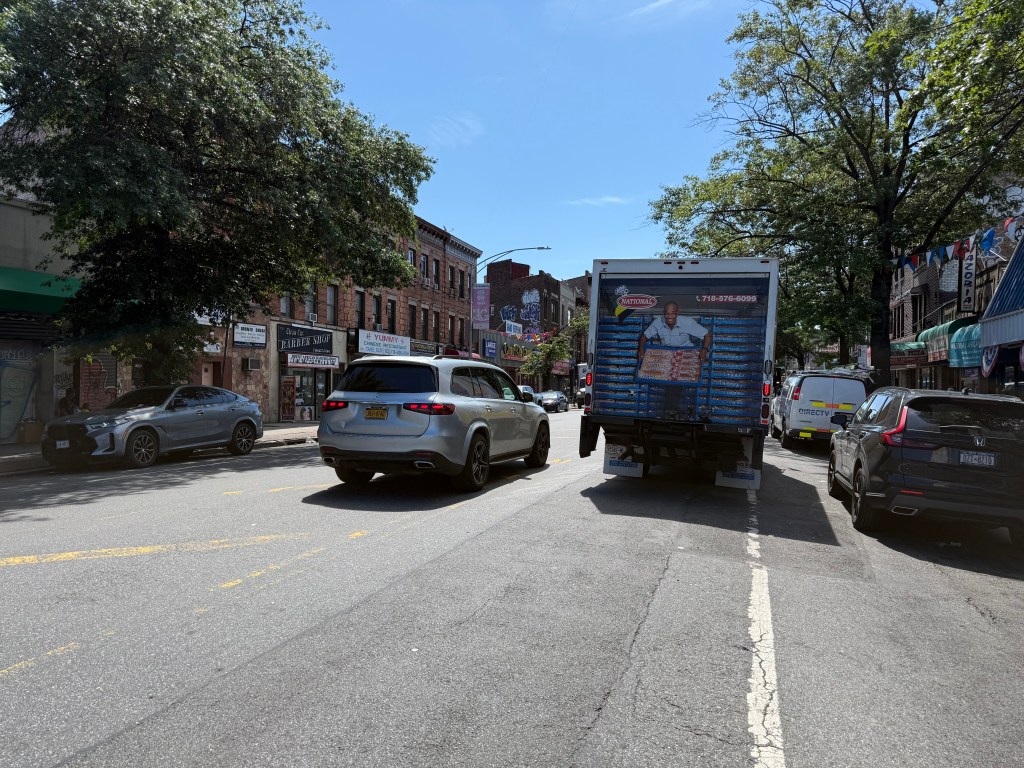
This stretch of Flatbush doesn’t work for buses right now; DOT data shows that buses top out at around 7 miles per hour at best in the central piece of the street during midday and the evening rush hour.
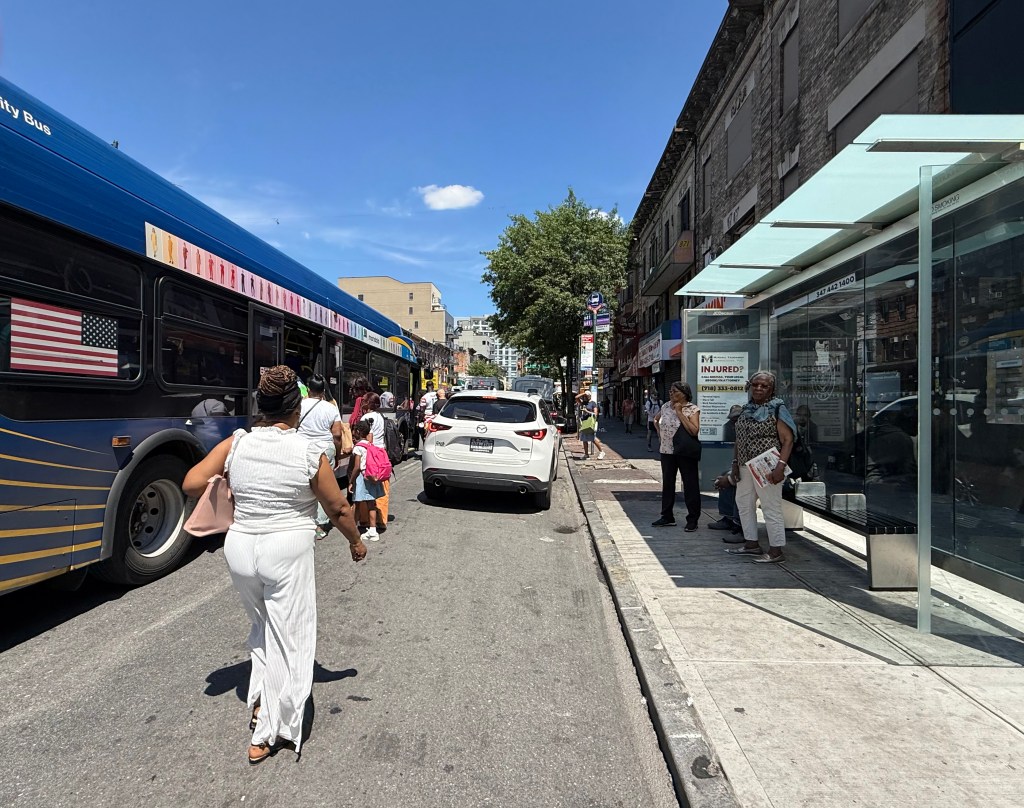
Even midday, without peak rush hour traffic, drivers still happily blocked bus stops or double-parked, which led to dangerous driving behavior in response.
People driving around double-parked vehicles either drove on a barely visible painted median, or in some cases even directly into turn lanes meant for traffic going the opposite direction.
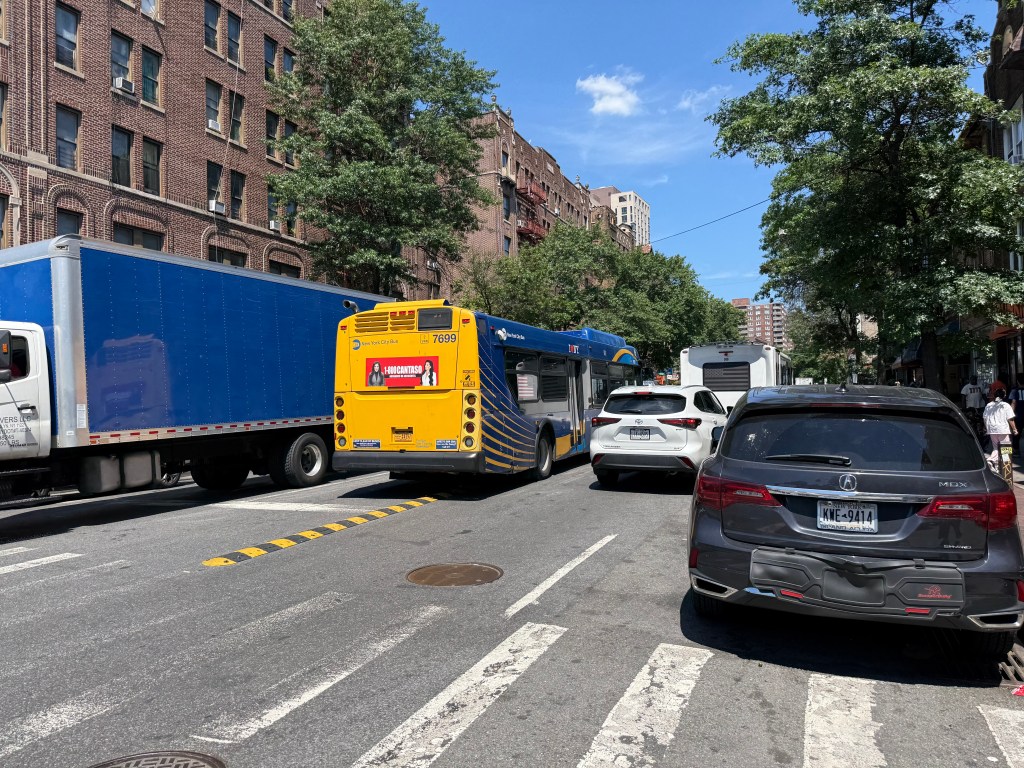
As it’s currently set up, Flatbush Avenue doesn’t work for anyone trying to use it. In addition to the bus speed data, you can see it in the crash data. Between 2023 and 2025, there were 450 reported crashes on Flatbush Avenue between Lincoln Road and East 26th Street, and over half of those crashes resulted in an injury. It’s a similar situation to the piece of Flatbush north of Grand Army Plaza that’s earned a wholesale redesign, where in the same time period there were 633 reported crashes between Grand Army and the Fulton Mall, almost half of which resulted in an injury.
That alone is a reason to completely reorient Flatbush as something more like a neighborhood road. But the city is also promising more than just a simple bus-lane project for all of Flatbush Avenue.
The “Better Buses, Faster Service” plan promised that the rapid bus transit corridors would deploy “continuous, bus-only infrastructure like busways or center-running bus lanes, bus-boarding islands with level boarding which allows for passengers to just step on to buses instead of having to step up onto them, prohibitions on cross traffic across the corridors, and covered bus stations with seating,” yet it’s unclear how far the city will go to change the street.
On the one hand, planners see room for a design not unlike the northern piece of Flatbush where DOT is already cutting six lanes down to four lanes in some places building bus boarding islands between a bus lane and a single general traffic lane.
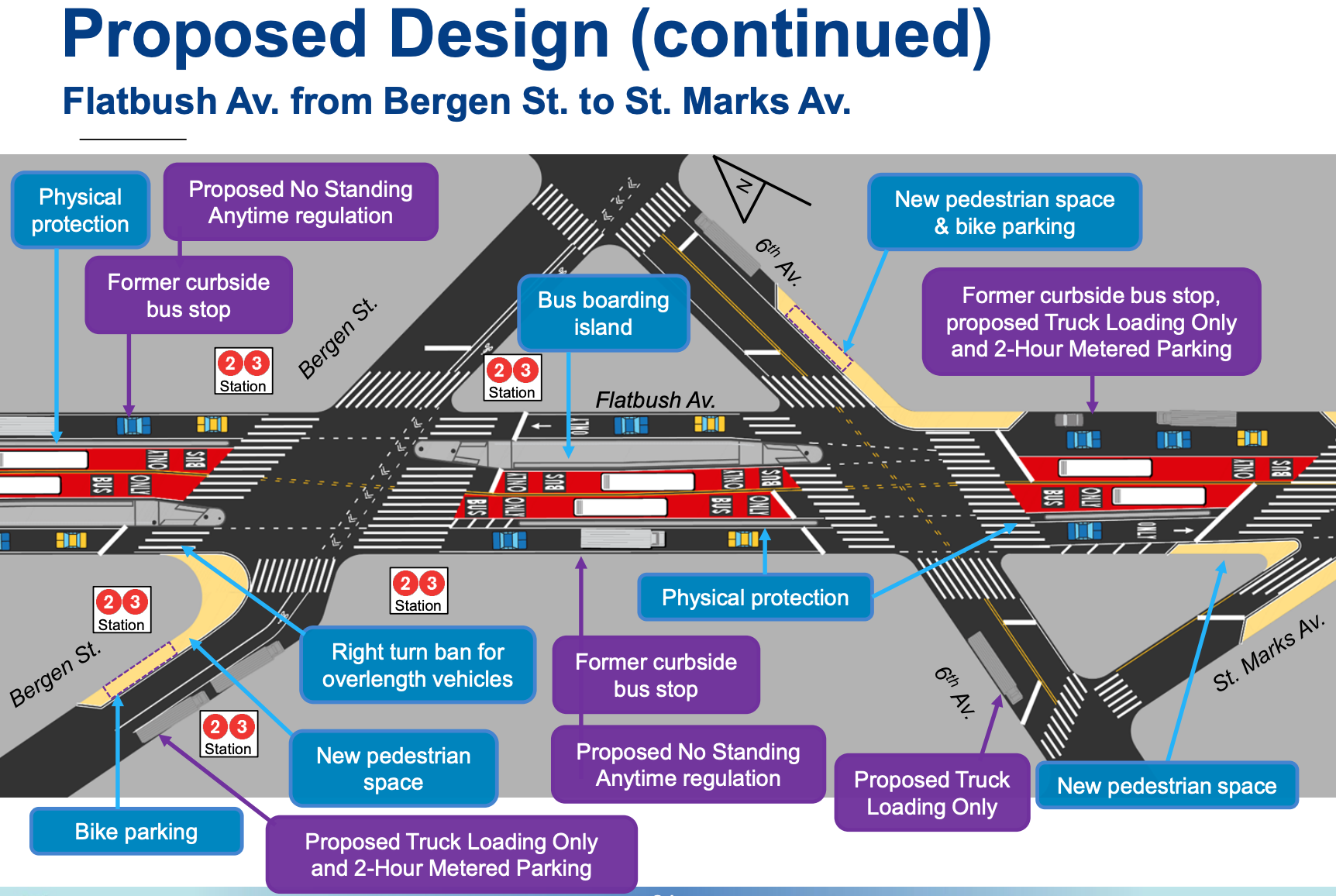
“With five lanes, two would be bus rapid transit lanes with one mixed traffic lane in each direction,” suggested Walter Hook, an international bus planning expert who’s studied bus rapid transit in the city and around the world. “Where there is a station, the fifth lane would be for the station. Where there is no station, there is space for parking, loading and public space.”
Hook also said DOT would also need to bar left turns at many (some would say all) intersections, since allowing drivers to turn across a busway — even with a separate signal phase like they can on Livingston Street — ends up delaying the buses.
Transit advocates suggest DOT could go even further and institute a full-corridor busway to get the most out of Flatbush.
“If you take the vast majority of the personal vehicles off [Flatbush], unless they’re doing drop-offs or pickups, or it’s a truck doing a delivery, possibly during specific hours or a couple periods during the day, you can clear off the street pretty significantly,” said Brian Fritsch, the associate director of the Permanent Citizens Advisory Committee to the MTA, which last year issued a report on how the city and the MTA could team up to bring bus rapid transit to key corridors.
The local business improvement district in Flatbush has at least signaled support for better bus service, but it could still be a tough sell to make drastic changes to the street. As Fritsch sees it, any potential complaints from business owners need to be met with the fact that the street is a mess already.
“The counterpoint is that everyone loses when Flatbush is a parking lot, and it’s that way a lot of the time because the curb is always jammed with with cars that are sitting there for lengthy periods of times. If you get [traffic] down to the deliveries that need to be made or the people that are in a taxi that need to be dropped off, you still get the people that are trying to come and go to a business, you just lose a lot of the car storage or people that are going are trying to get somewhere else in the city entirely,” he said.
City planners at least also understand that a busway is the strongest tool they have in their toolbox, though they won’t make any promises that it’s definitely the solution they’ll go with.
“For narrow streets, we have a lot of different options,” a DOT official who only provided the name Luke told a breakout group while soliciting feedback at last week’s central Brooklyn town hall on bus improvements. “I’m not saying that this is going to be, you know, the treatment, but busways are a really good treatment. And this creates priority for buses, trucks, and Access-A-Ride.”
If the city wants to go that route, bus riders will definitely support it, at least among the people who came out on Thursday to tell DOT and Mayor Mamdani their thoughts on the bus.
“Buses could be a vital and helpful part of life in Flatbush, where I live, and mostly they’re an obstruction, because of private cars,” said Ron Shalom, a town hall attendee. “The easiest and most ambitious option would be to get rid of cars on Flatbush Avenue so there’s a dedicated corridor for public transit that would really efficiently serve so much of Brooklyn.”
— with Poppy Wilkinson and Henry Beebe-Center

Read More:
Streetsblog has migrated to a new comment system. New commenters can register directly in the comments section of any article. Returning commenters: your previous comments and display name have been preserved, but you'll need to reclaim your account by clicking "Forgot your password?" on the sign-in form, entering your email, and following the verification link to set a new password — this is required because passwords could not be carried over during the migration. For questions, contact tips@streetsblog.org.