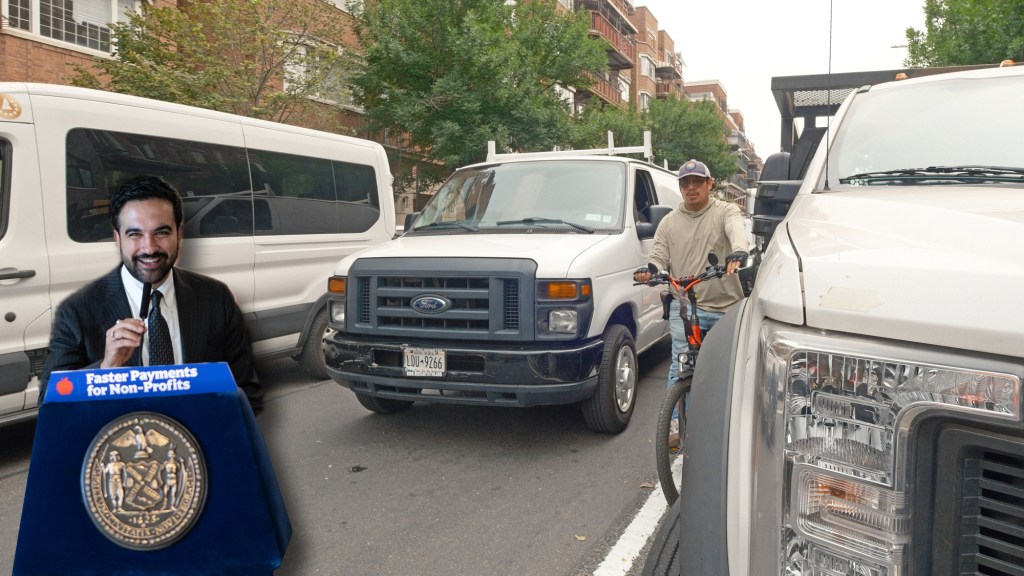
Bus Riders Tell Mamdani: Don’t Wait for BRT to Get Illegal Parking Out of the Bus’s Way
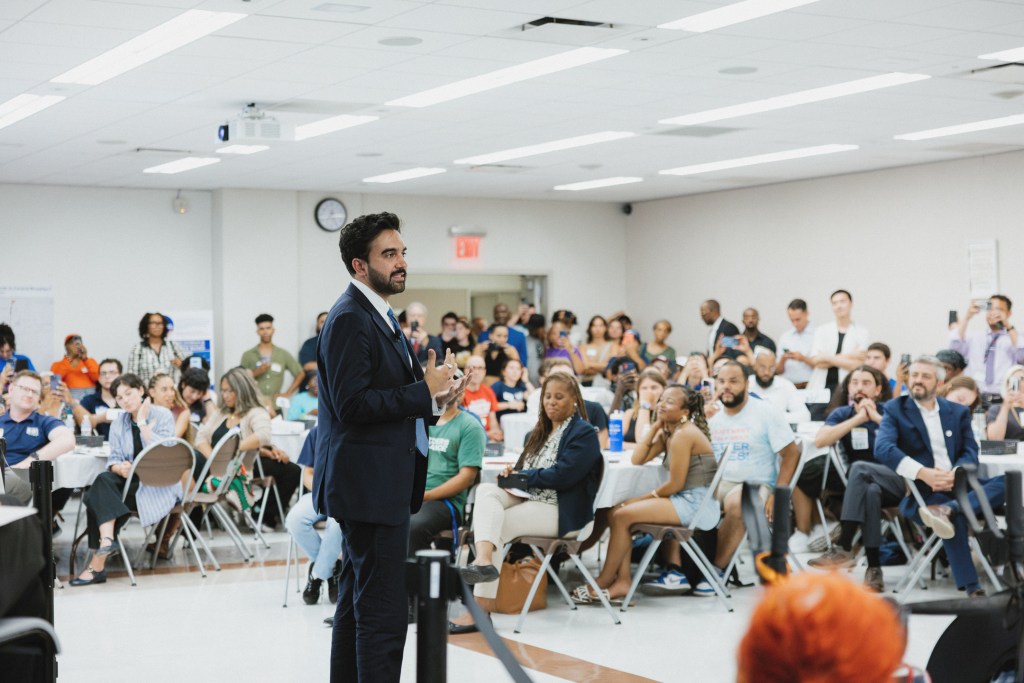
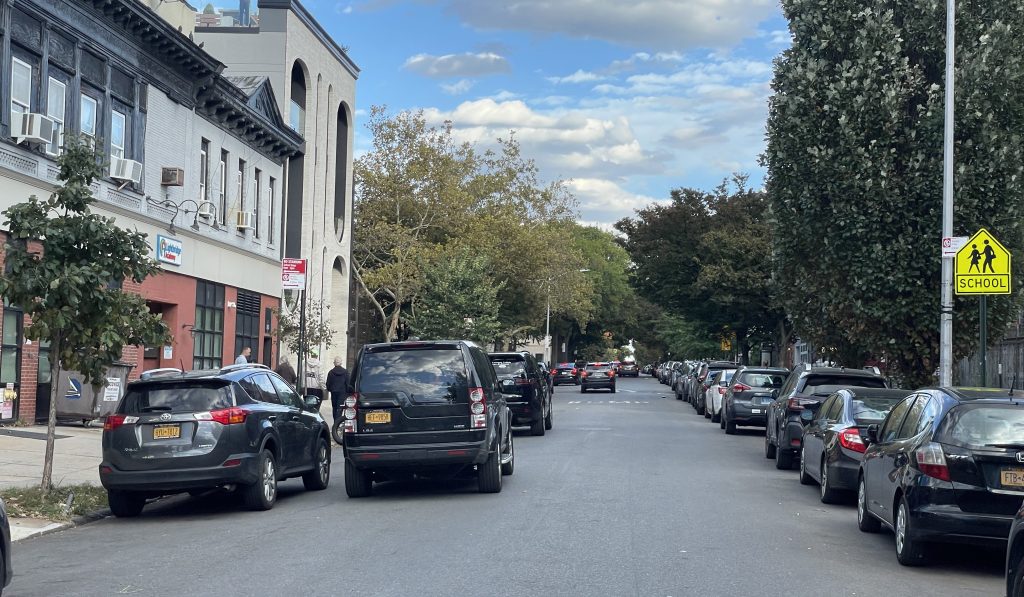
Mayor Mamdani’s Flatbush Avenue bus rapid transit isn’t scheduled to wrap up installation until 2030, but he can get illegally parked cars out of their way right now, according to bus riders who attended a mayoral “town hall” in Central Brooklyn on Thursday.
“It feels like really low-hanging fruit,” Ron Shalom, a Flatbush resident and music producer, said of the illegal parking along Flatbush Avenue, which serves the busy B41 among other routes.
“Restricted parking on Flatbush Avenue is just not enforced, it creates huge obstacles,” Shalom said.
The “town hall” hosted by the Department of Transportation, MTA and the mayor’s office focused on three corridors in Central Brooklyn where Mamdani has pledged to build-out some form of bus rapid transit: Flatbush Avenue, Utica Avenue and Church Avenue.
The three routes serve 150,000 daily riders across 13 buses, according to DOT, which solicited feedback from riders at Thursday’s event, which the mayor attended.
“We’re looking to build public transit that will make the whole world jealous of our city,” Mamdani told attendees. “When I look in this room, I see all of the different ingredients we need to make it happen.”
New Yorkers at Thursday’s meeting made it clear that these changes can’t come soon enough — and might not be able to wait until 2030. “Long wait times!” “Unreliable arrivals!” “Double-parked cars!” and “All of the above,” said participants when DOT asked for the most frustrating part of their commutes.
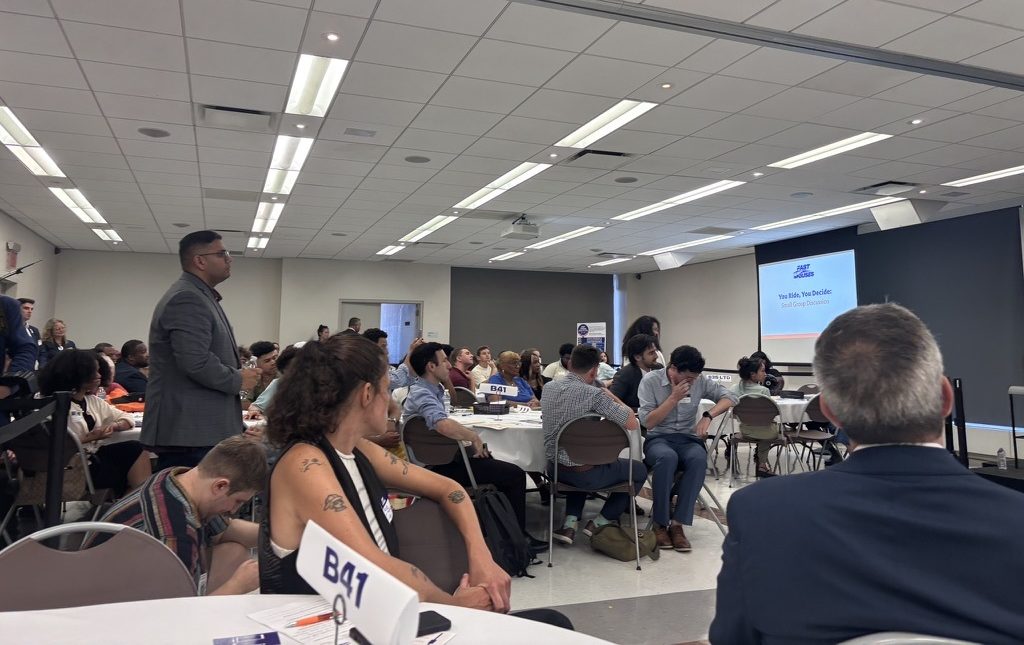
DOT said that it wants to amend a number of these problems in the short term, using methods such as bus lanes and bus stops with more shade and seating.
But attendees said that ridding the lanes of illegal parking could be a quick fix, too — especially for streets like Flatbush Avenue, where buses move as slowly as four miles per hour.
Double-parked cars cause buses to merge into regular traffic, instead of allowing them to cruise from stop to stop — and the lack of enforcement here is one of many reasons the New York City has the slowest buses in the country.
One Brooklynite said that they didn’t see parking, even legally, as a good use of space on Flatbush Avenue.
“I think they could do away with parking entirely on Flatbush,” said Jules Ratner, a Gravesend resident and prospective college student.
The MTA and city have rolled out bus-mounted automated cameras to enforce against bus lane blockers and double parking, but drivers continue to flout the rules — in part because the city only tickets them if two buses in a row snap them breaking the law.
Adding to the confusion, Ratner said, is that many bus lanes are not 24/7, so drivers grow accustomed to ignoring them.
“If you say a car is allowed, they’re not going to listen to the fine print,” Ratner said.
Hard infrastructure that completely prevent cars from driving or parking in bus lanes or bus stops are currently on a longer timeline.
DOT wants to roll out “bus rapid transit” treatments — busways that have dedicated, protected lanes, all-day, frequent service and upgraded waiting areas — over the next four years on Flatbush, Utica and Church avenues in Brooklyn along with Northern Boulevard in Queens and Tremont Avenue in the Bronx.
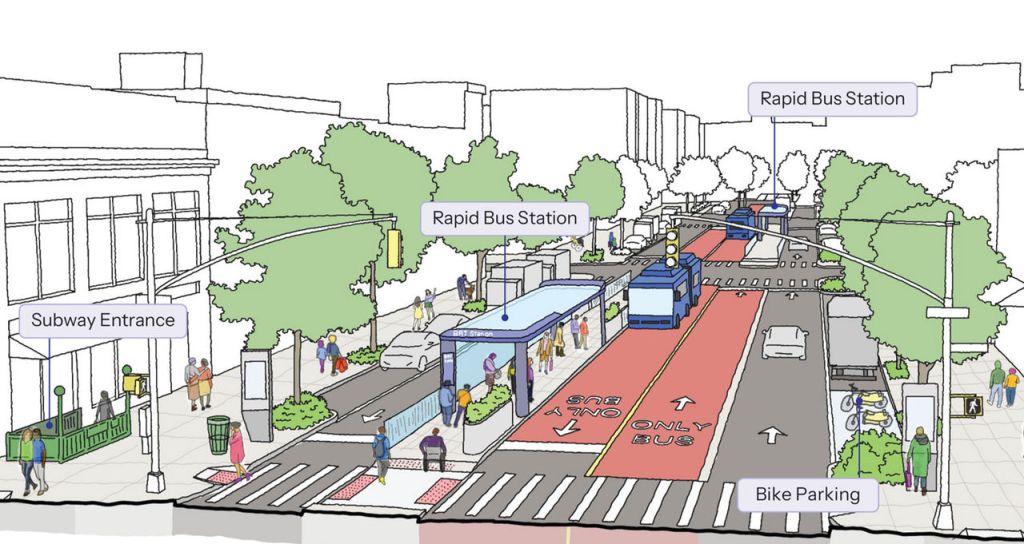
“The easiest and most effective way is with physical separation, like curbs,” DOT Commissioner Mike Flynn told Streetsblog on Thursday.
For bus riders, enforcement and infrastructure go hand-in-hand.
“When I hear about bus improvements, that makes me really happy, because I know that’s gonna make the street safer for cyclists as well,” said Rose, a Staten Islander who declined to provide her last name, but expressed excitement about changes coming to the city’s buses.
DOT will take more feedback from riders via an online survey through the end of October and is holding community events throughout August, September, October and November.
“We’re looking to hear from you not only for input on this plan, but about how we can best capture the experiences and priorities of bus riders across the city,” Flynn said. “We’re really just at the beginning of this process.”
— With Henry Beebe-Center

Read More:
Streetsblog has migrated to a new comment system. New commenters can register directly in the comments section of any article. Returning commenters: your previous comments and display name have been preserved, but you'll need to reclaim your account by clicking "Forgot your password?" on the sign-in form, entering your email, and following the verification link to set a new password — this is required because passwords could not be carried over during the migration. For questions, contact tips@streetsblog.org.