OPINION: G Train Riders Deserve Better Buses During Ongoing Shutdowns
The MTA is once again failing G train riders, nearly two years after shutting the line down for an entire summer. What the MTA originally dubbed a temporary one-summer-only G train disruption has morphed into a constant string of late night and weekend closures.
Transit riders deserve better than the subpar shuttle bus service the MTA provides to fill the gap. New York’s 24/7 subway means late night and weekend shutdowns are unavoidable, but the replacement service is terrible — and risks pushing people away from taking transit altogether.
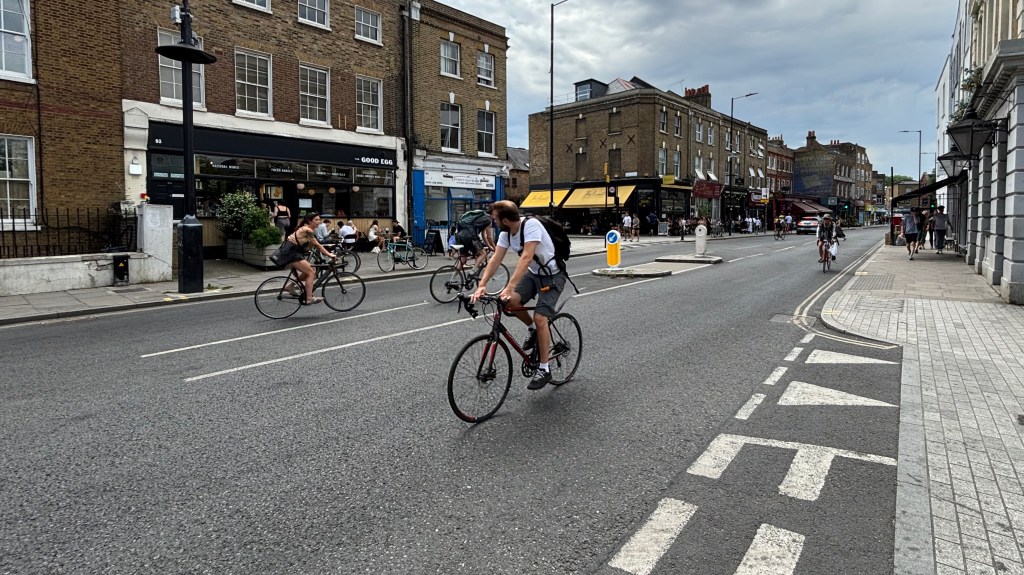
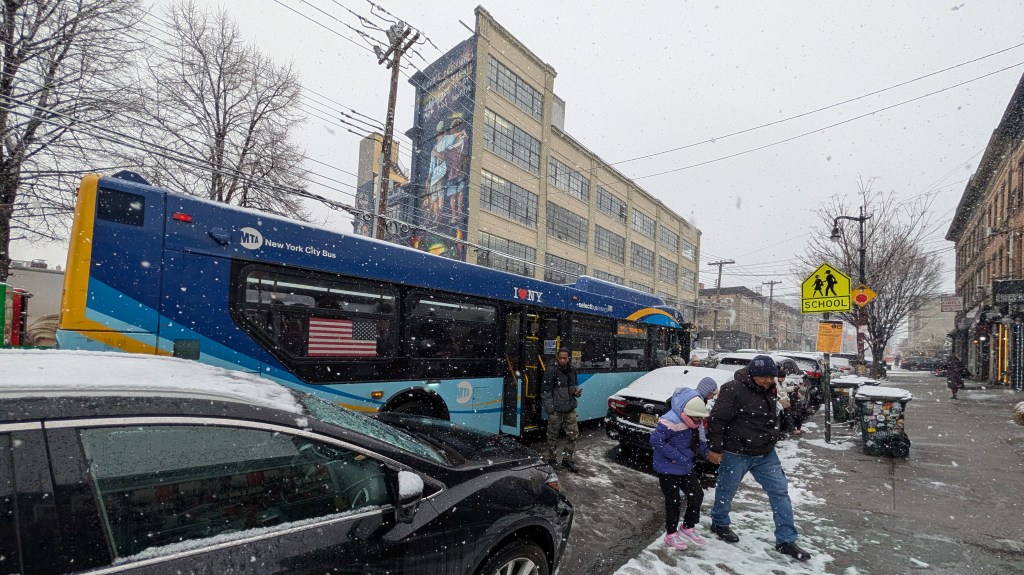
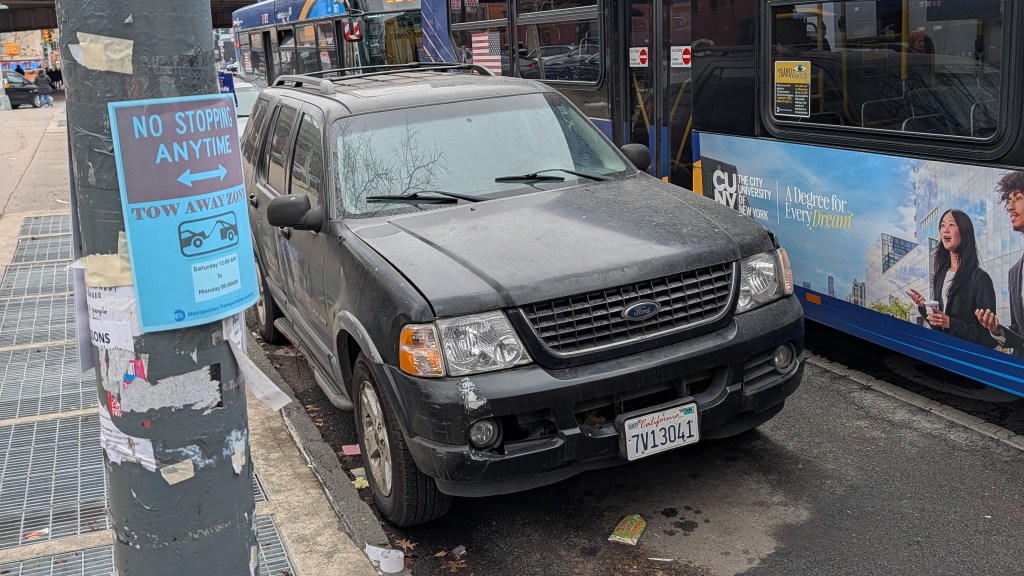
“No parking” signs to keep cars out of temporary bus stops are inconsistent and often torn down. Parked cars in crosswalks prevent buses from turning. Double parked cars anywhere force buses to slow down to try to squeeze by. Parking in bus stops forces riders into the street to board. Blocked bus staging zones force out-of-service buses to double park.
Weekend subway ridership has grown 9.4 percent in the past year, outpacing overall ridership growth of 7.7 percent. This has been especially true in North Brooklyn, where total ridership grew by 12.1 percent and weekend ridership grew by 14.4 percent. Riders show up, yet MTA treats weekend service as an afterthought.
It didn’t have to go this way.
Ahead of the 2024 shutdown, I wrote in Streetsblog that shuttle buses without dedicated space would not be able to keep riders moving. Buses kept moving thanks to turn restrictions on Manhattan Avenue, bus-only lanes on DeKalb and Lafayette avenues and increased enforcement. Once the weekday shutdowns ended, these temporary measures ended as well. Late night and weekend buses slowed back down to a crawl — even as G train disruptions persisted.
With years of additional G train closures expected, DOT and the MTA need to make these measures standard practice.
First, DOT should put in real infrastructure for bus routes. The replacement bus routes are already figured out. We should put up “shuttle bus stop” signs. Instead of relying on flimsy laminated signs that get torn off, this will always let riders know where the bus will be. People walking by regularly can even recognize the signs and will already where know to go when there is a subway problem. Bus turning radii should be respected with no parking zones around respective intersections marked with bumpers on the road.
These are the everyday basics, but we can do even more. Just like we have detours for construction, the DOT can create temporary bus only infrastructure for the weekend with cones and traffic cops. With two more years of G train disruptions, DOT should bring back the strategies used to speed up buses back during the six-week 2024 shutdown, which also boost speeds on the B62 and B43 buses.
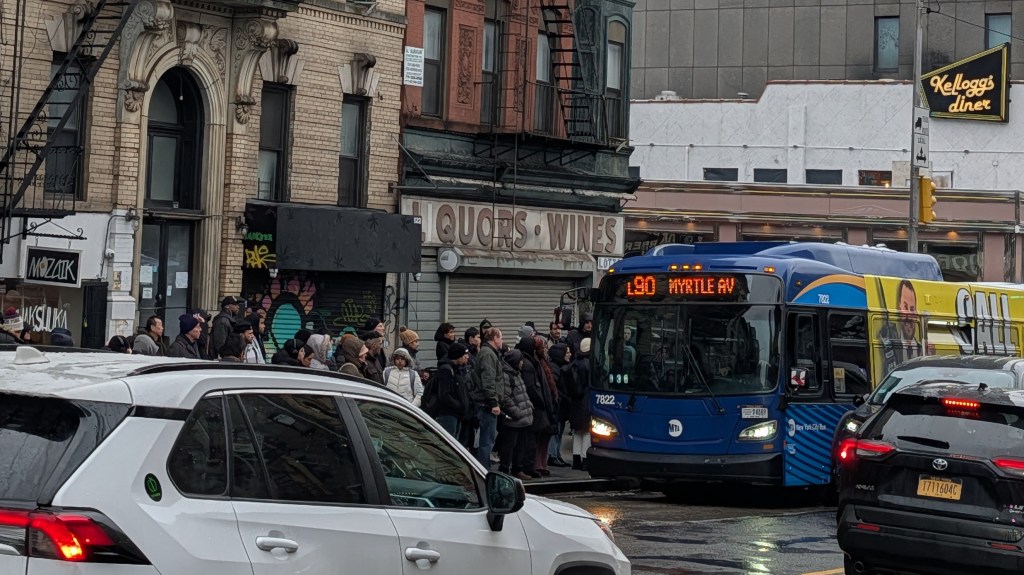
Second, NYPD and MTA enforcement agents need to be extra vigilant on shutdown nights and weekends, issuing tickets and towing any parked vehicles that will impede the shuttle buses — including to their own vehicles which is common around Metropolitan Avenue/Lorimer Street station, where many L train replacement buses begin their runs.
Third, the MTA needs to make it easier to understand shuttle buses. Right now when users open any navigation app, it will look like the subway line just disappeared. There is no shuttle bus information whatsoever. To fix this, the MTA just needs to publish shuttle bus schedules. Officials should also stop using the MTA’s internal route number T403 on the buses’ front destination screens and stick with signage that references the “G train”.
Finally, the MTA should boost service on parallel bus routes. This will give riders more options to get them to the closest open subway station. For instance, when the G train is down the MTA can boost B62, B24 and B48 service to make it easy for riders to still get to the L train.
All this should be a priority for the MTA and for Mayor Mamdani, who ran on “fast and free buses.”
The G train shuttle buses may be free, but they’re not fast. Someone should do something about it.

Streetsblog has migrated to a new comment system. New commenters can register directly in the comments section of any article. Returning commenters: your previous comments and display name have been preserved, but you'll need to reclaim your account by clicking "Forgot your password?" on the sign-in form, entering your email, and following the verification link to set a new password — this is required because passwords could not be carried over during the migration. For questions, contact tips@streetsblog.org.