Citi E-Bikes 10X Costlier Than Other Cities, So Price Should Be Capped At $3: Advocates
New Yorkers pay more than 10 times as much to ride an electric Citi Bike compared to bike share in peer cities, and Mayor Mamdani should peg the cost to $3 for a 45-minute ride, advocates demanded.
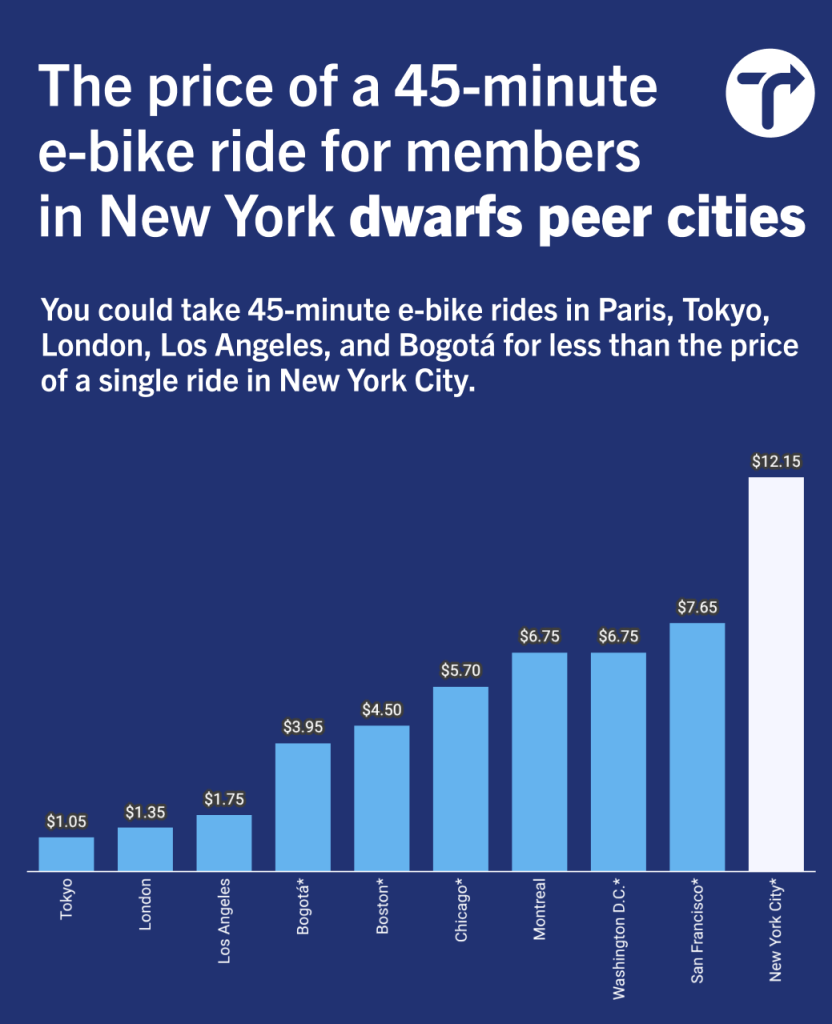
Citi Bike members shell out $12.15 for a 45-minute ride, according to a new analysis released by Transportation Alternatives on Tuesday, way out of whack with the rest of the country and the world. For instance, Docomo in Tokyo charges just $1.05 for the same kind of bike share trip and London’s Santander Cycles prices an e-bike journey at $1.35.
Mamdani – a frequent Citi Bike rider – should cap the cost of the highly popular silver cycles, said the group’s director of advocacy.
“If every Citi Bike rider got in a taxi or rideshare instead, the streets of New York City would grind to a halt,” said Shawn Garcia of Transportation Alternatives. “As costs balloon, we’re stepping up to fight for Citi Bike riders who are priced out of an increasingly unaffordable program.”
Bike share prices in other cities don’t come close to the Lyft-owned Citi Bike. Washington, D.C.’s Capital Bike Share, Montreal’s BIXI, and Chicago’s Divvy charge their members about half the rates for a three-quarter-hour ride, while an e-bike trip with car-focused Los Angeles’s Metro Bike is free for the first 30 minutes and afterwards only costs $1.75 for each half hour.
The advocates also launched a Citi Bike “riders union” on Tuesday to push for the interests of the roughly 200,000 daily riders that rely on the system, an idea previously floated by Streetsblog.
“There’s no reason it should cost $12.15 to ride a bike for 45 minutes, and we’re calling on the Mamdani administration to fund Citi Bike and lower the price to $3 for a 45-minute ride,” Garcia said.
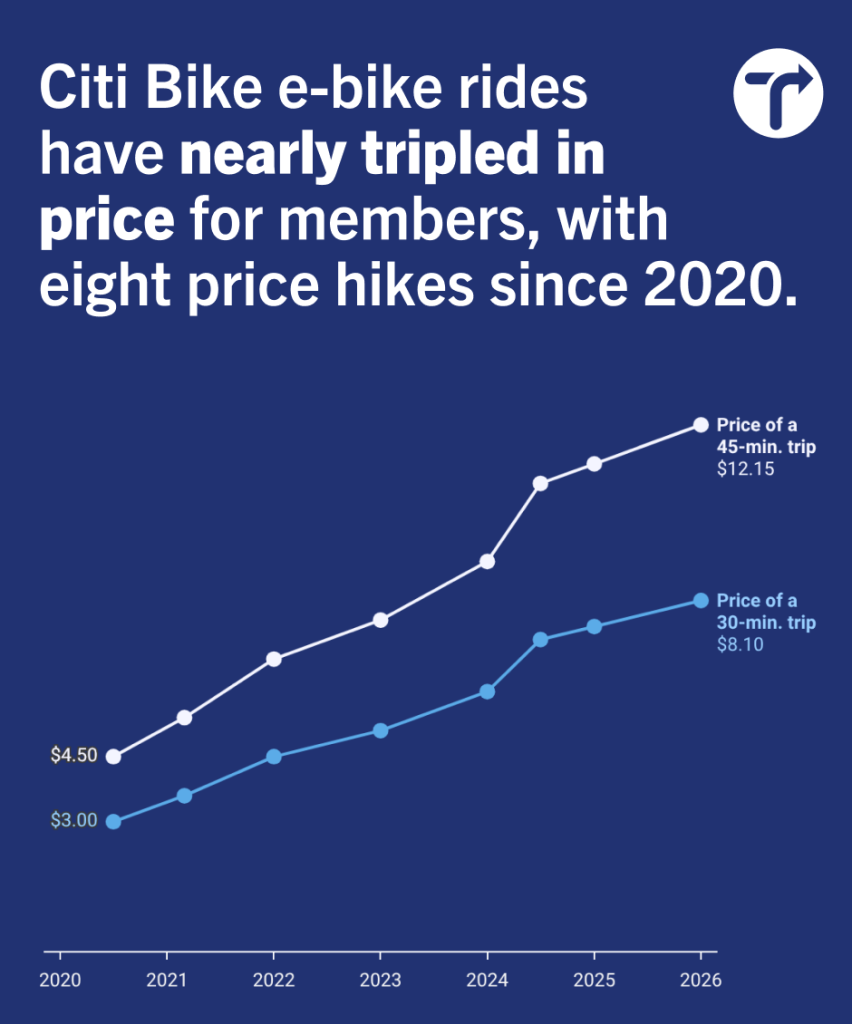
A 45-minute e-bike trip cost just $4.50 in 2020, meaning the price has nearly tripled.
Lyft heavily relies on e-bike charges, which accounted for 42 percent of the company’s $229 million in bike share revenue last year, according to TA, and Lyft has repeatedly raised its surcharges on the electrically assisted two-wheelers in recent years.
New York City does not provide a public subsidy for Citi Bike, while other large cities do, including several that contract with Lyft as their operators.
Chicago launched an operating subsidy last year for Divvy – also run by Lyft – spending $550,000 to freeze membership rates and expand discounted subscriptions and ended up logging a record 13 million trips in 2025.
Lyft offers cheaper $5 monthly memberships for low-income New Yorkers living in public housing or who qualify for food stamps, which Lyft has to provide per its contract with the city. Transportation Alternatives’s letter calls for the city subsidy to also take over funding this discount.
Transportation Alternatives’s spokesperson Charlie Baker told Streetsblog that advocates are willing to relieve that burden from Lyft because the entire package of proposals works “in conjunction with one another: subsidy, alongside overhead-cutting measures, to yield contractually obligated lower prices for riders.”
One expert lauded the advocates for dialing up the pressure on Mamdani to make Citi Bike cheaper, but City Hall should also scrutinize Lyft more and demand better data of its costs and ridership trends.
“Citi Bike is very pricey and it really should be part of the mayor’s affordability agenda to address it,” said Jon Orcutt who was a project leader at the Department of Transportation when then-Mayor Michael Bloomberg rolled out Citi Bike in 2013. “The trap you don’t want to fall into is rewarding Lyft for having an insanely steep pricing schedule by throwing public money at it. Let’s put some pressure on Lyft first to come down.”
The cost of an annual membership has surged 77 percent adjusted for inflation since the program launched 13 years ago, according to a recent analysis by the Independent Budget Office. A yearly subscription now costs $239, although Lyft bizarrely also offers a “Lyft Pink” membership for $199 that offers the exact same deal for Citi Bikes while throwing in discounts for its rideshares – all at $40 less.
Lawmakers have unsuccessfully tried to lower costs in recent years. Two years ago, a bill by Council Member Lincoln Restler (D-Brooklyn Heights) aimed to peg trip prices on both electric and classic Citi Bikes to the city’s transit fare.
Earlier this year, another package of legislation from Council members Christopher Marte of Manhattan and Farah Louis of Brooklyn proposed discounts for high-schoolers, seniors and public university students.
DOT officials argued that they can’t implement a cap or make changes until the bike share contract is up for renewal in 2029, and said the city shouldn’t let Lyft off the hook for paying for the low-income discounts.
“This administration is committed to creating a more affordable city, including through transit options like Citi Bike,” DOT spokesman Vin Barone said in a statement. “In any negotiations around bike share cost, the city will work to secure the strongest benefits for riders and their wallets.”
Lyft did not respond to requests for comment by press time.

Read More:
Streetsblog has migrated to a new comment system. New commenters can register directly in the comments section of any article. Returning commenters: your previous comments and display name have been preserved, but you'll need to reclaim your account by clicking "Forgot your password?" on the sign-in form, entering your email, and following the verification link to set a new password — this is required because passwords could not be carried over during the migration. For questions, contact tips@streetsblog.org.