Don’t Paint ‘Look Up’ On Corners. Fix the Corners!
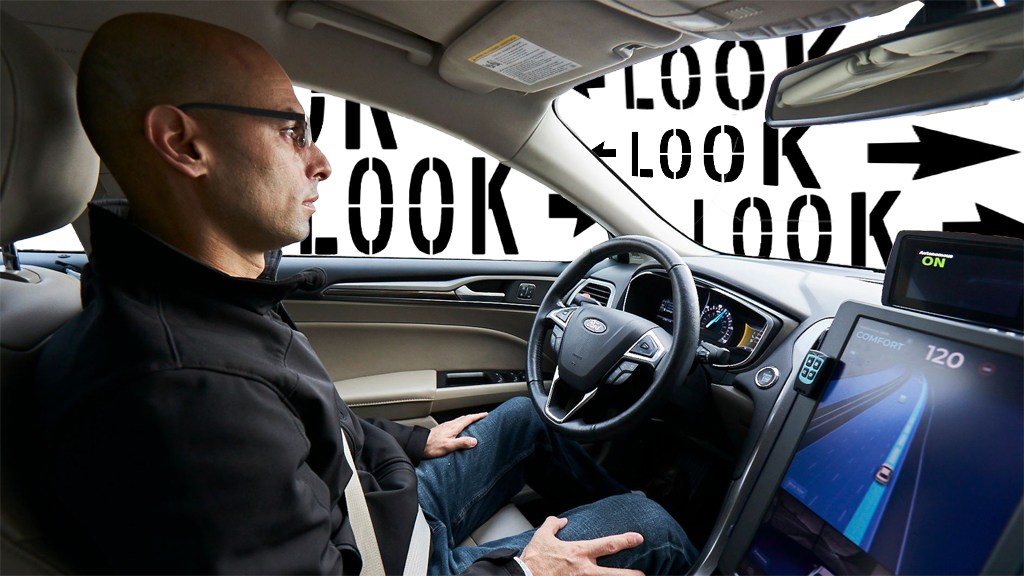
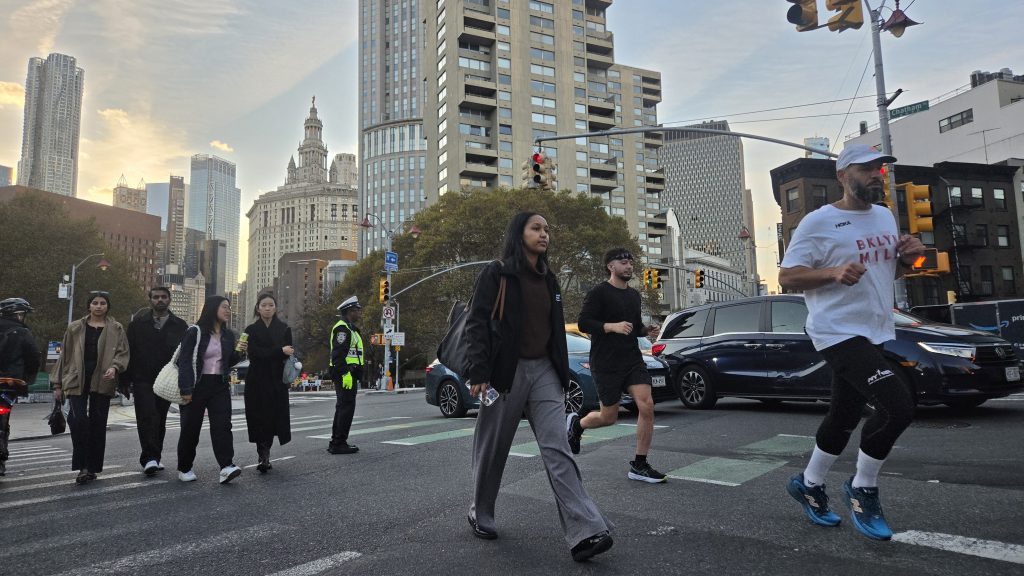
A new City Council bill would require the Department of Transportation to paint the words “Look Up” or “Look Both Ways” at 500 or more intersections, including 200 near schools. The markings would remind pedestrians, who may be looking down, to look up at oncoming traffic.
I thought about the shortcomings of Intro 1004 after yet another completely preventable recent fatality on a known dangerous corner. On Oct. 28, Siobhan Lynch, 30, was crossing Bay Parkway at Cropsey Avenue, next to Bensonhurst Park, when a Sanitation Department truck driver turned right onto Bay Parkway and killed her.
Lynch did everything right — and the trucker did everything wrong.
Pedestrians are the most vulnerable users of our roads, and drivers must recognize that they are responsible for the safety of people crossing the street. But the bill by Council Member Virginia Maloney (D-Upper East Side) seeks to shift that responsibility from drivers to pedestrians and, to me, raises an obvious concern: What happens if a pedestrian looks up, follows the rules, and still gets hit?
The answer to that question is embedded in the details of Lynch’s killing. As Streetsblog reported, the truck driver and Lynch had the light, but Lynch, as the pedestrian, had the right of way. Painting “Look Up” on the pavement would not have changed the outcome; such a reminder would not have made the turning trucker slow down or yield.
That’s the problem with the bill: It assumes that reminding pedestrians to pay attention will prevent crashes that are often beyond their control.
Yes, distracted walking can be an issue, and it is important for all road users to pay attention to their surroundings. But safe streets can not be solely the responsibility of pedestrians — roadways need to be designed to protect them (and that means more than designing “Look Up” stencils).
Again, the Lynch killing is illustrative: According to city data, since January 2022, there have been 76 reported crashes at that one intersection, injuring 50 people, including three cyclists and 15 pedestrians. The DOT designates Bay Parkway as a Vision Zero priority corridor, yet the department’s new Bay Parkway and Cropsey Avenue bus lane project left this intersection without the protections warranted by its crash history. The DOT says it is adding a painted curb extension to the northeast corner of the intersection. Safety advocates say that is not enough.
Clearly, distraction isn’t the only danger pedestrians face. In its plans for Bay Parkway and Cropsey Avenue, the DOT identified left-turn crashes as the leading cause of pedestrian injuries in the area, accounting for 40 percent. Its research also found that restricting left turns at certain intersections was associated with a 41-percent decrease in left-turn pedestrian and cyclist injuries. Lynch was hit by a driver turning right, not left, but the lesson is the same: when drivers turn through a crosswalk, pedestrians are exposed.
Designing streets so that drivers slow down for turns matters far more than painting a reminder to pedestrians, who can be, and are, killed and maimed even when they follow all the rules and all the advice.
The DOT has already achieved success in its street design efforts. Its Turn Calming program uses rubber curbs, speed bumps, and flexible posts, causing drivers to execute slower, more controlled turns — and the agency says serious pedestrian injuries fell 33 percent at the intersections included in the program. Given the city’s strong evidence that these changes work, this program should be expanded.
Maloney’s bill is cost-effective — paint is cheaper than lavish curb redesigns and road diets. But turn calming is also relatively inexpensive — a couple hundred to a few thousand dollars, according to Quartz. This kind of treatment is affordable and worthwhile, especially in light of its proven, and somewhat remarkable, results.
The DOT could also daylight corners to minimize risk to pedestrians and allow drivers to better see, but the agency famously opposes removing parking spaces at every intersection, citing a 2025 report that found no statistically significant reduction in injuries from daylighting with “No parking” signs alone. But that report was flawed, the DOT had to admit:
And the agency does support “hardened” daylighting to ensure that cars do indeed stay out of the space.
So instead of painting a slogan at every corner, the Council should require the DOT to assess each location and install improvements that address specific risks identified at each corner. Crash histories and associated risks should guide those decisions. The intersection at Cropsey Avenue and Bay Parkway would be a good place to start.
Encouraging young people to pay attention should not be abandoned, but the City Council must also take the necessary steps to ensure that one small mistake doesn’t get someone killed. When I take my driving test next year, nobody will assess whether pedestrians looked up as I drove through crosswalks. They’ll assess whether I yielded, as the law requires me to do. And if I don’t, I’ll certainly hope that the roadway is designed in a way to make me slow down.