Mamdani’s Charter Panel Wants to Speed Up Bike and Bus Lanes by 33%
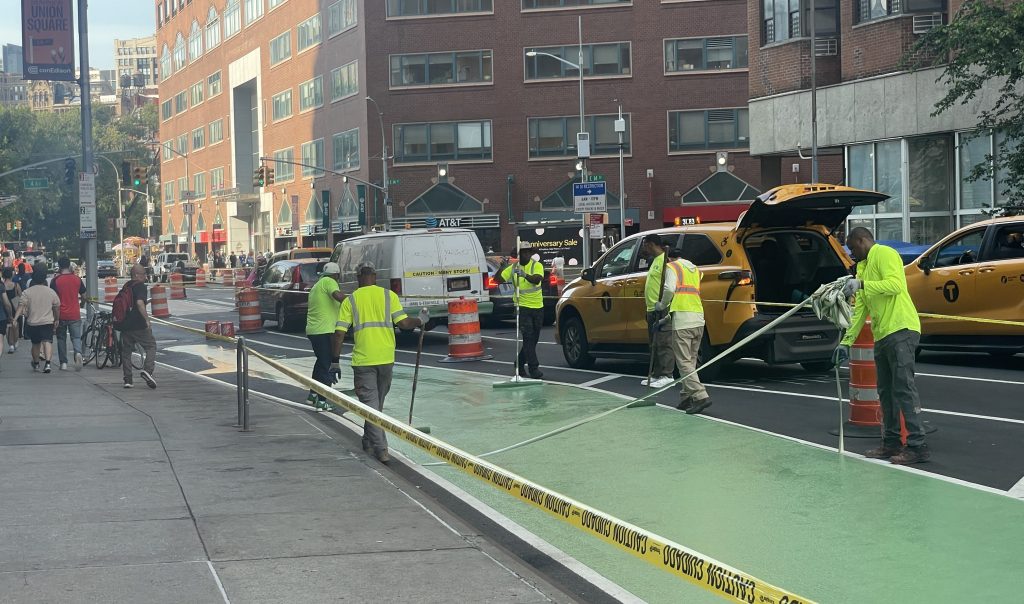
The city would accelerate street safety projects by “at least 33 percent” if voters pass a ballot proposal in November pushed by Mayor Mamdani’s Commission on Government Efficiency, which officials shared exclusively with Streetsblog.
Mamdani’s commission to review the City Charter plans to put questions to voters this November that, if passed, would consolidate outside review and allow the Department of Transportation to immediately launch street redesigns, such as bicycle and bus lanes, without having to wait on other agencies to weigh in and risk litigation.
The revision would mark a generational shift in the city’s efforts to combat the ongoing crisis of more than 200 traffic deaths and tens of thousands of injuries every year, according to advocates. It’s part of a package of ballot initiatives that the commission, called COGE, will advance.
“These ballot initiatives will save lives,” said Transportation Alternatives’s Executive Director Ben Furnas. “We’re grateful that the Mamdani administration is treating preventing new tragedies with the urgency it deserves with these new ballot proposals to speed up critical street safety projects that are too often stuck in red tape and duplicative reviews.
“With projects delivered faster and more efficiently, our streets can be safe so every New Yorker and their loved ones make it home at the end of the day,” Furnas added.
COGE released a slate of draft amendments to the charter – the city’s constitution – for public feedback on Monday. Those included the reforms to review of DOT’s street safety projects, along with proposals that would slash outdoor dining application timelines and costs, and make it easier for the city to repurpose small publicly-owned lots property as well as acquire office space.
The initiatives come after the commission found in a report earlier this month that City Council laws have added many extra steps of outside input for even basic street safety upgrades, which has set back projects and handed opponents broad leeway to sue to stop overhauls.
Dozens of advocates came out at a public hearing in Queens last week to voice support for COGE’s efforts to trim the extensive city process to build out simple street designs proven to reduce crash injuries and deaths. Some lawmakers criticized the commission for taking power away from the Council, but legislators have a history of working to slow down crucial safety work.
City regulations passed by lawmakers during the Bloomberg-era bikelash of 2009 has forced DOT to consult with other agencies for so-called “major transportation projects” — defined as any street redesign, including bike and bus lanes, that exceeds 1,000 feet or three blocks.
For every such project, DOT must to solicit feedback from the Police Department, the Fire Department, the Department of Small Business Services and and the Mayor’s Office for People with Disabilities – and lawmakers more recently added that all firehouses near a project needed to be heard from.
Those consultations add months of time to standard projects and have became grounds for opponents to sue the city, as was the case recently on 31st Street in Queens, when a judge temporarily halted a protected bike lane project due to a supposed lack of paperwork proving officials had indeed conferred with firefighters in the neighborhood.
The new draft ballot proposals would make clear that it’s up to the commissioners of each agency who gets consulted, and that failing to comply with these interagency requirements does not invalidate a project and cannot be the basis for litigation.
In the example of the Fire Department, that would mean that the mayorally appointed commissioner would have final say over who in the agency gets to weigh in on these projects, cutting out rogue FDNY brass that has tried to undermine protected bike lanes.
The proposed changes would also allow a DOT commissioner to fast-track critical upgrades “when there is an identified immediate need,” such as a rash of crash injuries and deaths at a location. The agency could start work on a project before or at the same time as notifying other parts of government and the public.
Building bike lanes faster also provides a safer workplace for the tens of thousands of delivery workers in the city, said an advocate.
“Cutting red tape to get street safety infrastructure—including bike lanes—built faster is an issue of economic and worker justice,” said Ligia Guallpa, Executive Director of the Workers Justice Project. “Deliveristas’ lives are on the line every single day when streets aren’t safe, and Workers Justice Project commends COGE for revising the charter to ensure that human life is valued over bureaucratic processes.”
Separately, the commission will ask voters to streamline the city’s process to use public space for outdoor dining, along with improvements like ramps and benches.
COGE plans to put a question on the ballot that would cut the eight-month outdoor dining application process in half and save business $1,800 in application costs and “thousands of dollars of staff time.”
Nearly 1,000 outdoor dining applicants were stuck in bureaucratic limbo earlier this year, under the rules enacted under the last mayor and Council that banned roadway cafés, a prohibition lawmakers are working on repealing in the coming months.
Mamdani convened his commission in May, initially to neuter a prior panel that his predecessor Eric Adams set up in the 11th hour of his term, reportedly to stymie his successor.
COGE will publish its finalized charter amendments, ballot questions, and a report on Wednesday and hold a vote on Thursday.
The draft ballot question groups together the street safety proposals with the changes for when the city wants to use small publicly-owned lots and lease office space.
Outdoor dining reforms are part of a separate ballot question, which also aims to make it easier for officials to use public space for ramps and benches.
“In every borough, at every hearing, New Yorkers told us again and again that they want a government that works at the same speed and efficiency that they do each day,” said Patrick Gaspard, chair of the Commission on Government Efficiency, in a statement. “From simplifying construction permitting so we can rapidly tackle the housing crisis to making it easier to open outdoor dining on blocks, we believe these proposals will help make our city more affordable and livable for working New Yorkers.”

Read More:
Streetsblog has migrated to a new comment system. New commenters can register directly in the comments section of any article. Returning commenters: your previous comments and display name have been preserved, but you'll need to reclaim your account by clicking "Forgot your password?" on the sign-in form, entering your email, and following the verification link to set a new password — this is required because passwords could not be carried over during the migration. For questions, contact tips@streetsblog.org.