Industry Group Wants Mamdani to Push Car Owners to Switch to Micromobility
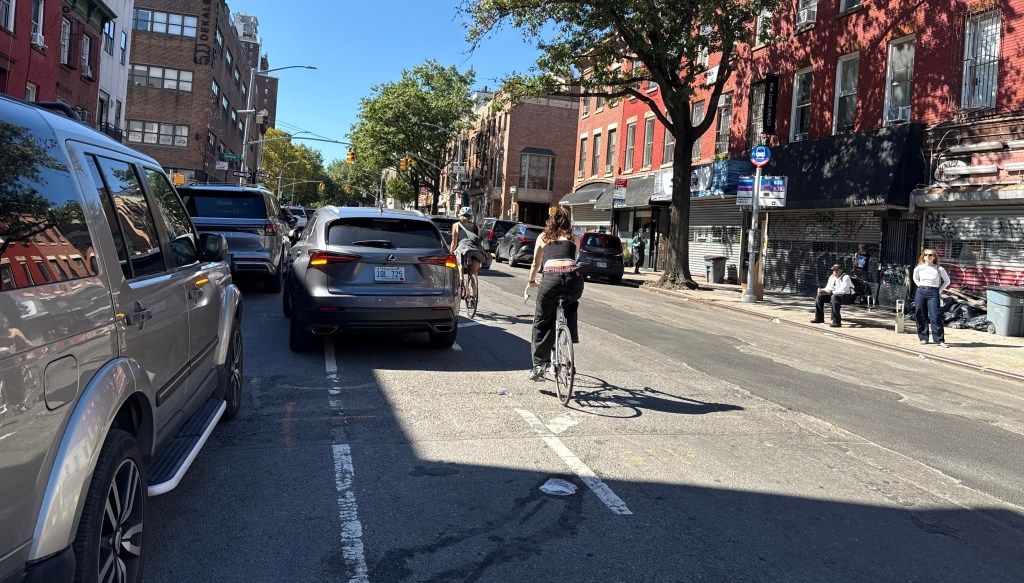
Mayor Mamdani has made “solid progress” in encouraging the safe adoption of electric micromobility in the city, but should do more to incentivize car-owning New Yorkers to ditch their four wheels for two, according to a new report from the e-micromobility industry.
The report comes at the end of a busy week for micromobility policy in the Big Apple. Mayor Mamdani’s lawyers are sending cease-and-desist’s to online sellers skirting regulations, Attorney General Letitia James issued a consumer alert, and the City Council is again weighing whether to support state-level e-bike registration laws along with other proposals set for consideration at a Sept. 30 scheduled hearing.
But the Next Mile Coalition, led by e-bike sellers Infinite Machine and Upway, is still betting big on the benefits of two-wheeled legal electric bikes.
“We’re extremely encouraged by this administration’s progress. Expanding protected bike lanes and adding secure parking make riding a real option for all New Yorkers,” said Stephane Ficaja, the Chief Operating Officer of Upway, a Brooklyn-based company that sells refurbished e-bikes. “We also recognize the safety threat created by illegal e-motos, and hope to support the city to get these off the streets and connect people to certified, high-quality e-bikes.”
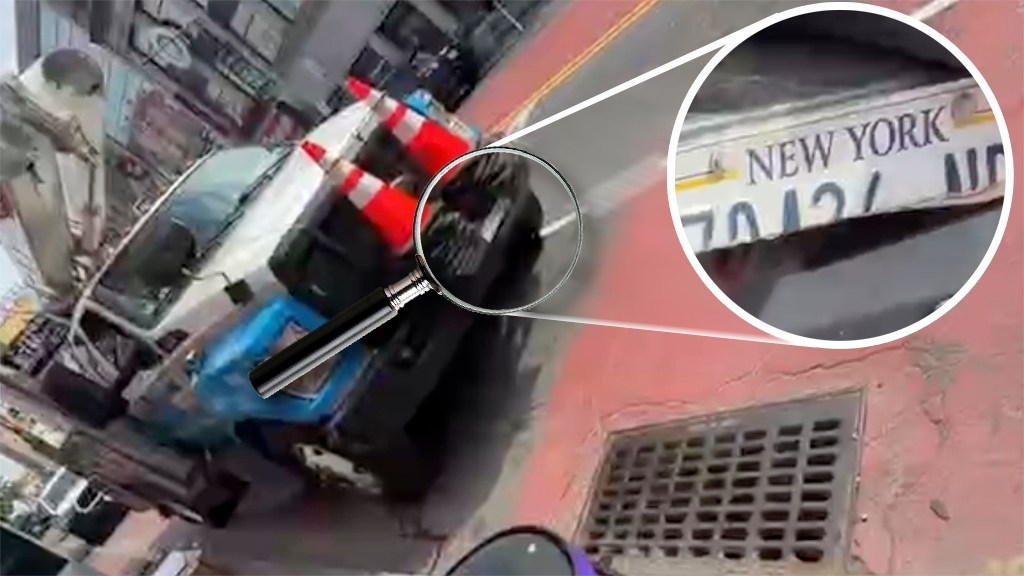
The coalition’s new Mamdani progress report builds on a detailed set of recommendations put out at the beginning of the new mayor’s term, and praises him for getting the ball rolling on secure bike parking infrastructure and ending the NYPD’s policy of issuing criminal summonses to e-bike riders caught committing minor infractions. Just this week, the mayor reiterated his opposition to requiring license plates and registration for e-bike riders.
“The focus of today is tackling the root causes of what has led to the loss of many New Yorkers’ lives,” he said. “When it comes to registration for e-bikers, I do not believe that that would actually improve street safety, and that’s not an approach that I believe we should move ahead with.”
The report gives Mamdani a passing grade, while calling on his administration to more proactively harness the benefits of electric bikes — specifically to replace trips taken by cars and trucks, which cause traffic crashes, congestion and pollution.
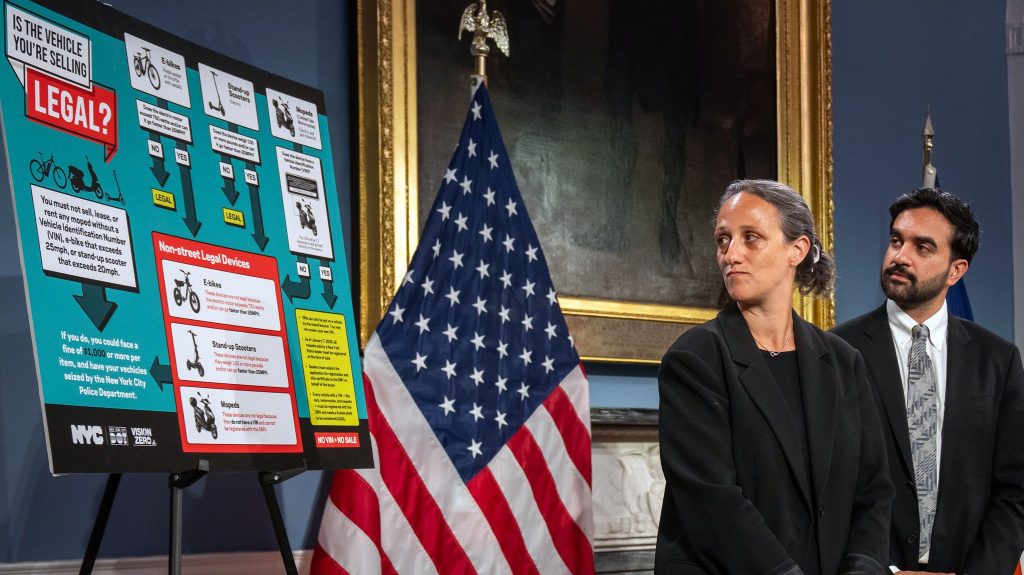
When it comes to illegal e-motos, the group recommends creating a city-funded trade-in program so that New Yorkers who unknowingly purchased illegal e-motos from online sellers can swap them out for a safe alternative. The group also wants the city to use roadside speed testing devices, like the ones used in bike-friendly European cities, to enforce against illegal vehicles on the streets. Council Majority Leader and Transportation Chair Shaun Abreu (D-West Harlem) has said the Council is looking into the idea.
Transportation Commissioner Mike Flynn has assured e-bike enthusiasts that the administration understands the crucial role of the devices in New York City.
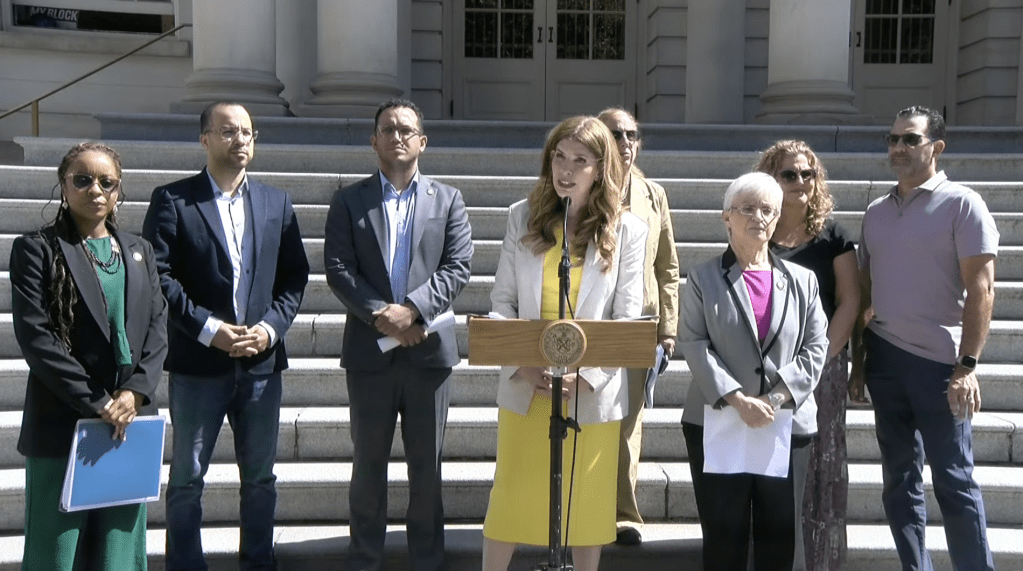
“Biking is one of the best ways to get around New York City, its affordable, convenient and one of the most sustainable ways to travel,” Flynn said at a press conference with the mayor on Wednesday. “Legal electric bikes and scooters have expanded those benefits even further, giving thousands of New Yorkers including families, older adults, delivery workers, and people who may not be able to ride a traditional bicycle the opportunity to choose a safe, efficient, affordable way to get where they need to go.”
The Mamdani administration has turned a corner from his predecessor’s antagonistic posture towards e-bikes and e-bike users in the city. Part of that is restarting street safety projects, like the McGuinness Boulevard road diet, that former Mayor Eric Adams stalled or watered down. The administration is also proposing ballot initiatives that would cut some of the redundant red tape involved in building out new bike lane projects.
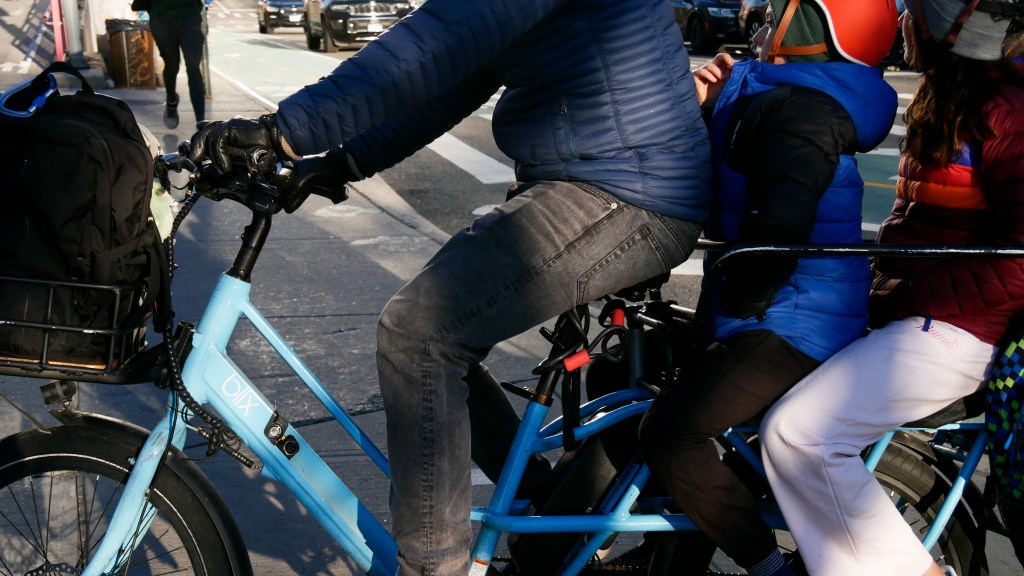
“The city’s focus on expanding micromobility infrastructure is exactly right, and it’s essential to giving people a non-car alternative,” said Joe Cohen, CEO of Infinite Machine, which sells high-end scooters that are bike lane-legal as well as electric mopeds. “We are especially encouraged by the proposed bike boulevards and the updates to the city’s charter, which would speed up implementation of bike lanes and charging infrastructure, and allow more people to experience the joy of two-wheeled mobility.”
But there are still some blind spots from this bike-friendly administration, the group said.
Specifically, industry groups want the mayor to offer tax benefits to employers who incentivize micromobility use. This could look like expanding pre-tax transportation benefits so employees can use those untaxed dollars to purchase a bike or an e-bike. The city can also force large companies with hundreds of employees to conduct surveys identifying the commute patterns of their employees to set targets to decrease car driving.
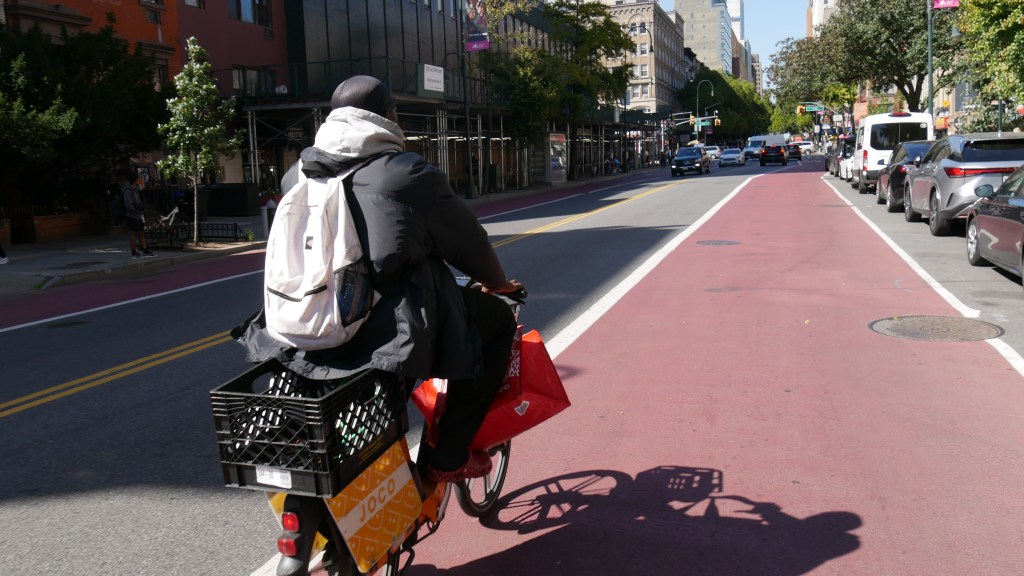
The report card also calls on the city to revisit the so-called “safe delivery device access law,” which was passed last year as part of a package of industry reform bills. The original legislation intended to force app-companies like Uber and DoorDash to provide their workforces with safe e-bikes. But the eventual law allowed companies to get out of the requirement by funding e-bike trade-in programs or subsidizing membership in an e-bike-share or equipment service like Whizz or JOCO.
The coalition wants to see bike parking and e-bike charging infrastructure in more new construction. The group suggests offering density bonuses to developers who add those commuting “amenities” to building plans. They want the administration to consider subsidizing micromobility freight vehicles, like electric cargo bikes, for small businesses
And lastly, the group wants New York to follow other U.S. cities like Denver and Atlanta that have e-bike subsidies — after the state balked at funding a proposal to do just that.
The e-bike incentive program, designed by the advocacy group Bike New York, would have given e-bike subsidies people living in areas underserved by the city’s vast, but inconsistent subway and bus network. The state already has tax incentives and rebate programs for those who purchase electric cars.
Friday’s report may have come from people who stand to profit off its recommendations, but the industry’s products have a constituency among New Yorkers.
Alex Duncan, who runs the r/MicromobilityNYC community on Reddit under the sobriquet “Miser,” agreed that there’s more Mamdani and the city can do to encourage micromobility use as a replacement for car trips.
“There’s always more the city can do,” said Duncan. “E-bike subsidies have shown to be wildly popular. We were giving tons of money for people to get into electric cars. By every metric an e-bike is tons better for the city than an electric car. It makes sense for the planet and the city to subsidize that cost.”

Streetsblog has migrated to a new comment system. New commenters can register directly in the comments section of any article. Returning commenters: your previous comments and display name have been preserved, but you'll need to reclaim your account by clicking "Forgot your password?" on the sign-in form, entering your email, and following the verification link to set a new password — this is required because passwords could not be carried over during the migration. For questions, contact tips@streetsblog.org.