Promising E-Bike Subsidy Pilot Is Denied Funding By State Agency
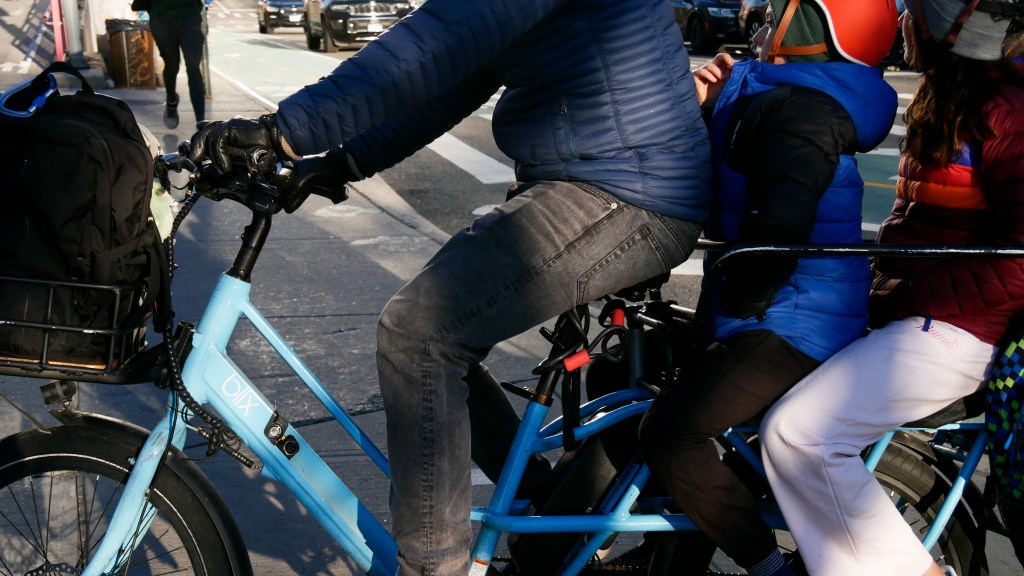
A key state agency has refused to fund a promising program that helps New Yorkers in transit deserts buy e-bikes, Streetsblog has learned, dealing a blow to the effort to create sustainable commutes for low-income New Yorkers.
The decision by the New York State Research and Development Authority came after the same agency had given Bike New York a planning grant to develop an e-bike subsidy program in March 2025 — only to deny the non-profit funding for actual implementation.
Bike New York spent a year creating a plan, but now has no money to implement it. This highlights a crucial problem with the micromobility landscape in New York City. State and city officials often say they support more electric micromobility, bike infrastructure, and charging infrastructure, but the reality is pilot programs don’t lead to widespread change.
One industry player says this amounts to a leadership vacuum.
“I continue to be struck by the asymmetry between rhetoric and reality,” said Shabazz Stuart, the founder and CEO of Oonee, which has applied for both city and state funding initiatives to varying success. Recently DOT passed over his Brooklyn-based company to build secure bike parking, despite a successful pilot. (Oonee has filed a formal protest.)
“All of these programs need a champion in government, a political champion who can drive the issue forward. What is happening across the board in micromobility is that I don’t think anyone would be able to name one.”
Micromobility, specifically e-bikes, has become a political third rail in New York City since the delivery industry began its exponential growth in 2020, adding tens of thousands of e-bike-using workers to the city’s streets. Even Mayor Mamdani, who on the campaign trail said he would support micromobility, is continuing former-mayor Adams’s policy of giving e-bike riders criminal summonses for breaking traffic laws that would have typically resulted in a traffic ticket.
Some state lawmakers have been trying to push NYSERDA to fund an e-bike rebate program with some of the many millions dedicated to electric car subsidies. State Sen. Julia Salazar (D-Bushwick) and Assembly Member Robert Carroll (D-Windsor Terrace) have a bill that would direct NYSERDA to “develop a ride clean rebate program to allow [e-bikes] and electric scooters to be eligible for a 50-percent rebate up to $1,100.”
This is not the first time that NYSERDA has overlooked an e-bike subsidy program. Back in 2022, the Equitable Commute Project was selected as a finalist for the agency’s “Clean Transportation Prize,” to fund an e-bike subsidy, but it was not selected for implementation funding.
Still, Bike New York was hopeful that its program could “proactively combat prevailing public negativity” around e-bikes, and prove their worth as an affordable car-replacement for those living in areas underserved by the city’s vast, but inconsistent, subway and bus network.
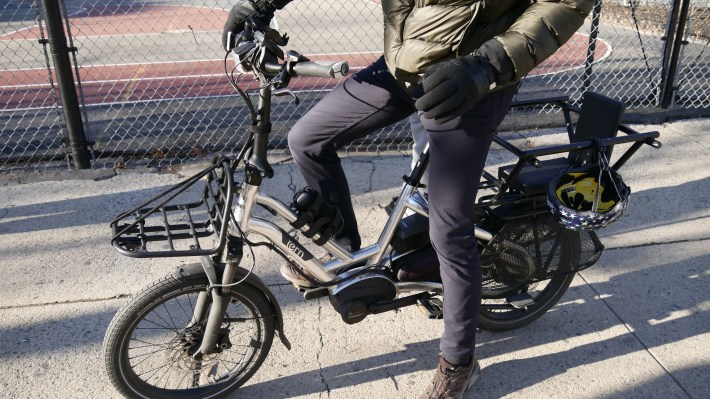
“We believe that safe, legal e-bikes have the power to transform transportation and recreation for New Yorkers across the five boroughs and beyond,” said Ken Podziba, president and CEO of Bike New York.
“The program we’ve developed is an unprecedented, turnkey solution for NYC to put e-bike education first while significantly lowering the cost barrier to ownership for thousands of New Yorkers.”
On Wednesday, Bike New York released its plan to the public, “Ride Clean New York.” Bike New York was one of 29 organizations to receive the $100,000 planning grant, which did not guarantee implementation funding. Bike New York’s thorough plan took case studies from other states’ successful e-bike subsidies and created something targeted to New York’s transit needs.
“Grants always come with uncertainty, and we understand that NYSERDA could only fund a handful of projects throughout the entire state,” said Dan Suraci, a principal at Urban Cycling Solutions, who put together the report for Bike New York. “At the end of the day we worked with the city, Con-Ed, elected officials, bike shops, and consumers to design a practical, education-forward incentive program that expands access to safe, legal ebikes for all New Yorkers.”
Bike New York’s program, as outlined in the report, draws inspiration from successful e-bike subsidies in other cities, like Denver. NYSERDA also recently funded an upstate-based program, which helped a nanny living in the suburbs afford an e-bike, which she uses to get to her work that is 2 miles away but not accessible by transit.
Bike New York’s planned program would provide a little over 4,000 point-of-sale subsidies to New Yorkers purchasing Class 1 pedal assist e-bikes from local bike shops in the five boroughs. The program would give out $500 to 2,348 city residents with priority given to low-transit density districts (defined by DOT’s Citywide Mobility Survey zones). In addition Bike New York would give out 1,660 $1,100 credits to low-income New Yorkers. The organization will chose winners by lottery.
The total budget for Bike New York’s program is $3.9 million. The NYSERDA grant would have covered $3 million with Bike New York kicking in the rest for “the program’s education, administration and operational components.” Bike New York already has an education network and pop-up locations in local parks.
A NYSERDA spokesperson said the implementation awards would be announced in 2026 and that all proposals were evaluated on the same criteria.
Although NYSERDA did not select Bike New York for the program, Suraci is hopeful he can still find the cash to move forward. The group’s “vetted solution” had letters of support from three Borough Presidents, the previous administration, and ConEdison.
“The Ride Clean program is a vetted solution that’s ready to launch, and we look forward to collaborating with NYSERDA, the new administration, and other stakeholders as we explore alternative avenues to make it happen,” he said.

Read More:
Streetsblog has migrated to a new comment system. New commenters can register directly in the comments section of any article. Returning commenters: your previous comments and display name have been preserved, but you'll need to reclaim your account by clicking "Forgot your password?" on the sign-in form, entering your email, and following the verification link to set a new password — this is required because passwords could not be carried over during the migration. For questions, contact tips@streetsblog.org.