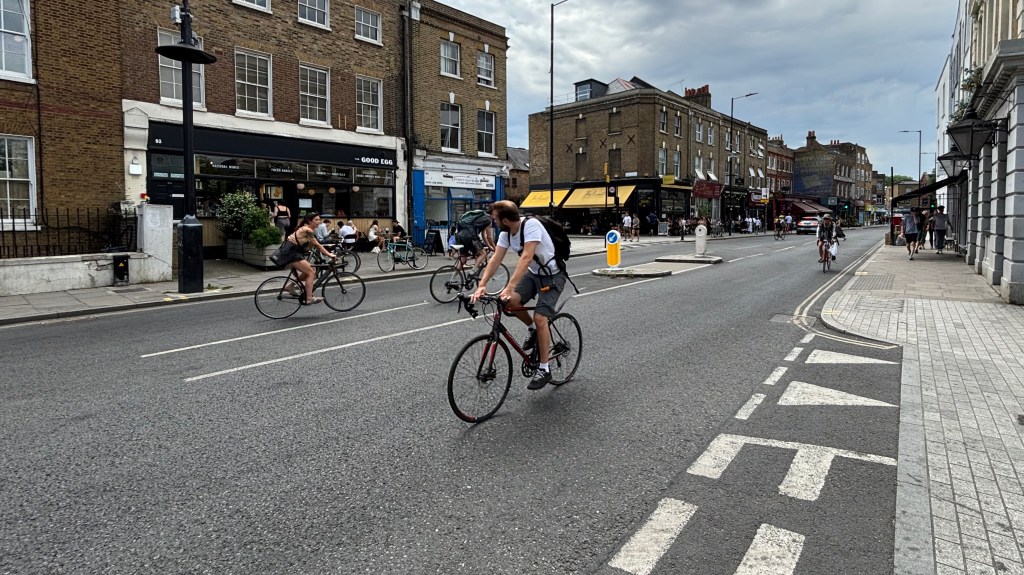
Dead Cyclist’s Best Friend Demands Action Against Illegal Vehicles on City Streets
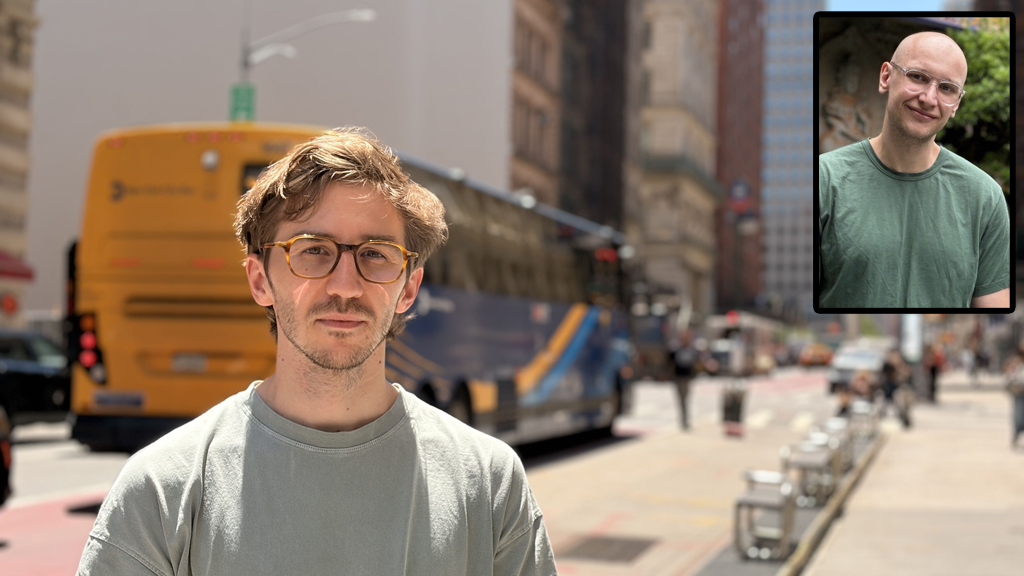
Dmytro Stechenko was not just a stand-up guy, but had a personal morality that he simply did not violate. He didn’t litter. He didn’t jaywalk. He wouldn’t so much as sit in an accessible seat on a subway, even if no one was around.
So it’s the cruelest irony that the Ukraine-born cyclist was killed on the Queensboro Bridge on May 28 in a collision with the rider of an illegal scooter who reportedly made a risky passing maneuver, the victim’s best friend told Streetsblog.
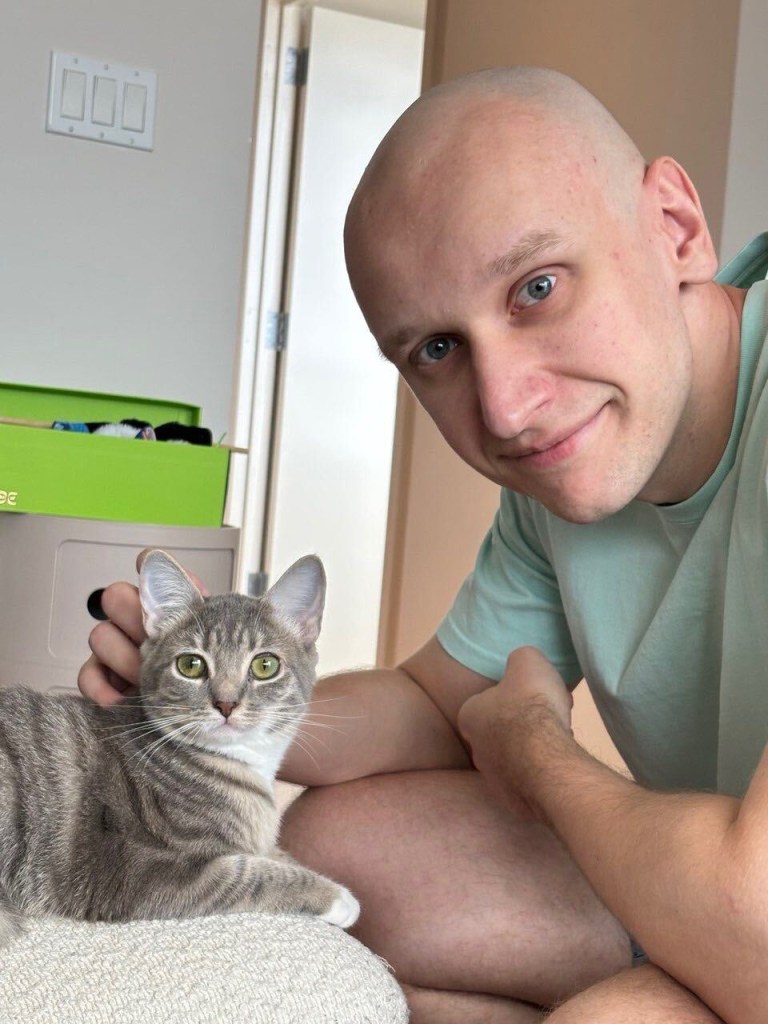
“It just feels super unfair that somebody who would never break the law, even a tiny one, would be killed in such a [way],” said Alex Pawlowski, the best friend of 35-year-old cyclist, reflecting on Stechenko’s way of life and connecting it to the need for Mayor Mamdani to not wait for another death to crack down on illegal high-powered electric two-wheelers and improve existing bike infrastructure.
“I want the politicians to know that we don’t have to wait for the next death to happen in order to create the impetus to change,” he said.
Pawlowski and Stechenko met 16 years ago at the National Technical University of Ukraine in Kyiv, where both men studied computer science. The two were reunited after both moved to the United States and would often ride endurance laps in Central Park, a fitness hobby the pair picked up in their 30s.
In fact, the friends were together the morning before the May 28 crash, when scooter operator Francis Delvalle, 39, crashed his illegal electric scooter into Stechenko, killing them both.
The first time Pawlowski rode on the Queensboro Bridge, in fact, was the day of his friend’s death, after a mutual friend called him about the crash. Pawlowski said he always avoided the East River bridges because he felt they were too narrow and unsafe. Now he just wants to make sure no one else has to lose a friend in the same way.
“We always know that something is unsafe, but we rationalize it [because] nothing has happened yet,” he said. “But it will eventually happen. And when it happens, it takes away somebody’s brother, husband, someone’s friend, their best friend of 16 years. It’s not like better street design is some kind of mystery. We have a lot of experience in urbanism, there are people who can help. We just have to take their advice and actually implement those changes.”
In fact, the Queensboro Bridge recently received major safety improvements. Last year, after inexplicable delays and years of advocacy about the danger, the Department of Transportation finally opened up one lane of the bridge’s so-called “South Outer Roadway” to pedestrians so that cyclists and other legal electric two-wheelers no longer had to dodge walkers on the narrow path.
But DOT’s efforts to protect roadways with evidence-based redesigns must endure a gauntlet of theatric community board meetings and navigate a broken political system that allows powerful New Yorkers and influential businesses to delay, dilute and cancel those redesigns.
Even when DOT overcomes these hurdles, however, it still takes too long to implement redesigns. Indeed, the road markings on the Queensboro Bridge have not yet been updated, creating a confusing situation for those using the bridge path.
“To be fair, the Queensboro Bridge, the markings were confusing,” said Pawlowski. “When I was riding there for the first time on that day, I was also a bit confused, because it was showing that I have to go the opposite direction that I was going.” He pointed out that while cyclists and pedestrians now each have their own lane, car drivers still enjoy seven lanes of traffic on the bridge.
Stechenko moved to New York around 2016, and was working as a software engineer at Meta when he died. Pawlowski followed him to the city in 2021. Cycling provided a way for the two to stay connected. “It was nice that he started cycling with me because it’s cool to have somebody to share your hobby with,” Pawlowski said. “Especially an old friend.”
When Pawlowski reached the crash scene on the morning of May 28, he was struck by the severe damage to his friend’s bike, especially compared to Delvalle’s illegal scooter. “This thing was not even damaged,” he said. “I was looking at the scooter and it just seemed completely pristine.” The only exception was a tiny aluminum clamp that allowed the scooter to fold in half.
By contrast, Stechenko’s carbon-fiber road bike was cracked in half. The bike was “outclassed” by the heavy scooter, Pawlowski said.
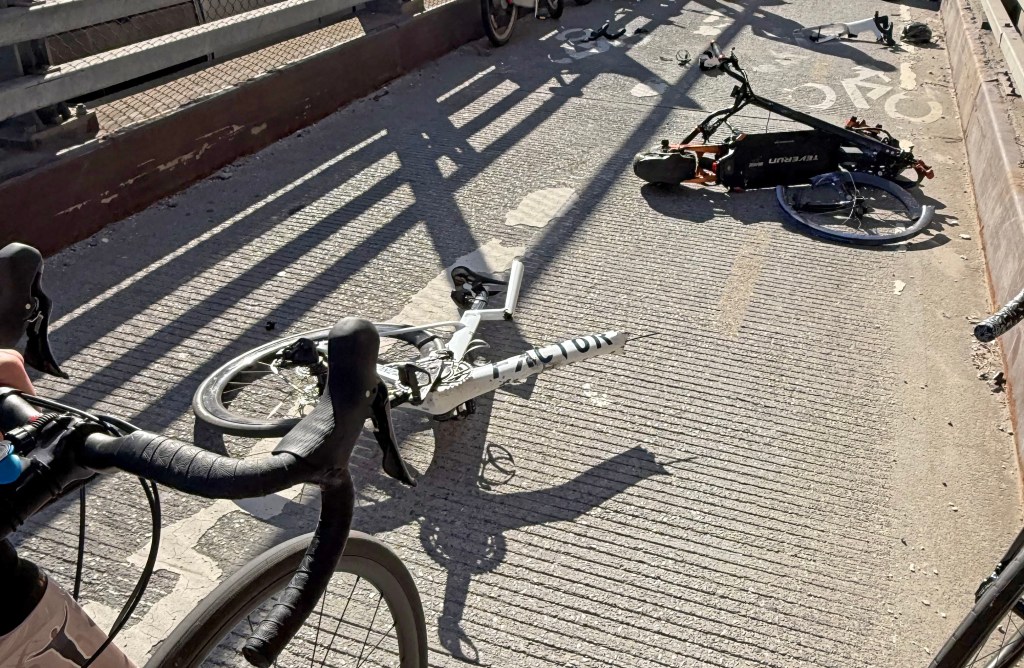
This type of damage may not have been possible if both men were riding street-legal devices. After the crash, Streetsblog identified the scooter as a Blade GT II by the Chinese brand Teverun. Thanks to its 4900W motor, the vehicle can reach 53 mph in under four seconds. While the city requires electric bikes to top out at 750W, the law is less clear for scooters. But the city still bans scooters that are capable of exceeding 20 mph.
It’s unclear how fast Delvalle was going, but the debris caused by the crash and the fact that both men died while wearing protective helmets clearly suggests a high-speed collision. Pawlowski blamed the sheer power and torque of the device under Delvalle’s feet.
“We live in a dopamine-fueled environment,” he said. “People are seeking dopamine from anything, just like phones, and I think that type of instant acceleration is another source that can, over time, distort your sense of risk.”
He continued: “The idea that you can overtake anything, it’s just there, this acceleration, which goes to the wattage rating of the motor. If the motor was less than 750 watts, it would not be capable of that much acceleration. But if it’s multiple kilowatts of power, it’s instant torque.”
It is currently illegal to operate this type of scooter on city streets and bike paths, but it is not illegal to buy one. That means online retailers can continue to market and sell thousands of street-illegal e-scooters and e-bikes to New Yorkers. Local brick-and-mortar stores dedicated to these illegal vehicles have popped up, too.
Pawlowski wants the city to enforce existing laws and take a clue from Europe, where many cities equip law enforcement personnel with specialized devices known as dynamometers that measure the power of electric scooters and bikes in order to determine which are legal — and which are not.
“We have to start enforcing [the regulations],” said Pawlowski. “Something like in the EU where they take the scooters and they test the top speed. Something like that needs to happen. New York is a busy city, people are rushing everywhere so probably that somewhat partially explains it, but I think it’s unreasonable to expect culture to change. That’s why we don’t live in a utopia — you have to make bad behaviors difficult to do.”
State Sen. Kristen Gonzalez (D-Long Island City) represents the neighborhood where Stechenko lived and the bridge on which he died. She told Streetsblog that she is drafting legislation to close this loophole and prevent future deaths like Stechenko’s, which she described as “devastating.”
“It’s clear we need reform around the sale of these dangerous products,” she said in a statement. “When these products are advertised it needs to be clear they are not street safe and there needs to be transparency on the risks of using them. I am actively working on legislation at the state level that would keep dangerous devices off of our streets and address enforcement at the point of sale.”
City Hall did not respond to a request for comment on Pawlowski’s call to action.

Read More:

Streetsblog has migrated to a new comment system. New commenters can register directly in the comments section of any article. Returning commenters: your previous comments and display name have been preserved, but you'll need to reclaim your account by clicking "Forgot your password?" on the sign-in form, entering your email, and following the verification link to set a new password — this is required because passwords could not be carried over during the migration. For questions, contact tips@streetsblog.org.