Mamdani’s ‘COGE’ Panel Sets Its Sights on Anti-Safety ‘Major Transportation Projects’ Law
Mayor Mamdani’s charter revision commission will look into ways to change a 17-year-old provision added to the city charter by anti-bike politicians to slow down the installation of life-saving street redesigns, City Hall revealed on Thursday.
The city’s Vision Zero street safety upgrades have reduced pedestrian fatalities by as much as 34 percent in some neighborhoods, but requirements enacted by bike-skeptical City Council members in 2009 gum up the Department of Transportation’s efforts to expand such life-saving benefits, officials from the Committee on Government Efficiency — which everyone calls COGE — said in a new report.
“Crashes are preventable, and sensible safety-focused street redesigns can have an outsized impact on safety,” the commissioners wrote. “Yet, some of these street redesign initiatives are subject to mandated delays that slow down the projects and, in so doing, risk lives and injuries.”
The Bloomberg-era law required extensive outreach and outside review for even the most simple bike and bus lane projects, despite reams of evidence that they reduce crash injuries and death. The commission plans to hold public hearings across the city this summer before putting its proposed changes to the city charter on the November ballot as a referendum.
COGE collected testimony from street safety advocates for its report and is exploring ways to “streamline” public review while retaining community input, as well as whether inter-agency reviews should only apply when there are environmental impacts or “other indicia of a substantial project,” the report said. The panel will also consider “reviewing” the definition of major transportation projects “to avoid a one-size-fits-all approach that delays very minor projects,” officials said.
Advocates praised the potential reforms, calling on the city to swiftly clear the way for Mamdani’s agenda to make the streets of New York into the “envy of the world.”
“Right now, too many New Yorkers are stuck navigating dangerous streets or sitting in crawling traffic while critical safety and transportation projects are delayed by redundant processes and red tape,” said Ben Furnas, executive director of Transportation Alternatives. “We look forward to working with the commissioners to advance ambitious changes that can save lives and make New York City streets the envy of the world.”
The initial 2009 law required DOT to consult with the Police Department, the Fire Department, the Department of Small Business Services and and the Mayor’s Office for People with Disabilities for so-called “major transportation projects” — defined as any street redesign, including bike and bus lanes, that exceeds 1,000 feet or three blocks. The law further required DOT to provide a certification for each of those consultations.
The City Council has added even more layers of reviews over the years, most recently with a provision sponsored by Council Member Joann Ariola (R-Queens) to require DOT to not only get the sign-off from the Fire Department headquarters, but also written confirmation that officials solicited feedback from “any affected firehouse” in the area of a street revamp.
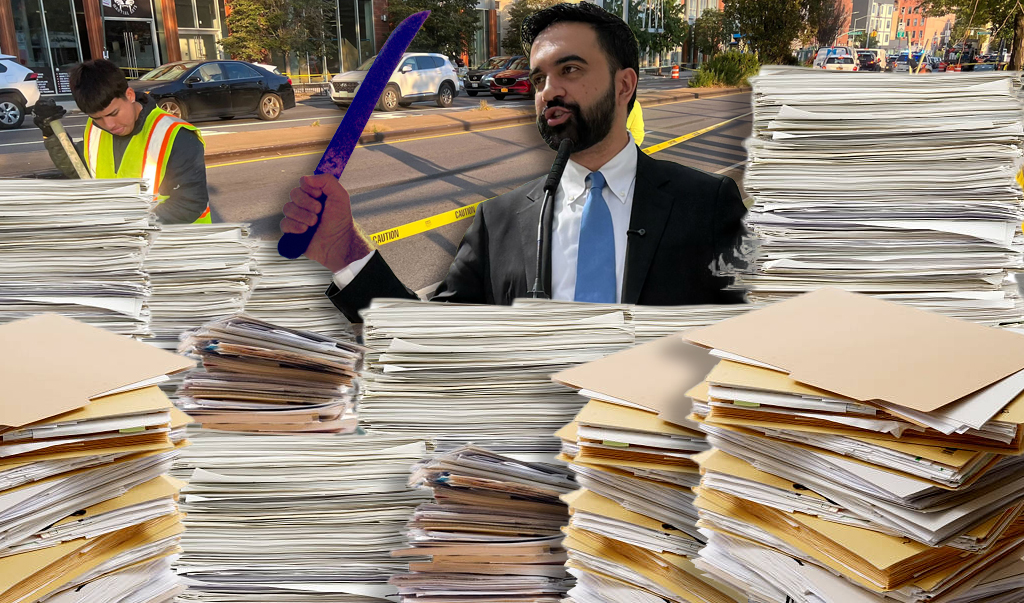
The consultation requirements have added mountains of unnecessary paperwork and provided a platform for bike lane opponents — most notoriously some FDNY brass — to rail against DOT proposals, despite not being transportation engineers or urban planners, and often in defiance of their own agency’s leadership. The rules also gave easy fodder to a Queens judge to stall a protected bike lane in Astoria last year after opponents sued the city.
“In practice, these requirements delay critical safety upgrades, leading to fewer street safety redesigns, significant staff time used, and legal challenges that can cause substantial delays to important safety upgrades,” the COGE commissioners said. “So long as duplicative, burdensome rules are on the books, street safety projects that save lives will be delayed—an inefficiency that falls most squarely on our roads’ most vulnerable users.”
One Council member who has long been critical of the city’s bike lane bureaucracy praised the mayor for looking at ways to speed up projects — but urged City Hall to work with the Council on legislation rather than put the reforms to a vote from the general public.
“I’m deeply committed to the Department of Transportation being able to expeditiously complete street safety projects and any and all reforms that ensure we are delivering bolder street safety projects more quickly for our communities is welcomed,” said Council Member Lincoln Restler (D-Brooklyn). “I would offer a note of caution that many of these fixes can be done through local law, which is to say many of these actions can be done through the work of the City Council.”
Restler passed a law in 2023, repealing an infamous 2011 addition to the major transportation law by late Council Member Lew Fiddler, that singled out bike lanes for a special 90-day advance notice requirement to community boards.
The legislator said that the Council could undo many of the reviews by passing bills like that, without a referendum to the City Charter, the city’s constitution.
Charter review commissions can go further than legislation by making changes that alter the fundamental balance of power in city government, such as as getting rid of community board or Council input entirely – although COGE is proposing neither of those.
Mamdani appointed his commission in May, a move that neutered a prior panel that his predecessor Eric Adams set up in the 11th hour of his term, reportedly to stymie his successor.
In another part of COGE’s report, the panel revealed it will look into reforms to the city’s outdoor dining program, which shrank dramatically from up to 8,000 restaurants during the pandemic-era program to just 1,405 fully licensed establishment as of last month, under the more restrictive rules enacted by the Mayor Eric Adams administration and the City Council under Speaker Adrienne Adams in 2023.
The commission will explore eliminating some of the mandated public hearings and notices for licenses, and reconsidering the city’s revocable consent structure that charges restaurants rent to use the sidewalk or roadway space for outdoor dining.
Hizzoner appointed Patrick Gaspard, a former Obama administration official, to chair the 14-person brain trust, which took on the task of developing ways to “modernize City government, improve service delivery, and strengthen accountability to New Yorkers.”
“This Commission is immensely grateful to the more than 650 New Yorkers who came out to testify or submit written comments, and we want even more of them in the room as we head into our next round of hearings,” Gaspard said in a statement. “As this Commission considers reforms to put forth on the ballot in November, it will be guided by the shared goal of unlocking this city’s potential to deliver a more affordable, safe, and dignified life for all who call it home.”
Editor’s note (Thursday, July 2, at 12:10 p.m.): This story has been updated to include more information from the COGE report after City Hall released the full document.

Read More:
Streetsblog has migrated to a new comment system. New commenters can register directly in the comments section of any article. Returning commenters: your previous comments and display name have been preserved, but you'll need to reclaim your account by clicking "Forgot your password?" on the sign-in form, entering your email, and following the verification link to set a new password — this is required because passwords could not be carried over during the migration. For questions, contact tips@streetsblog.org.