Two-Pronged Approach: City Will Appeal Judge’s Block on Astoria Bike Lane But Also Address Her Concerns
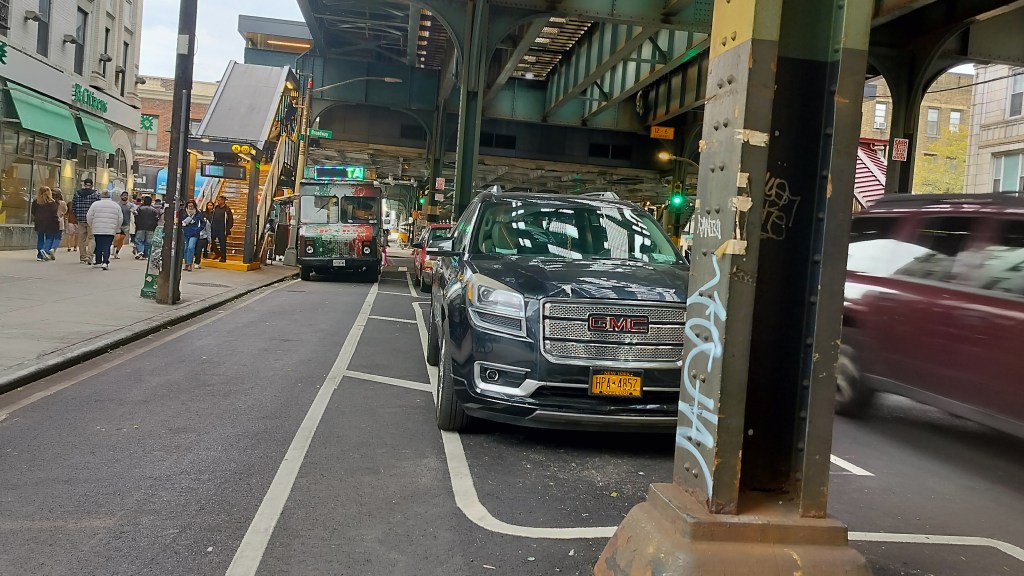

The city is prepping its appeal of a December court order to rip up Astoria’s 31st Street protected bike lane — but will simultaneously push to get the redesign installed this spring by completing a minor bureaucratic step that the Adams administration failed to complete during the project’s rollout, Streetsblog has learned.
Queens Supreme Court Judge Cheree Buggs took the unprecedented step last month of ordering the Department of Transportation to halt the project, which was already partially installed. Buggs’s flawed ruling criticized the Adams DOT for failing to get certification from FDNY and other agencies as required under the city’s “major transportation project” law, but she also questioned the efficacy of the project itself, even though court precedent grants DOT the power to redesign city streets as it sees fit.
Now, however, DOT officials believe the fastest way to get the project installed is to simply carry out the process of getting the certified sign-off from bureaucrats at the FDNY and other agencies, and then finish up installation when the weather allows in the spring. At the same time, the agency will file a
“notice of appeal” on Wednesday indicating that it may still want to challenge the judge’s ruling on the merits.
“Thirty-first Street is one of the most dangerous corridors in Queens, and we must act with urgency to make it safer,” DOT Commissioner Mike Flynn said in a statement. “We are beginning the mandatory consultations and will issue the notices needed to restart the project, while also filing a notice of appeal of the court’s decision.”
DOT installed the protected bike lane on one side of 31st Street between Broadway and 30th Avenue last summer before a group of revanchist businesses sued, and Buggs halted all work. The full plan called for protected bike lanes on either side of the street between 36th and Newtown avenues.
The 31st Street corridor — which runs directly under the elevated N/W train — is one of the most dangerous roads in Queens, with 14 severe injuries or deaths and 139 total traffic injuries between 2019 and 2024, according to city figures.
A similar redesign of White Plains Road in the Bronx yielded a 41-percent drop in injuries to motor vehicle occupants and 10-percent decrease in overall injuries from traffic crashes, according to DOT.
“I love being in Astoria — walking through it, biking across it, and driving from one end to the other. But when I can, I avoid doing so on 31st Street because it isn’t safe for pedestrians, cyclists or drivers,” Mayor Mamdani said in a statement. “Enough is enough. My administration is restarting the 31st Street redesign because New Yorkers shouldn’t be forced to go out of their way because our roads are too dangerous.”
Groups of neighbors and business owners frequently sue the city to protest the installation of a bus or bike lane, but judges routinely rule in the city’s favor, citing state law that gives municipalities broad discretion over how to layout roads. Buggs’s ruling ignored that longstanding precedent, substituting the her own judgment for DOT’s broad statutory authority, legal observers said.
City law requires consultation with — not sign-off from — FDNY, the Department of Small Business Services and the Mayor’s Office for People with Disabilities, but DOT failed to get notarized certifications from those agencies, in alleged violation of a 2009 law passed by the City Council to gum up street redesign projects during the administration of Mayor Michael Bloomberg.
The DOT is also required to share those certifications with elected officials and give them an opportunity comment (in this case, the area’s elected officials support the project). FDNY must also consult with the impacted firehouses.
The DOT had undertaken the required consultation with the multiple agencies, but the agency did not provide the court with the actual signed certification of said consultation, so Buggs killed the project entirely. (It is unclear why the Adams DOT did not obtain or provide those certifications, which have been required by city law for years.)
One legal expert said he understands why the city is going about the appeal process this way.
“The fact that they’re appealing has little to do with 31st Street,” said Brandon Chamberlin, a lawyer who specializes in bike-related cases. “Practically speaking they’re accepting defeat on 31st Street by going back and doing [the certification requirement]. But they feel they need to appeal to get the Appellate Court to correct the errors of laws so those errors they don’t influence other judges or embolden opponents of other projects.”
Getting the certification signatures should take about two months, according to a source familiar with the city’s deliberations, and by then, the weather will be warm enough to finish the job.
Reached for comment, Hartley Bernstein, attorney for the project’s opponents, declined to say whether his clients would sue DOT again if it moved forward with the project once it has the required certification.
“They certainly have the right to appeal the ruling, which they’ve now done, and they certainly have the option to restart the process in accordance with the court’s order, if that’s what they want to do,” Bernstein said.

Read More:
Streetsblog has migrated to a new comment system. New commenters can register directly in the comments section of any article. Returning commenters: your previous comments and display name have been preserved, but you'll need to reclaim your account by clicking "Forgot your password?" on the sign-in form, entering your email, and following the verification link to set a new password — this is required because passwords could not be carried over during the migration. For questions, contact tips@streetsblog.org.