MTA Demands Albany Deal With Toll Evasion Already
Drivers are getting away with hundreds of millions of dollars of unpaid tolls by simply ignoring mailed invoices from the MTA — and Albany legislators are allowing them to skirt the law.
A new MTA analysis of toll evasion found that the amount of money owed by drivers who don’t pay mailed toll invoices has more than doubled since 2022, from $147 million in unpaid tolls to nearly $350 million.
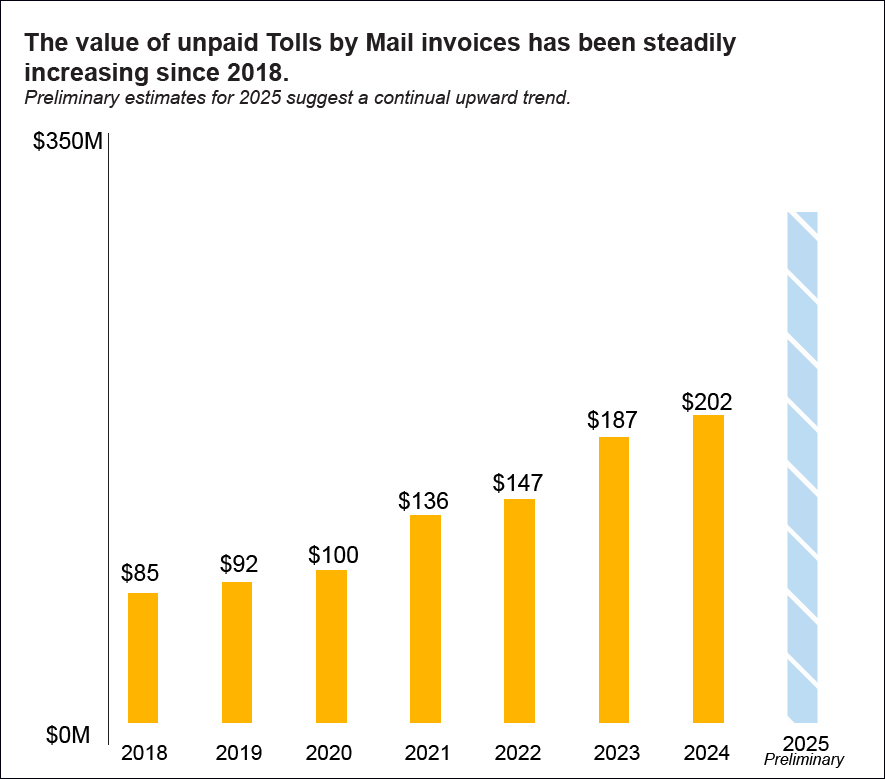
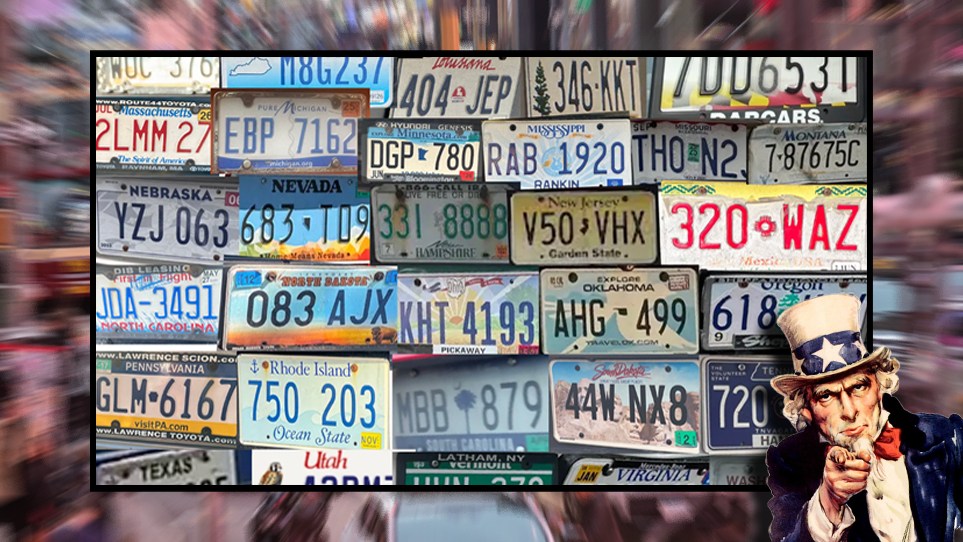
The MTA published the analysis as part of a “policy brief” that discussed potential solutions to the prevalent (but at least no-longer-growing) problem of ghost plates and the surging incidence of unpaid tolls-by-mail.
In short: The state agency wants legislators in Albany to provide it with far more latitude to deal with toll evasion.
The legislation
The agency specifically highlighted twin bills (S. 7905/A. 8860) that would allow a police officer to seize illegal license plate covers from scofflaws. Under the bills, sponsored by state Sen. Andrew Gounardes (D-Bay Ridge) and Assembly Member Landon Dais (D-Bronx), drivers would also get points on their license for being caught with an obstructed or defaced plate three times in a five-year period.
This would add to the MTA’s existing efforts, including high-profile stings to seize the cars of people who use covered or defaced plats, which the agency said is no longer a growing problem, though it still exists: Ghost plates deprived the MTA of $56 million in tolls last year. That’s slightly less than the year prior, and substantially less than 2021, but significantly higher than 2018.
Of course, the prolonged campaign to eliminate license plate fraud means little if drivers don’t actually pay their tolls.
To crack down on toll-by-mail evasion, the same legislation would allow the agency to place liens on scofflaws’ bank accounts or property until they pay up, and allow MTA Bridge and Tunnel police to enforce judgments — a responsibility that now falls on the New York City Sheriff.
The agency specifically wants to target drivers who collect three or more violation notices — which are only sent when a bill from the MTA hasn’t been paid in 90 days — in five years. The agency said these evaders are not “the everyday driver who accidentally misses a toll,” but rather chronic offenders who know exactly what they are doing.
The bills would also heighten the general penalty for toll evasion. One provision would classify toll evasion as theft of services, a Class A misdemeanor (subway and bus fare evasion are similarly classified).
Another provision would close a notorious loophole that allows people to re-register their vehicle if they have their registration suspended for unpaid tolls. Currently, a suspended registration connected to a certain vehicle is attached to a license plate, which can easily be swapped out. The Albany bills would instead attach the toll non-payment suspension to a vehicle identification number, and not allow for any re-registration connected to that VIN until the tolls were paid.
Albany resistance
The MTA could face a difficult battle in Albany, where legislators have demonstrated a middling interest in tackling toll fraud.
In 2024, Albany leaders and Gov. Hochul added anti-toll evasion provisions in the state budget after the MTA asked for them, including raising fines for defaced plates and giving police officers the “discretion” to let drivers remove plate coverings — but a number of the more-consequential proposals, such allowing the police to seize illegal plate covers, didn’t make it into the final budget. The changes that did pass have not eliminated the problem, which is why the MTA and advocates are agitating for lawmakers to pass laws that could solve the issue for good.
“Albany’s purported ‘crack-down’ on ghost plates in 2024 was deliberately riddled with loopholes that allow toll-evaders who get caught to easily avoid fines or punishment,” said Reinvent Albany Senior Policy Adviser Rachael Fauss. “They just have to show they have ‘fixed’ the problem and are now using a real, unmarred plate. This is like allowing bank robbers to walk free if they return the loot. Sen. Gounardes’s bill includes many useful changes to improve enforcement that Albany lawmakers should consider before the end of the session.”

Read More:
Streetsblog has migrated to a new comment system. New commenters can register directly in the comments section of any article. Returning commenters: your previous comments and display name have been preserved, but you'll need to reclaim your account by clicking "Forgot your password?" on the sign-in form, entering your email, and following the verification link to set a new password — this is required because passwords could not be carried over during the migration. For questions, contact tips@streetsblog.org.