Ossé and Hudson Ask Mamdani to ‘Return to Table’ On Bus Lanes They Claim to Support
With friends like these, who needs enemies.
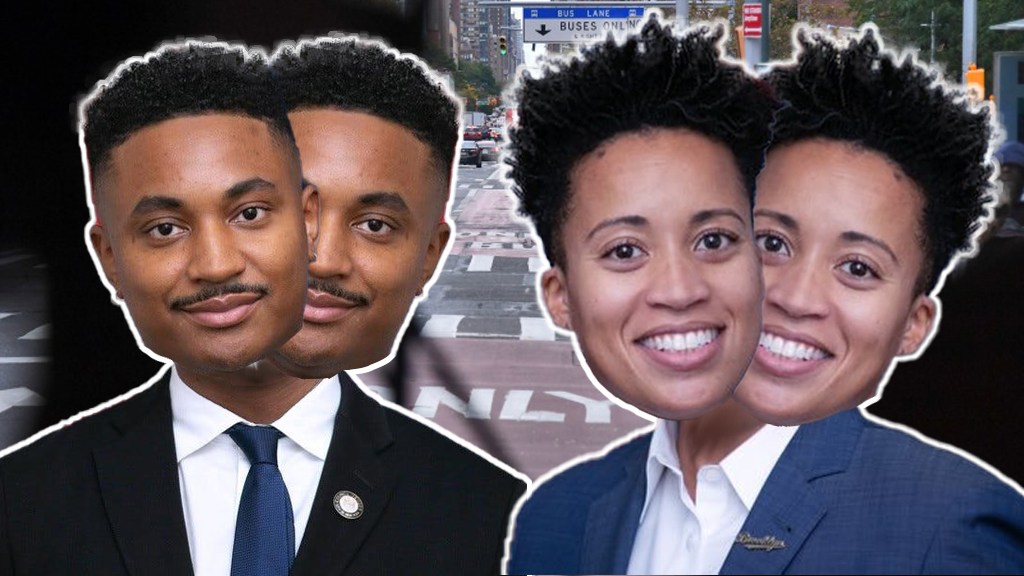
Brooklyn Council Members Chi Ossé and Crystal Hudson want the Mamdani administration to “return to the table” on its already in-the-works plans for bus lanes and protected bike lanes on Dekalb and Lafayette avenues — even as a spokesperson for one of the pols claimed their push to slow the project’s roll with more community outreach did not reflect a reversal of their past support for the changes.
Ossé and Hudson sent a letter to to the Department of Transportation on Tuesday with a litany of complaints about the street safety and bus improvement project that broke ground on Nov. 5, including what they said was a lack of outreach and critiques of the specific street redesign.
“Among the concerns raised by out community, residents have noted that the concrete barrier between Marcy and Patchen Avenues could create pedestrian crossing challenges and complicate school bus and Access-A-Ride pickups,” they wrote in the letter. “Residents are also unclear about the hours of operation for the alternating bus lane and why no consultation took place.”
The pair of Council members went on to ask that DOT give the critiques of the project “serious consideration” and that the agency sit down with Brooklyn Community Board 3 before the end of the year to discuss.
City Council members issuing demands for more community input on behalf of street redesign opponents is nothing new — except in this instance, Ossé and Hudson both gave the project a thumbs up after DOT presented the redesign to CB3 in September.
“I support DOT’s proposal to add bus lanes and protected bike lanes on DeKalb and Lafayette Avenues,” Hudson told Streetsblog at the time. Ossé was even more effusive in his praise.
“I commend Mayor Mamdani and the Department of Transportation for advancing the plan to deliver faster buses and protected bike lanes, particularly for prioritizing DeKalb and Lafayette Avenues,” he said at the time. “Slow, unreliable bus service on high-ridership routes, coupled with growing demand for safer cycling infrastructure on a key link between Downtown Brooklyn and Bushwick, makes this moment especially important.”
By the time Ossé and Hudson issued those statements, DOT had already informed Brooklyn Community Boards 2 and 3 of the exact contours of the plan — including the planned concrete barrier along the bike lane on Lafayette, which the pols now claim “could create crossing challenges,” as well as the bus lane hours they now claim are “unclear.”
The call for more community input contradicts the will of the voters, who elected Mayor Mamdani on an explicit pledge to speed up bus service, and then voted in favor of speeding up street improvement projects in a ballot referendum. Asking DOT to return to the community board in the middle of implementation is nothing more than a demand to stop the project in its tracks after the agency has spent at least two years planning the bus and bike improvements.
“New Yorkers have now repeatedly voted for fast buses,” said Danny Pearlstein, policy and communications director of the rider advocacy group Riders Alliance. “Riders are invested in seeing these projects delivered quickly. Community engagement is a piece of the puzzle but it can’t swallow the process or give everyone a veto.”
A rep for Ossé insisted the Council members still support the redesign.
“To be clear, our offices support the project — no one is backtracking here,” Ossé Press Secretary Saha Guerrero said in an email. “The letter sent by Council Members Ossé and Hudson requests that DOT provide further transparency and engage more effectively with our constituents. As we have stated in the past, our intention is to uplift community feedback. This is consistent with both our statement and recent letter.”
The two Central Brooklyn rep have not shied away from casting themselves safe street champions, as they did again in their letter by mentioning their support for the Bedford Avenue bike lane, which was ironically choked off for a year by an endless and invisible “community consultation process” that Ossé never shied away from criticizing.
Just two weeks ago, Ossé posted a video interview with Andrew Bennett, CEO of Black bicycling club Good Co. Bike Club, in which the two made a compelling case for more protected bike infrastructure in Black communities like the ones in Ossé’s district.
“If bike lanes aren’t in our communities and you’re asking us to bike down streets like Atlantic Avenue, that’s unsafe,” Bennett told Ossé, when the Council member asked him what could encourage more cycling in neighborhoods like his native Brownsville. “So if we have more protected bike lanes, that’s the next thing to focus on.”
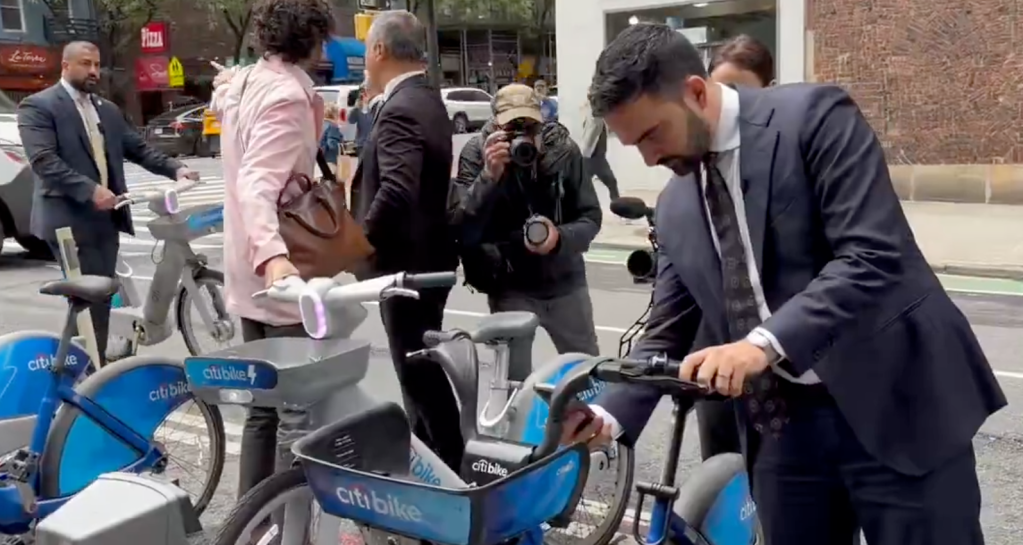
Hudson, for her part, has made several bike-based appearances with Mayor Mamdani this year, including a ride with the Bergen Bike Bus when the mayor announced plans for bike boulevards on Bergen and Dean streets in May, and a press conference on Monday where the mayor announced a price cap on Citi Bike e-bike rides.
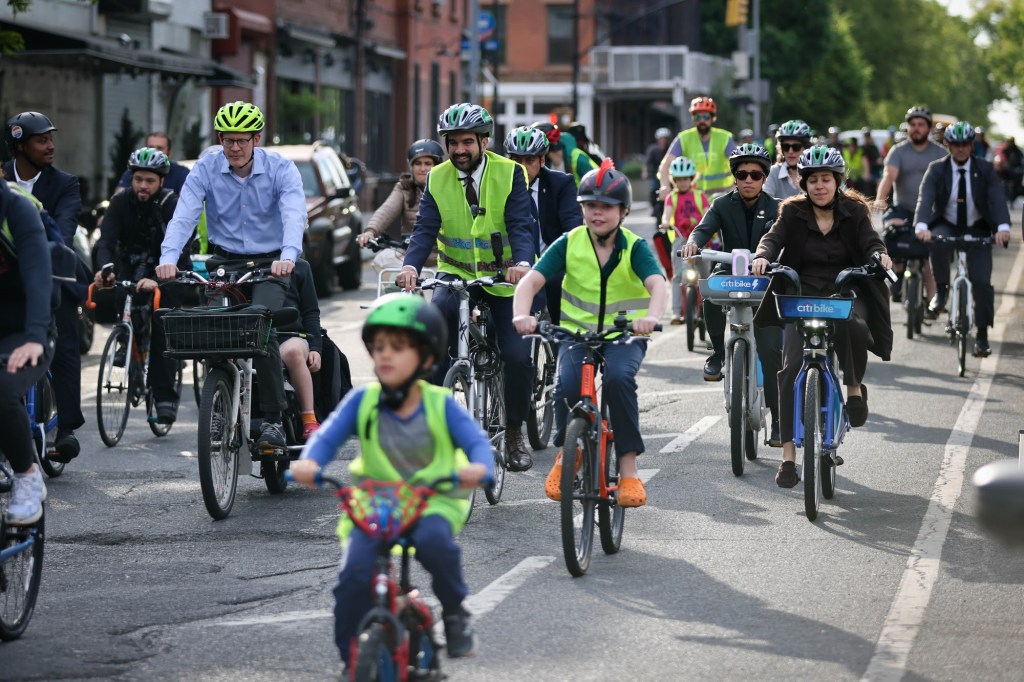
Ossé and Hudson’s unwillingness to make a positive case for the bus lane in their recent letter disappointed constituents who otherwise see the pair as allies of efforts to improve bus service and make cycling safer.
“I’m grateful to both these members for their support of safe street and transit projects in general, but I think they missed the mark on this,” said Alex Morano, the co-chair of the DSA Transit Working Group. “My understanding is that they’re still supportive of the project, but their statement wasn’t clear about that, and created confusion for people who both oppose and support it. I urge them both to stay the course because construction is always frustrating, but once this project is done people won’t be able to imagine these two streets without it.”
DOT and City Hall did not respond to a request for comment.