Desperately Needed Bus and Bike Lanes Are Coming to Brownstone Brooklyn
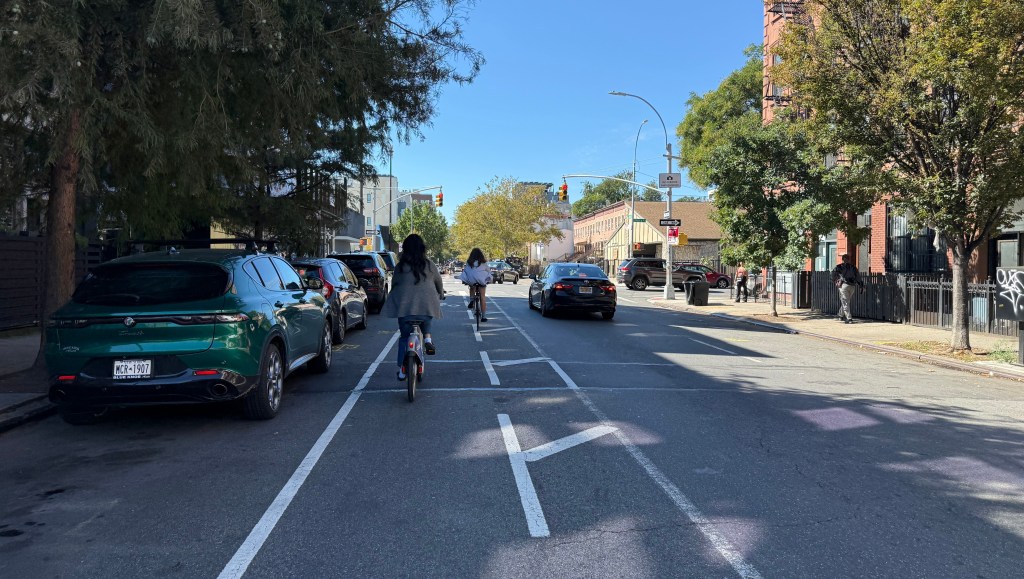
Bus and bike riders in Bedford-Stuyvesant and Clinton Hill are about to get much faster and safer rides, thanks to the Mamdani administration’s decision to place bus and bike lanes on two major crosstown streets that link the leafy Brooklyn neighborhoods.
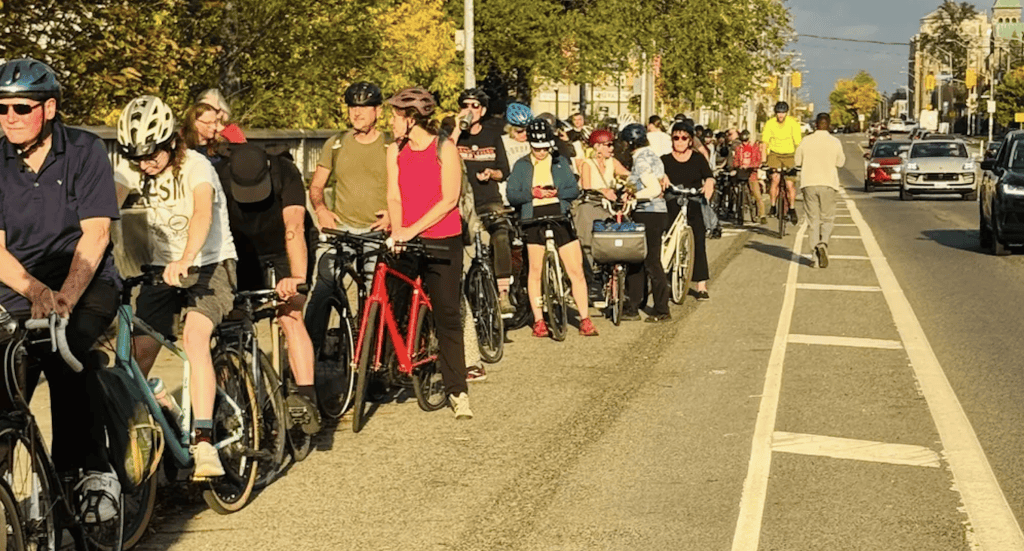
Beginning this fall, the Department of Transportation will install bus lanes and protected bike lanes along the length of Lafayette and DeKalb Avenues from Broadway to Flatbush Avenue. The project will speed up buses for the 18,000 daily riders on the B38 bus, and give cyclists a crucial east-west protected route through the borough.
The in-progress street redesigns will bring a combination of curbside bus lanes that operate from 7 a.m. to 7 p.m., a 24-hour offset bus lane, and parking-protected and barrier-protected bike lanes to almost six miles of city street.
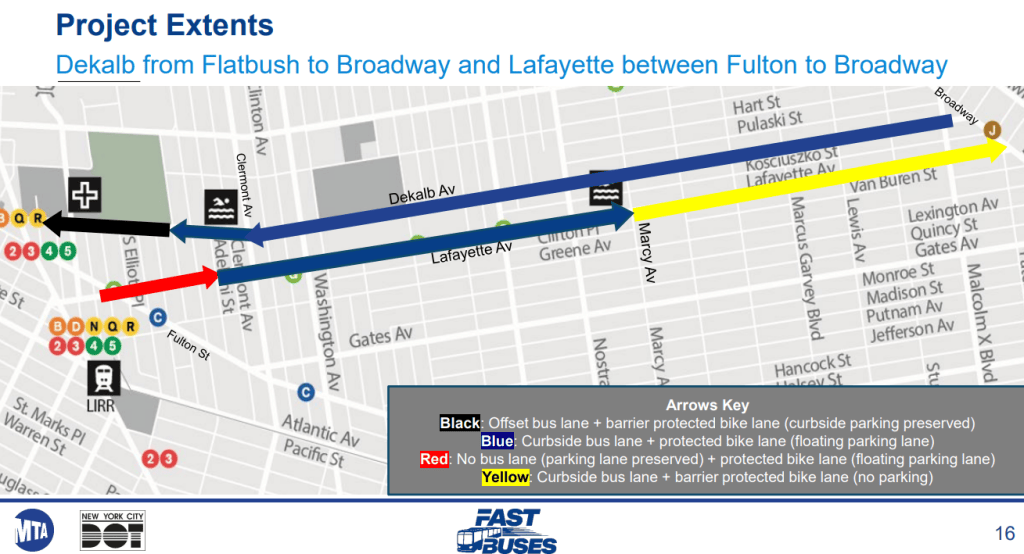
The specifics of the plan are as follows:
- On DeKalb Avenue between Malcolm X Boulevard and Cumberland Street, DOT will install a curbside bus lane and a parking-protected bike lane, with a general travel lane between those.
- On DeKalb Avenue between Cumberland Street and Flatbush Avenue, DOT will install an offset bus lane which will operate 24/7 and a barrier-protected bike lane, with a general travel lane between those.
- On Lafayette Avenue between Patchen Avenue and Marcy Avenue, DOT will install a curbside bus lane and a jersey barrier-protected bike lane, with a general travel lane between them, since the street is only 34-feet wide in this section compared to 40-feet wide everywhere else on the project.
- On Lafayette Avenue between Marcy Avenue and Classon Avenue, DOT will install a curbside bus lane and a parking protected bike lane, with a general travel lane between those.
- On Lafayette Avenue between Classon Avenue and Adelphi Street, DOT will install a curbside bus lane and a parking protected bike lane, with a general traffic lane between those.
- On Lafayette Avenue between Adelphi Street and Fulton Street, DOT will install a parking-protected bike lane.
- On Lafayette Avenue between Fulton Street and Ashland Place, DOT will install a barrier-protected bike lane.
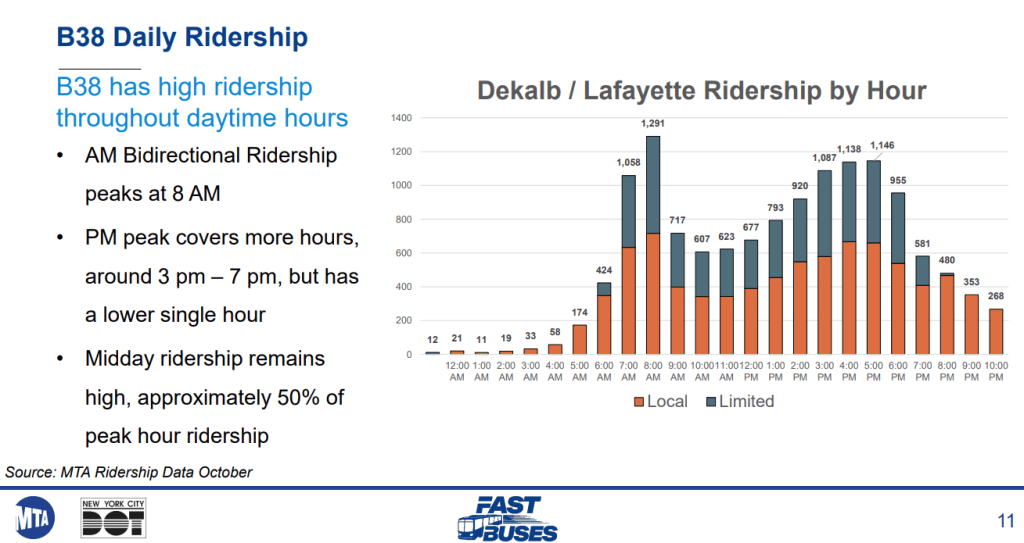
The curbside bus lanes will operate for just 12 hours on weekdays. The MTA’s ridership data show that ridership in both directions surges between 7 a.m. and 7 p.m. and slows down at other times of the day.
The bus and bike lanes will go a long way towards making DeKalb and Lafayette Avenues useful for everyone, regardless of their chosen mode of transportation. They will also reflect the actual demographic makeup of New Yorkers who live and use these streets.
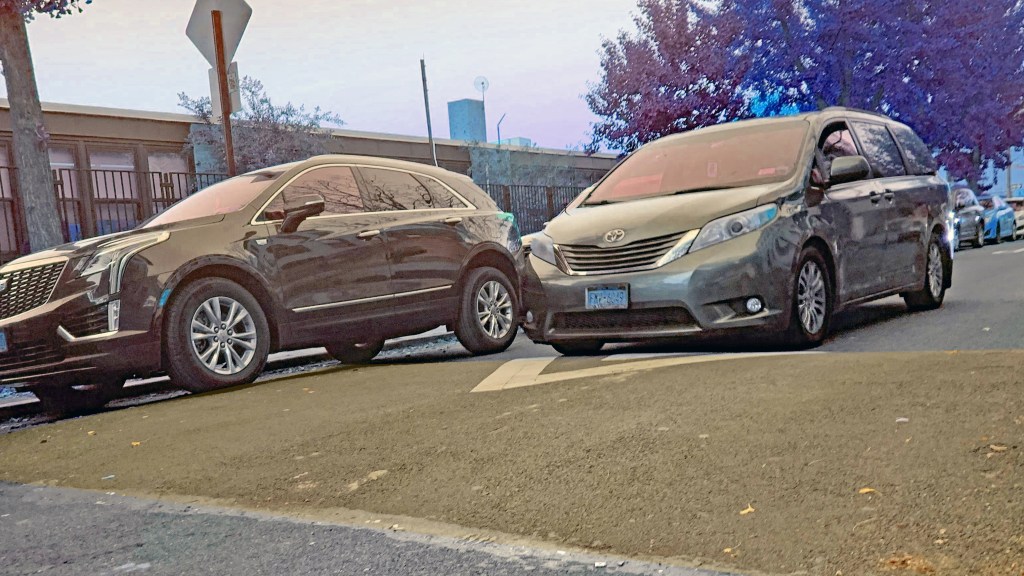
Right now, both avenues are cut up into curbside parking lanes, one or two motor vehicle lanes, an unprotected bike lane and a second curbside parking lane. At any time, rows of parked cars can easily block the unprotected bike lane, while the B38 must compete for space with drivers who double-park.
As a result, bus speeds on both avenues clock as low as four miles per hour in the morning and evening rush hours, when bus ridership peaks at intersections like Broadway, Nostrand Avenue and Vanderbilt Avenue. This is particularly notable because 80 percent of Brooklynites who live within a quarter-mile of the avenues take public transit or walk to work, while 62 percent of nearby households lack access to a car.
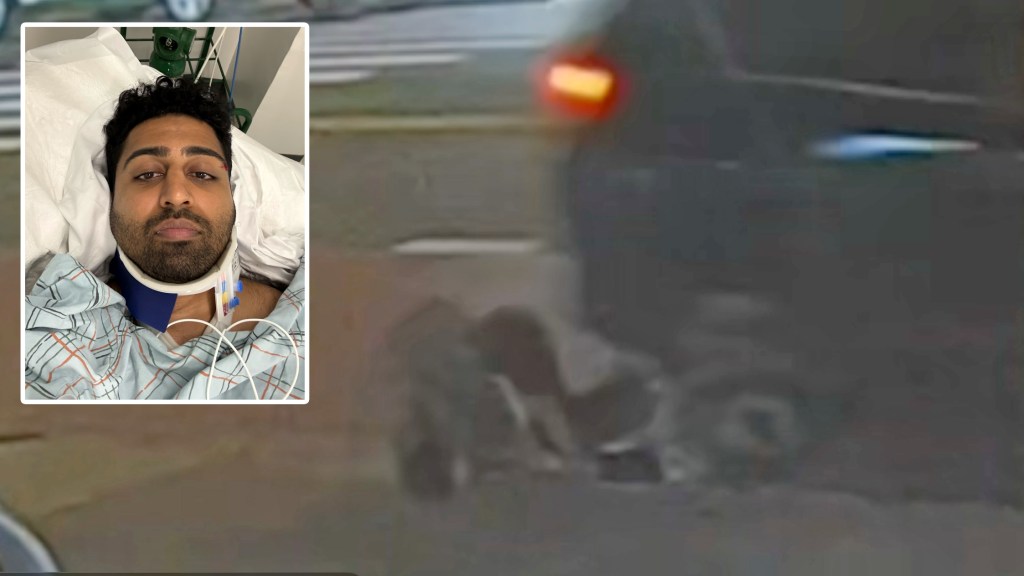
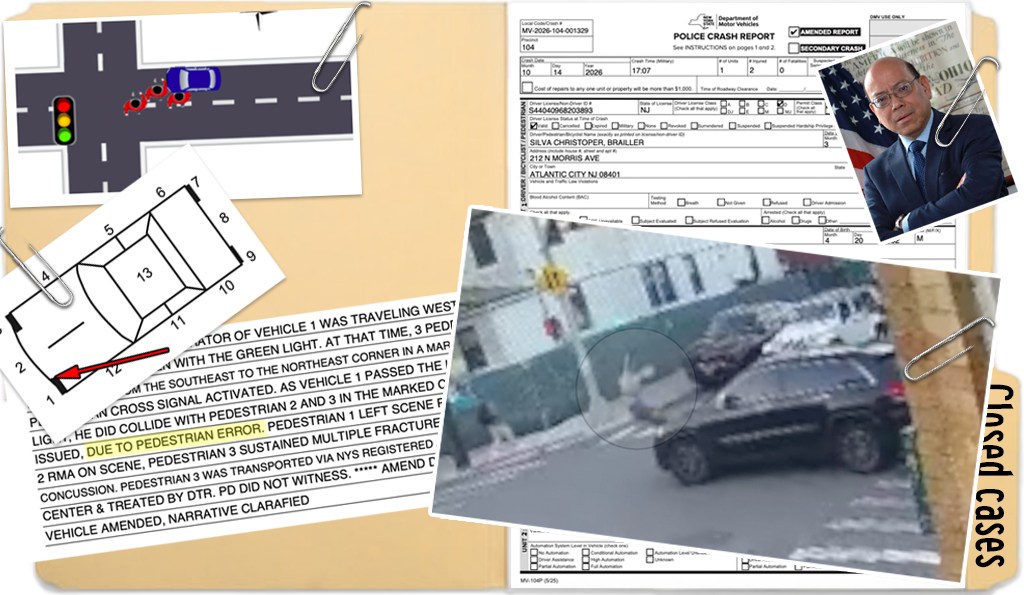
The prior design created profoundly unsafe street conditions. According to statistics that DOT shared with Brooklyn Community Boards 2 and 3, 841 people were injured in crashes on Dekalb and Lafayette between 2021 and 2026, and one person died.
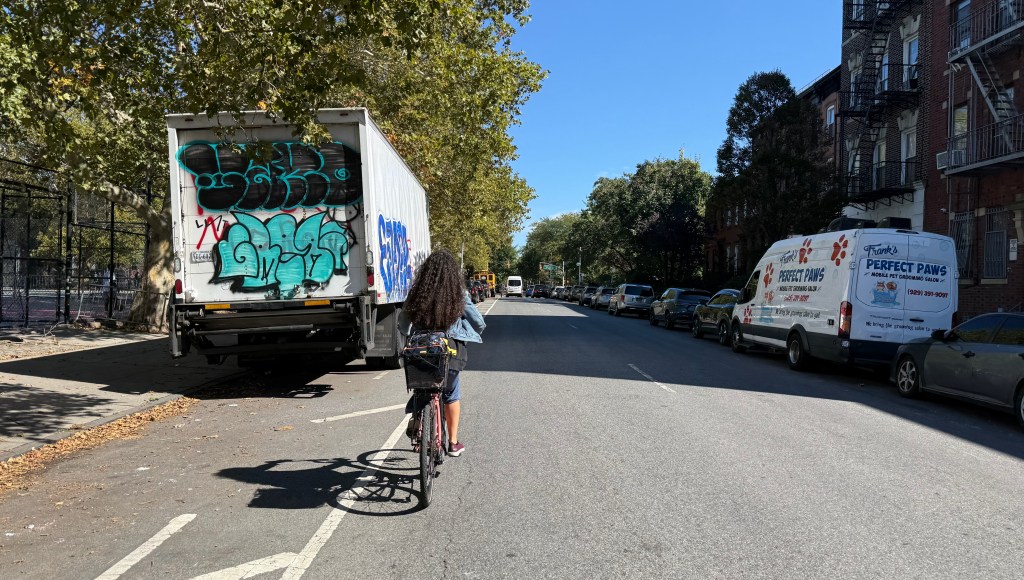
The protected bike lanes will fulfill a portion of the Streets Master Plan, which obligates the city to carve 50 miles of protected bike paths (and 30 miles of protected bus lanes) every year. The new kermit will also contribute to a more truly connected bike-lane network — a key priority for DOT Commissioner Mike Flynn.
“Connectivity is an important factor in achieving our ultimate goal of getting many more New Yorkers to ride bikes in the city—cycling is a safe, affordable, sustainable, and quick way to get around,” said DOT spokesperson Vin Barone. “We believe this can happen when more and more trips can be taken on streets that are comfortable and safe for cycling.”
With protected bike lanes on DeKalb and Lafayette, cyclists will enjoy a fully protected ride that connects to the protected bike lane on Ashland Place, which itself connects to the Brooklyn and Manhattan Bridges, the greenway on Flushing and Kent Avenues and the protected bike lane on Fourth Avenue.
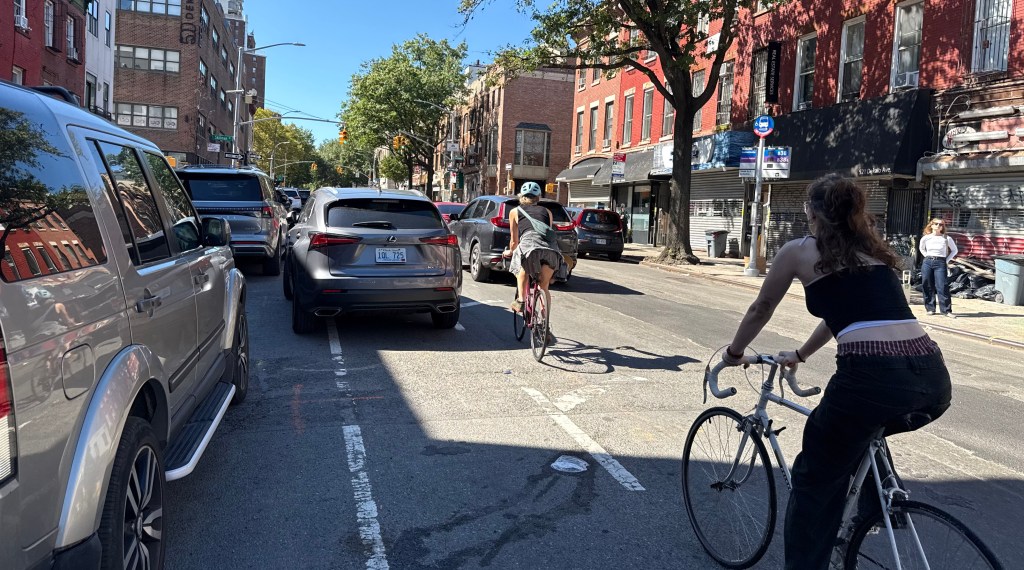
Apart from a short paint-only segment on Bond Street, the protected lane on DeKalb will connect to the protected lane on Schermerhorn Street, while the protected lane on Lafayette Avenue will link to the Schermerhorn lane when the Boerum Place and Adams Street bike lane wraps up later this year. Both lanes will even connect to the existing protected bike lane on Bedford Avenue, before it disappears like tears in the rain.
Both City Council members whose districts the project runs through have given a pair of thumbs up to the bus and bike lanes — an often-crucial marker of the project’s immediate future.
“I support DOT’s proposal to add bus lanes and protected bike lanes on DeKalb and Lafayette Avenues,” said Council Member Crystal Hudson (D-Clinton Hill). “I hope to work with DOT to ensure there are limited disruptions for riders, businesses, schools, and houses of worship during the construction phase, with clear advance notice and well-communicated potential impacts.”
Council Member and why-is-shit-not-working explainer Chi Ossé also threw his support behind the project, and highlighted DOT’s extensive public outreach to families who rely on buses and bikes to get around the neighborhood.
“I commend Mayor Mamdani and the Department of Transportation for advancing the plan to deliver faster buses and protected bike lanes, particularly for prioritizing DeKalb and Lafayette Avenues,” Ossé told Streetsblog. “Slow, unreliable bus service on high-ridership routes, coupled with growing demand for safer cycling infrastructure on a key link between Downtown Brooklyn and Bushwick, makes this moment especially important.
“Hundreds of families who ride the B38 or bike through Bed-Stuy know how much this would change their daily commute, so their input matters. I intend to listen to our community’s feedback as we identify ways to support infrastructure that makes travel faster and streets safer.”

Read More:
Streetsblog has migrated to a new comment system. New commenters can register directly in the comments section of any article. Returning commenters: your previous comments and display name have been preserved, but you'll need to reclaim your account by clicking "Forgot your password?" on the sign-in form, entering your email, and following the verification link to set a new password — this is required because passwords could not be carried over during the migration. For questions, contact tips@streetsblog.org.