Council Speaker Slams Amazon For Delivery Worker Layoffs
City Council Speaker Julie Menin slammed Amazon for terminating a contract with one of its Delivery Service Partners, effectively firing around 200 workers, and vowed to pass first-in-the-nation regulations against the delivery giant whose business practices have come increasingly under fire.
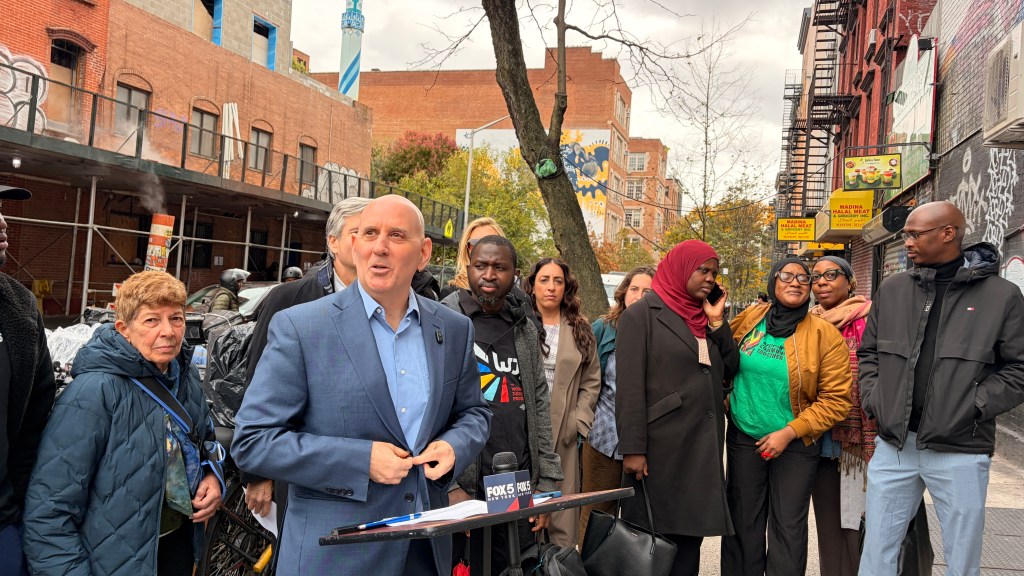
“I think it’s terrible,” Menin (D-Upper East Side) told Streetsblog at a press conference on Thursday. “To be clear, we are going to be regulating Amazon, we will be the first city in the country to regulate Amazon in a very significant way.”
Menin’s strong words came hours after 200 employees of Kaizen Management Solutions, a company contracted by Amazon to fulfill same-day deliveries, were unceremoniously fired, effective on Nov. 18.
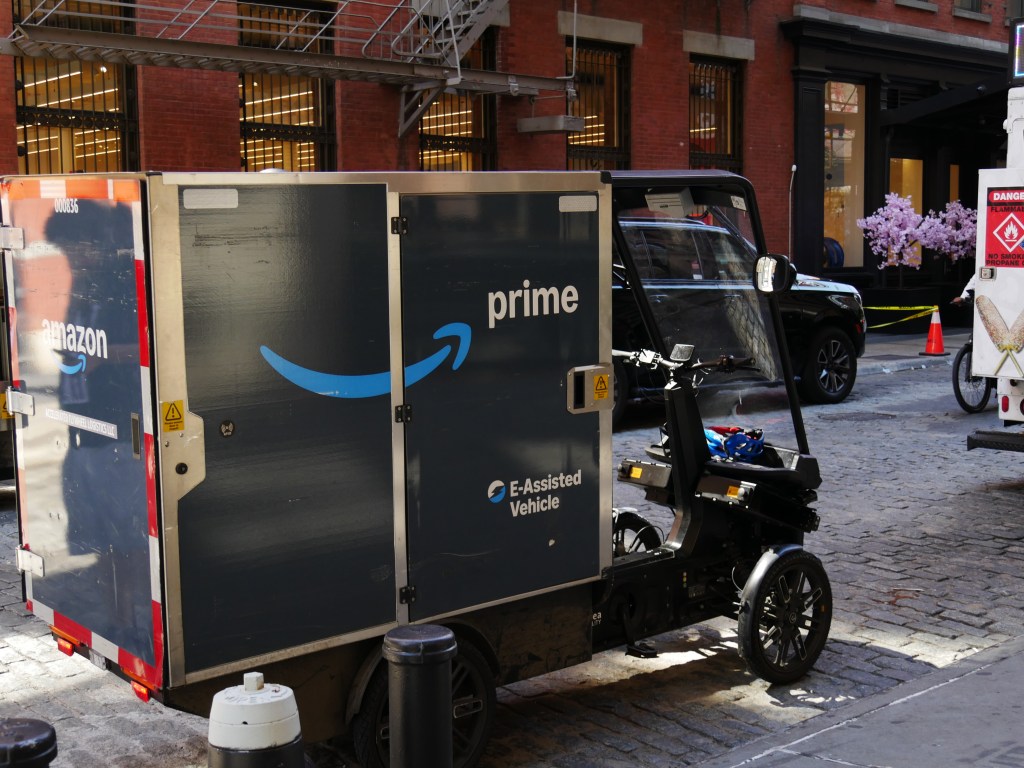
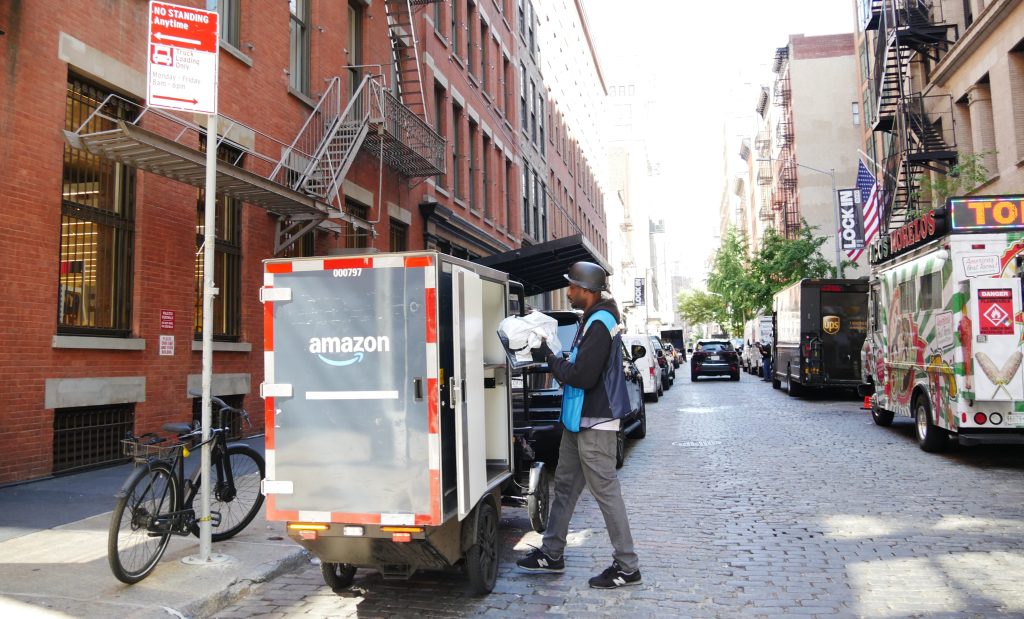
The fired workers — who deliver Amazon-branded packages on Amazon-branded bikes and fans — are not actually employed by Amazon. Instead, the e-commerce giant relies on a network of Delivery Service Partners, small independent companies, to hire workers and make the deliveries. For most such DSPs, Amazon is the only client. When Amazon drops a contract, the DSP goes belly up.
And it’s a pattern. Since 2018, Amazon has terminated 35 DSP contracts in New York, resulting in the loss of over 3,500 jobs, a report from the Teamsters Union found.
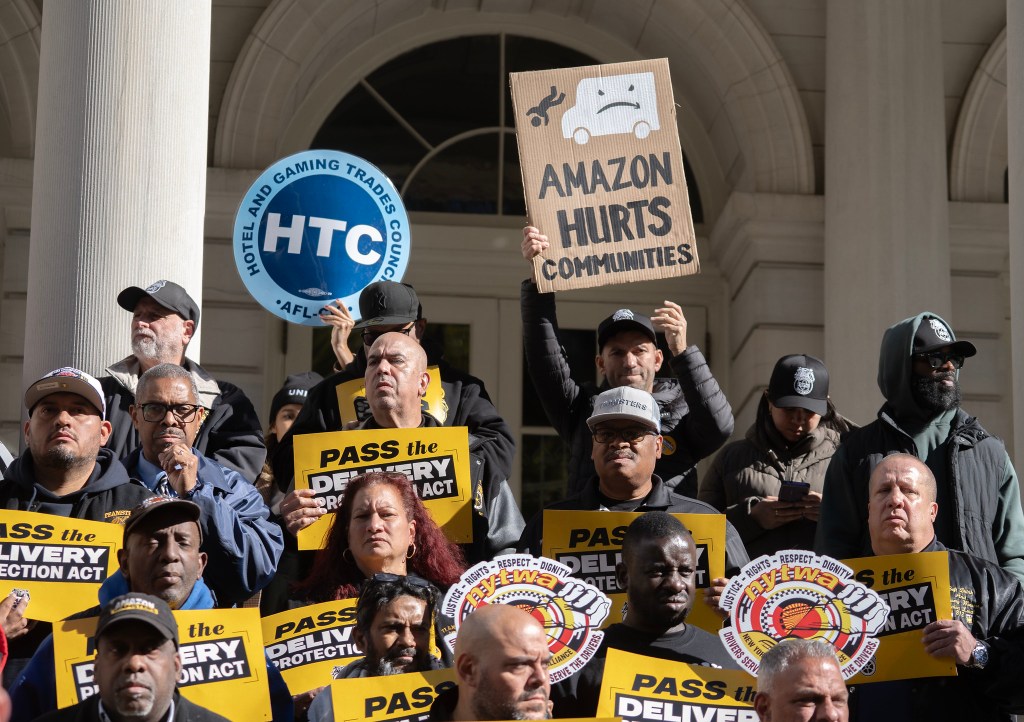
A Council bill sponsored by Tiffany Cabán (D-Astoria) would force Amazon to directly employ its delivery drivers. The bill, known as the Delivery Protection Act, has a majority of Council support, but remains on Speaker Menin’s desk as she negotiates what she calls “legal issues” to get it over the finish line. (A spokesperson for Menin reiterated that the Speaker is committed to passing the bill.)
One of the laid-off workers said the Delivery Protection Act gets to the heart of the problem with Amazon: the company is not a vaunted job-creator.
“This DSP model is about Amazon’s bottom line,” said the worker, who requested anonymity because he needs to find another job. “The model that allegedly creates jobs just laid off 200 people right before the holidays. … I wish I could tell you I have another thing lined up but I don’t. They didn’t even give me a month to figure it out.”
The Kaizen employee has worked at various DSPs over the past two years. He said he started the job because he needed to find work fast after graduating college without a safety net.
“They say you don’t choose Amazon, Amazon chooses you,” he said, adding that the job market is “atrocious.”
Amazon told Streetsblog it terminated after an investigation found that Kaizen “put several e-cargo bikes back on the road before necessary repairs were done,” and that there were “multiple breaches of contract involving fraud, including failure to accurately record drivers’ hours worked.”
The laid-off employee called this a “crock of shit.”
“If that’s truly the case, then every single DSP needs to be shut down, and that’s not happening,” he said.
Workers have been sounding the alarm for years about the conditions of Amazon’s vans and electric cargo quad bikes, which are often leased by Amazon directly to the Delivery Service Partners.
Amazon’s vehicles are notorious for double parking, blocking bike lanes, and setting up make-shift loading zones. Supporters of the bill say forcing Amazon to directly hire its delivery drivers would make the company more accountable for their conduct, and financially accountable for tickets.
The Alliance for a Greater New York, which supports the bill, created an interactive tool that shows that Amazon-associated delivery vans drew 14,290 tickets from cameras and traffic enforcement agents between July 2021 and June 2025.
“You want to park anywhere you can fit so that you can hop out and deliver this package, but it comes at a price. Sometimes it’s a hydrant. … Sometimes you’ll just have to simply double park,” said LeAnn Rivera, an Amazon van driver for a DSP in Queens. “It’s unfair because the only reason I’m even doing things like this is because I have pressure to move faster.”
Rivera said job security is her “main reason” for advocating for the passage of the Delivery Protection Act.
“When it comes to people who aren’t for it, their main worry is the small business people [DSP owners] losing their business,” she said. “But you’re not safe as an owner because anything, literally anything, can happen.”