Mamdani’s Charter Panel To Speed Up Outdoor Dining Process by 75%, Bus and Bike Lanes by 33%
Now that’s fast service!
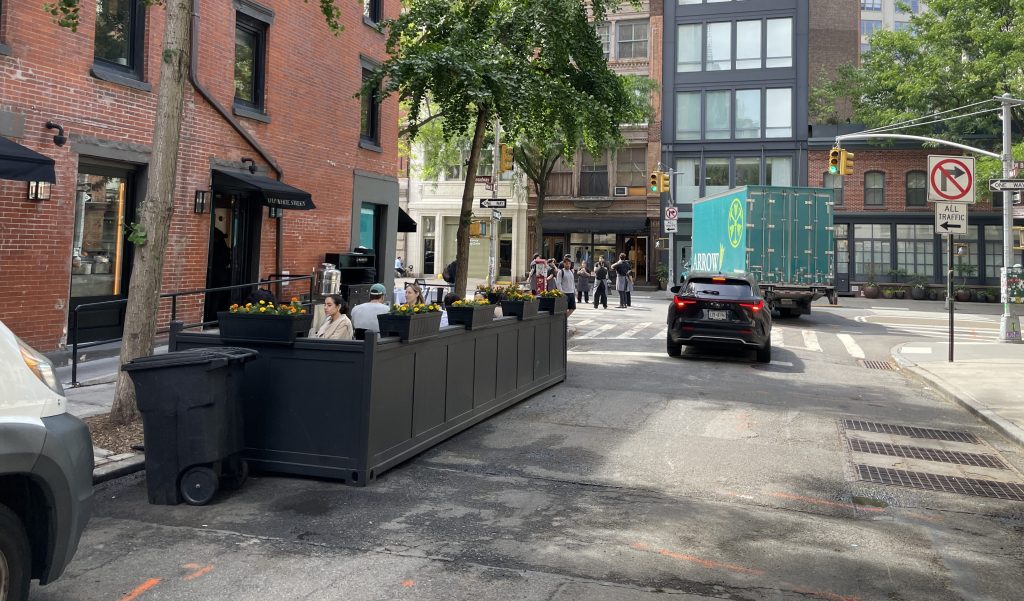
Mayor Mamdani’s charter review commission wants to slash the outdoor dining application process to just two months, a 75-percent cut from the current eight months (or more) that it can take a restaurant owner to get a permit to set up tables and chairs outside, according to the final ballot questions the panel is set to vote on today.
The Commission on Government Efficiency, or COGE, wants to change the city’s process for renting out street and sidewalk space by creating a single permit, and “modernizing” requirements to give public notice, according to its final ballot proposals City Hall shared early with Streetsblog.
Officially, the proposed Ballot Question 1 will ask voters if they want to amend the City Charter to “simplify [the] process to use public space for uses such as ramps, planters and cafes, by removing mandatory hearings and Council disapproval of sidewalk cafes, while maintaining community and Council input.”
It’s not like all public oversight would be eliminated, of course. According to background material provided by COGE, the outdoor dining proposal seeks to standardize the process for both roadway and sidewalk dining because it would “remove City Council’s power to disapprove a sidewalk cafe, while retaining the requirement that notice be provided to the relevant Community Board, Borough President and Council member.”
And it would eliminate public hearings over each and every outdoor dining location, allowing the Department of Transportation to merely “choose whether to hold a public hearing … in its discretion.”
If approved, the reforms will save small businesses up to $1,800 on application costs and “thousands of dollars of staff time,” according to commission. Advocates celebrated the speedier timeline to let New Yorkers to enjoy al-fresco dining.
“This is exactly the kind of government efficiency we need,” said Sara Lind, co-executive director of Open Plans (which shares a parent company with Streetsblog). “New Yorkers love outdoor dining, and our small businesses shouldn’t have to navigate an eight-month bureaucratic maze to make it happen.”
During the Covid-19 pandemic, the city dropped many regulations around outdoor dining to support struggling restaurants, and the temporary emergency measures grew the program soared to about 11,770 participants, according to COGE. However, the City Council under then-Speaker Adrienne Adams together with former Mayor Eric Adams enacted new regulations in 2023 banning roadway cafés during the winter and adding multiple layers of outside review, and the number of eateries participating in outdoor dining plummeted to just 1,549 fully-permitted operations.
The outdoor dining reform is one of five ballot questions COGE plans to put to voters in the November election, all of them aimed at accelerating government operations via the “e” of the commission’s name.
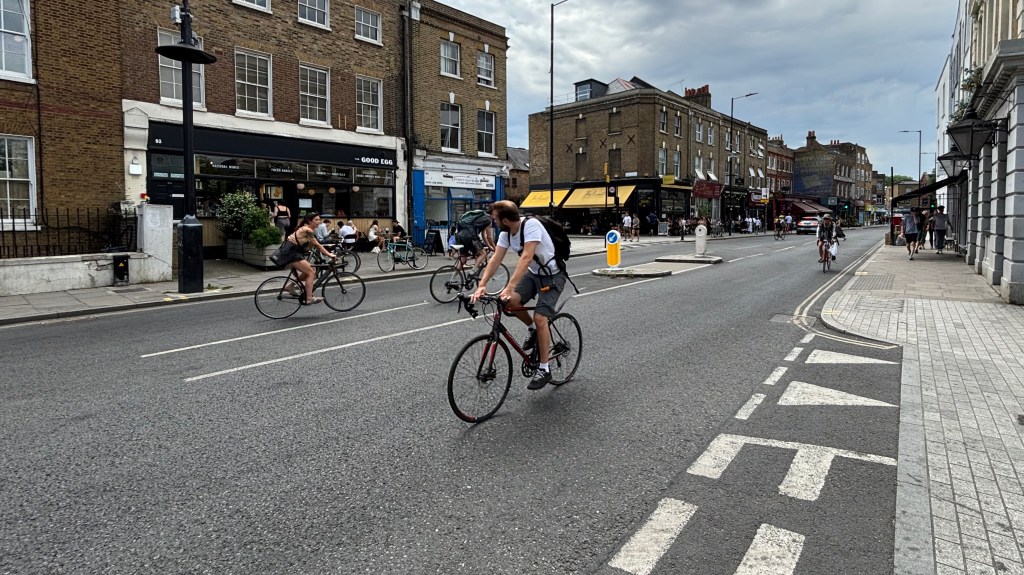
For instance, Ballot Question 3 would fast-track street safety redesigns by 33 percent, as Streetsblog previously reported based on the commission’s draft proposals.
Those changes would enable the Department of Transportation to more quickly launch bike- and bus-lane projects without extensive outside review and risks of bad faith litigation. In short, it would “reduce construction timelines,” as the proposed question is worded.
The changes affect so-called “major transportation projects” – any bike or bus lane greater than 1,000 feet or three blocks – which require lengthy reviews from several agencies outside of DOT, which has led to delays for the crucial street safety work. Last year alone, DOT had 37 of those projects, 13 of which were delayed, and all but two of those stalled projects were bike lanes, according to commission.
The promised improvements come after dozens of street safety advocates begged COGE to unclog the bureaucratic obstacles to making the Big Apple’s streets less deadly, at a public hearing earlier this month.
For instance, the proposed amendment would no longer require the DOT to confer with anyone other than the head of other agencies, such as the FDNY, when it undertakes a major transportation project. So, according to underlying COGE documents, “the Fire Department would no longer be required to confer with affected firehouses when DOT proposes a major transportation project.”
However, Ballot Question 3 also includes non-street-safety-related measures — it would reduce the time it takes to sell or lease small city-owned properties and also cut the time needed to lease office space for municipal workers — that drew harsh criticism from the good government group Reinvent Albany.
The group thinks it’s wrong to combine “totally unrelated” issues into one question because voters may support one part of the reform but not the other two.
“This question should be solely about streets, street safety, bike lanes, and bus lanes, all of which Reinvent Albany strongly supports. We are extremely unhappy with the way the Commission has combined these totally unrelated issues into one proposed question,” the group wrote in a release on Tuesday in response to the draft proposals from the day before. “It is highly likely that some voters would support the street safety proposal, while opposing the unrelated office space and land proposals.”
City Hall spokesperson Monica Klein said COGE bundled those issues together because they all change how “city land and space is utilized and approved.”
However, so does the outdoor dining reform, which is a separate ballot question.
The other three proposals set to come before voters include reforms to the city’s contracting and procurement process, simplify building permitting, and set a target for rainy day reserves the city keeps.
Mamdani convened COGE in May, a move that neutered a prior panel that his predecessor Eric Adams set up in the 11th hour of his term, reportedly to stymie his successor.
The efficiency panel will continue as an “advisory board” to gather more ideas from New Yorkers and “explore” other suggestions that came up during the commission’s work over the summer, according to City Hall.
If approved by voters, the ballot questions would take effect on March 1, 2027.
COGE will vote on the proposals at 5 p.m. at the Landmarks Preservation Commission Public Hearing Room, 253 Broadway (between Murray and Warren Street) in Manhattan.
Editor’s note (Thursday, July 23, at 1:01 p.m.): This story has been updated to include more information from COGE and comment from City Hall.

Read More:
Streetsblog has migrated to a new comment system. New commenters can register directly in the comments section of any article. Returning commenters: your previous comments and display name have been preserved, but you'll need to reclaim your account by clicking "Forgot your password?" on the sign-in form, entering your email, and following the verification link to set a new password — this is required because passwords could not be carried over during the migration. For questions, contact tips@streetsblog.org.