DOT May Push Mamdani’s W. 72nd Street Bike Lane to Next Year Amid Lawsuit Threat
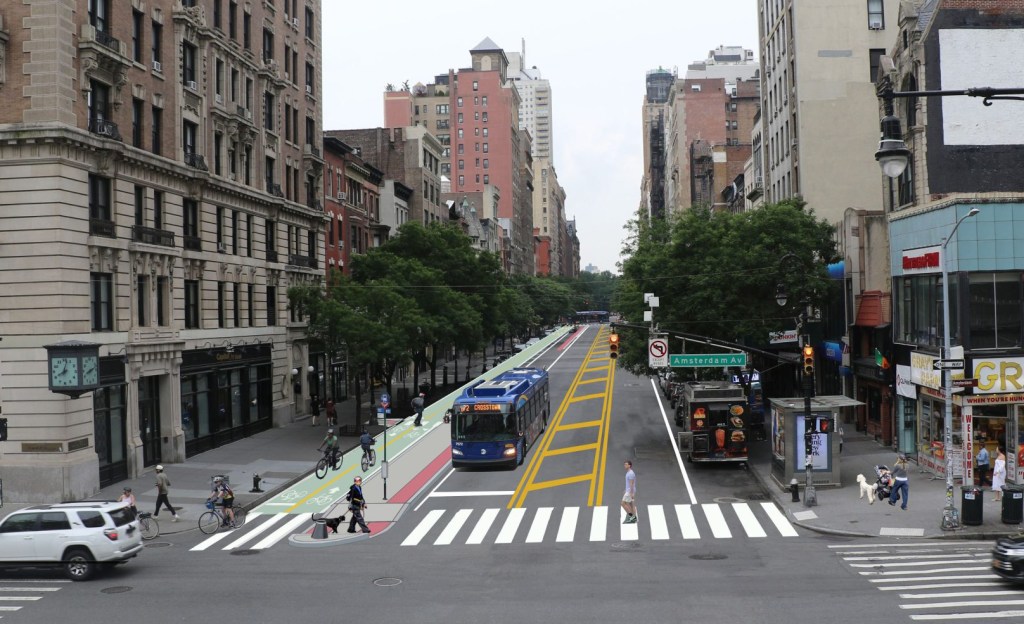
The Department of Transportation checked all the boxes — it notified elected officials, firehouses and the business community, and passed a contentious community board vote.
Yet DOT is apparently still waiting on an extra — and not legally mandated — walkthrough with City Council Member Gale Brewer to finalize its design for a protected bike lane on W. 72nd Street — potentially pushing the life-saving infrastructure to next year, court filings reveal.
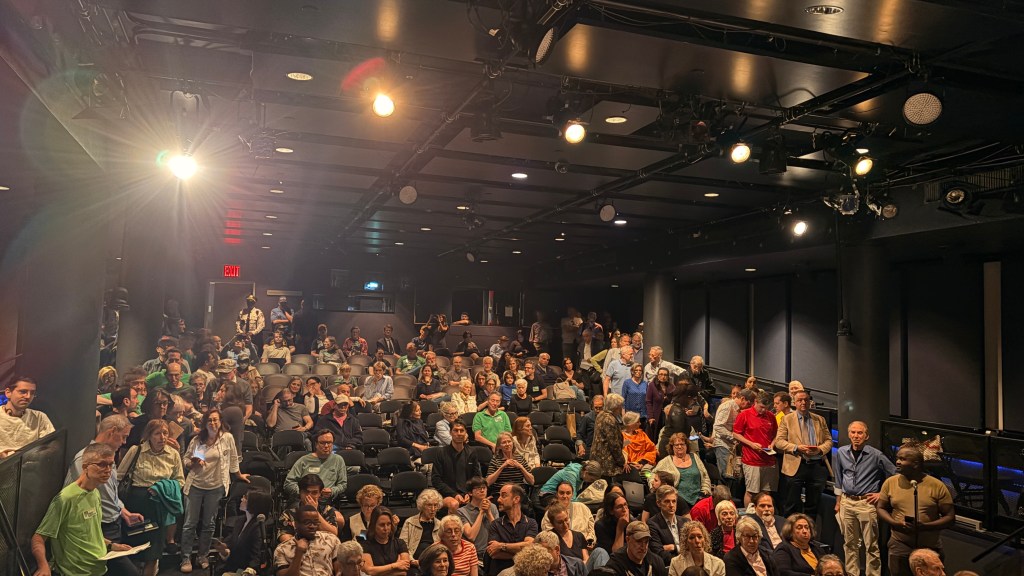
DOT first presented its plan to redesign W. 72nd Street on the Upper West Side to Manhattan Community Board 7 on April 14. At the time, the agency indicated it would go ahead with the plan regardless of how CB7 voted, but the board nevertheless endorsed the project in June by a vote of 26 to 19. DOT said construction would start as early as the summer.
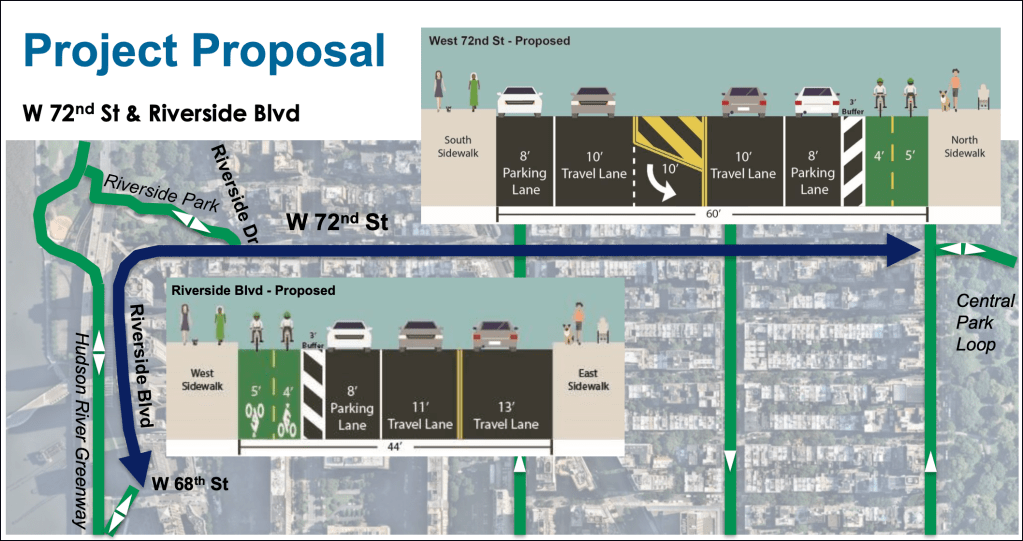
Fast forward to late August and the redesign is apparently still in development pending on a site visit with Council Member Brewer to address concerns about access to a bus stop on the Riverside Boulevard section of the project, DOT said in documents filed in response to a NIMBY attempt to kill the effort. The agency argued successfully in court this week that the case cannot proceed until that walkthrough happens.
If DOT fails to file an official “Notice of Implementation” by the end of October, it may get too cold for the agency to start construction, according to an affidavit filed by DOT Chief of Cycling & Micromobility Carl Sundstrom.
“There are multiple outstanding components of the engagement and final design processes that must be completed before … DOT can issue a Notice of Implementation,” Sundstrom wrote. “If we are unable to complete all of these steps and issue the notice of implementation by the end of October, we may not be able to implement the [project] in 2026. There is risk that the ground temperature will be too low to do street marking work and it will be unsafe to use a water blaster in freezing temperature to remove street markings.”
DOT plans to eventually join the W. 72nd Street bike lane with a proposed protected bike lane across the park on E. 72nd Street — creating the first crosstown protected bike lanes in Manhattan north of Midtown.
It’s one of the most ambitious plans proposed under Mayor Mamdani, who took office vowing to make the city’s street “the envy of the world.”
“It’s the most aggressive and brave proposal DOT has come out with this year. They are really on the hook to deliver and make good on the mayor’s rhetoric,” said Jon Orcutt, a former DOT official under mayors Bloomberg and de Blasio.
Reached for comment, a rep for DOT stood by the project and pledged to defend it in court.
“Protected bike lanes have been shown to support local businesses and enhance safety for everyone, including pedestrians, cyclists, and people traveling by car,” the spokesman, Will Livingston, said in a statement. “Seventy-second Street connects across Manhattan and multiple parks, making it a great location to fill a critical cycling network gap in Manhattan and enhance safety for families accessing these green spaces. We will be defending the proposal in court.”
DOT’s new filings came in response to a suit from the W. 72nd Street Neighborhood Residents and Business Association Inc. Protected bike lanes have shown to reduce injuries and severe injuries for cyclists and pedestrians alike, yet the opponents claim the project will “intentionally threaten safety,” “impede on business interests” and “accommodate a single group of individuals at the expense of the greater community.”
The group is represented by attorney Hartley Bernstein, who has unsuccessfully sued the city to stop two other bike lane redesigns on Court Street in Brooklyn and 31st Street in Astoria. The lawyer also sued the city in federal court alleging the W. 72nd Street project violates the Americans with Disabilities act.
Manhattan Supreme Court Judge Dakota D. Ramseur previously ordered DOT not to cease work on the project until she ruled on the case. On Tuesday, DOT officials cited the outstanding walkthrough with Brewer to claim that the project is not finalized, and that the lawsuit and judge’s order are not valid until the Notice of Implementation has been issued.
Ramseur agreed, and ordered the parties to update the court at a Sept. 29 conference.
It is unclear exactly why the DOT is taking so long to finalize a plan and finish the process, but the lawsuit may be playing a role. Ramseur’s initial order from July 14 prohibited DOT from “proceeding with and implementing” the project, halting all outreach work. She adjusted that order on July 25 so the agency could still do non-physical work on the project, like scheduling the walkthrough with Brewer.
In its court filings, DOT said it has tried to schedule the walkthrough since July 24. The two parties agreed to do it on Aug. 20, but that walkthrough never happened. The department already completed a walkthrough with Brewer on W. 72nd Street on June 5, the filings said.
As a candidate last year, now-Mayor Mamdani repeatedly dinged then-Mayor Eric Adams for delaying and canceling DOT projects, and pledged to “make decisions with safety as the imperative.” But the delay on W. 72nd Street could cost lives: Hit-and-run drivers killed killed three cyclists last week on streets without protected bike lanes.
“The thing that seems mismatched is the rhetoric on the campaign trail with the middling sense of urgency in terms of getting things out the door. Let’s step it up and win the case and get [the infrastructure] in as fast as you can,” said Orcutt. “Cyclists are getting killed all over the place.”
City law does not require the walkthroughs DOT is conducting with Brewer — while community board consultation is required, but not binding.
Longtime Manhattan CB7 member Ken Coughlin, who attended Tuesday’s court hearing, said the judge questioned the petitioners’ assumption that they should have another chance to weigh in on the plan after DOT completed all the legal outreach requirements, and asked Bernstein, “So what entitles you to a second bite of the apple?”
Streets with protected bike lanes experience an average 39-percent drop in crashes that cause death or serious injury for seniors, and a 24-percent drop for non-senior adults, according to DOT stats.
“It would be better to have a safer street earlier rather than later,” Coughlin said, “but as long as we get a safer street eventually it’s better than nothing.”
DOT spokesperson Vin Barone denied that the agency has delayed the project. “Engaging meaningfully with local stakeholders is an important part of project development, and this engagement is not causing additional delay to the project timeline.”

Read More:
Streetsblog has migrated to a new comment system. New commenters can register directly in the comments section of any article. Returning commenters: your previous comments and display name have been preserved, but you'll need to reclaim your account by clicking "Forgot your password?" on the sign-in form, entering your email, and following the verification link to set a new password — this is required because passwords could not be carried over during the migration. For questions, contact tips@streetsblog.org.