Opinion: NYC’s Curbside Bus Stops Treat Passengers Like Dirt
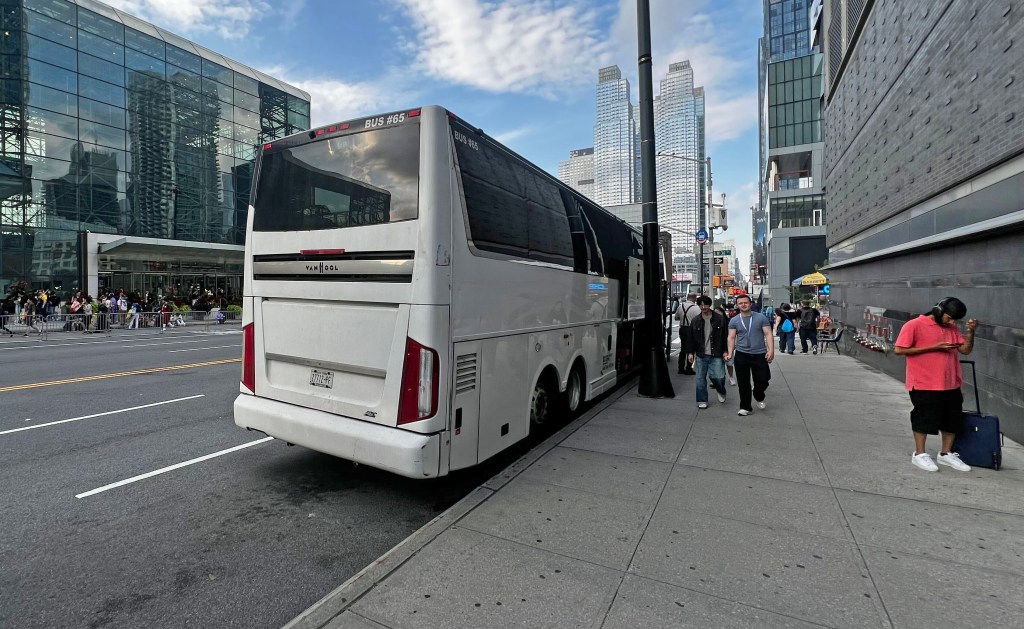
Every day, intercity bus passengers arrive and depart from curbside stops across Manhattan. In many areas, you only know it’s a bus stop because there’s a sign marking where the bus will arrive.
On a pleasant spring afternoon, that may not seem like much of a problem. Spend 30 minutes there during a summer heat wave, a January cold snap, or a downpour and the experience looks very different. Many stops have no shelter, no seating, and not even basic amenities that passengers deserve while waiting for transportation. Not even a trash can.
For years, that has simply been accepted as part of curbside intercity bus travel in New York, but it doesn’t have to be.
Curbside buses are hardly a niche experiment. Rutgers research published in 2009 found more than 2,500 low-fare bus trips each week connecting New York with Boston, Philadelphia, and Washington, D.C., plus more than 100 weekly departures to over 30 other cities. The market has evolved considerably over the following decade-plus, but the passenger infrastructure at many curbside stops has not.
The buses themselves have. Operators have invested in newer vehicles, onboard amenities, and technology. Yet passengers can step off a modern motorcoach and find themselves on a bare sidewalk.
This isn’t something bus companies can solve themselves. Operators don’t own the sidewalks where passengers wait, nor can a private company simply install benches, shelters, lighting, or other infrastructure on a city street. These are public spaces, and improving them requires the involvement of the city.
New York already knows how to do this well. Public bus stops, pedestrian plazas, parks, and other urban spaces incorporate seating, shelters, trash cans, lighting, and wayfinding. Curbside intercity passengers deserve some of that same thinking.
But I don’t think bus operators should simply ask taxpayers to pick up the bill.
Private intercity bus companies already pay the New York City Department of Transportation for permits to load and unload passengers at designated curbside stops. Those fees are capped at $275 per vehicle, which works out to about 75 cents a day over a year.
If operators paid somewhat more for access to high-volume curbside stops, that additional revenue could help fund improvements where passengers actually wait. The details would need to be worked out with the city, but the idea is straightforward: operators pay a little more, and passengers get better places to wait. I think that’s a fair trade and good for the traveling public.
We’re not talking about building another bus terminal. One advantage of curbside service is its simplicity, and there is considerable room between a multi-billion-dollar terminal and a bare sidewalk: seating, weather protection, trash receptacles, better lighting and signage, and clearly defined waiting areas. The city could start with its busiest curbside intercity locations and determine what is practical at each one.
The timing is particularly appropriate as the region rethinks bus infrastructure in Midtown. The Port Authority is undertaking a $10-billion replacement of its Midtown bus terminal, with additional capacity planned for intercity buses that currently operate from nearby city streets.
That’s an important investment, and many of today’s curbside operations may eventually move into the new facility. But that transition is still years away, and passengers shouldn’t have to wait another decade for basic improvements to the places they’re using today.
These don’t need to become permanent mini-terminals. A few basic improvements could make curbside waiting much more tolerable for passengers in the meantime.
Different bus operators compete for passengers, but many of us share the same sidewalks and the same problem. Operators, industry associations, passenger advocates, and city officials should work together on a practical standard for high-volume intercity stops: what amenities make sense, where they are most needed, what they cost, and how operators can contribute.
If better curbside facilities require operators to pay somewhat more for the privilege of using public space, that’s a conversation worth having.
Curbside buses have changed dramatically over the past decade. Maybe it’s time the curb changed with them.

Read More:
Streetsblog has migrated to a new comment system. New commenters can register directly in the comments section of any article. Returning commenters: your previous comments and display name have been preserved, but you'll need to reclaim your account by clicking "Forgot your password?" on the sign-in form, entering your email, and following the verification link to set a new password — this is required because passwords could not be carried over during the migration. For questions, contact tips@streetsblog.org.