This Trucking Industry Veteran Wants Every Truck To Have Life-Saving Side Guards
If you’re hit by a 10,000-pound truck in this city, your survival might depend on what payload its carrying.
That’s because only a small number of big-rigs operating in the city — most of them hauling commercial trash — are required to have life-saving side guards that can prevent cyclists and pedestrians from getting dragged underneath and run over by a vehicle’s rear wheels.
Unlike other cities across the world, New York City requires the simple, after-market aluminum barriers only on the city’s own fleet, “trade waste” trucks regulated by the Business Integrity Commission, and trucks deployed by companies with large contracts with the city. That leaves tens — if not hundreds — of thousands of unsafe trucks that fill city streets every day.
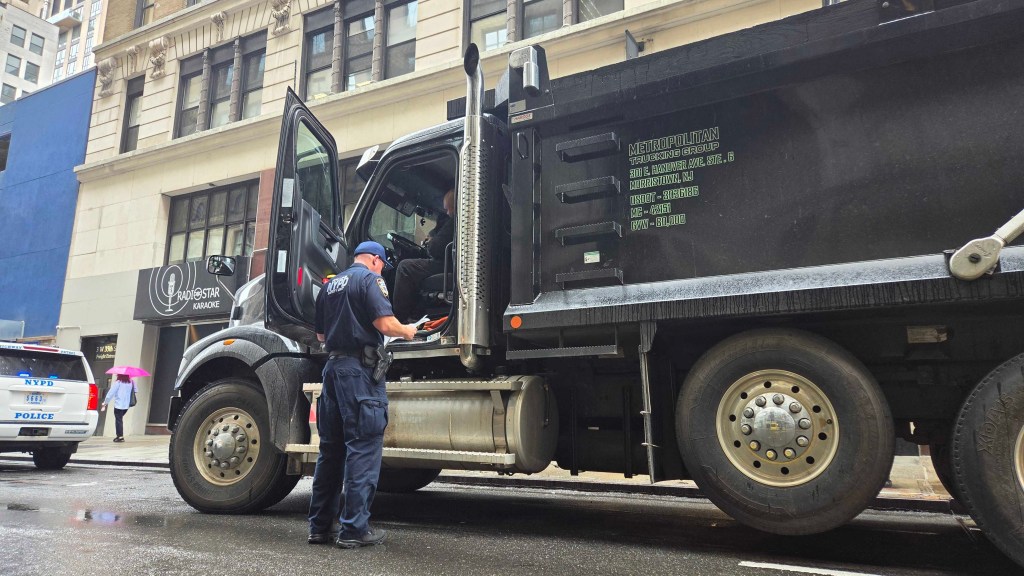
Worse, city officials exempt many of the above-listed required trucks from fulfilling the mandate; the Business Integrity Commission grants exemptions to around 50 percent of the 7,100 waste trucks it regulates, a spokesperson told Streetsblog. The driver of one such exempted truck struck and killed a teenage girl riding a Citi Bike with her friend last month. And one week later, the driver of a different large hauling truck without side guards killed a 51-year-old woman cyclist.
The truck in the second wasn’t regulated by the Business Integrity Commission because it wasn’t hauling “trade waste,” but merely other objects — a distinction that matters little to street safety advocates and some enlightened trucking industry veterans.
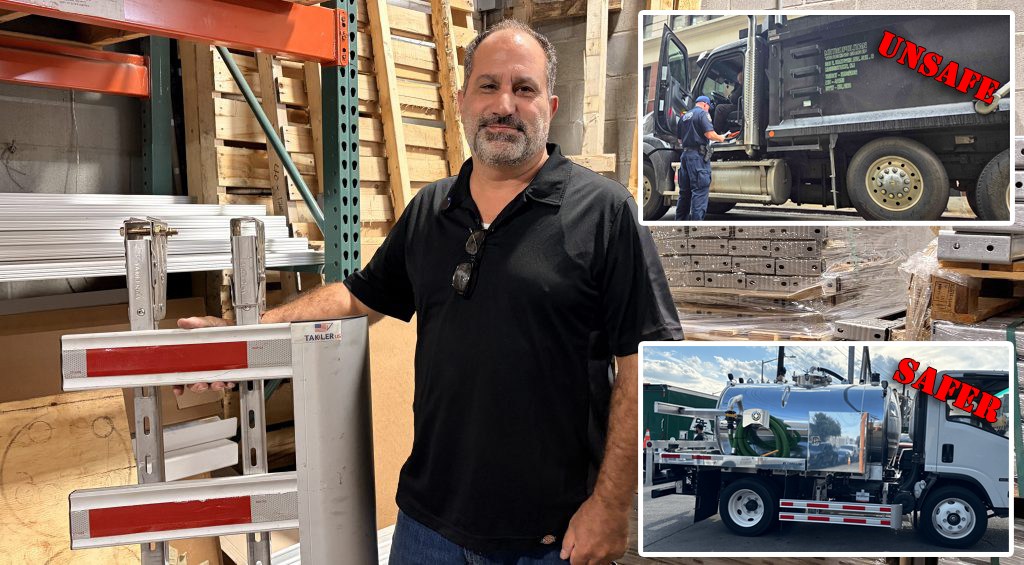
“Every truck should have them. I mean, why not?” said Dave Caprio, whose family business, Virgo Fleet Supplies, sells truck accessories, including Department of Transportation-approved side guard kits for around $2,400. “Why are we allowing trucks to operate in New York City [without guards]? Well, maybe every truck should be required to put these on.”
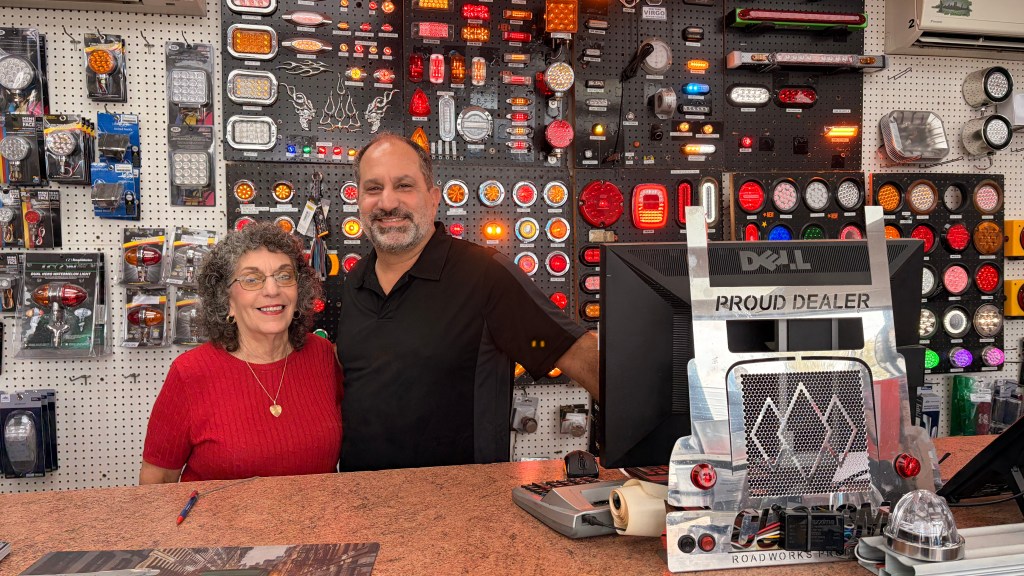
Caprio told Streetsblog that his interest in side guards started purely as a business move. When the Council mandated them for the small sub-section of trucks, he started offering them to his customers who would be required to comply. But after doing research — including visiting Italy where such safety equipment is required — he realized the benefits.
“In selling the product, I realized, ‘Wow, this thing really does work,'” said Caprio, whose shop is based in Canarsie. “So forget the exemptions. This … is the only way [deaths like those last month] are going to stop.”
Caprio is hardly a radical. The European Union has since 1989 mandated side guards, which can result in a 40-percent reduction in fatalities, according to a city press release.
The success of the mandate is clear in the numbers: In London, a city of comparable population to New York, 96 people were killed on the roads in 2025, six of them cyclists. Over the same time, 205 people were killed on New York City streets — more than double.
And only six cyclists were killed that year in London, compared to New York City’s 20 — a stunning statistic, given that there were 1.5 million daily cycling trips in London in 2025, far more than in New York.
London’s freight safety standards are not the only contributing factor to its greater success in curbing deadly crashes, but it is notable that all trucks traveling in and out of The Big Smoke not only need side guards, but also must comply with strict cab-visibility standards.
Asked for comment, a spokesman for Mayor Mamdani stopped short of committing to expanding side guard mandates.
“These tragic deaths serve as a painful reminder of the stakes of our Vision Zero work,” said the spokesperson, Jeremy Edwards. “We will continue doing everything in our power to make our streets safer and prevent more families from having to endure this kind of loss. We will take all steps necessary to prevent tragedies like these and promote street safety.”
Truck side guards, also known as lateral protective devices, are designed to keep pedestrians, cyclists, and moped and motorcycle riders from being run over by a truck’s real wheels in a side impact collision.
The City Council initially mandated side guards for its own fleet and Business Integrity Commission-regulated vehicles in 2015, three years after cyclist Mathieu Lefevre was killed in Brooklyn by the driver of a guard-less truck. But the Council’s law, which at the time was celebrated as a Vision Zero success, was small in scope.
The Business Integrity Commission was created in 2001 to clean up the notoriously Mafia-controlled trash hauling industry. But the mayoral agency regulates only commercial waste trucks involved in picking up garbage from businesses. If a truck is hauling other heavy waste, like concrete, steel, or gravel, it isn’t necessarily regulated by the BIC and therefore has no side guard requirements.
In 2019, the driver of just such a truck — without side guards — struck and killed teenage cyclist Mario Valenzuela on Borden Avenue in Queens, a crash eerily similar to the one on 14th Street that killed Daria Serkov.
In 2021, the city expanded the side guard requirement to include trucking companies engaged in city projects of $2 million or more. At the time, the Department of Citywide Administrative Services estimated that the new rule covered about 1,000 contracts and 5,600 trucks.
The other trucks that are required to have side guards are the city’s own fleet, which numbers 28,567, according to the most recent Mayor’s Management Report. The city must only retrofit its “large vehicles” with side guards, which are defined as “a motor vehicle with a manufacturer’s gross vehicle weight rating exceeding 10,000 pounds.” Street sweepers, fire engines and off-road construction vehicles are exempt.
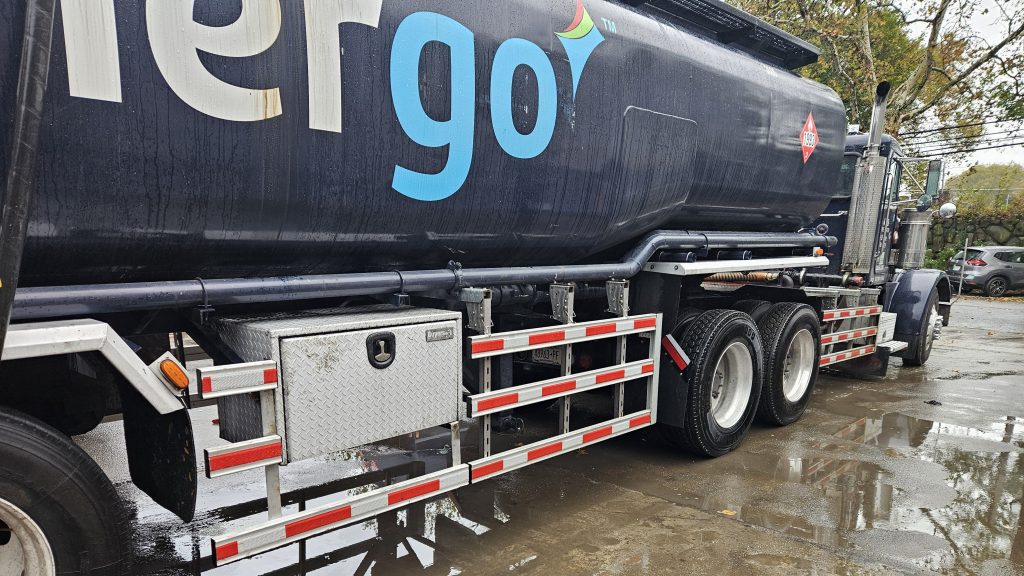
The law mandating side guards on BIC-regulated trucks passed in 2015, and companies had eight years to comply. Caprio said he had a rush of business in 2021 and 2022, as the compliance requirement loomed, but then business plummeted as he “started seeing exemptions coming through.”
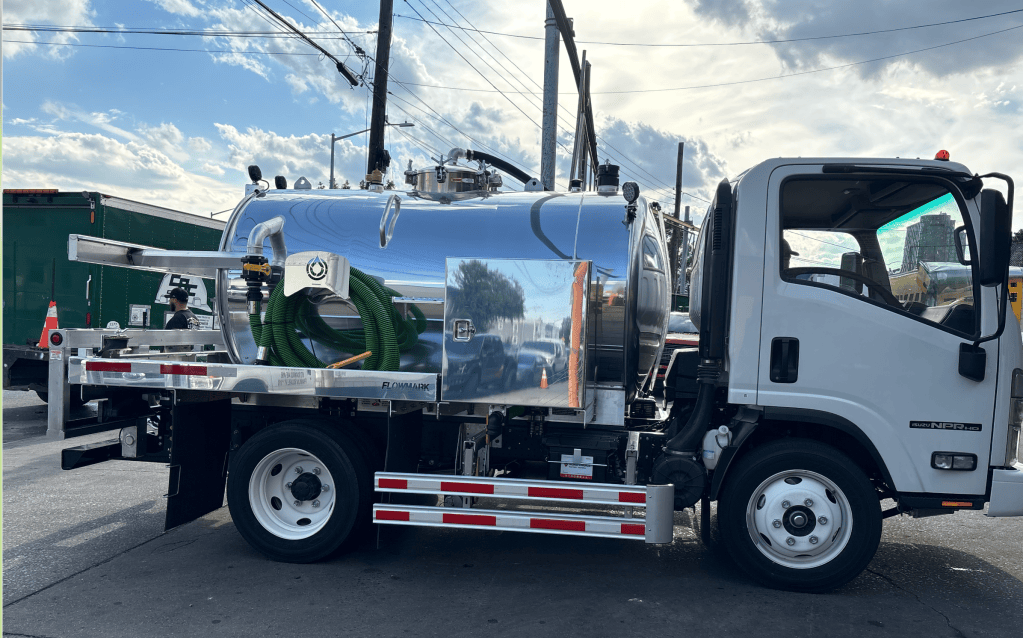
Side guards are required under law if there is more than 13.8 inches between the bottom of the truck and the ground. The Business Integrity Commission has granted exemptions if equipment or tanks that get in the way, but where there is a will, there is a way: Caprio custom cuts his side guards so they can be installed anywhere on the truck.
“They’re just handing out exemption after exemption because well, there’s a toolbox there. Well, there’s a ladder there,” Caprio said.
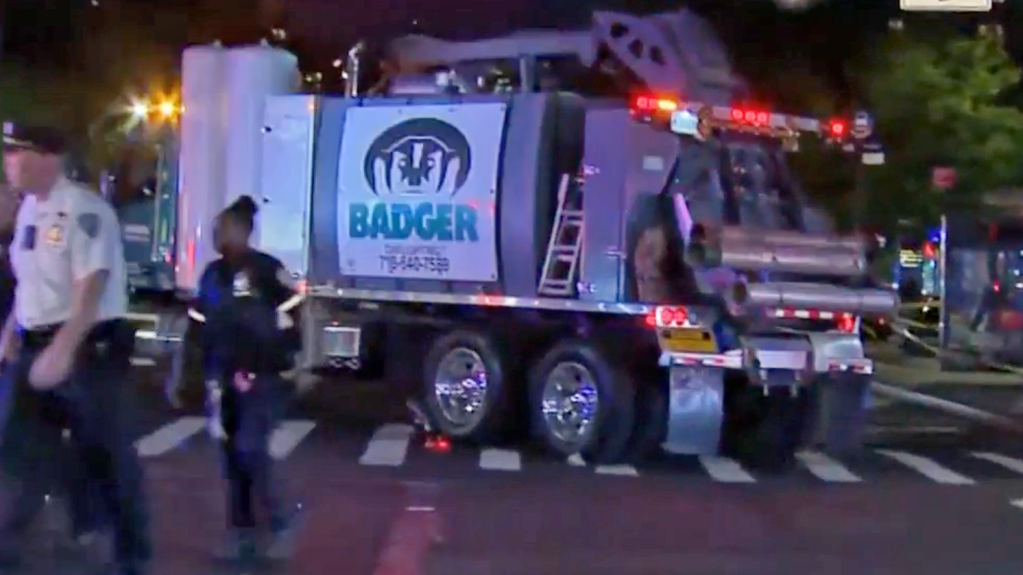
The Business Integrity Commission told Streetsblog the Badger truck involved in the 14th Street crash was exempt because of waiver application demonstrated that the vehicle’s side features, like “toolboxes and fuel tanks … render guards impractical.”
But Caprio wasn’t buying it. Streetsblog recently visited Caprio at his shop, where he looked at photos of the exempted Badger truck. To him, there were plenty of spots where a side guard was still needed.
“Yes, there was an arm that comes out that obviously you can’t cover that. Yes, there were tanks and things there, but by the letter of the law, there still should have been stuff covering some of those open spaces,” he said.

Read More:
Streetsblog has migrated to a new comment system. New commenters can register directly in the comments section of any article. Returning commenters: your previous comments and display name have been preserved, but you'll need to reclaim your account by clicking "Forgot your password?" on the sign-in form, entering your email, and following the verification link to set a new password — this is required because passwords could not be carried over during the migration. For questions, contact tips@streetsblog.org.