Raid! Hochul Leaves MTA Holding $200M Bag
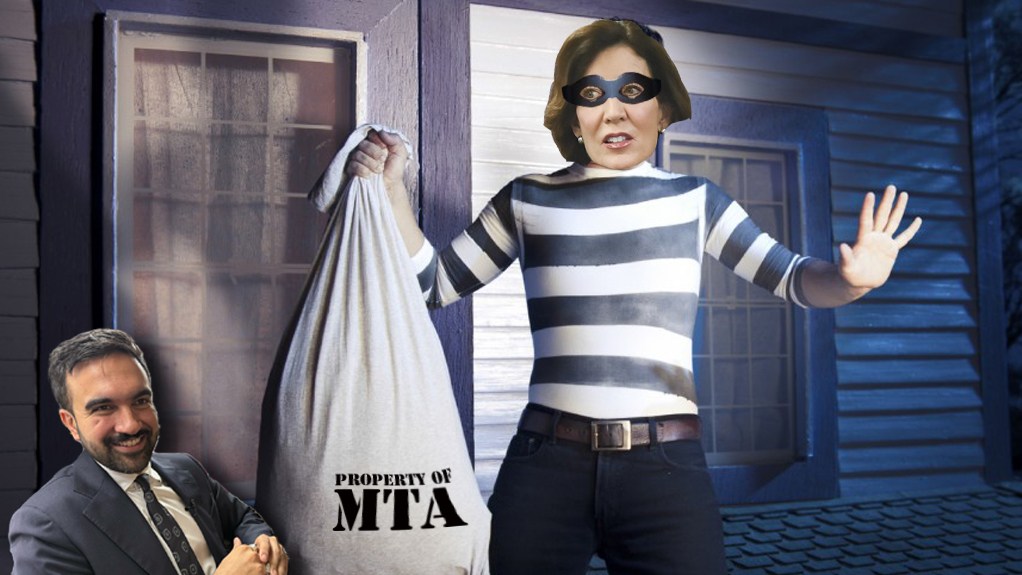
The Hochul administration robbed the MTA of $200 million in bus operating funds in a secret maneuver to shore up the first budget put forward earlier this year by the Mamdani administration, a bombshell report from an Albany watchdog group shows.
As part of a budget deal that closed a $4-billion city budget gap, Gov. Hochul allowed Mayor Mamdani to reduce the city’s annual payment to the MTA’s bus division by $200 million — money that Hochul initially said she would cover from the state’s massive budget, but ended up being covered by the transit agency itself, according to the report from Reinvent Albany.
“The MTA is not the piggybank of the state and the city whenever they need to find money to pay for some other priority,” said Rachael Fauss, Reinvent Albany’s senior policy analyst, who wrote the report. “[These] funds are supposed to be dedicated and safe for the MTA. The MTA Bus aid in this case is supposed to be protected under a 2004 agreement between New York City and the MTA. Transit riders are the ones who get hurt, who are too often asked to pick up the bill to balance the budget.”
The raid became clear over many months and in ways that could easily elude sharp-eyed observers — even those who, as Robert Caro once said, turn every page.
For instance, on May 12, Hochul and Mamdani announced an agreement on “$4 billion in gap-closing support” from the state to the city. At the time, neither lawmaker specifically cited that $200 million of the city’s regular payment to the MTA would be forgiven or deferred as part of the package.
“Indeed,” as Reinvent Albany’s report put it, “the announcement made it sound like the $4 billion was ‘new state assistance’ to the city.”
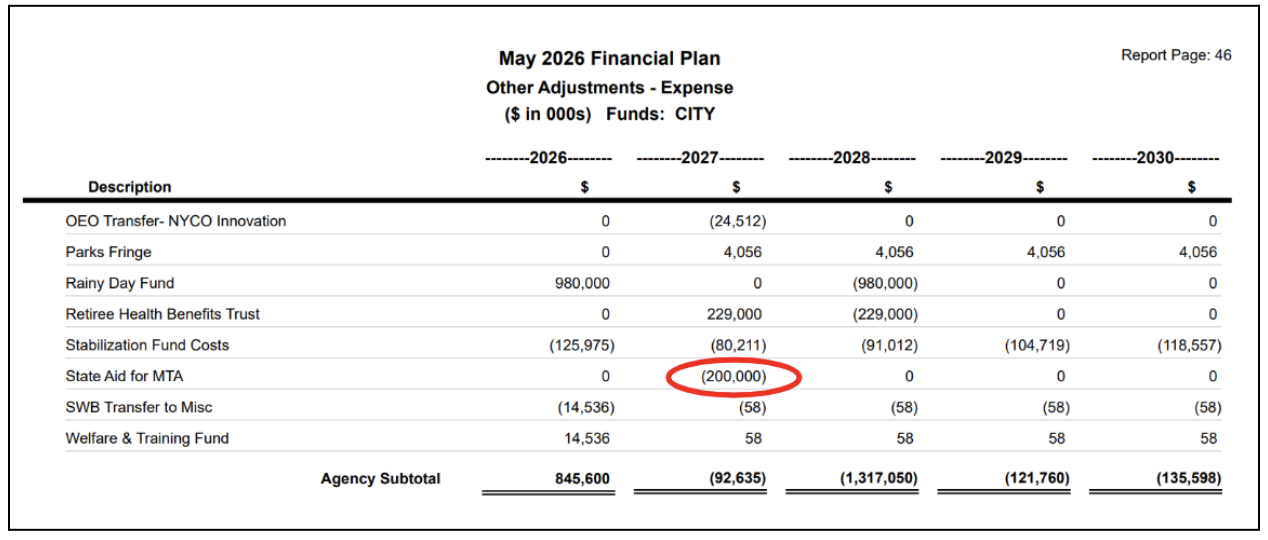
And the city’s May 2026 Financial Plan Reconciliation – which reflects changes to the budget after the Hochul-Mamdani pact – shows the $200 million savings for the city as “State Aid for MTA” (see the screenshot below):
Throughout the spring, everyone — including the city and state comptrollers — asserted that the state would indeed pay the city’s $200-million contribution to MTA Bus.
City Comptroller Mark Levine, for example, described the $200 million as a “one-time shift to the state,” according to his office’s May 2026 Monthly Economic Newsletter.
A similar report a month later by state Comptroller Tom DiNapoli also said the $200 million reflected “city-funded MTA-related costs” that would now be picked by “by the state.”
By late June, however, the fiscal watchdogs figured out that they’d been had.
Levine suddenly revealed that “this change was not included in the State’s Enacted Budget and must be made in the MTA financial plan,” according to his office’s June 2026 comments on the city budget.
Finally, in its preliminary budget issued in July, the MTA indeed said it would absorb the $200 million loss.
“The [budget] reflects a corresponding one-time reduction in the expected city subsidy reimbursement, which will be covered by MTA resources,” the document states. “Despite the reduction in city reimbursement, the MTA Plan continues to provide the resources necessary to maintain current bus service levels for customers.”
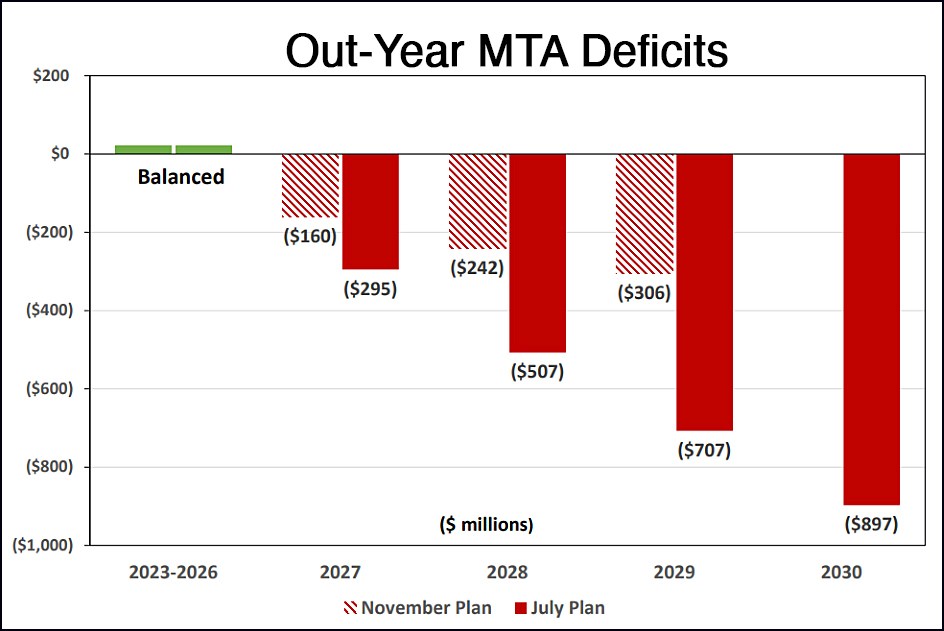
Advocates are not convinced. First, Reinvent Albany pointed out that the plan itself shows that predicted deficits have worsened, despite the 4-percent fare and toll increases in 2027:
Second, the raid undermines public trust.
“Raiding public transit funds or trying to balance the city budget on riders’ backs makes New York less affordable and erodes trust in our government,” said Danny Pearlstein, the spokesperson for Riders Alliance, which has supported regular fare hikes. “MTA enforcement agents recently got so aggressive that they assaulted bus rider Kyle Taylor over a $3 fare, so it’s pretty clear our transit system needs the missing $200 million and the governor should make it whole. Raising fares while raiding funds is not the policy New Yorkers expect from our transit champions in public office.”
Fauss added that those “champions” may appear that way in public, or to some reporters, but this particular shell game suggests a different portrait is in order.
“The MTA is getting $200 million less than it is supposed to from New York City — all while the governor could claim credit for helping the city to balance its budget,” she said. “Furthermore, none of this was written down in the state budget agreement. We had to dig through the financial records to even figure out what happened here.”
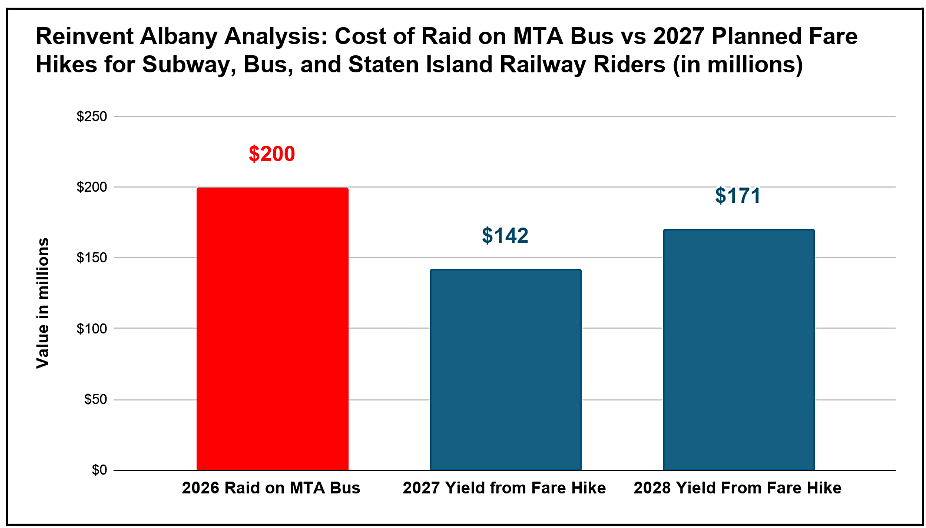
The $200-million MTA loss more or less wipes out the revenue it anticipated from next year’s fare and toll hike, Reinvent Albany added, which will make it harder for Mayor Mamdani to realize his signature campaign promise of buses that are both fast and free:
Streetsblog reached out to City Hall and the governor’s office for comment on Friday. We will update this story if we hear back.