Election Recap: Street Safety and Transit Won Big Across the Empire State on Tuesday
New York backers of mass transit, livable streets and cities won big on Tuesday, as Democrats vanquished foes of congestion pricing, sent street safety champions to Congress and re-elected a governor who has enthusiastically embraced transit.
Congestion pricing’s mightiest haters turn out to be extremely meek
Nassau County Executive Bruce Blakeman and U.S. Rep. Mike Lawler (R-Hudson Valley for a couple more months) made a big show of opposing congestion pricing. Blakeman promised to end the toll and attacked the MTA throughout his campaign. Lawler, for his part, spent the past few years lying and whining about the same toll.
Neither politician survived Tuesday’s wave. Blakeman couldn’t even find enough voters in Nassau County who were mad enough about congestion pricing to lift him to victory on his home turf, and Lawler conceded to his opponent Cait Conley before midnight — even before election workers in Westchester County could hand-count a quarter-million ballots in the Democratic stronghold.
Elected officials should remember this fact about congestion pricing: fewer than 300,000 people drive cars into Manhattan’s Central Business District every single day from around this vast metropolitan area. There are simply not enough drivers whose opposition to congestion pricing would propel you to higher office.
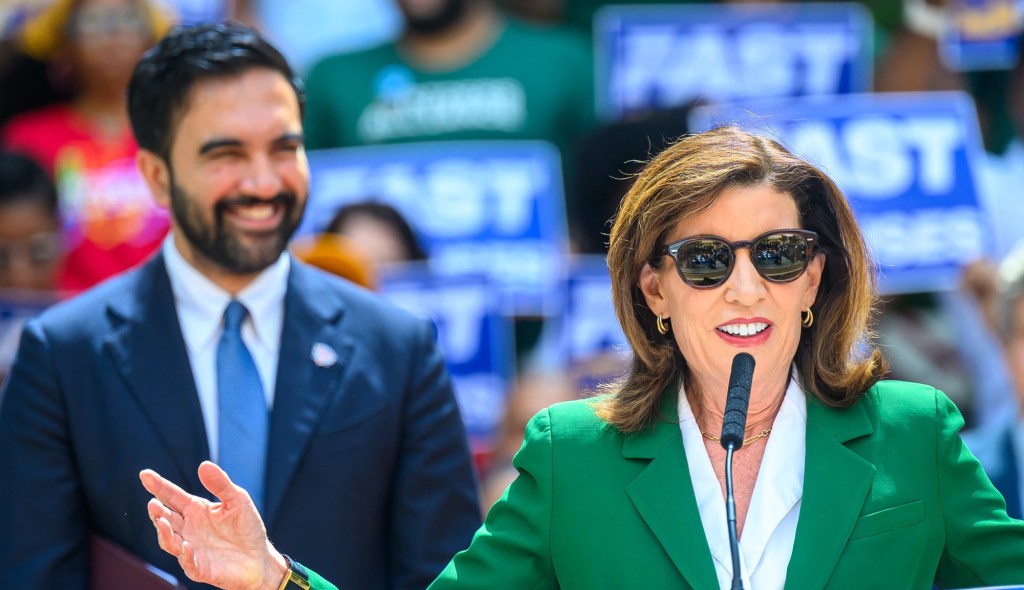
Gov. Hochul, America’s transit champion, must build Nassau County II
In 2023, Gov. Hochul dreamed of solving New York State’s housing crisis by upzoning certain parts of the New York City metropolitan region that had spent decades refusing to build new homes. Her commendable ambition died on the rocks of her own inexperience and the catchy but evil chant, “Local control, not Hochul control.”
But that was three years ago. Get ready to learn Hochul control, not local control. In addition to trouncing Bruce Blakeman across the Empire State, America’s most prominent Bills fan won Nassau County — her opponent’s home and a longstanding metonym for NIMBYism.
If there was ever a time to go big on transit-oriented development and finding a way to fit one million more people into Nassau, this is the time to push it through. Nearly 80 percent of New York State voters support the construction of multifamily housing around transit stops.
Furthermore, Hochul now has time to fulfill an impressive slate of pending projects, including the Interborough Express, the second phase of the Second Avenue Subway, the 125th Street crosstown subway, Penn Access and the joint city-state plan to speed up buses. Hochul will oversee the creation of one more MTA capital plan during her new term, when the agency publishes its 2030-2034 five-year plan. She’ll be responsible for the headache of funding that plan, too.
Southern Brooklyn gets the blues
Recent election cycles have seen southern Brooklyn going increasingly Republican, as Democrats wrote off the region and conservatives made inroads among immigrant populations frustrated by crime or prices. But, as in so many states across the country, Republicans managed to completely alienate those voters by rewarding these them with ICE raids and tariffs that made their lives here harder and more expensive.
Republican State Sen. Steve Chan and Assembly members Lester Chang, Alec Brook-Krasny and Michael Novakhov all lost to Democratic challengers in districts that encompass neighborhoods including Bensonhurst, Sunset Park, Bay Ridge, Midwood and Sheepshead Bay.
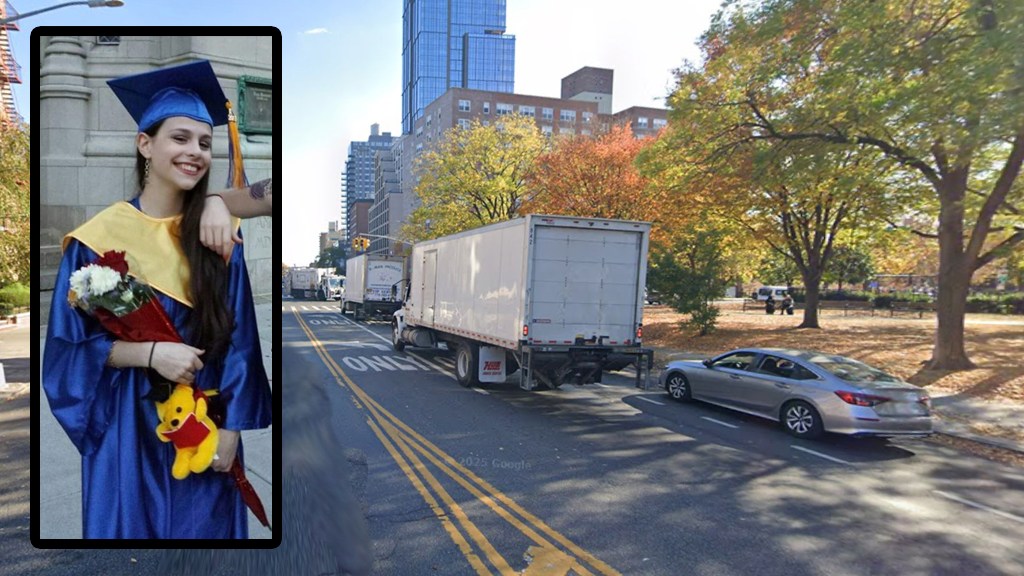
Streetsblog readers may remember Novakhov as the pol who essentially defended speeding after a recidivist speeder struck and killed a mom and two children on Ocean Parkway. He later signed on to the “Stop Super Speeder” bill that passed in Albany earlier this year.
It’s a bird! It’s a plane! It’s a supermajority!
In January, Democrats will control at least 46 out of 63 seats in the state Senate, giving them a historically comfortable supermajority in the upper chamber of the legislature. That provides a big cushion if legislators want to override Hochul’s veto on any of their priorities, and leaves room for defections from bills that certain members might find unpalatable.
For Streetsblog purposes, the supermajority will include two new street safety champions into the senate: Nyack Mayor Joe Rand and Dutchess County Legislator Lisa Kaul. Both stressed their livable streets bonafides in office and on the campaign trail. Rand wants to make his district more walkable and bikeable and also wants better MTA operations west of the Hudson Valley, while Kaul has talked about dragging the New York State Department of Transportation’s attitude out of the car-centric thinking of the 1950s and 1960s.
The safe streets route to Congress
With the formality of the election out of the way, New York’s Congressional delegation will add at least three new members with a real interest in street safety. Micah Lasher told Streetsblog in June that he believes the federal government should make street safety a condition for getting transportation funding, and locally he said that he welcomed the 72nd Street bike lane proposal.
Brad Lander is an extremely well-known quantity on street safety. As a City Council member, he devised the Dangerous Vehicle Abatement Program in order to give the city’s automated camera enforcement some teeth, and constantly provided oversight of the city’s failure to properly implement it. Lander supported the Ninth Street protected bike lane, the redesign of Fourth Avenue and answered the Dave Colon Open Challenge in 2025. In Washington, he’ll push to create a 50-50 split between highway and transit funding for surface transportation rather than the current 80-20 split towards highways.
The pair will head to the capital with Claire Valdez, who will succeed Nydia Velázquez in Congress and penned an ambitious vision for federal involvement in transportation for Streetsblog. Valdez wants to pursue ideas like funding the QueensLink, giving more federal money to cycling infrastructure, sending money from the FHWA directly to cities instead of routing the money through state DOTs and directing more federal money to mass transit accessibility projects.
U.S. Rep. Alexandria Ocasio-Cortez, meanwhile, seems poised to run for higher office — either the senate or presidency. Ocasio-Cortez talked about changing the 80-20 split, and a lot more, on a bike ride with Streetsblog earlier this year:
Mamdani voters delivered for Hochul
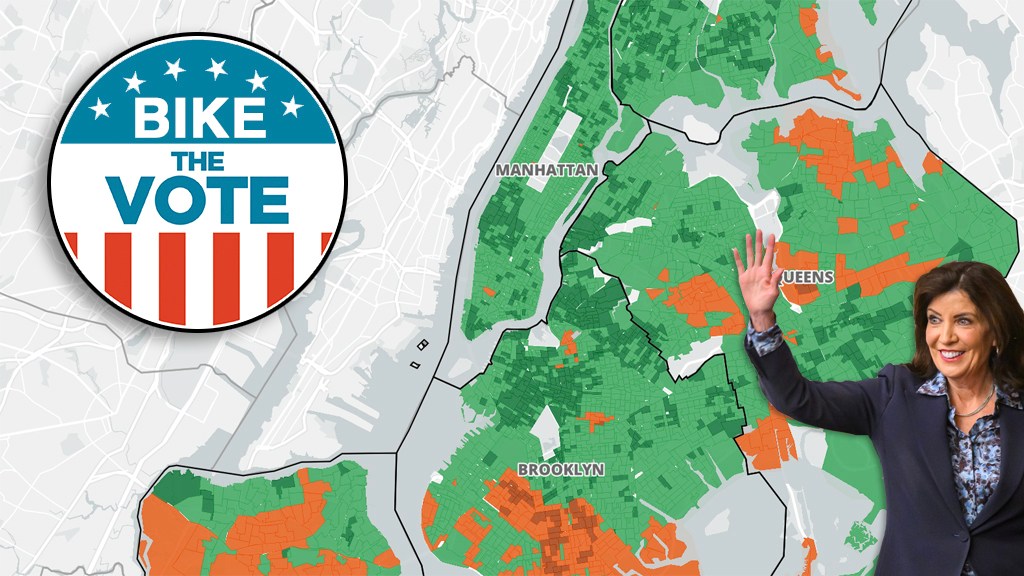
Gov. Hochul ran up the score big time in New York City, capturing 76 percent of Gotham’s vote. Even though he wasn’t on the ballot this time, Mayor Mamdani can claim some credit.
Analyst Michael Lange found that in the Mamdani-friendly Commie Corridor, Hochul’s vote share rose by 38 percent, compared to 18 percent in the rest of the city.
Two of Mamdani’s big campaign promises, free buses and universal childcare, will require state help to come to fruition. That means Hochul must either raise taxes or find a couple billion dollars in the state’s couch cushions.
Between the Assembly and state Senate, Mamdani and the Democratic Socialists of America sent 11 legislators to Albany to support the mayor’s agenda. Next year, Hochul and Mamdani will find out what each can get out of the other when neither has to worry about an election.
Mamdani’s show of force also had some closer-to-home implications: All five of ballot initiatives passed, including Proposal 1 to speed up outdoor dining approvals and Proposal 3 to clear bureaucratic hoops that slow bike lane and bus lane implementation.