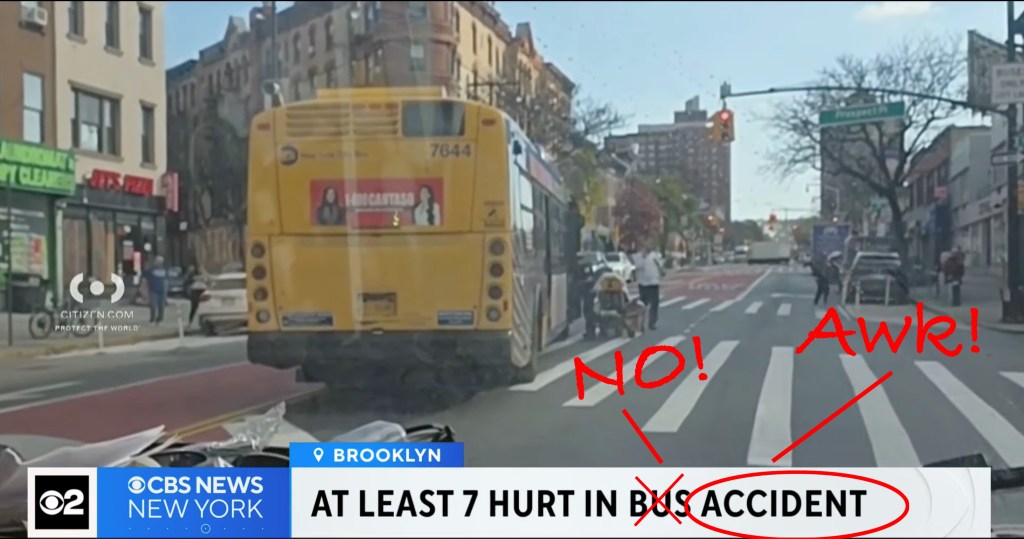
How The MTA Plans To Build Up America’s Bus Manufacturing Base
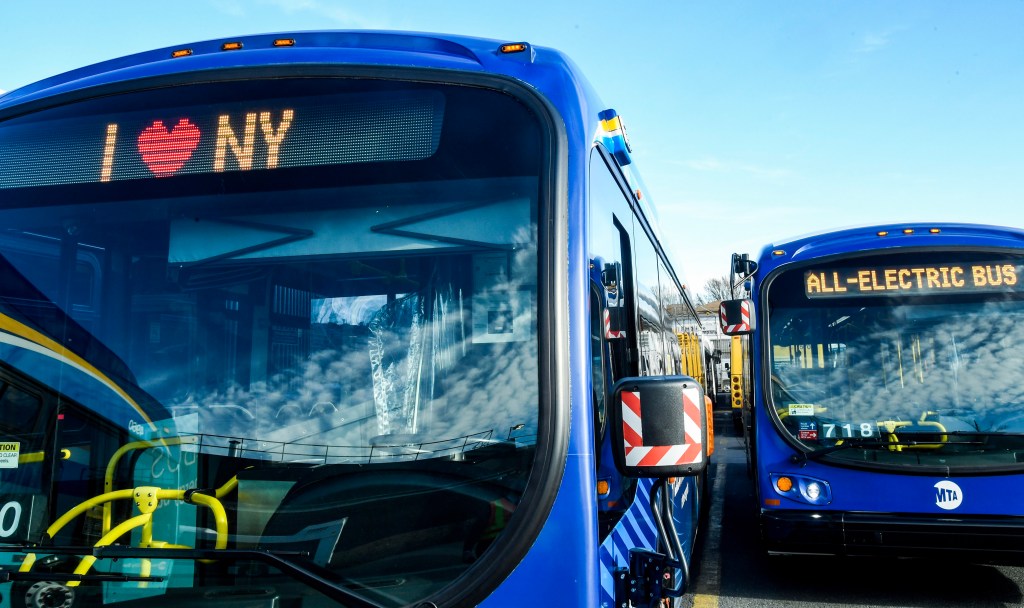
The MTA wants to buy a small number of buses from international bus manufacturers in order to encourage them to set up shop in America — an ambitious “try before you buy” strategy that could give the agency more options when it acquires thousands of buses in the near future.
Earlier this year, the MTA explained its struggle to find reliable zero emissions buses built in the United States, and paused an order for almost 500 electric buses from New Flyer until the manufacturer could ensure the company’s buses could consistently complete a day’s service. But instead of twiddling their fingers, agency executives are recruiting international firms in an attempt to develop a more competitive manufacturing environment while still taking advantage of federal help for bus purchases.
“Buy America” rules incentivize American transit agencies to purchases buses made in the United States, because the federal government will subsidize 80 percent of their cost. According to a recent study by the Eno Center for Transportation, the average price tag of an American zero-emissions bus is approximately $1 million.
The same Eno study found American bus manufacturing has dwindled to only two main firms: Gillig and New Flyer. Gillig does not bid on requests for proposals from large transit agencies, which means the MTA has little choice but to continue buying New Flyer buses even as transit companies around the country reported similar problems with its electric buses.
Now, in order to better understand the global bus market, the MTA will purchase a small number of buses from overseas manufacturers without any federal subsidy. It will then stress-test those buses by running them on city streets. By doing so, the agency hopes to learn more about the rolling stock from new companies and how they work in the Big Apple.
The pilot will place a major emphasis on electric buses, which are popular and widely used in Europe but have yet to gain traction in the United States.
Transit officials are currently racing to replenish the MTA’s bus fleet with new buses so and take older, less reliable buses off the road. Last month, the MTA published a request-for-proposals for 650 new buses that run on compressed natural gas.
But the scale of the entire bus replacement program goes far beyond last month’s RFP. According to an outside engineering firm that monitors the MTA capital plan, the agency must purchase 500 new buses per year, and MTA executives say the agency needs to order 4,500 buses over the next few years.
The agency hopes the pilot, and the knowledge it gains from stress-testing, will help it lure non-American manufacturers who make buses that satisfy the agency’s needs. The idea is to provide the chosen firms with the promise of immediate business, to accomplish the monumental task of keeping the MTA’s bus fleet in a state of good repair. It’s plenty of desirable work for the right firm, but also so big that the MTA is skeptical a single new entrant to the American market will suffice.
“The size of our orders are very interesting to these companies that are making service and delivering a great product in Europe and Asia,” said Jessie Lazarus, the MTA’s head of rolling stock procurement. “But they’re deterred a bit by the scale, which is sort of the irony around it. We need so many buses, so we obviously need to think really broadly about who those partners can be, or cast a really wide net as we’re doing that market outreach because we can’t rely on just one new partner. We need to think about bringing in a few more. But I think for any new manufacturing relationship, we need to de-risk this for both sides.”
In this case, Lazarus explained that the small orders take the risk out of both sides of the relationship: the MTA doesn’t over-commit to a single company, and can learn about new bus designs used around the world, while bus manufacturers don’t need to navigate the process of establishing factories in America without the certainty of future business.
“We are going to run several pilot fleets,” Lazarus said. “Think of the fleet size as five to 10 buses. We’re going to run those buses for 52 weeks. We’re gonna put them into service and at depots, we are gonna give those manufacturing partners an opportunity to learn more about the New York City operating environment, and we’re going to give our teams an opportunity to learn more about a design that is unfamiliar to us but not unfamiliar to bus service globally.”
European and Asian manufacturers bring certain challenges: some are unaccustomed to placing the operator booth on the left side of the chassis, while others and may not be suitable for dense urban environments. But Lazarus noted that the MTA’s fact-finding mission is receptive to designs that differ from the expectations of the MTA and its bus passengers, if the design is still familiar enough to drive in America.
“If we get close on those dimensions, then we look really closely at [the manufacturer’s] technical specifications, what does this bus look like,” she said. “And if it’s pretty different than what we have, but it’s working really well in a lot of urban areas with varied weather conditions, we think it it would be a good fit to to at least try it in New York.”
MTA leadership has struggled to reconcile two important and seemingly competing goals: completing the transition to a fully zero-emissions bus fleet by 2040, and also ensuring the buses the agency owns are able to stay on the road.
Although those goals are not in natural competition, the central roadblock to the MTA’s effort to acquire more zero-emission buses is New Flyer — the only manufacturer from which the MTA can buy electric buses and still enjoy federal matching funds that cover 80 percent of the cost of new buses under the Buy America program. As a result, the MTA owns a handful of New Flyer electric buses that continue to suffer from major problems with battery charging and equipment failure. That makes it impossible for these buses to complete their runs without breaking down.
Understandably, the MTA has held off on acquiring more rolling stock from New Flyer. But that also means the agency is running hundreds of buses that are more than 12 years old — the effective lifespan of a bus before breakdowns become more frequent.
Another difficulty stems from the companies that make parts for electric buses, such as batteries, seats, doors and HVAC systems. These firms have experienced the very same kind of consolidation and industry shrinkage that destroyed American bus manufacturers. Lazarus said the MTA hopes that overseas companies who make bus components will follow bus manufacturers to the states.
“The constraints on low and no emissions busses in the U.S. have been in part on the [original equipment manager] side, but also on the supplier side,” she said. “Buses have lots and lots and lots of subsystem components, and unfortunately, the story in the subsystem supplier market is pretty similar to that in the [original equipment manufacturer] side, which is a ton of consolidation and not a lot of competition.”
Lazarus continued: “My hope here is that our work to bring in new bus manufacturers will also demonstrate to their suppliers, that if we’re able to prove that those components work for our operating folks and work in our operations, and we generally like our relationships with the the bus manufacturers, we might also be able to encourage some of their subsystem suppliers to come to New York State also and hang a shingle.”
The MTA’s not-so-secret weapon: a well-funded capital plan
The MTA’s plan to engage foreign manufacturers and put their buses on the road is a decidedly non-traditional strategy that its peer agencies in other cities and states would likely struggle to pull off. But the MTA has a not-so-secret weapon to lure manufacturers here: its fully-funded and very large capital plan, which sets aside a big chunk of money for rolling stock.
“Having a funded capital program with $12 billion set aside for rolling stock and very specific commitments on bus replacement and bus purchase is the biggest tool that we have, and the one and the biggest tool that we would need,” Lazarus said.
“We looked initially in the United States for how to spend this money and how to get these buses as quickly as we need them,” she added. “We don’t have the the option to to do that, and so we’re investing these dollars in relationships with new manufacturers that we can bring to the United States and to New York State, hopefully specifically.”
A bus manufacturing company won’t show up in America out of the goodness of its executives’ hearts, and it certainly won’t do so if there’s any chance the MTA will decide its products don’t work in the five boroughs. The pilot fleets allow the MTA and the bus builders to avoid that initial risk.
Tariffs pose another challenge. President Trump has repeatedly applied the import taxes as an unpredictable cudgel. MTA Chairman and CEO Janno Lieber has bemoaned how they have forced the MTA to scrounge up an additional one billion dollars for rolling stock, because the federal government doesn’t exempt parts purchased overseas even if firms used them to build trains and buses in America.
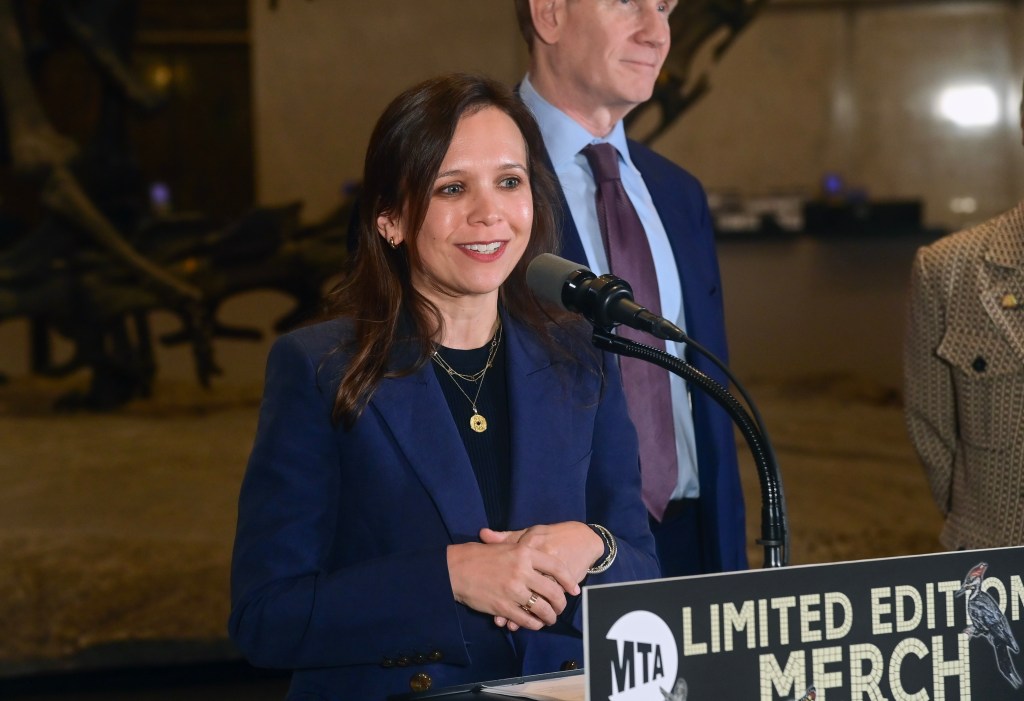
Lazarus echoed her boss’s concern but also suggested the Republicans’ recent midterm losses could relieve the situation.
“The major elephant in the room for all of these companies selling to North America and setting up shop here right now is the tariff environment,” she said. “The biggest obstacle that I’m talking to folks about. We can overcome a lot, but we can’t really overcome the current volatility of the tariff environment. That’s a major deterrent, and I hope we’ll start to see something change on that.”
Environmental advocates praised the MTA’s new strategy.
“Cities around the world successfully run transit bus fleets that are majority electric,” said Rachel Spector, the deputy managing attorney of Earthjustice’s northeast office. “New York City shouldn’t be left behind, and it’s great that MTA is pursuing new vendors. Electric buses can work for New York City and are critical to cleaner air and meeting our climate targets. Especially in light of surging diesel prices, it’s never been clearer that electrification and defending healthy transit budgets go hand in hand.”
Lazarus hopes the pilot will benefit other American transit agencies who need reliable buses, and potentially revive the country’s bus manufacturing sector.
“If we’re able to issue a request for proposals for hundreds or thousands of new buses, that plus the collective demand from other public transit agencies will be attractive enough for [manufacturers] to set up shop in North America,” she explained. “This is really aimed at how can the MTA put these dollars to work to support the health and diversity of the bus ecosystem in North America. We don’t want to be buying from abroad once we solve the problem, we’re trying to solve the problem so we don’t have to do that.”