Power Outage: MTA Delays Bus Electrification Amid Manufacturer Challenges
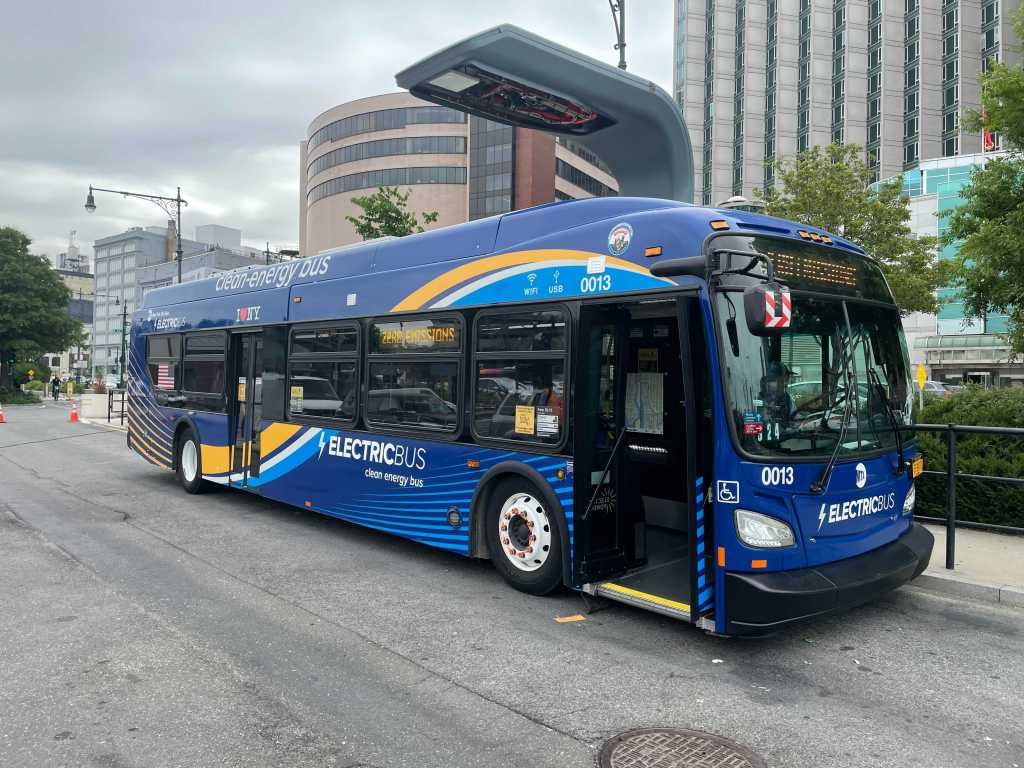
Electric bus or electric bust?
The MTA is falling behind on bus electrification as the U.S. bus industry collapses under pressure from inflation, supply chain challenges and technological shortcomings, officials told the MTA Board on Monday.
Transit officials have paused orders on almost 500 electric buses they expected to receive last year and next amid reliability issues with the MTA’s existing e-bus fleet: The agency’s existing electric buses only go 2,500 miles on average between major failures that take them off the road, compared to 8,500 miles on average for diesel buses, Jessie Lazarus, the MTA’s head of rolling stock procurement, told agency board members.
In a presentation to the MTA Capital Committee, Lazarus blamed the issues on technology as well as “COVID-era inflation and supply-chain chaos.”
“The bus industry is continuing to stabilize itself from COVID-era inflation and supply chain chaos,” she said. “The new technology, particularly in the low-to-no emissions categories, are continuing to mature and facing some challenges, and these two factors combined have prevented us from meeting our historic replacement rate targets.”
Like many manufacturing concerns, the bus industry faced labor market instability, chip shortages, inflation and a rise in costs of components in the wake of the pandemic, a 2024 report from the American Public Transportation Association found.
One company, Nova Bus, exited the U.S. market in 2025, leaving the MTA and other American transit agencies a shrinking pool of manufacturers to draw from.
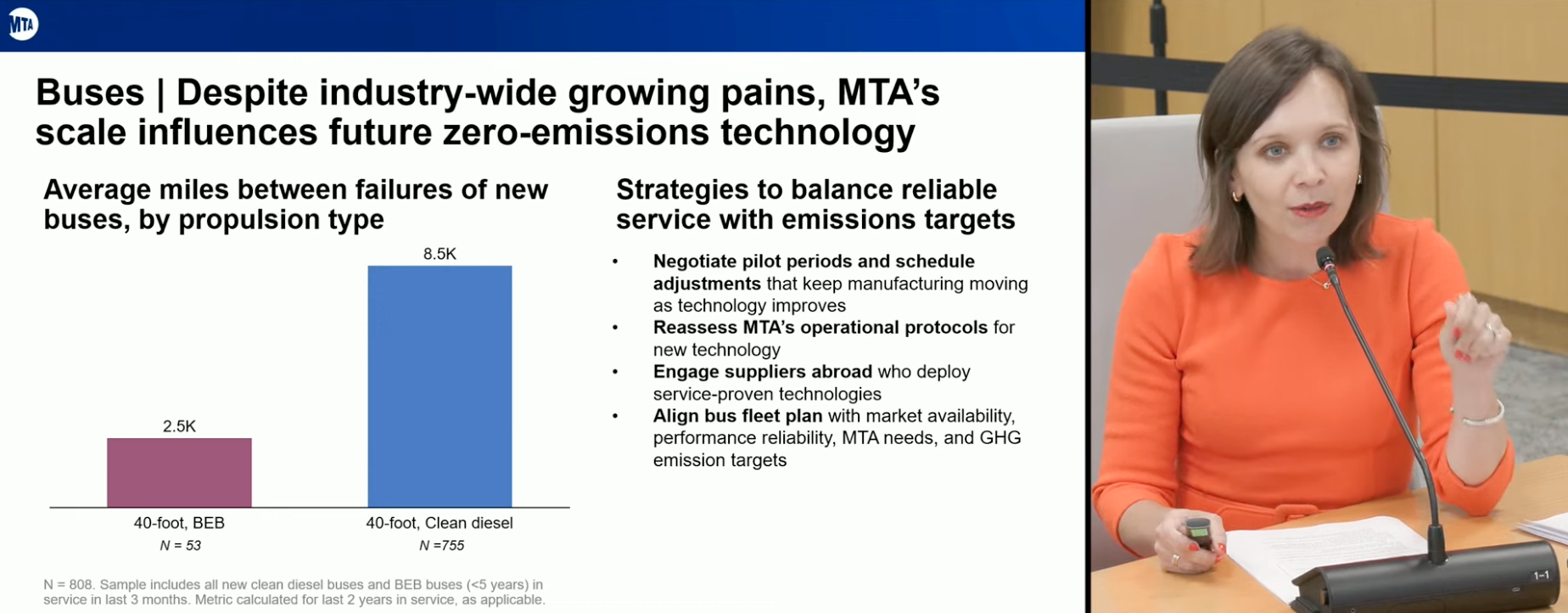
The MTA’s 60 New Flyer electric buses have been an issue since they went into service. Last year, officials paused a delivery of 205 more electric buses as various malfunctions took its existing electric fleet off the road for major report work. An agency review found that just 60 percent of the battery-electric buses could stay in service for a full day due to battery drainage and electric component issues.
The 2025 order remains on hold, as does an order of 265 electric buses that was due to arrive in 2027, Lazarus said on Monday.
Electric bus unreliability threatens the MTA’s legally required transition to a zero-emissions fleet by 2040, but also its schedule for replacing out-of-date buses.
The recommended service life of a bus is 12 years. According to the independent engineering firm overseeing the MTA’s capital program, Michael Baker International, the MTA needs 490 new buses per year in order to keep up with that — but because of electric bus reliability issues, the agency received just 161 buses in 2025 and is on pace to receive 370 buses in 2026.
Another challenge: Federal “Buy America” requirements require buses bought with federal funding be built in the United States using at least 70 percent domestic components. That means bus makers from countries with more reliable electric buses need to set up shop stateside to build for American transit agencies. So the MTA has just two manufacturers to choose from after the end of Nova Bus’s U.S. operations.
Advocates for electric buses noted the weakness in the market and suggested that the MTA’s size as a purchaser could bring better offers to the table.
“The electric bus market in the US is weaker than it needs to be,” said Sasan Saadat, a senior research and policy analyst at Earthjustice. “Stronger policy drivers and MTA’s purchasing power can be leveraged to improve product offerings from manufacturers. The UK, Europe, and Asia have all leveraged strong e-bus policy to create new manufacturing capacity. Good electric bus policy can also be good industrial policy.”
The MTA itself seems to be thinking along similar lines.
Lazarus told MTA board members that the agency still needs to ink contracts for 1,608 new buses in the near future, and that that sheer number could possibly entice new players into the U.S. market.
“We’re engaging new manufacturers to the MTA and outside domestically and also abroad to see if the size of these awards could be attractive to manufacturers to come to North America and take another look at the US bus market,” she said. “It’s very early, but we’re taking this very seriously, and the funding and the size will help us here tremendously.”
If New Flyer can’t figure out how to keep its electric buses on the road, the engineer recommended the MTA convert some of the electric buses to gas or hybrid buses in order not to fall too far behind the replacement cycle for buses.
Without new buses, the MTA needs to engage in maintenance dark arts to keep older buses on the road and keep service levels the same, officials said.
That specialized work to keep older buses in service is funded from the agency’s rider-funded operating budget — as opposed to the new buses, which come of out of the capital budget.
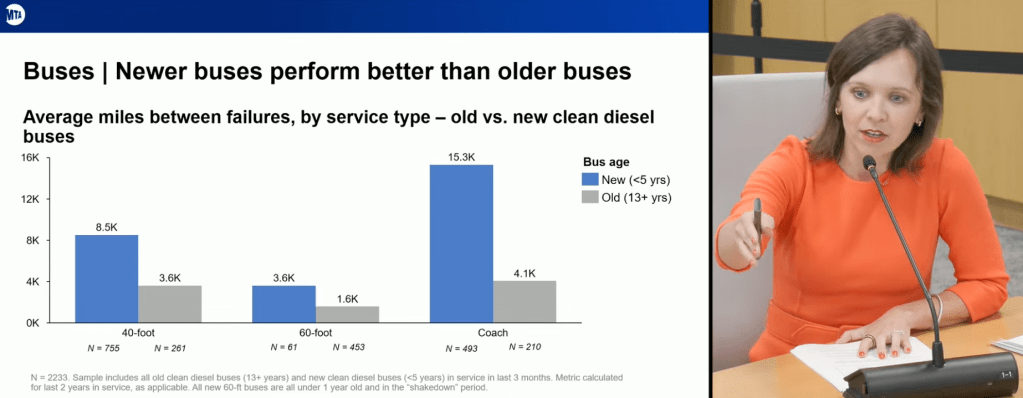
Buses that are over 13 years old are significantly less reliable than newer buses, Lazarus noted:
One bright spot with the electric transition: Upgrades to bus depots themselves are moving along as planned, with seven depots set up or on pace to be set up for electric bus charging by 2027, and planning underway to bring online four more depots.
For now, Lazarus said that the agency is buying as many new buses as it can to keep from falling too far behind the curve.
Agency executives pledged to push New Flyer to figure out how to keep electric buses on the road, but said their top priority is vehicle reliability.
“The number one issue here is making sure people ride mass transit,” MTA Chairman and CEO Janno Lieber said following the presentation. “The first priority is making sure that service is good and that there are new buses in operation. We would prefer they were zero-emissions buses of all varieties but our first priority has to be to meet the customer needs so people continue to use mass transit to get where they’re going in a city where half the people don’t own cars.”

Read More:
Streetsblog has migrated to a new comment system. New commenters can register directly in the comments section of any article. Returning commenters: your previous comments and display name have been preserved, but you'll need to reclaim your account by clicking "Forgot your password?" on the sign-in form, entering your email, and following the verification link to set a new password — this is required because passwords could not be carried over during the migration. For questions, contact tips@streetsblog.org.