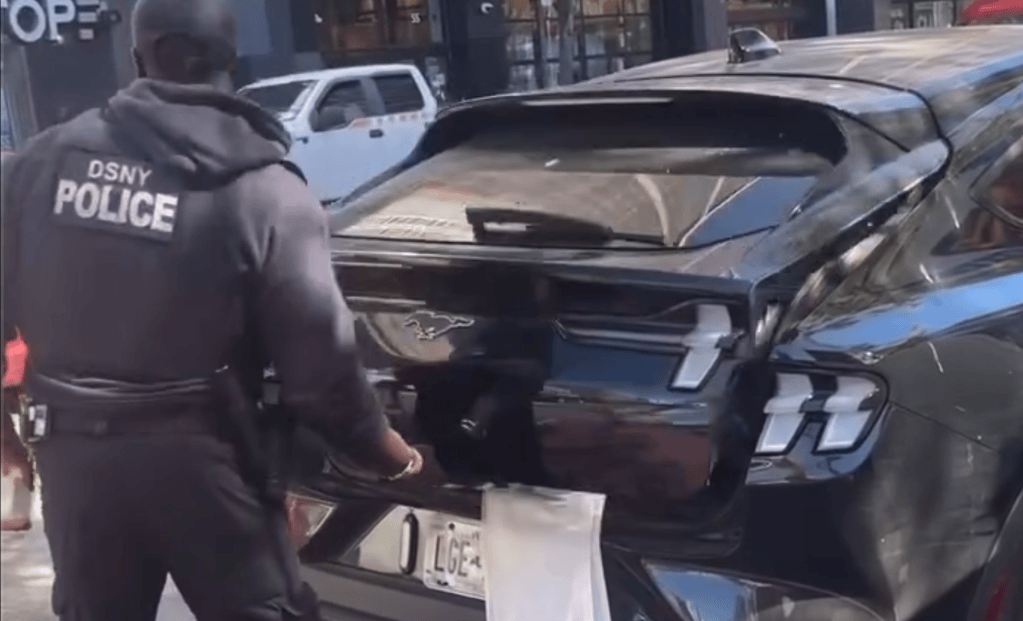
Eyes on the Street: It Is Time For Kent Avenue To Be Car-Free
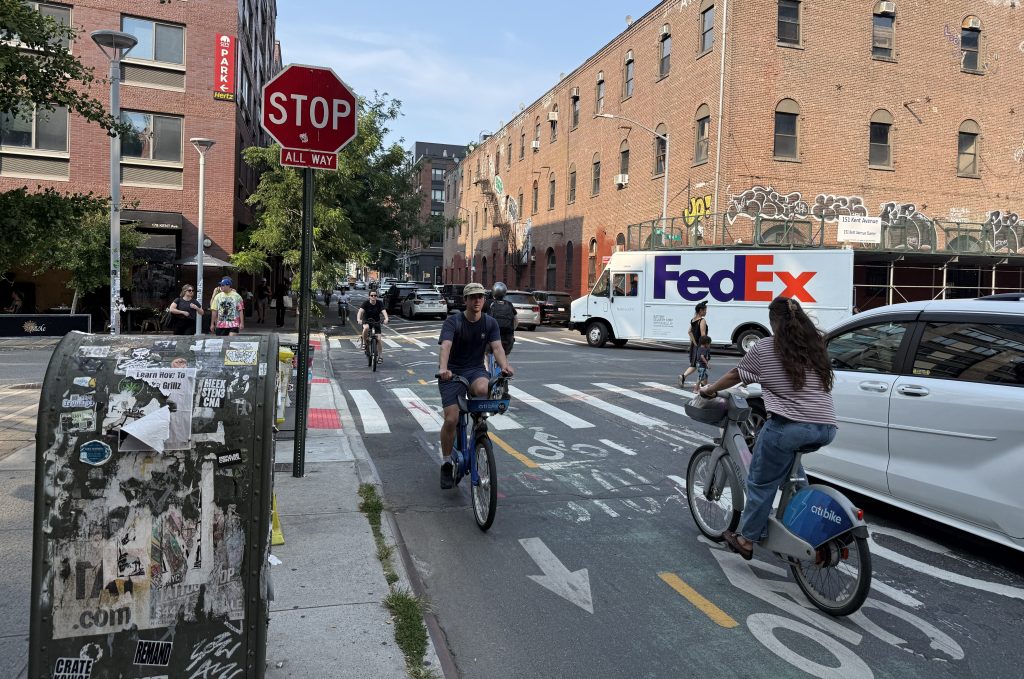
It Kent have cars.
The Kent Avenue bike lane — once a signature project that safely connected Greenpoint to the rest of Brooklyn with a two-way protected route — has become such a victim of its own success that it is effectively useless.
On the corner of N. Fourth Street, Streetsblog counted 196 cars, buses and motorcyclists on the roadway, compared to almost 300 cyclists riding in the bike lane. Five years ago, Streetsfilms counted only one more bike lane user than car — making it clear that the biking explosion has fully infiltrated the neighborhood.
“We’ve experienced a major boom and we need our infrastructure to keep up with it. And that means a wider bike lane and a safer street for everybody,” Lincoln Restler, the neighborhood’s council member, told Streetsblog.
Williamsburg has added more housing to the New York housing stock than any other community district and as a result, the neighborhood has exploded with new neighbors, many of whom are cyclists. Still, the Department of Transportation hasn’t significantly changed the bike lane since it was installed in 2009.
“It’s a backward process,” said Restler (who was quoted in a 2021 Streetsblog story demanding that the bike lane get widened). “When the city rezones a neighborhood like Williamsburg, they don’t install the traffic-calming measures that will make it safe for everybody moving in here. Instead, they wait for enough crashes to occur that warrant stoplights and stop signs and other traffic calming measures.”
In 2024, advocates wrote to DOT requesting a wider bike lane and more pedestrian space in response to the increase in bike usage along the avenue — up by 35 percent since 2017 to more than 3,500 daily users, according to DOT data.
“The bike lane was great, but it’s been overwhelmed,” said Jon Orcutt, a former DOT official under Mayors Mike Bloomberg and Bill de Blasio and an author of the letter. “The bike lane was cutting edge in 2010, but the avenue and usage of bikes in the city has exploded.”
Cyclists biking along the strip agreed. “I wish it was bigger,” said Williamsburg resident Renner Colbourn, who said he uses Citi Bike to travel up and down the street multiple times a day. “There’s not enough space to pull over and park.”
The 2024 letter recommended that one of the two parking lanes be repurposed to widen the bike lane. Colbourn agreed.
“It sucks to compromise for cars,” he said.
Streetsblog took a ride along the lane on Monday to see what’s going on.
What’s ugly?
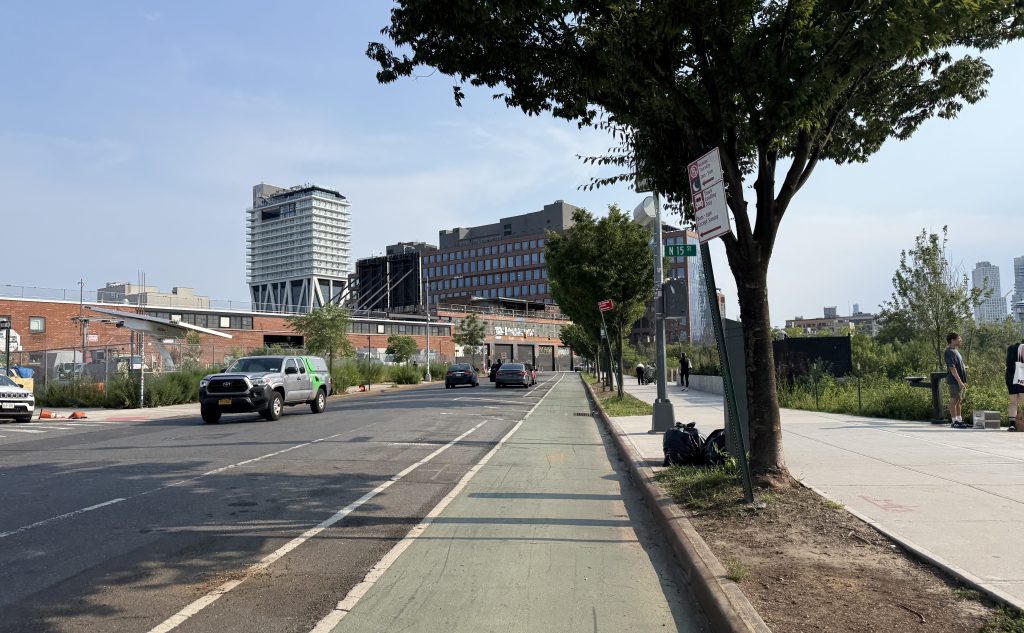
Heading south, the lane starts with a smooth but worn stretch of protected lane, starting at Kent Avenue and Quay Street, right on the border of Williamsburg and Greenpoint. It’s largely protected by a parking lane — which was mostly empty when Streetsblog rode by, but was still wide enough to sufficiently protect cyclists — and a few jersey barriers.
But as soon as cyclists get to the narrower, busier streets closer to the center of the waterfront residential zone, things get hairy. Brooklyn residents heading towards the parks on the waterfront, the thousands of new apartments in the neighborhood’s high rises, and the many grocery stores and other shops along Kent Avenue are now largely visiting these spots using their bikes or feet — not cars.
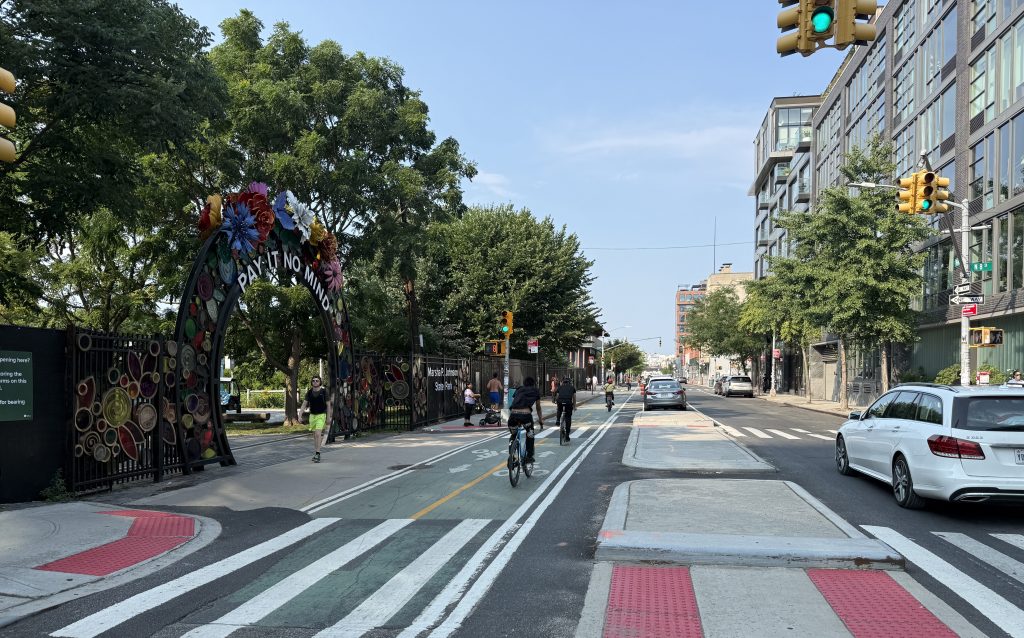
Instead of a wider bike lane and sidewalk, most of the roadway is still reserved for the small number of cars rolling through, or being stored in, the neighborhood.
When pedestrians or cyclists have to venture across one of the many intersections on the strip — many of which don’t have crosswalks, stop signs or traffic signals — no one seems to know where to go or what to do.
“Folks sometimes don’t look before they cross so that can get a little hectic,” said Patryk Perkowski, a cyclist travelling along the route.
According to Restler, there are at least three more traffic signals on the way, thanks to DOT. Along the ride, Streetsblog witnessed countless near-misses, pedestrians stopping in the bike lane, cars turning left into cyclists (including a Streetsblog reporter … at N. Fourth Street), and cyclists crossing Kent Avenue to the west-side bike lane from the east-side streets.
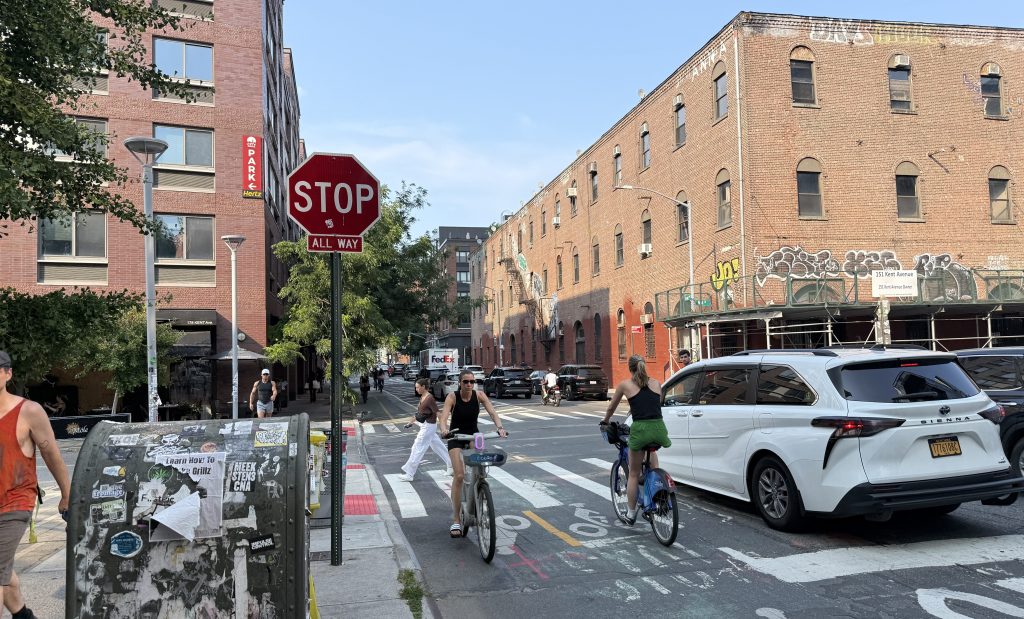
The biggest change to the bike lane wasn’t in the lane itself, but in the neighborhood, which boomed over the last decade with residential and commercial development.
Restler says the population boom has impeded the effectiveness of the lane — but much less new development is in the pipeline.
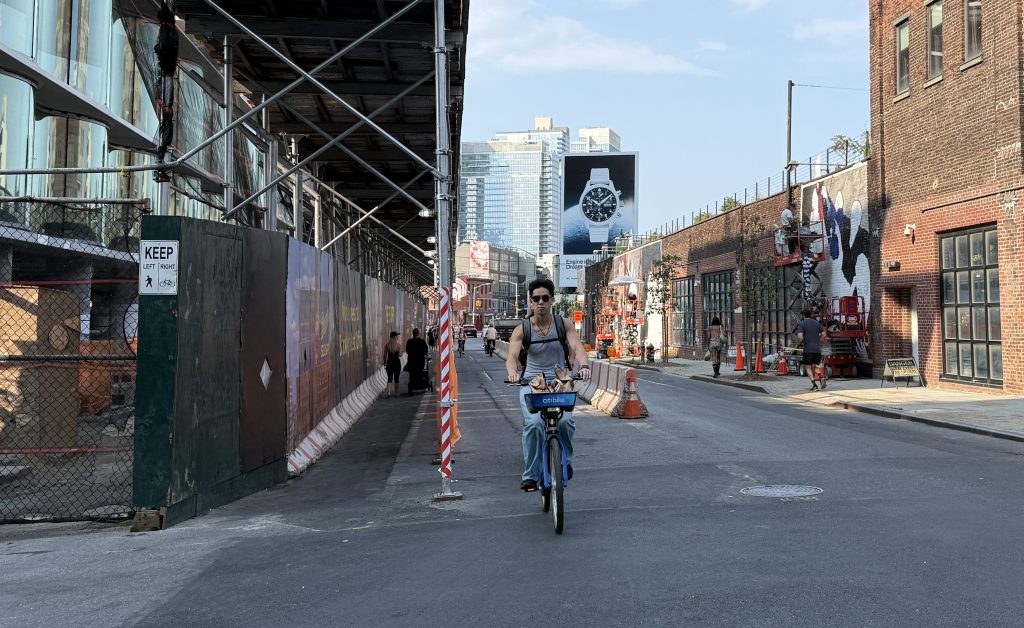
One of those developments is between S. First and S. Second streets. Only a small sign directs cyclists and pedestrians into their respective detour lanes, and it’s easily missed — with pedestrians sometimes ending up in the bike lane.
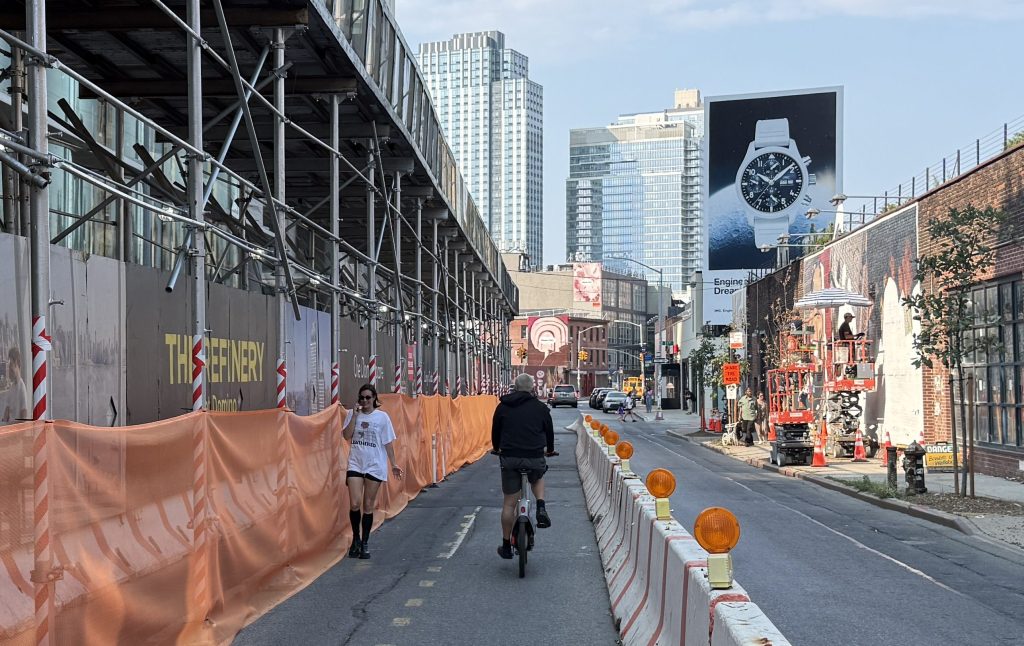
What’s right?
Once southbound cyclists make it past the bustling center of Williamsburg, they are back to smooth sailing down a kermit-painted lane, protected by parking and a buffer-zone, or only a wide buffer-zone.
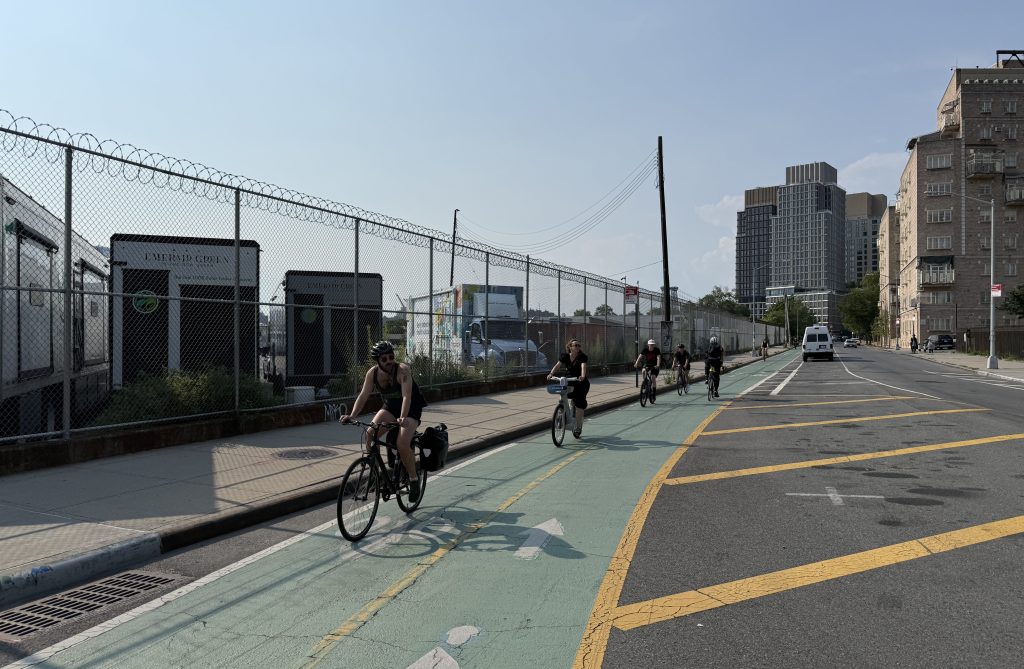
Past Clymer Street, cyclists make it to a section of the Kent Avenue bike lane that is, essentially, the bike-lane gold standard: a grade-separated lane.
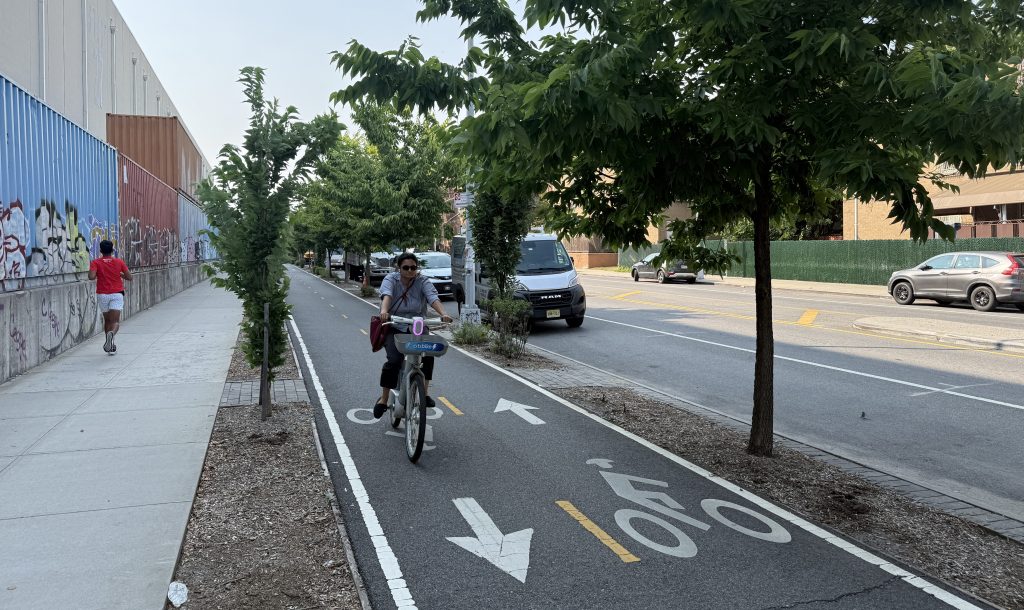
This means the lane is at a different level than the roadway. It’s protected from walkers by a buffer-zone — complete with baby trees — and protected from drivers by another tree-populated buffer zone and a lane of street parking.
Streetsblog reached out to DOT to see if it had any plans in store for improving the lane.
“We are exploring ways to improve the busiest sections where we see the highest volumes of pedestrians and cyclists and will be working with the community on any upgrades,” said agency spokesperson Vincent Barone.

Read More:
Streetsblog has migrated to a new comment system. New commenters can register directly in the comments section of any article. Returning commenters: your previous comments and display name have been preserved, but you'll need to reclaim your account by clicking "Forgot your password?" on the sign-in form, entering your email, and following the verification link to set a new password — this is required because passwords could not be carried over during the migration. For questions, contact tips@streetsblog.org.