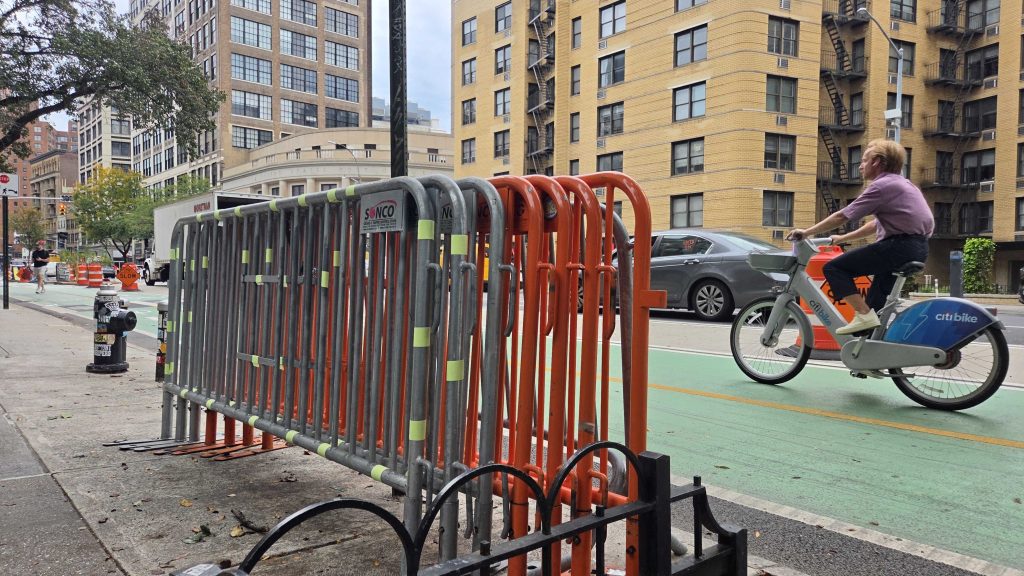
Komanoff: Rep. Lawler Calls Congestion Pricing ‘A Cash Grab,’ But Shrugs at Runaway Gas Prices
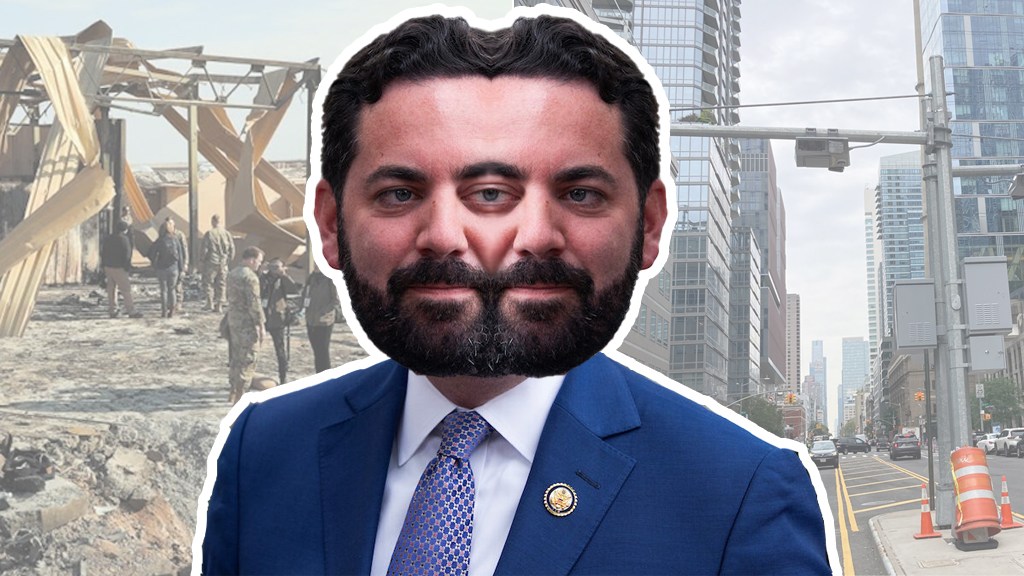
Rep. Mike Lawler isn’t troubled that Donald Trump’s Iran War is making his constituents pay more to fill up on gas.
“Gas prices are volatile and will fluctuate. [But] they will come down,” Lawler (R-Hudson Valley) said last week during an interview with the so-called NY Editorial Board. So, to Lawler, the nearly 23-percent increase in fuel prices is no problem.
No, what really riles Lawler, whose suburban district includes all of Rockland and Putnam counties and portions of Dutchess and Westchester, is Gov. Hochul’s successful congestion pricing program, which Lawler repeatedly termed “a cash grab.”
But thanks to Trump’s war, Lawler’s constituents have paid far more in higher gas prices than they have in tolls. OK, maybe that’s not a “cash grab,” but it is a massive hit to Lawler’s own neighbors, courtesy of his party’s standardbearer and his blunderous policy choice.
U.S. gasoline prices have surged since Feb. 28, when Trump sent bombers to assassinate Iran’s top leaders (while also killing 120 pupils and several dozen teachers at a girl’s school). The ensuing hostilities have disrupted oil shipments from the Middle East, raising the cost of a gallon of gas nearly 80 cents (see details below).
Do the math: Since Trump launched his war on Iran, the 260,000 households in NY-17 have coughed up $102 million more for gasoline — $390 per household — than they would have paid in the absence of the war. That collective toll, if you will, exceeds by 75 percent the $58 million they’ve paid in New York congestion charges (including surcharges on cab rides) since congestion pricing commenced in early 2025 (again, see the methodology below).
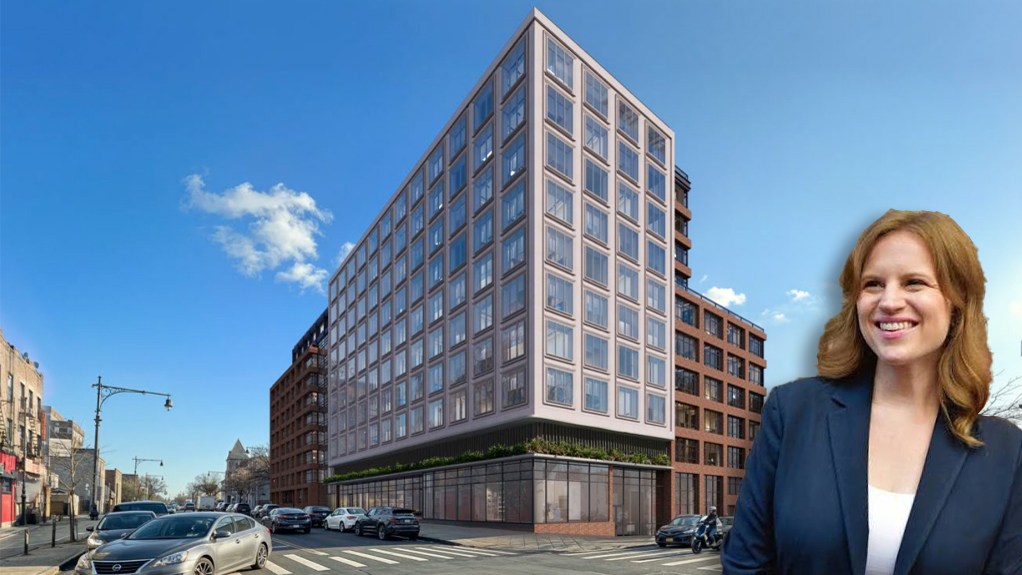
Yet it’s congestion pricing that Lawler repeatedly derided in the interview, which comes as Lawler is facing a tough re-election against Democratic challenger Cait Conley.
“You’re raising these funds, which is nothing but a cash grab. Let’s all be honest,” Lawler told the star-studded panel of journalists including Nicole Gelinas and Josh Greenman. “This is not about congestion. It’s certainly not about the environment. It’s a cash grab. That’s all it is.”
Lawler’s disparagement of congestion pricing contrasts with his dogged support for the war on Iran. He has helped defeat several congressional efforts to stop the war, most recently House Continuing Resolution 89. (The resolution failed on July 23 by a vote of 214 to 208.)
Comparing the tallies
The large (and widening) gap between NY-17’s Trump tab and the district’s congestion toll cost is especially striking for two reasons.
One is that in calculating NY-17’s higher fuel cost I excluded the even-sharper rise in diesel fuel that powers U.S. trucking, industry and agriculture. Measured across the same six-month (March-August) periods of 2026 vs. 2025, diesel was up by $1.62 a gallon — more than twice the $0.78 rise for gasoline. With diesel fuel generally viewed as the U.S. economy’s “single most universal tangible input,” its record-high price is a major cause of persistent U.S. inflation, which last month clocked in at an annualized rate of 3.7 percent — the second highest monthly rise since 2022 (the highest was in March) — which triggered Wednesday’s NY Times banner headline, “Soaring Energy Prices Push U.S. Inflation Higher.”
Secondly, my comparison is especially stark because the war on Iran has barely had one third as much time as congestion pricing to drive up costs for NY-17 households: 227 days vs. 648, to be exact. On any given day, the higher gas price resulting from the Trump-GOP Iran war is hitting NY-17 pocketbooks five times as hard as the congestion toll: $450,000 per day for gas vs. $90,000 for tolls. Not to mention that the congestion revenues are producing tangible benefits, like subway station elevators, faster trains (through digital track signals), fewer traffic jams, and well-paying jobs rebuilding the transit system, whereas the war on Iran has not a single upside as I see it.
What it means
Is there a logic to Lawler’s choice of whipping boy, beyond opposing a Democratic policy (congestion pricing) while backing a Republican one (high gas prices from Trump’s Middle East straycation)? After all, drivers are being hit either way, so Lawler’s stance is just politics, right?
Not so fast. Congestion pricing’s hit to the pocketbook is intentional. Indeed, it’s the point. The policy is doubly built on a price disincentive: 1) to eliminate a fraction of driving trips, and 2) to generate revenue from the trips that remain.
In contrast, the Trump-caused, GOP-enabled spike in gasoline is worth paying, in the eyes of those who can’t or won’t see that Trump simply made a grievous error.
But it’s also worth pondering whether Lawler made his own error, one of perception.
Congestion pricing got so deep in his head that he may well believe his constituents are bearing a huge brunt of the tolls, when in reality they account for a mere 5 to 6 percent — which is why their total congestion toll tab comes to just $90,000 a day. Their true pocketbook problem is their car dependence, which forces them to collectively buy nearly 580,000 gallons of gasoline each day. And that is how the Trump/Iran 78-cent rise in the cost of gas is now costing them daily an extra $450,000.
Like Trump locked into the Mercator projections of his childhood and believing Greenland is as large as Africa, Lawler looks at the toll gantries and thinks they’re coming for NY-17. In reality, his district surrendered to U.S. car culture a long time ago.
Methodology and assumptions
All assumptions, calculations and sources are shown in NY-17 — a new tab of my Balanced Transportation Analyzer spreadsheet, which you can download via this link. (Note: The file requires real Excel to run.)
Alternatively, here are key figures and assumptions:
- Number of households in NY-17: 261,372 (Census)
- Vehicles per households: 1.8
- Miles driven per vehicle per year: 11,000
- Share of vehicles that are internal combustion: 98 percent
- Their average mpg: 24
- Average U.S. gasoline price, March-August 2026: $4.21 (EIA, Monthly Energy Review)
- Average U.S. gasoline price, March-August 2025: $3.43 (ibid.)
- Days with price spike: 227 (from March 1 to Oct. 14, 2026)
- Cumulative gas-price hit = 261,372 x 1.8 x 11,000 x 227/365 x ($4.21-$3.43) divided by 24/98%) = $102.3 million. (Daily rate = that figure divided by 227 = $451,000.)
- Daily average MTA congestion toll receipts: $1,601,000
- NY-17 county percentages and CP incidence, including taxi trips (from BTA Incidence tab):
- Rockland: 100 percent (3.0 percent)
- Putnam: 100 percent (0.5 percent)
- Dutchess: 50 percent (0.9 percent)
- Westchester: 30 percent (1.7 percent)
- Sum of x-products = 5.6 percent
- Daily NY-17 congestion toll = 5.6 percent x $1,601,000 = $90,000
- Days since start of CP: 648
- Cumulative CP toll tab = 648 x $90,000 = $58.3 million

Read More:
Streetsblog has migrated to a new comment system. New commenters can register directly in the comments section of any article. Returning commenters: your previous comments and display name have been preserved, but you'll need to reclaim your account by clicking "Forgot your password?" on the sign-in form, entering your email, and following the verification link to set a new password — this is required because passwords could not be carried over during the migration. For questions, contact tips@streetsblog.org.