OPINION: New York City’s Trash Revolution Should Be an Accessibility Revolution, Too
Our narrow and crowded sidewalks have always created an obstacle course for disabled New Yorkers. The city’s ubiquitous practice of piling trash bags on sidewalks is one of the biggest reasons why. Many residents consider the resulting mountains of garbage as mere eyesores, but they are a matter of life and death for people with disabilities. Huge mounds of refuse force the disabled community into moving traffic, block curb cuts and create unpredictable hazards that lead to injury and death.
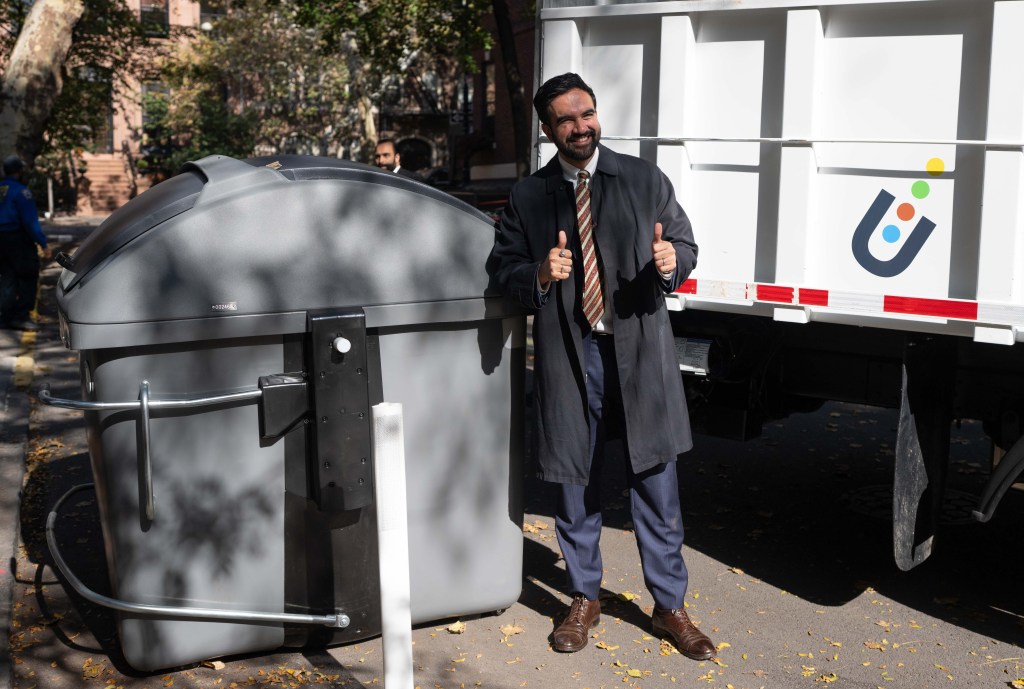
Formally known as the Citywide Containerization Program, New York City’s so-called “trash revolution” is an overdue step toward cleaner streets. The program will require residential buildings with up to nine units to use individual bins, while buildings with 10 to 30 residential units can choose between individual bins or stationary on-street receptacles known as Empire Bins. Buildings with more than 30 residential units will use Empire Bins.
Done right, the program can also serve as an “accessibility revolution” by delivering cleaner sidewalks, safer streets and a more accessible city for all New Yorkers. Unless the city designs the program with accessibility in mind, however, its leaders risk replacing one kind of barrier with another.
Unbroken lines of bins placed on sidewalks make navigating the street difficult for low-vision or blind New Yorkers who use orientation and mobility canes to negotiate sidewalks. Rows of bins interrupt otherwise continuous building lines, creating unpredictable and hazardous obstacles that increase the risk of tripping or veering into moving traffic.
In densely populated neighborhoods with narrow sidewalks, clusters of bins shrink the clear path needed by wheelchair users, individuals using walkers, and people using other mobility devices. Overturned bins, loose lids and misaligned containers can easily block curb cuts, bus stops and building entrances.
Empire Bins and moveable dumpsters can address these problems because they clear sidewalks of bins and bags. The city can encourage smaller buildings to share bins rather than use individual ones. To advance the City’s climate and zero waste goals, Empire Bins must be able to collect recycling and compost, too — keeping even more bags away from walking paths.
This is a promising approach, but it will require careful planning to execute. Empire Bins can also obstruct curb access — a dangerous outcome for Access-A-Ride and taxi users who may be forced to board within, or disembark into, active traffic lanes. And Empire Bins placed too close to crosswalks or curb cuts can obstruct sightlines between shorter pedestrians or wheelchair users and oncoming traffic, increasing the risk of injuries and deaths.
New York City can and should ensure that its waste management goals benefit all New Yorkers. We cannot sacrifice the rights, safety, and independence of pedestrians with disabilities. Accessibility must be a foundational requirement, not an afterthought.
To accomplish all of this, the Department of Sanitation must:
1. Make sidewalks truly waste-free
Sanitation should expand the use of Empire Bins to smaller buildings and begin working on a way to accept recycling and compost. While the agency deserves credit for launching a pilot in Brooklyn that allows smaller buildings to share Empire Bins, the larger program must formally replace individual bins and bags with Empire Bins. Sidewalks must be clear of all bins and bags.
2. Partner with the disability community
For decades, siloed New York City agencies stalled containerization. Now that the program is underway, Sanitation must proactively partner with the disability community and agencies such as the Mayor’s Office for People with Disabilities. Together, they can develop clear and enforceable placement guidelines consistent with the Americans with Disabilities Act and state and local accessibility laws.
For example: Empire Bins should never be placed within 20 feet of curb cuts, crosswalks, Access-A-Ride pickup zones or bus stops. On dense residential blocks that will receive large numbers of bins, Sanitation must consider the construction of additional mid-block crosswalks and loading zones to accommodate people with disabilities.
3. Create real oversight and accountability
DSNY must develop transparent mechanisms for oversight and accountability, including accessibility and safety reviews for every Empire Bin location. The agency must also establish a formal process to allow people with disabilities to request relocation of bins that impede access or create safety concerns, and those requests must be addressed promptly.
Containerization is one of the most significant changes to New York City’s streetscape in decades, and this is the rare chance to solve two long-standing problems at once. The trash revolution must also be an accessibility revolution, precisely because we want a city that every resident can access. This opportunity must not go to waste.