Sanitation Will Let Smaller Buildings Share Curbside Containers
Sharing is caring.
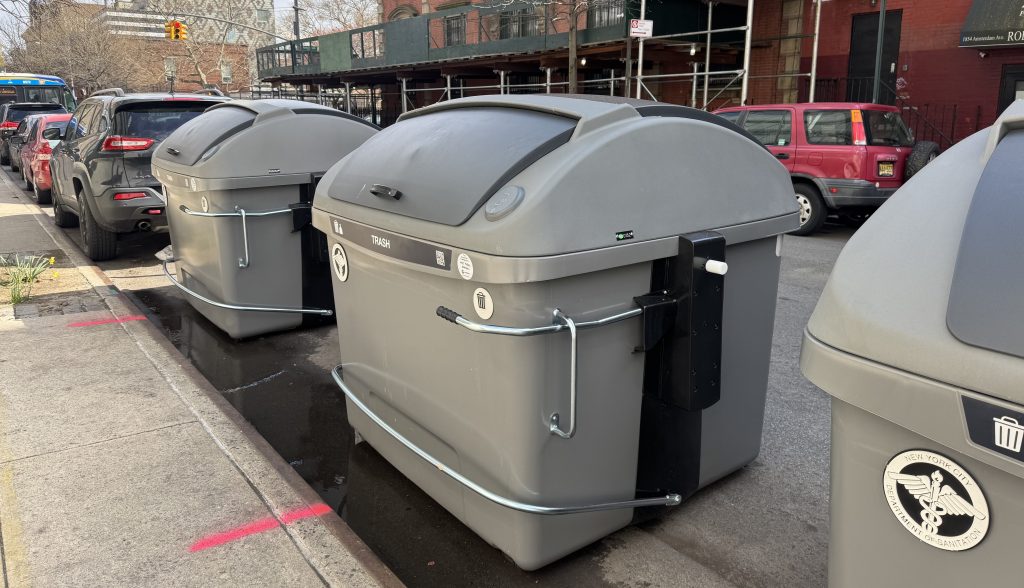
The city will allow smaller buildings to share curbside trash containers rather than rely on wheelie bins clogging up the sidewalk, marking a small but promising policy change that brings the Big Apple’s waste reforms closer to best practices common in Europe and Latin America.
The Department of Sanitation previously restricted its “Empire Bins” to one building at a time, and only to those with 10 or more units when it rolled out its so-called Trash Revolution in last year — but now smaller housing stock in parts of Brooklyn will be able to get the roadway bins, and share them with other buildings, as part of the next phase.
The tweaks are still a far cry from the way other cities with curbside containerization have implemented their systems from Barcelona to Buenos Aires, according to experts. Municipalities either give all building residents access to the containers, or leave them open to the general public, said Clare Miflin the executive director of the Center for Zero Waste Design.
“It’s definitely moving in the right direction. It’s thinking about curb efficiency, it’s trying to reduce the amount of bins on sidewalks, it just doesn’t go far enough,” Miflin told Streetsblog.
The change for smaller buildings is also only a pilot for now, but it promises to bring the benefits of curbside garbage collection to more types of residences, said a Brooklyn lawmaker who lobbied DSNY for the policy in his district.
“Smaller brownstones and six-unit apartment buildings should also enjoy the benefits of full garbage containerization,” Council Member Lincoln Restler (D-Brooklyn Heights) told Streetsblog. “Our sidewalks are often too congested and moving our garbage entirely off of the sidewalk and into these Empire Bins in the street is a great way to expand pedestrian space and get garbage off our doorsteps.”
The city previously only required buildings with 31 or more units to deploy the new containers in the roadway when New York’s Strongest launched its “Trash Revolution” in West Harlem last year. Those with nine or fewer apartments have had to use wheelie bins on the sidewalk, while buildings with 10-30 units could choose either. It was part of the Adams administration’s historic effort to remove the Big Apple’s notorious mountains of rubbish, an initiative Mayor Mamdani said he would fully fund for a citywide expansion by mid-2032.
For the next phase of the city’s rollout, building owners in Brooklyn’s Community District 2 can apply to share Empire Bins, according to Sanitation officials. That includes Brooklyn Heights, DUMBO, Fulton Ferry Vinegar Hill, Boerum Hill, Downtown Brooklyn, the Brooklyn Navy Yard, Clinton Hill and Fort Greene. Smaller buildings that have at least a combined 15 units can apply for shared Empire Bins.
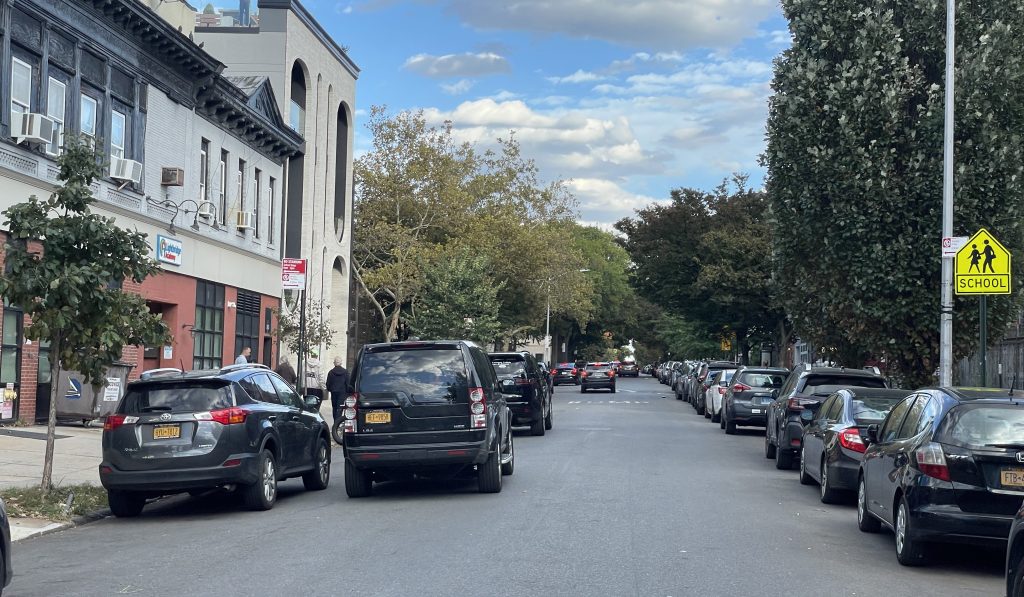
Miflin and other waste reformers have long urged the city to allow more buildings to take part in the curbside option, which makes better use of the space than car storage while avoiding a “Berlin Wall” of garbage cans on the city’s already scarce sidewalk space. Wheelie bins are also harder for Sanitation workers to collect, because parked cars still get in the way.
DSNY must also allow recyclables and organics to go in street containers to fully free up the sidewalk, and take on the cost of maintaining the bins rather than putting it on building managers, otherwise the uptake by buildings will likely be limited, Miflin said.
“The amount of people that are going to do that I think is pretty slim if it’s just the trash, because you still have to maintain your recycling and organics bin,” Miflin said.
Buildings vying for shared containers will have to organize themselves and pick a point person or management company that signs an agreement with the city to be responsible for the containers. That person or group would also be responsible, which start at $100 and rise to $300 per violation, like failing to clean the bins and the area immediately around them.
The city is allowed to charge landlords up to $55 per year per apartment unit for the bins, and Miflin urged officials to channel those fees toward maintaining the bins, rather than dumping the responsibility on individual building owners.
“Other cities that do shared containers on streets, the city maintains them,” she said. “It’s not anywhere else in the world done like this.”
“Why not do a pilot and see what it takes to maintain around them. Maybe it wouldn’t be that much for the Department of Sanitation,” Miflin added.
The city began rolling out the new bins at schools in the Brooklyn neighborhoods last fall, and plans to cover households across the district by mid-October 2027, according to a notice in the City Record.
DSNY personnel started canvassing buildings to apply for the curbside option this week, according to agency officials, and buildings must register for the bins by the end of July.
“Residents and building managers in West Harlem have found Empire Bins to be clean and convenient, allowing building supers to take trash out at any hour, any day, while freeing up space once occupied by trash inside the building and on the sidewalk,” said DSNY Commissioner Gregory Anderson in a press release. “We are thrilled to be bringing Empire Bins and cleaner streets to Brooklyn, and we expect them to be just as popular here and across the city.”
Building owners and staff interested in applying for shared Empire Bins should contact DSNY directly at customerservice@dsny.nyc.gov.

Read More:
Streetsblog has migrated to a new comment system. New commenters can register directly in the comments section of any article. Returning commenters: your previous comments and display name have been preserved, but you'll need to reclaim your account by clicking "Forgot your password?" on the sign-in form, entering your email, and following the verification link to set a new password — this is required because passwords could not be carried over during the migration. For questions, contact tips@streetsblog.org.