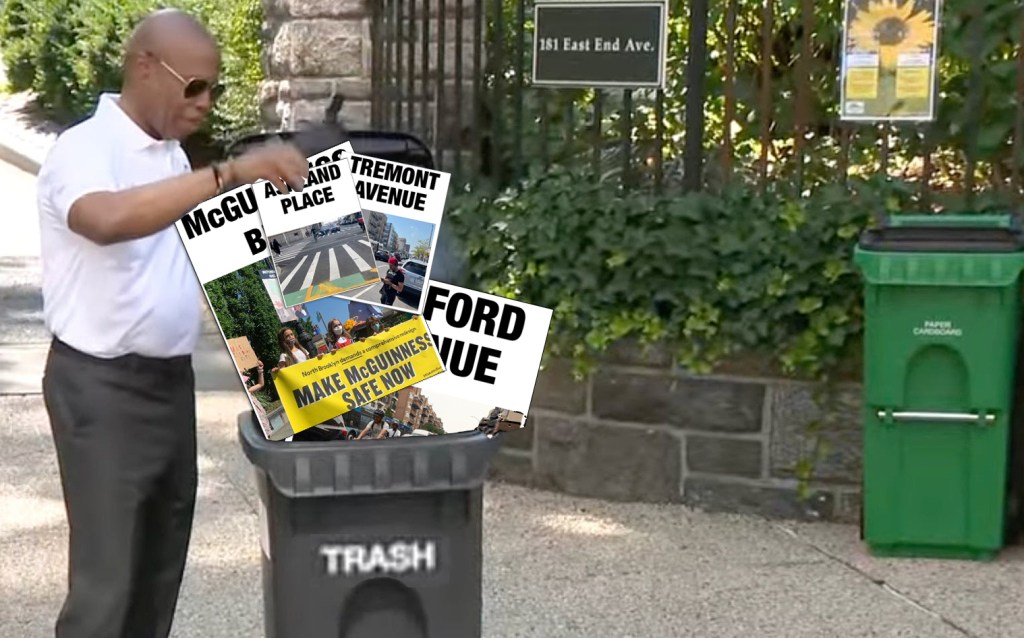
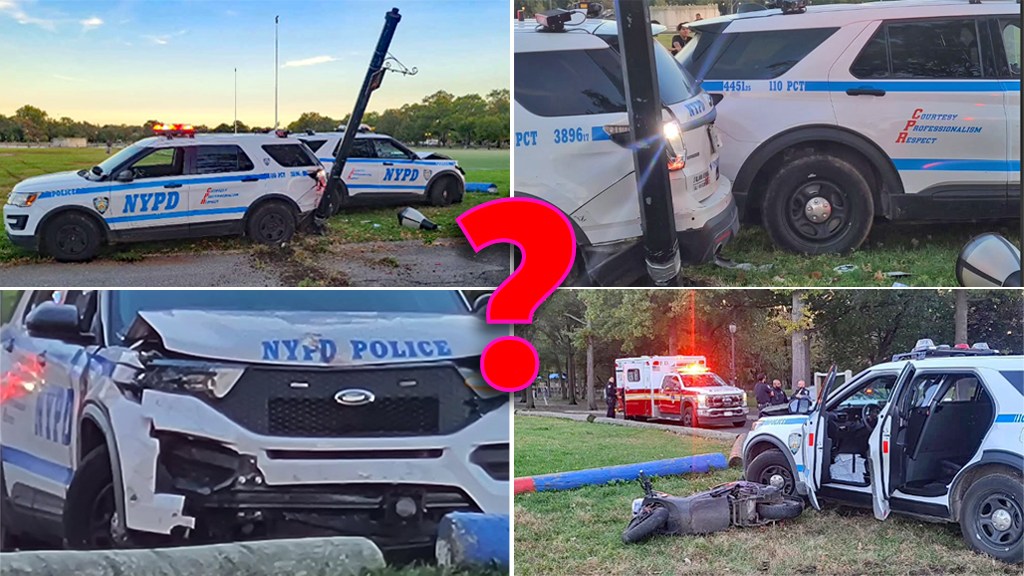
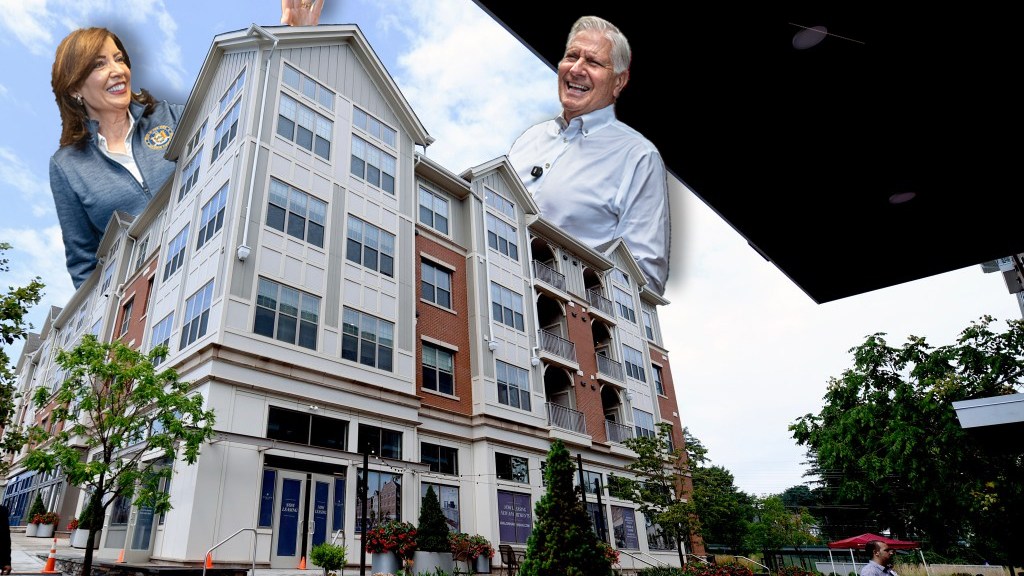
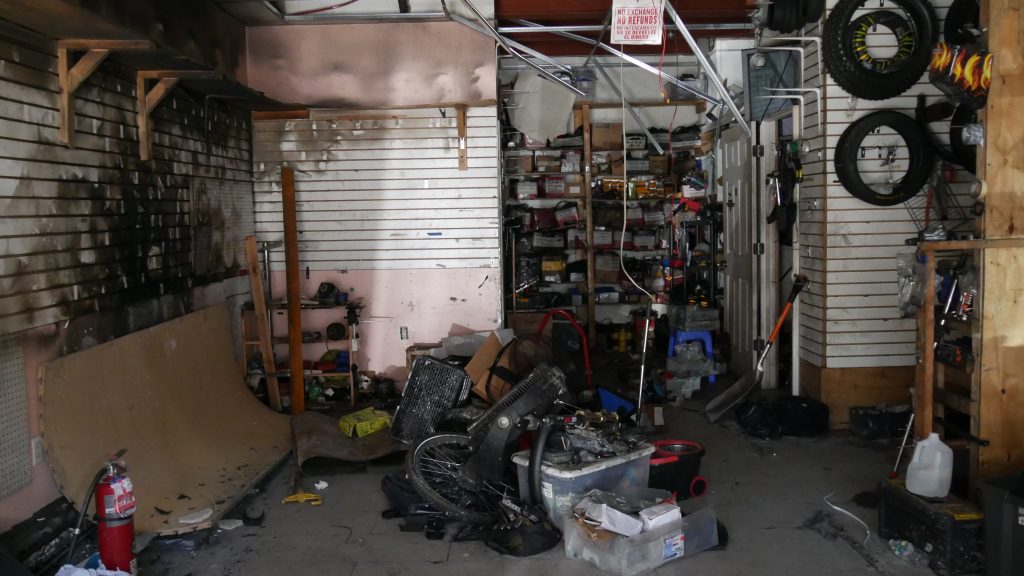
So much good work by the Department of Transportation was simply thrown out by Mayor Adams, as this photo-realistic editing job shows. The Streetsblog Photoshop Desk
Streetsblog provides high-quality journalism and analysis for free — which is something to be celebrated in an era of paywalls. Once a year, we ask for your tax-deductible donations to support our reporters and editors as they advance the movement to end car dependency in our communities.
If you already support our work, thank you! If not, can we ask for your help?This year’s fundraiser includes a special gift for our biggest supporters. Don’t miss out.
Together, we can create a more livable, walkable, bikeable, equitable and enjoyable city for all. Happy holidays from the Streetsblog team!
He entered as the “Bus Mayor.” He’s exiting as the Bust Mayor.
Eric Adams leaves the role of mayor this week after a single term with a grim legacy on remaking New York City’s streets.
The first mayor tasked with implementing the city’s Streets Master Plan pitched himself on the campaign trail as someone who wouldn’t just hit the goals of the plan but surpass them. Yet four years later, the closest Adams’s Department of Transportation came to the master plan’s mandatory 50 miles of bike lanes per year was 31.7 miles in 2023.
Mayor Adams oversaw a DOT that installed just 15 miles of new bus lanes in three years, when the law required 80. Even counting “enhanced” or “newly-protected” bus lanes, the agency still came in under 20 miles of projects in its best year, 2024, when it installed or “enhanced” 17.9 miles of bus lanes.
Adams fell far short of the Streets Plan’s major milestones every year. He also left DOT to fight through the same trench warfare the plan’s benchmarks were designed to avoid.
DOT successfully installed a decent number of good projects for cyclists and buses during Adams’s tenure — but it did so despite the mayor, not because of him. Whenever the mayor inserted himself or a subordinate into a local dispute over a bike lane, open street, or busway, he almost always sided with whoever opposed the projects DOT had proposed to meet the benchmarks and policy goals that he set for his own administration.
Amid the many projects Adams rolled back, watered down and abandoned, the mayor stopped even trying to convince people he cared about these projects.
Adams’s goals were ambitious and maybe impossible, but they signaled that he was serious about the Streets Master Plan’s legally-mandated benchmarks of 30 miles of bus lanes and 50 miles of bike lanes per year.
Then reality set in.
In February 2022, less than two full months into his term, Adams tried to quietly tear up the open street on Brooklyn’s Willoughby Avenue. The mayor failed in the endeavor only because of local pushback. While the mayor claimed he had no idea why city employees tried to dismantle the open street, the New York Times later revealed that his longtime aide and close friend Ingrid Lewis-Martin gave the order.
The mayor tried to correct course in April by allocating $900 million for DOT to finish five years of work on the Streets Master Plan — a welcome move after previous DOT Commissioner Polly Trottenberg said the agency needed $1.7 billion over ten years to fully execute the plan. Adams announced the new funding with a celebratory bike ride with his DOT Commissioner Ydanis Rodriguez, advocates and even his later bête-noireCouncil Member Lincoln Restler.
Apart from the $900 million, Adams’s commitment to street safety began to show cracks before he finished his first year in office. DOT staff shortages prevented the department from working at the pace necessary meet the Streets Master Plan’s benchmarks or the mayor’s own mileage goals. By the end of 2022, DOT informed the MTA that it wouldn’t be able to install 30 miles of bus lanes in 2023.
Meanwhile, pro-car forces within the Adams administration began to slow projects down. Between 2022 and 2023, Adams appointees delayed an expansion of Citi Bike into Ridgewood and a bus lane on Northern Boulevard. The mayor also reduced the operating hours of busways on Archer Avenue, Jamaica Avenue and 181st Street.
Adams went completely off the rails in 2023, when he killed or delayed several projects: a bike boulevard on Underhill Avenue, a traffic calming project on McGuinness Boulevard, an offset bus lane on Fordham Road and a crucial bike lane link on Ashland Place were all obliterated following intervention by City Hall.
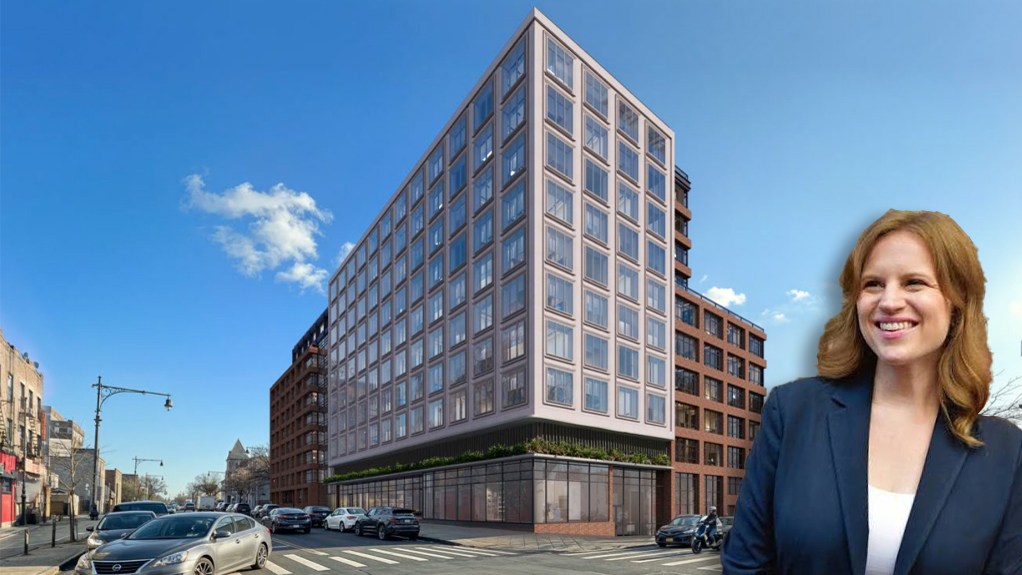
After the administration introduced its plan to install a protected bike lane on Bedford Avenue in April 2023, and DOT estimated the lane would be completed by the end of the year, the same officials simply stopped talking about it without explanation. The administration began its outreach for a Flatbush Avenue bus lane in June 2022 and held a subsequent meeting in January 2023, only to say nothing about it for 16 months. A secure bike parking pilot that ran for five months in 2022 went nowhere in 2023. As all of this was happening, Streetsblog’s reporting revealed that the anti-street safety elements in the administration were able to empower Richard Bearak, an otherwise minor land-use bureaucrat, to slow down streets safety projects with excessive reviews.
Mayoral appointees are never going to agree on every single aspect of their boss’s agenda. But when Adams put together his team of deputy mayors and advisors, he may have pushed the idea of a “team of rivals” to a breaking point, as he pitted technocrats like Deputy Mayor for Operations Meera Joshi against political creatures like Chief Advisor Ingrid Lewis-Martin.
“He put together a very bizarre and incoherent City Hall where you had Ingrid Lewis-Martin down the hall from Meera Joshi and it seemed like when there was something to fight about, Ingrid would win,” said Jon Orcutt, a former DOT executive under mayors Mike Bloomberg and Bill de Blasio. “The mayor just never seemed like he was really doing the job.”
Over the first two years of Adams’s tenure, 50 cyclists and 242 pedestrians died in traffic crashes, including a modern-day record of 31 cyclist deaths in 2023. Bus speeds dropped from an average of 8.5 to 8.3 miles per hour.
The bullying pulpit
Adams completely neglected to stand up for bike and bus projects as mayor — a stark contrast to his time as Brooklyn borough president.
Rather than govern as the cycling and bus booster that he made himself out to be on the campaign trail, Adams refused to say a single good word about any of the projects the city installed during his entire tenure. This is not an overstatement: the mayor declined to issue a single press release celebrating the completion of a bus lane or bike lane, and never appeared in a single DOT press release about one.
“When I worked for the city, [then-DOT Commissioner] Janette Sadik-Khan made a point of making sure Bloomberg was at every single Select Bus Service ribbon cutting, because those are big deals where you’re taking a lot of real estate, and you’re changing up how the street operates,” said Orcutt.
“It was important to bring him in for the framing, to say this is part of the city’s goal, we’re doing this for a reason. This isn’t just about a handful of bus stops getting better service, it’s contributing to a bigger thing,.”
If anything, Adams amplified NIMBY complaints about process and demeaned livable streets proponents and his own DOT. When Adams demanded DOT dilute its traffic calming project on McGuinness Boulevard, he claimed to be merely respecting the wishes of the local community. But when confronted with the fact that every elected official in the area supported the redesign, the mayor literally laughed it off.
The best-case scenario for projects that had a hint of controversy around them was for Adams to say nothing at all — because in his four years in office, the mayor never once bothered to defend a bike lane or bus lane in the face of public pushback. In the worst-case scenario, Adams joined opponents in attacking DOT — as if he were a bystander and not the city’s top executive.
In late 2023, after reversing course on multiple projects, Adam began to criticize the way DOT informed the public about its safety projects. When the mayor paused the work on the Underhill Avenue bike boulevard, he slagged his own agency for allegedly not doing enough public outreach, when in fact the department held 12 different meetings, updates and survey opportunities over three years. He said DOT was “forcefeeding” street redesigns on unwilling New Yorkers. In November of that year, Adams brought that message directly to DOT headquarters, when he told agency staff that his legacy would be less about his accomplishments and more about how many people he “heard on the ground.”
Despite the apparent deficiencies in DOT’s outreach process, Adams never actually did anything to change how the agency communicated with the public about its projects or policy goals. Despite his big show of funding the Streets Master Plan in 2022, the mayor never held it up as the reason for DOT projects. His hostility to DOT continued into 2024, when he accused new bus lanes of fomenting gentrification.
“The mayor had a law in place that he could point to, to explain to opponents why he needed to speed up the bus,” said Riders Alliance Director of Policy and Communications Danny Pearlstein. “And instead of doing that, he ignored the law. He had the audacity to accuse bus riders of not being real New Yorkers, and at the end of the day, that aspect is unforgivable,” said Pearlstein.
Street safety advocates could not count on Adams to maintain his support of projects that he had publicly endorsed. In 2022, the mayor held a press conference about installing wider sidewalks on 8th Avenue in Manhattan, and he emphasized his commitment to making intersections safer. Two years later, he reneged on the entire project.
Recongestion
Adams also fumbled his response to congestion pricing. The mayor is hardly alone when it comes to elected officials who bungled things on the traffic toll, but before Gov. Hochul ran away from it, Adams set the pace. After the MTA announced the original $15 toll in November 2023, the mayor stood by as John Samuelsen, his representative on the Traffic Mobility Review Board, quit the panel the moment before it approved the price. The mayor then started to criticize the process for allegedly shutting out New Yorkers from deliberations. He skipped a press conference that celebrated the MTA’s official approval of the new toll.
The city’s approach to the toll’s implementation reflected the mayor’s disinterest. In May 2024 — two months before the original start date for congestion pricing — the Adams administration finally rolled out DOT’s Connecting the Core program, which supposedly offered plans to take advantage of the toll’s once-in-a-generation “space dividend” provided by the anticipated drop in car traffic. Advocates quickly noted the plans mostly consisted of previously announced projects.
“It was a grab bag, a kitchen sink that included projects many miles, in fact, from the core,” said Pearlstein. “Ultimately, the city hasn’t seized the opportunity given it by the state, with congestion pricing to transform the streetscape in the center of Manhattan.”
The non-plan left bus riders in the lurch. The Adams administration finished only three of the paltry six bus priority projects planned for Manhattan. Two haven’t even made it out of the planning phase. Another, the 34th Street busway, faced delays from City Hall that allowed the Trump administration to step in and jam it up even more.
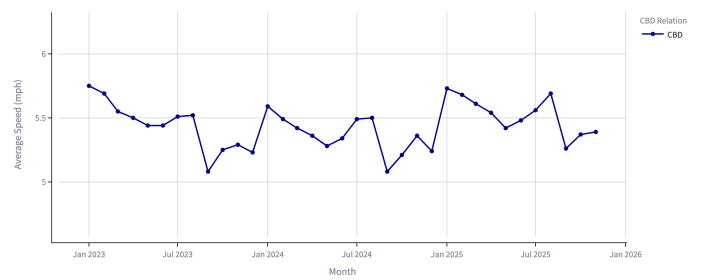
Buses received an initial boost from the traffic drop induced by the toll, with bus speeds for local, limited and SBS routes south of 60th Street surpassing 6 miles per hour in January 2025. But by November, buses in the Central Business District ran only marginally faster than they did a year earlier:
Local buses inside the Central Business District have not been able to greatly speed up even with a 11 percent drop in traffic. MTA
The legacy moment
Eric Adams is on his way out — and, according to his celebratory time capsule, he’s leaving at the top of his game. Whatever his other accomplishments, he did not fulfill his promise to remake the streets for pedestrians, cyclists and transit riders.
The outgoing mayor seems to understand that. His staff recently sent out a valedictory press release containing everything the mayor accomplished. It made a glancing reference to a “record number” of bike lanes, without highlighting a single project. It lacked a single mention of the word “bus.”
“Had he made a good faith effort, I think that riders and advocates would give him grace, but beyond the first few months that is not how he approached the job of speeding up buses, which is squarely the mayor’s job to do, because he controls the streets,” said Pearlstein.
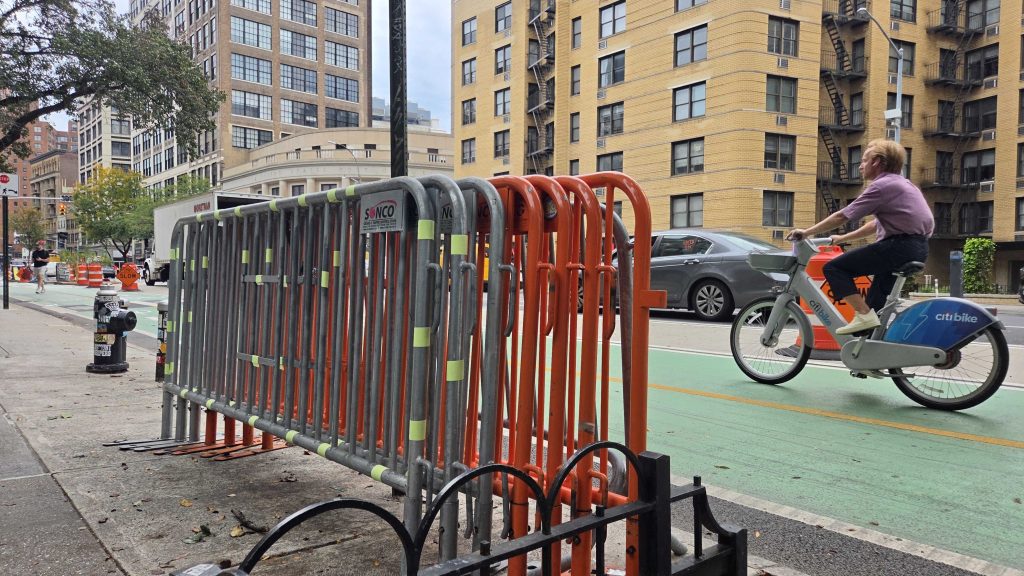
Adams’s real legacy may be his decision to rip up three blocks of the protected bike lane on Bedford Avenue. That decision, a stunning and cynical move that reeked of an election ploy(for a race he quit in disgrace months later) raised the spirits of reactionaries across the city, who have gloated on social media that the removal of the Bedford bike lane proves they can replicate its removal elsewhere.
Adams’s move forced his DOT to argue that it was safe to remove a type of project it has previously and consistently said makes streets safer — a contradiction highlighted by the judge who ordered the removal of a new bike lane on 31st Street in Astoria.
“What’s interesting to me is the testament it shows to the longevity of DOT’s direction. As long as the dead hand of the mayor wasn’t on the agency, it was still churning out really great stuff. There’s still fantastic impulses there. We just need to double down on those instead of keeping them on life support,” said Orcutt.
Dave Colon is a reporter from Long Beach, a barrier island off of the coast of Long Island that you can bike to from the city. It’s a real nice ride. He’s previously been the editor of Brokelyn, a reporter at Gothamist, a freelance reporter and delivered freshly baked bread by bike.
Streetsblog has migrated to a new comment system. New commenters can register directly in the comments section of any article. Returning commenters: your previous comments and display name have been preserved, but you'll need to reclaim your account by clicking "Forgot your password?" on the sign-in form, entering your email, and following the verification link to set a new password — this is required because passwords could not be carried over during the migration. For questions, contact tips@streetsblog.org.