MTA Prepares to Fund IBX Light Rail Without Feds After Trump Meddling
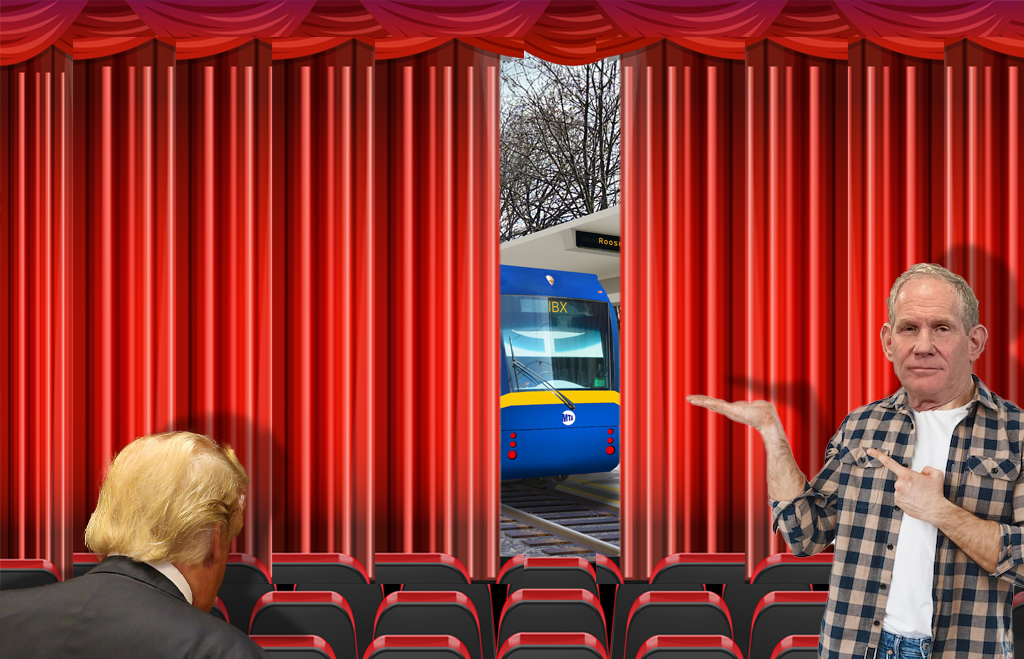
They can go their own way.
The MTA is exploring alternatives to federal funding for the $5.5 billion proposed Interborough Express light rail line between Brooklyn and Queens to circumvent President Trump’s propensity for meddling in New York’s ambitious infrastructure goals.
Federal funding for a transit project in the country’s largest city would once have been a given, but Trump has devoted much of his second term to obstructing New York and other states’ access to federal transportation dollars. MTA officials are keen to prevent the president’s costly shenanigans from impacting the IBX.
“Normally a project of this magnitude, a brand new rail line that will serve 160,000 to 200,000 people, would be federally funded — that’s the way it works in the United States of America,” MTA Chairman and CEO Janno Lieber told the MTA board’s capital construction committee on Monday. “We understand that opportunity may be a little bit of a lift for us, so we are developing different strategies to fund it.”
Plans for the IBX have gone full speed ahead in the five years since Gov. Hochul announced her intention to bring passenger rail to a lightly used freight rail track that runs from south Brooklyn to central and western Queens. The MTA is currently in the design and engineering phase of the project and has already started a state-level environmental review. Officials expect to finish both of those pieces by the end of next year.
“We’re going to be ready to do construction in a couple of years. We want to make sure that we could move quickly into construction rather than waiting around for Santa Claus,” Lieber told reporters on Wednesday. “It’s a strategy of optimistic realism. We’ll absolutely apply for federal money, but we are looking at alternatives in light of what we’ve seen about how discretionary grant money is being distributed in this administration. We’re not unrealistic about that.”
The IBX actually received a federal grant during the Biden administration to cover some of the early design and environmental review costs. Transit watchers are agog at the new state of affairs that forces agencies like the MTA to circumvent the feds rather than seek out their support as states and cities have done for mega-projects since the New Deal.
“How absurd to think we’d ever liken a federal funding application to waiting for good, old St. Nick, or even Christ as the president has fashioned himself, but here we are,” said Riders Alliance Director of Communications and Policy Danny Pearlstein. “Riders in Brooklyn and Queens are anxious for the IBX to proceed and eager for whatever time the project can recoup by vaulting over D.C.’s notorious red tape.”
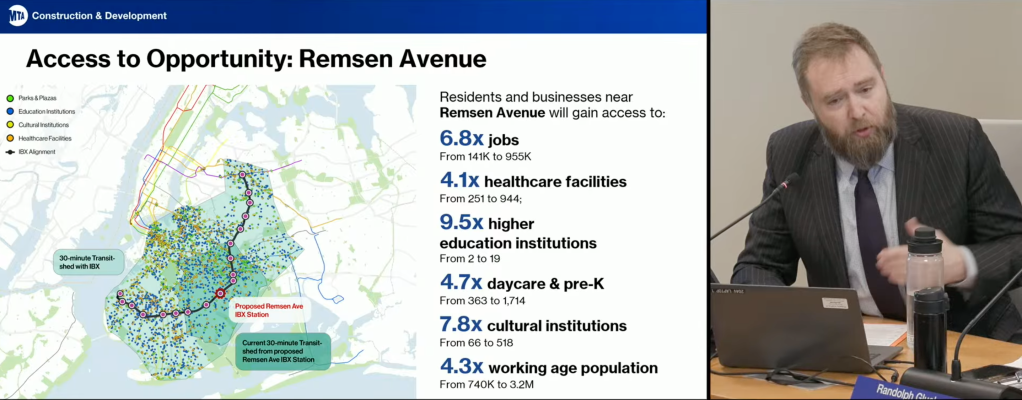
The new passenger rail between Sunset Park and Jackson Heights will provide connections to 17 other subway lines and over 50 bus routes — dramatically improving access to jobs, culture and education. Officials estimate as many as 200,000 daily riders.
Outcomes like that would normally be a slam dunk for federal transit funding. But under President Trump, the federal government has been intensely hostile to mass transit, particularly in New York. In his second term, the president has tried to turn off the federal faucet for work on the Second Avenue subway and the Gateway Tunnel project, despite the fact that the money had already been earmarked by Congress. The MTA only recently clawed back $60 million for Second Avenue Subway after the state sued the feds for it.
Trump hasn’t stopped there: Last year, his Department of Homeland Security tried to deny transit security grant funding for New York City and New York state. And city Department of Transportation busways on 34th Street and Tremont Avenue remain in limbo thanks to interference from Trump Secretary of Transportation Sean Duffy.
Even during his first term, Trump famously held up congestion pricing by refusing to even tell the MTA what kind of environmental review it had to do in order to get clearance to start the toll, which finally launched in the final days of the Biden administration. And he’s spent his second term trying and failing to kill congestion pricing.
New York has managed to beat some of Trump threats in court, but the very possibility of constant meddling — and resulting delays — is reason enough for the MTA to want to side-step federal involvement entirely, one expert said.
“The federal government’s actions on congestion pricing and Second Avenue subway show they’re not as willing of a partner as they have been in the past on on transit projects,” said Regional Plan Association Executive Vice President Kate Slevin. “It’s a shame, because in terms of economic investment and getting the most of every transit dollar, you’d be hard-pressed to find another project in this country that has a better return on investment than the IBX. The ridership numbers are incredibly high. It’s in a high-job city that’s the backbone of the Northeast.”
Forgoing federal dollars would also deprive Trump — or any future president — of the ability to hold up the project like Trump did with congestion pricing, since a locally funded IBX would only require review under New York’s State Environmental Quality Review Act, rather than the federal National Environmental Policy Act.
Every day spent actually moving forward on the project is a day it doesn’t rack up extra costs — so assuming federal disinterest helps ensure the MTA can keep the IBX on time and on budget.
“Every day of delay in a project drives the project cost up substantially,” Slevin said. “The longer it takes to build a project, the more the costs mount, and the price of materials and all the other costs rise every day.”
And in the event that the attitudes in Washington change, the state review is comprehensive enough that many of its conclusions can most likely be transferred to any federal study the MTA would need to do to unlock funding mid-construction.
Lieber didn’t identify how MTA could pay for the IBX without the feds, saying it was too early in the process to do so. The 2025-2029 MTA capital plan includes $2.75 billion for the light rail — funding for half of the project.
Some of that may end up being state money: When Duffy and Amtrak took over the reconstruction. of Penn Station, Hochul said that she redirected $1.3 billion the state had earmarked for the Penn project directly to the MTA capital plan. A spokesperson for Hochul reiterated that she will do what it takes to get the light rail built.
“The IBX will be transformative for New York City, and Gov. Hochul won’t waste any time getting construction started,” said Hochul spokesperson Sean Butler. “That’s why she secured the funds the MTA needed to kick off design and environmental review last year, and why she is committed to getting the project into construction.”

Read More:
Streetsblog has migrated to a new comment system. New commenters can register directly in the comments section of any article. Returning commenters: your previous comments and display name have been preserved, but you'll need to reclaim your account by clicking "Forgot your password?" on the sign-in form, entering your email, and following the verification link to set a new password — this is required because passwords could not be carried over during the migration. For questions, contact tips@streetsblog.org.