Trump Dragnet That Stopped 34th St. Busway Is Holding Up Tremont Avenue, Too
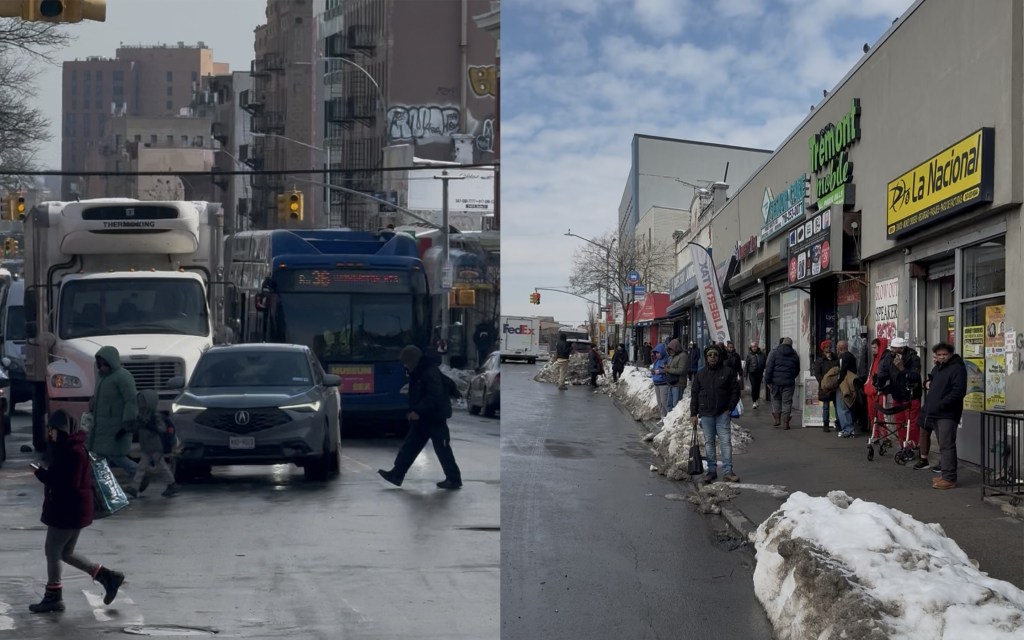
The same federal threats that prevented the city from installing a busway on 34th Street in Manhattan are stalling action on the Tremont Avenue busway in the Bronx, Streetsblog has learned.
Multiple administration sources said the city has been reticent to move forward on the Tremont Avenue busway because the Bronx thoroughfare belongs to the National Highway System — the same circumstance that allowed the the Federal Highway Administration to stymie the 34th Street busway last year.
“We’re trying not to move forward on anything that will draw the ire of the FHWA,” one source said.
In a September letter, the federal government asked the city Department of Transportation and its state-level counterpart to address its concerns about the proposed busway’s ability to accommodate commercial deliveries and its impact on surrounding streets — even though the busway would allow commercial delivery trucks, and received the official support of the Trucking Association of New York.
The city did not answer the first letter — for reasons that remain unclear — so in October the FHWA threatened in a second letter to block federal funding and approval for transportation projects across New York State unless the city halted work on the busway and both the city and state met with the federal agency to discuss the issue.
Both letters demanded updated information about other city busways on other National Highway System streets, including Main Street in Flushing and 181st Street in Washington Heights.
Tremont Avenue is not a highway, but it still belongs to the National Highway System. The avenue is a “MAP-21 Principal Arterial,” which is a type of non-highway route serving a major population center. The NHS absorbed the avenue after Congress passed the Moving Ahead for Progress in the 21st Century Act in 2012.
Tremont is hardly unique. Many major streets in New York City are part of the NHS — a fact the federal government never remarked upon when the city painted bus lanes and busways.
On Wednesday, Bronx bus riders demanded that DOT revive the Tremont Avenue busway. “The Tremont Avenue busway still remains frozen after being shelved by the Adams administration last summer, all while the governor moves forward with the Cross Bronx expansion that will only deepen the very damage our communities are still recovering from,” said Bronx River Alliance Executive Director Siddartha Sanchez.
Sanchez continued: “We are the most bus-reliant borough in the whole city, and for black and brown communities still physically divided by the Cross Bronx, buses are an especially critical lifeline. We need the mayor to fast track the Tremont Avenue busway before state construction locks in a future that once again, leaves the Bronx behind.”
The Adams administration planned to install the busway last year, until it inexplicably mothballed the entire project. The redesigned avenue would have banned through-traffic by private cars between Third Avenue and Southern Boulevard from 6 a.m to 8 p.m. It survived a thorough public-review process, and DOT was supposed to begin painting it in March or April of this year. But before the agency could get started, the mayor’s office pulled the plug.
DOT initially failed to explain the why Adams put the busway on ice, though it later said that Bronx Community Board 6 was opposed to the project. But CB6 District Manager Raphael Moure-Punnett told the press that while the community board initially had questions about the busway it had never demanded that the project be halted.
Killing the busway has left 40,000 daily bus riders on the Bx36 stuck in traffic, with the bus moving as slow as 4.5 miles per hour on the congested corridor. DOT surveys found that almost 60 percent of people traveling on the part of Tremont where the busway would be installed were traveling by bus. Census data shows that just 72 percent of households on or near Tremont don’t own a single vehicle.
The people who pay the price for the Adams administration’s decision to kill the busway are regular Bronxites, one rally speaker explained.
“As a parent of a young child who has had to make the decision in an emergency situation to get my kid home really fast, I prefer to walk, pushing a toddler in a cart with a bunch of stuff for half a mile than try to get on a bus that will get me to my home slower,” said Victoria Toro, the Bronx River Alliance outreach manager. “That is just the reality of living in the Bronx, especially in hyper-congested areas where our neighborhoods are not walkable because of how they’re cut through with highways.”
A DOT spokesperson said that the Tremont Avenue project, which was slated for installation last year, is now under development. Spokespeople for city DOT, state DOT and the FHWA did not comment on when a meeting might finally happen to address the federal objections to common-sense traffic issues. Bronx residents were left puzzled by the federal interference on city streets.
“If your concern is efficiency of government, functionality of government, it’s very clear that busways are actually to the benefit of everyone, even people who don’t use the bus,” said Toro. “They make travel more efficient. They take cars off of roads, so it means that there’s less traffic for everyone using the roads. Aside from the dignity of communities, and the respect for communities to self-determine that we want this busway, it does not make sense for the federal government to intervene and block public transit progress in cities.”

Read More:
Streetsblog has migrated to a new comment system. New commenters can register directly in the comments section of any article. Returning commenters: your previous comments and display name have been preserved, but you'll need to reclaim your account by clicking "Forgot your password?" on the sign-in form, entering your email, and following the verification link to set a new password — this is required because passwords could not be carried over during the migration. For questions, contact tips@streetsblog.org.