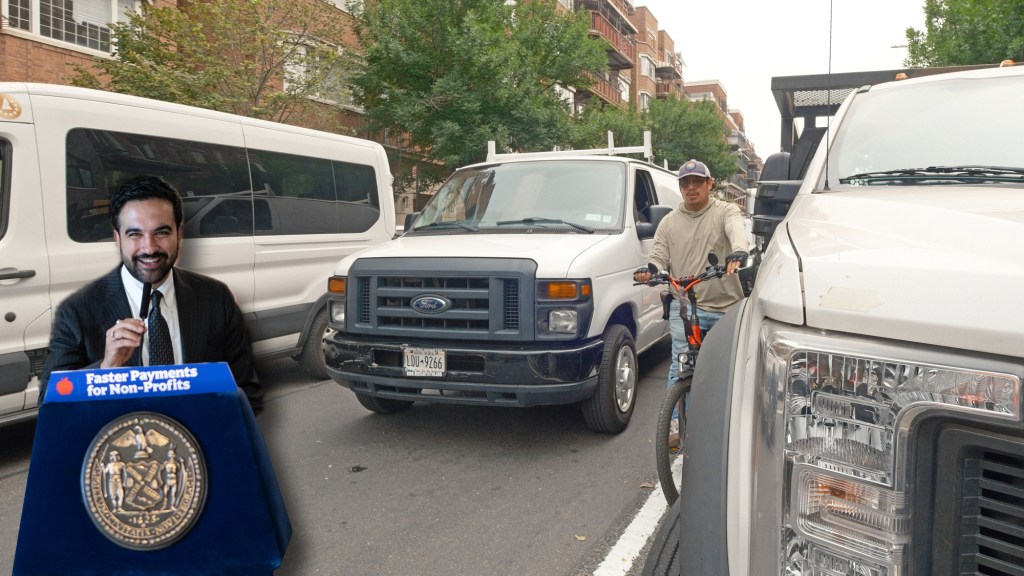
Mayor Mamdani’s Daylighting Budget Covers Tiny Fraction of the City
They’re between a rock and a hardened place.
Mayor Mamdani has proposed only enough funding to implement hardened daylighting at just 500 locations per year, or 0.16 percent of eligible locations in the city, even though city transportation officials insisted anew on Tuesday that “daylighting” corners without hard protections endangers pedestrians.
DOT set that budget under ex-Mayor Eric Adams, who said he would ban parking at 1,000 intersections per year, but watered down the promise within months. Advocates want Mayor Mamdani to up the funding — even as his DOT recently declined to commit to his campaign pledge to bring the policy citywide.
“The Mamdani administration should not be satisfied with a pace of change set by the Adams administration,” said Ben Furnas, executive director at Transportation Alternatives. “The mayor ran [for office] on universal daylighting, and we expect to see resources allocated accordingly.”
With roughly 40,000 intersections citywide, there are some 320,000 potential locations DOT could daylight, assuming each has two sides per corner and four corners per intersection. So 500 locations a year with hard infrastructure amounts to 0.16 percent of that number, by Streetsblog’s calculations.
DOT officials who testified at a City Council budget hearing on Tuesday did not say how much money the Mamdani administration plans to spend on daylighting overall, but noted that the funding for hardened daylighting comes out of the agency’s expense budget, which last year totaled $1.5 billion.
“We have dedicated funding for about 400-500 locations each year,” said Paul Ochoa, DOT’s executive deputy commissioner.
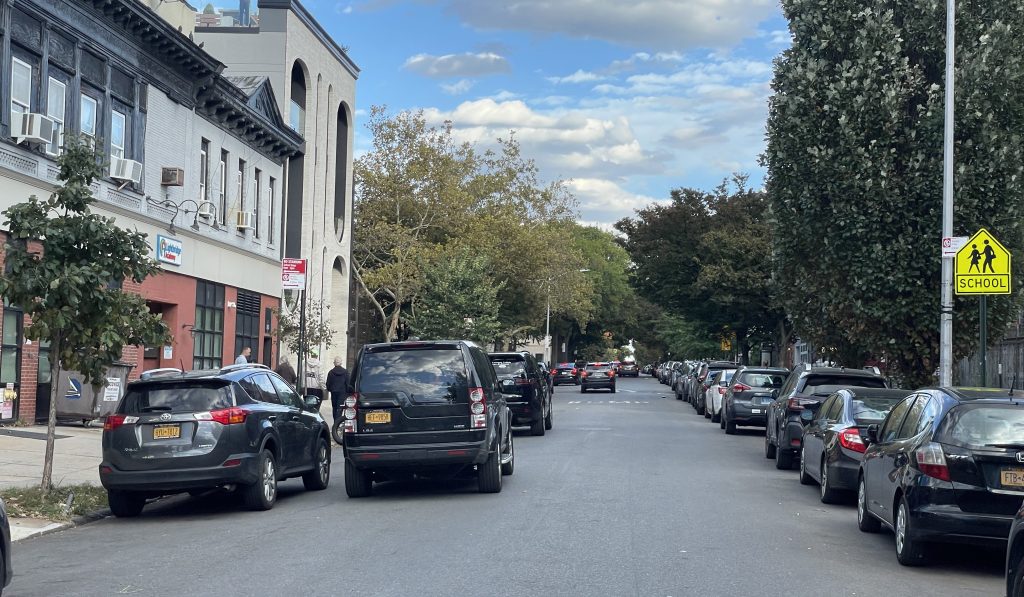
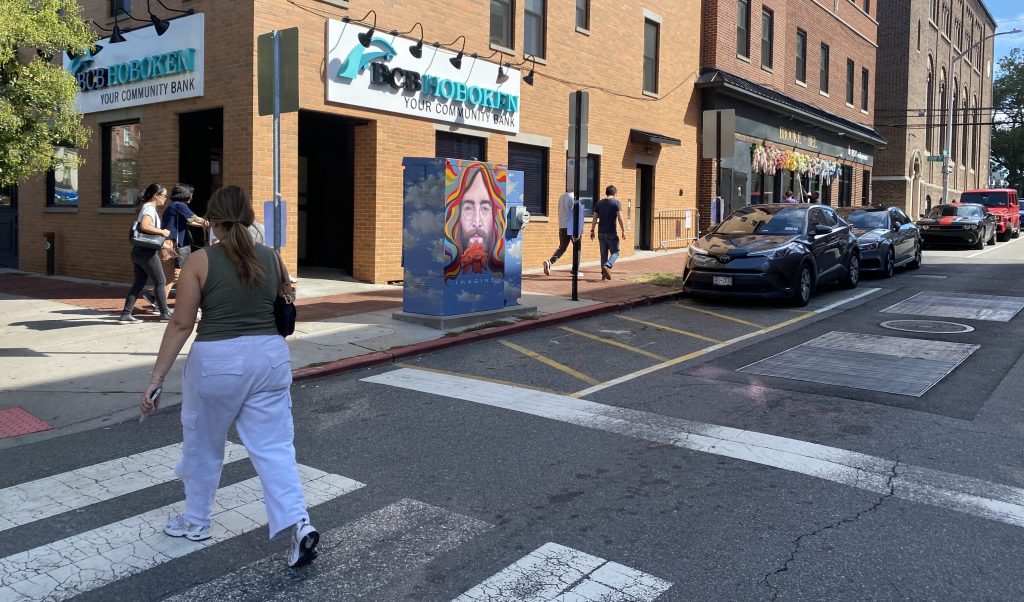
Intersections are the most deadly part the street for pedestrians, accounting for 55 percent of pedestrians fatalities and 79 percent of pedestrians injuries, according to city stats. Cities from Hong Kong to Hoboken have used daylighting to stem that carnage, yet DOT’s upper ranks oppose universal daylighting, which state law requires, but exempts the city from in favor of extra on-street car storage. The agency says it prefers hardened daylighting — aka creating space marked off with a block or bike rack so drivers can see pedestrians, but not cut the corner at speed.
Mamdani came into office vowing to implement the policy and overriding internal resistance, but has so far deferred to his DOT Commissioner Mike Flynn. Advocates still hope the new mayor will follow through on his campaign plank despite DOT’s reluctance.
“As we continue to improve our streets, so they serve people and not just vehicles, hardened infrastructure is two for the price of one: we get the proven safety benefits and also public benefits like bike parking, beautification, seating, or bioswales,” said Sara Lind, co-executive director of Open Plans, which shares a parent organization with Streetsblog. “When something is that cost-effective, we should be putting more money behind it, not less.”
On Tuesday, Flynn appeared to inch a bit closer to the mayor’s campaign position, saying he would like to expand the agency’s capacity.
“We live in a world of finite resources, but absolutely we’re supportive of the concept of daylighting across the city,” Flynn told Council members. “We just want to make sure that we can design it appropriately in each location so that it has the intended benefit.”
The transportation chief declined to explicitly back universal daylighting, however, when pressed by Council Transportation Committee Chair Shaun Abreu (D-Hamilton Heights).
“So is the administration committed to universal daylighting?” Abreu asked.
“Daylighting is already a key part of our toolkit and we’re working to expand its use, and we want to do that in a data-driven way that uses our resources most effectively,” Flynn responded.
“It sounds to me like a ‘No,’ that the administration is not committed to universal daylighting,” Abreu said. “If that’s the case, is it safe to assume that the mayor has changed his view since the campaign about universal daylighting?”
To which Flynn said: “I think we would like to see daylighting across the city.”
The agency last year questioned the safety benefits of daylighting without hard protections like granite blocks or plastic bollards in a contested study.
Officials had also testified in the past that they found increased injury rates at certain intersections that had hydrants near corners, specifically for left-turn crashes at one-way-to-one-way intersections.
But when Council Member Lynn Schulman (D-Rego Park) cited those concerns and asked which locations are unsuitable for daylighting, Flynn declined to give any.
“Is it the case that some intersections might not be conducive to daylighting?” Schulman asked.
“At this point we’re focused on looking forward, and really, we want to work constructively,” Flynn responded. “We think daylighting can take different forms in different situations and we try to incorporate it into all different programs.”
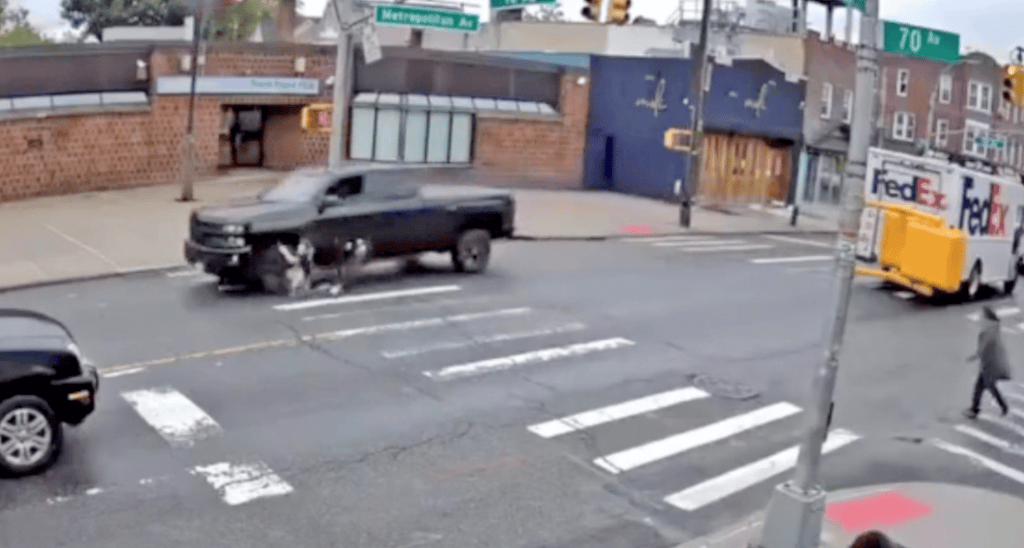
Ex-Mayor Adams had promised to ban parking near 1,000 intersections annually after an NYPD tow truck driver mowed down seven-year-old Kamari Hughes in Fort Greene in 2023.
But DOT later altered the language to say it would “add daylighting to 1,000 locations in 2024,” and a Streetsblog review of an agency list of 314 spots that had supposedly gotten the improvements showed that officials were juking their stats by triple-counting intersections and logging locations that far pre-dated the Adams administration. DOT’s latest rate still rests on that scaled-back benchmark.
Mamdani has long backed citywide universal daylighting, starting with him co-signing a letter in late 2023 as a state assembly member with his fellow western Queens lawmakers, which Abreu cited at Tuesday’s hearing. The mayor was also among the first pols to publicly stand behind the policy, after a driver killed seven-year-old Dolma Naadhun at an undaylighted Astoria intersection.
He continued standing behind universal daylighting on the campaign trail for mayor, including at a forum on transportation and during an “Ask Me Anything” session on the influential subreddit MicromobilityNYC.
Mamdani rode the wave of of a grassroots daylighting push by community boards and local politicians, who passed resolutions and signed letters calling for universal daylighting across the city, growing to more than 200 organizations to date.
The groundswell culminated in a failed piece of legislation in the Council last year, which then-City Council Speaker Adrienne Adams blocked despite garnering a majority of support among lawmakers.
In a statement, DOT spokesman Vin Barone said hopes to expand daylighting “in an effective way.”
“This administration will use every tool available to make our streets and intersections safer, including daylighting. When done right, daylighting can keep corners clear so drivers, pedestrians, and cyclists can better see each other, and help slow turning vehicles,” Barone said.

Read More:
Streetsblog has migrated to a new comment system. New commenters can register directly in the comments section of any article. Returning commenters: your previous comments and display name have been preserved, but you'll need to reclaim your account by clicking "Forgot your password?" on the sign-in form, entering your email, and following the verification link to set a new password — this is required because passwords could not be carried over during the migration. For questions, contact tips@streetsblog.org.