City’s Queens Waterfront Greenway Plan Seems Tailor-Made to Placate Vickie Paladino
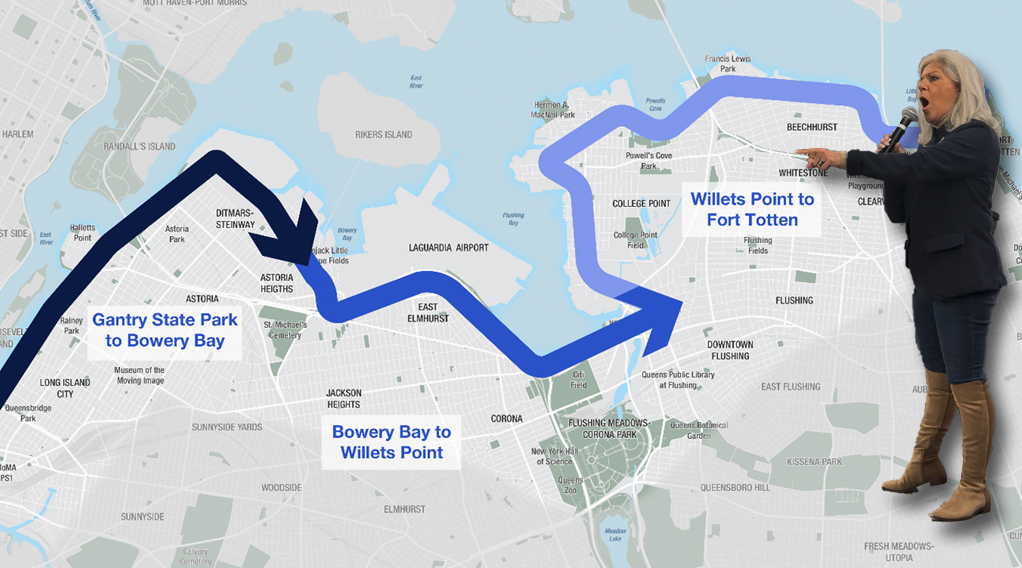
The city won’t add protected bike paths in northeastern Queens as part of its new waterfront greenway plan, more than a year after local Council Member Vickie Paladino hijacked a community meeting about the 16-mile-long project — a stunt that forced the city to create a “code of conduct” for its public workshops.
The Department of Transportation plans to fill in various gaps between existing protected two-way bike paths along or near the Queens waterfront, starting at Long Island City and continuing north around Astoria and east to East Elmhurst. But further east, in neighborhoods like College Point and Whitestone, the agency downgraded its designs to mere shared lane markings – also known as sharrows – according to the much-anticipated Queens Waterfront Greenway plan released last week.
“Unlike the other segments, the eastern section only has minor improvements, since a small outspoken group is turning bike lanes into a culture wars issue, ensuring that kids in College Point won’t be as protected on the greenway as children in Chelsea,” said the co-founder of Eastern Queens Greenway, John Kelly. “The Queens Waterfront Greenway will be incredibly popular a few years after implementation, if we really do it right now. But half measures won’t make a real impact.”
The timid proposals, while still “conceptual designs,” according to DOT, will leave the suburban parts of the World’s Borough less safe in Paladino’s district, and local advocates expressed disappointment that the Mamdani administration gave in to the bike-lash.
DOT has not set a timeline for implementing these projects, and officials first want to come back to local community boards with more detailed proposals, according to spokesman Vincent Barone. In-house projects generally take one to two years, the rep added.
“The plan basically gets way less ambitious the minute you step into Flushing and eastern Queens,” said John Surico, an Astoria resident who chairs the 31st Avenue Open Street Collective and contributes to Streetsblog. “I hope to see some more of that ambition stretched to the east. To really get people cycling you also have to have that level in car dependent areas.”
Paladino has vehemently opposed street redesigns that undo car-dominance. In late 2024, she shouted down officials and advocates at a heated community workshop about the greenway that nearly devolved into violence. Before that raucous meeting, the Republican pol posted a call-to-action video in which she claimed the city was going to “take” residents’ streets.
“They’re going to take your streets and make it a two-way bike lane to connect us to Astoria,” Paladino said at the time. “No can do, I will not allow it, but you won’t allow it either. Not allowed to happen in District 19 – I forbid it.”
Mayor Mamdani and his DOT Commissioner Mike Flynn vowed to turn the Big Apple’s streets into the “envy of the world,” but studies have shown that sharrows alone won’t achieve that objective, since they do little to encourage more bike ridership or improve safety, while protected bike lanes cut injuries and deaths by double-digit percentages.
Wide roads, doughnut hellholes
DOT’s redesign for Whitestone and College Point proposes sharrows on about six miles of roads — which the DOT counts as 12 miles because the paths are two-way. The route connects the marvelous existing waterfront greenway on Joe Michael’s Mile at Fort Totten Park and goes around the two suburban neighborhoods down to Flushing.
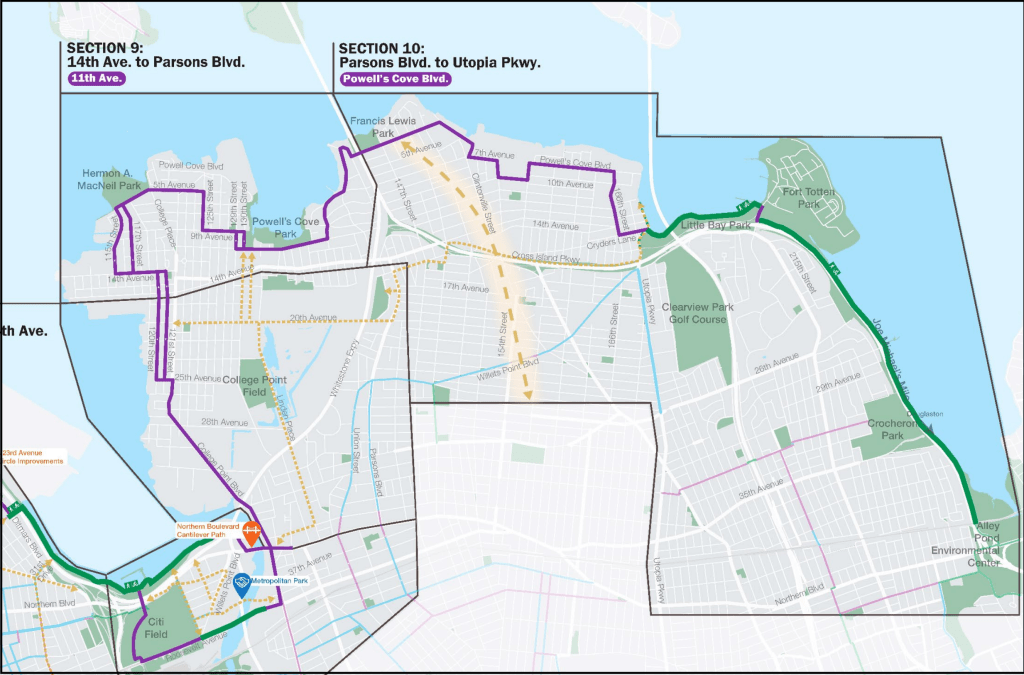
The agency will add some painted curb extensions, but otherwise won’t reclaim street space from motorists, who still get four lanes to drive and store their cars. The sharrows are supposed to encourage motorists to share the 13-foot two-way driving lanes that the agency described as “low-stress” and “residential.”
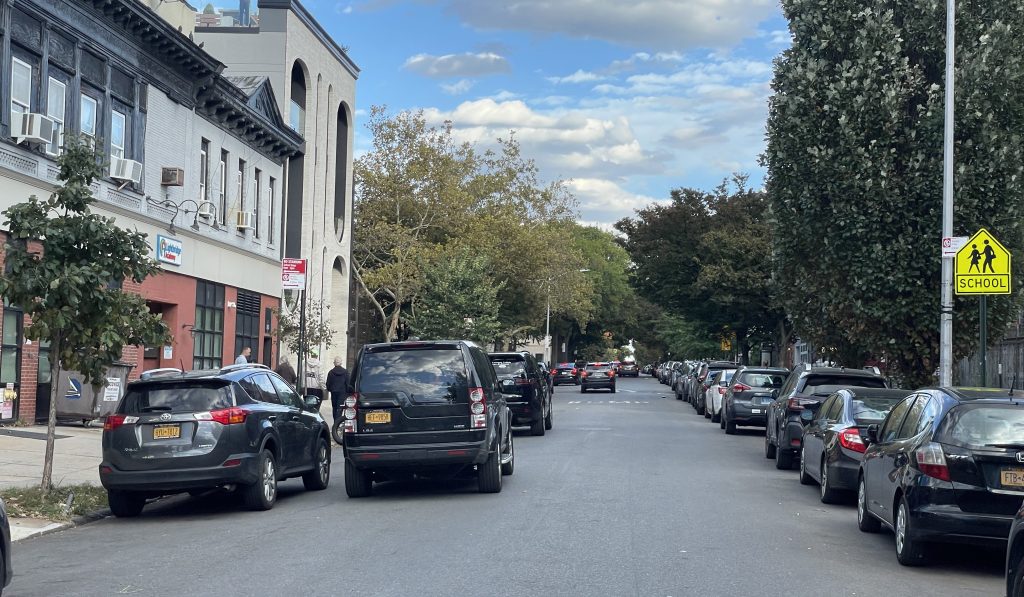
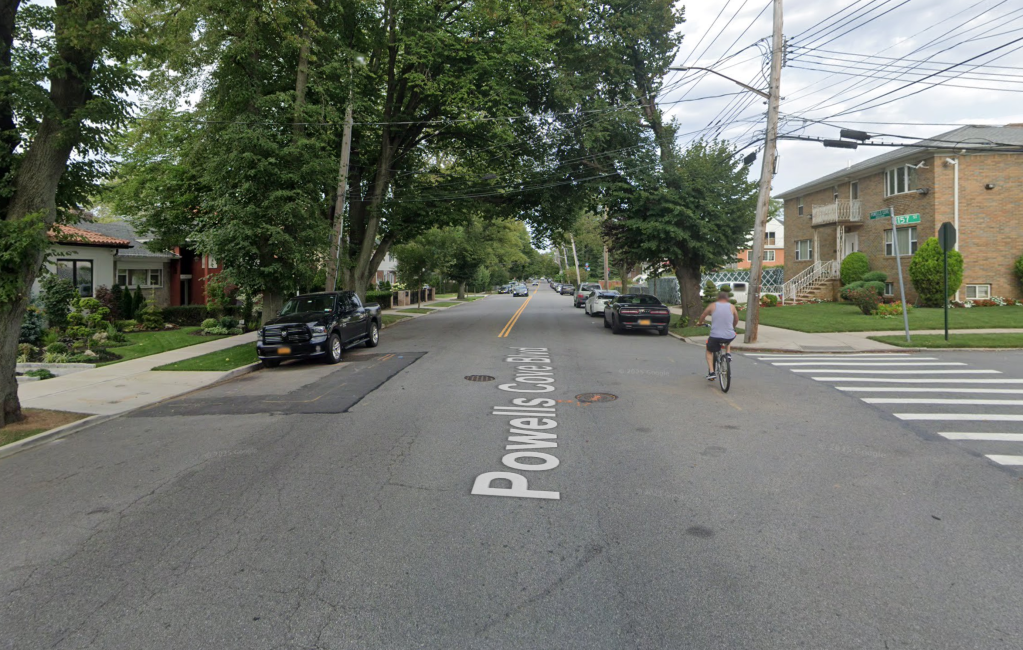
This is what the redesign looks like on Powells Cove Boulevard, between Parsons Boulevard and Utopia Parkway:
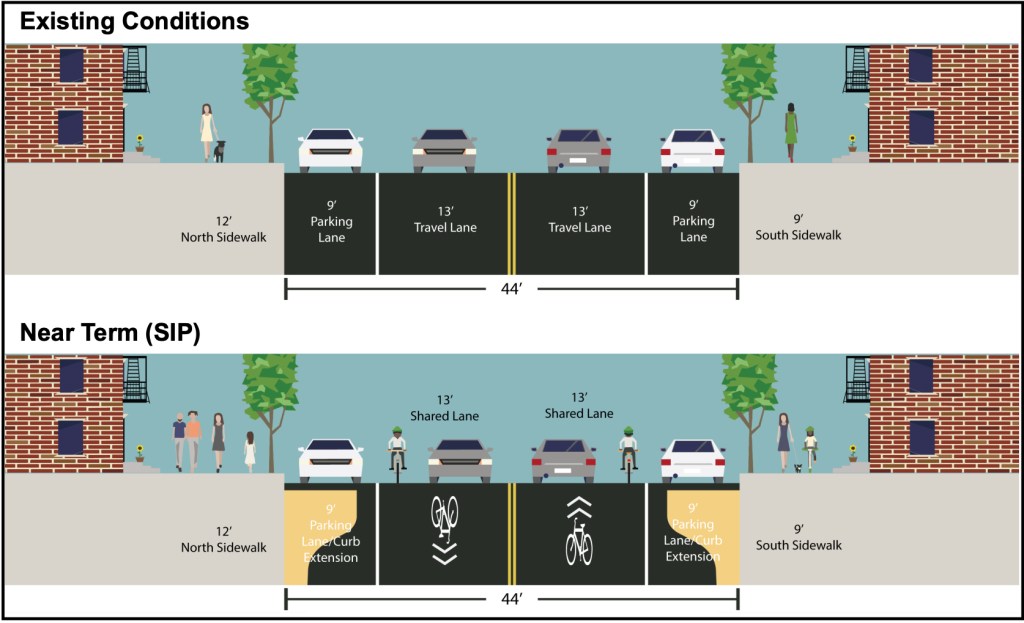
Despite DOT’s description of these streets, they are actually wide, hilly and straight throughways with few stop signs or lights – the perfect setups for drivers to speed:
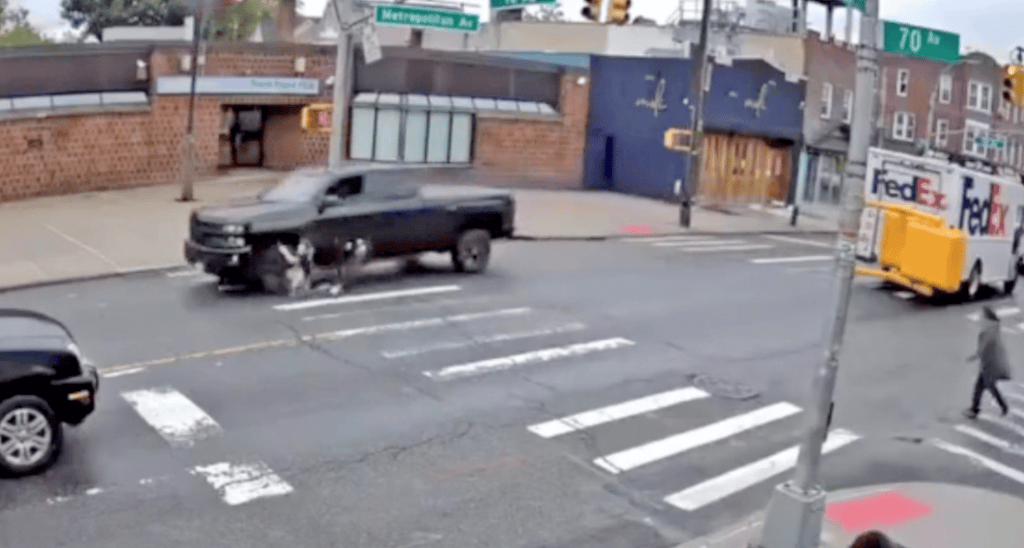
The unprotected paths continue west on to College Point and cut through a notorious starfish intersection in the sub-neighborhood of Malba, where motorists have staged nighttime takeovers to do doughnuts and torch cars.
Sharrows can be even worse than no bike markings at all by giving cyclists a false sense of security, and have been tied to higher injury rates, according to research out of the Universities of New Mexico and Colorado. Protected bike lanes, meanwhile, reduce people seriously injured or killed in crashes by 18 percent, and a whopping 39 percent among senior pedestrians, according to DOT.
The western half of the greenway in more politically-friendly territory will receive protected paths. DOT is even planning to upgrade some sharrows on other parts of the proposed greenway route to protected bike paths.
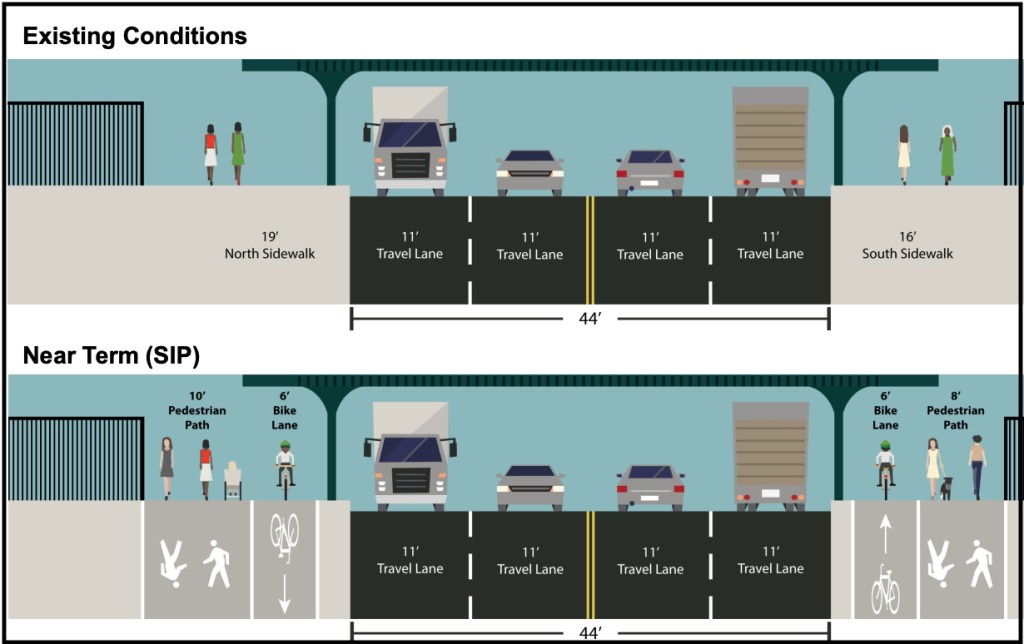
On College Point Boulevard, from 14th Avenue to Northern Boulevard, DOT will add a seven-foot barrier-protected bike lane while narrowing two travel lanes. And on Roosevelt Avenue, from College Point Boulevard to Grand Central Parkway, the agency decided to preserve four travel lanes for cars and trucks, while relegating cyclists to the sidewalk with pedestrians.
Better luck westward
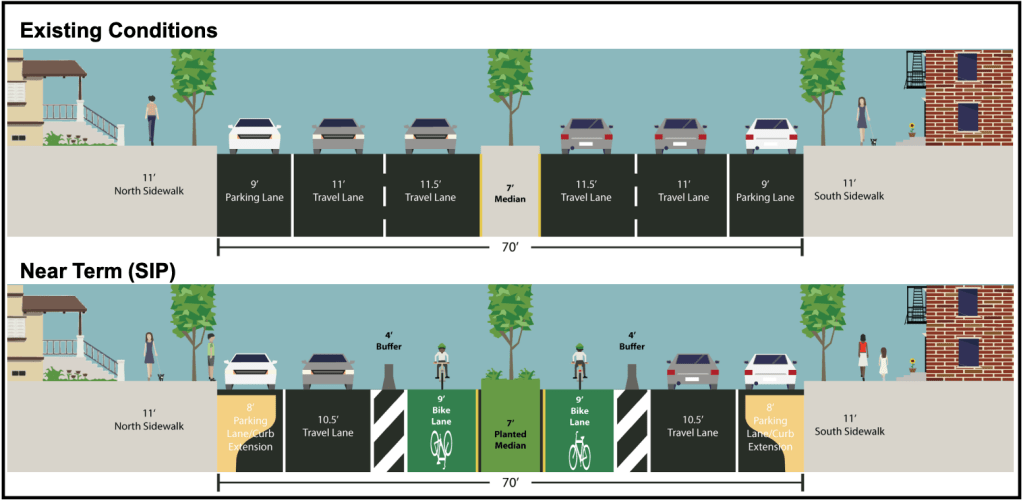
DOT saved its bolder designs for East Elmhurst and to the west, with a new center-running bikeway on 23rd Avenue — removing a car lane each way — from 81st Street to Malcolm X Promenade, boasting a spacious nine feet in each direction.
The plan continues to fill in gaps along the Astoria waterfront, adding a two-way protected path on 26th Avenue while turning the car lanes into a one-way road, between Hoyt to 34th Avenues.
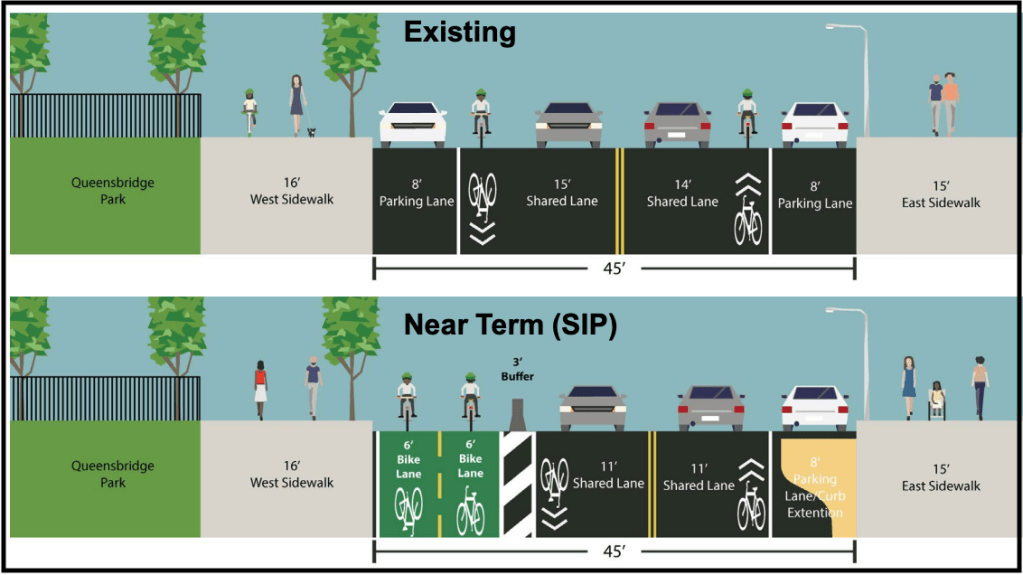
On Vernon Boulevard, DOT proposed filling in a gap in the existing two-way bike lanes outside Queensbridge Park, while maintaining the current sharrows next to it. Interestingly, Vernon is roughly the same size as the streets in College Point and Whitestone, where DOT plans to install sharrows alone.
DOT also unveiled some proposals to harden bike lanes with capital projects, such as raising the curbside protected bike lanes on 11th Street connecting to the chaotic entrance at the Pulaski Bridge, as well as the two-way protected path on 20th Avenue.
Barone, the agency rep, defended the choice for lesser designs in the car-dominant corridors, while noting that the city does not actually define greenways as protected cycling paths (the city’s official guidance states the routes can consist of as little as wayfinding signage).
“These conceptual designs relate to the context of the individual streets along a waterfront with radically different land uses, and in a small section of the eastern Queens corridor, NYC DOT was able to identify quiet, narrow, low-traffic corridors to help define comfortable cycling routes along parks, the waterfront, and other College Point amenities,” said Barone in a statement.
Paladino’s office did not respond to requests for comment.
Update (June 10, 2026 at 4:40 p.m.): After publication, Paladino posted this article on social media, celebrating DOT backing off of a protected bike path in her district.
“Congratulations, District 19. Always worth the wait. I couldn’t be more proud. In this instance, there was no backing down. Always remember to persevere, and patience is key,” Paladino wrote on her Facebook page.

Read More:
Streetsblog has migrated to a new comment system. New commenters can register directly in the comments section of any article. Returning commenters: your previous comments and display name have been preserved, but you'll need to reclaim your account by clicking "Forgot your password?" on the sign-in form, entering your email, and following the verification link to set a new password — this is required because passwords could not be carried over during the migration. For questions, contact tips@streetsblog.org.