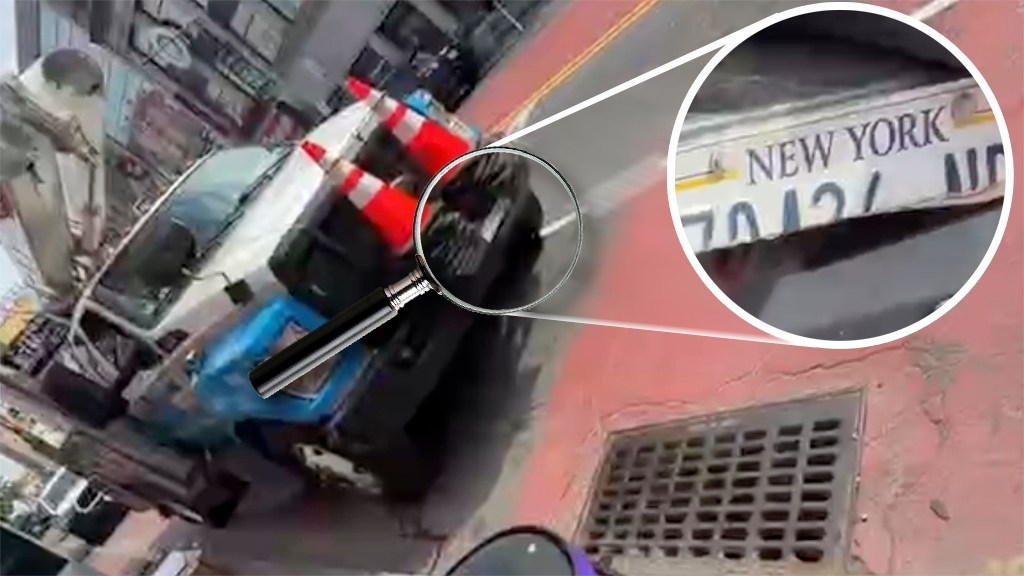
Need To Kill Cross Bronx Widening Plan Is Obvious Amid Slight Pollution Uptick
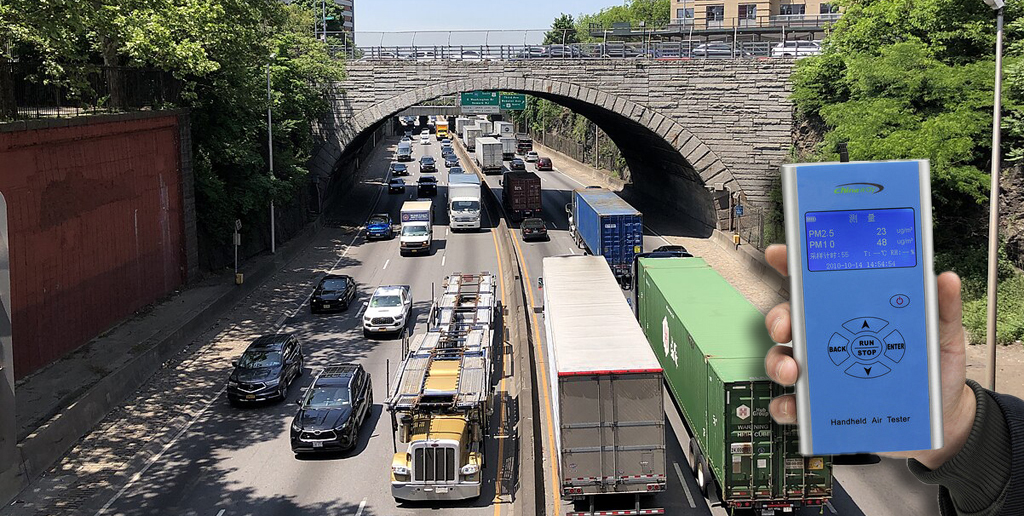
Gov. Hochul has delayed her decision on whether to widen the footprint of the Cross Bronx Expressway for the second time, to next month — as advocates raise the alarm about the potential harm of dumping more car pollution on the Bronx after slight increases in traffic and pollution in the borough since the launch of congestion pricing.
Hochul now plans to decide whether to widen the Cross Bronx Expressway’s shoulder lanes by May 7, state officials informed the federal government this week — marking the second time she’s pushed her decision.
The delay comes days after Bronx advocates released new air quality readings from monitors in and around Port Morris and Mott Haven, two neighborhoods surrounded by highways and industrial zoning. Of the 19 monitors, 17 showed upticks in air pollutants in the first year of congestion pricing tolls in Manhattan, according to researchers at Columbia University who work with the local advocacy group South Bronx Unite.
Over the whole area, the average increase of PM2.5 particulate matter was 0.22 micrograms per cubic meter — an increase of 1 to 10 percent, according to air quality monitors run by the city Department of Health and Mental Hygiene. It’s a small spike, but a significant one for residents of The Bronx, who have historically suffered more vehicle-based pollution than other parts of the city.
“Even though these numbers are small, they do have health risks,” said Zander De Jesus, a PhD student who worked on the project. Respiratory illnesses increase by 2.07 percent, and hospital visits by 8 percent, for every additional 10 micrograms per cubic meter of daily PM2.5 exposure, so 0.22 micrograms barely moves that needle — but the needle is nonetheless moving in the wrong direction.
South Bronx residents experience relatively higher levels of respiratory illnesses as a result. Yet Hochul’s proposal to widen the highway shoulder lanes would saddle the area with more truck traffic, according to the state’s own environmental review which paradoxically suggests the project will also improve air quality. The project began as an even bigger highway expansion before Hochul scaled it back in response to criticism from Bronx environmental advocates.
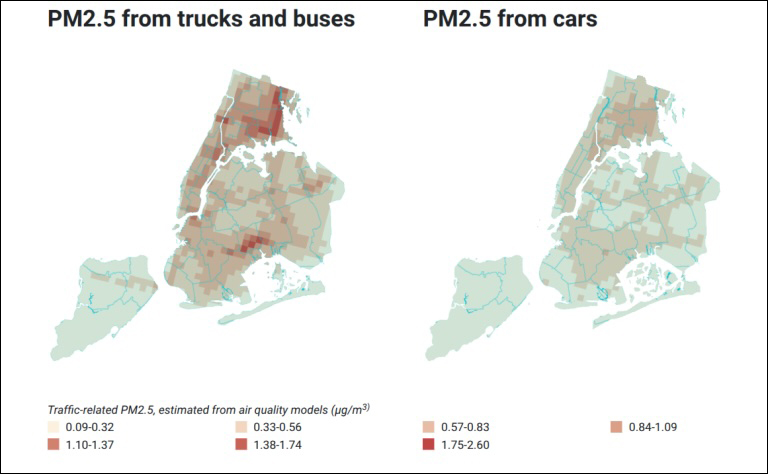
On top of the uptick in pollution, traffic on the Bronx and Manhattan spans of the Triborough Bridge also increased in the first year of congestion pricing — although not as much as the MTA revealed in its environmental review. The increases in pollution also fell short of the MTA’s forecasts, but advocates — who maintain that they still support congestion pricing — said that any negative effects simply add another burden to an already overburdened area.
“Incremental impacts on vulnerable community have exponential possibilities in terms of health outcomes. That’s what we’re concerned with. Our concern is with our community having fresh air to breathe and not to be inundated with more negative impacts,” said Mychal Johnson, the co-founder of South Bronx Unite. “We don’t want congestion pricing to end. We want to make sure that it doesn’t hurt our community. We want congestion relief here as well.”
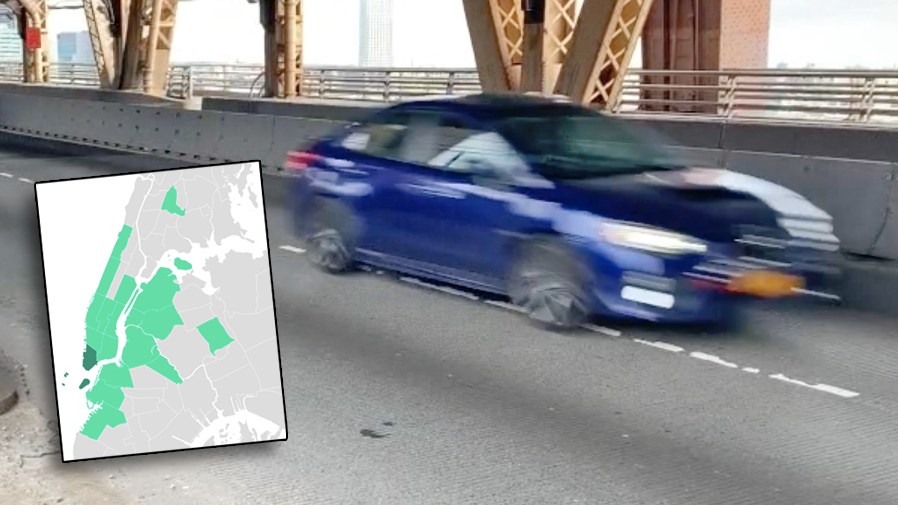
Using the MTA’s bridge and tunnel crossing data, South Bronx Unite said the Bronx and Manhattan spans of the Triborough Bridge carried an average of 1,000 additional vehicles per day on the span in 2025 compared to 2024, an increase that matches up with citywide trends since 2023. Total car and truck trips across MTA bridges and tunnels have been going up every year since the end of the pandemic.
Despite the slight increase in Bronx pollution, congestion pricing caused a slower rate of increase in traffic than the increase that occurred in 2024, and there were about 1,000 fewer trucks per day passing through the South Bronx on the Major Deegan Expressway.
“The traffic on some of the crossings since Covid had been coming back and slowly growing,” Lieber said at a recent press conference. “It has been going much less quickly, even though people are getting faster travel in part, because of the reduction in traffic [from congestion pricing].”
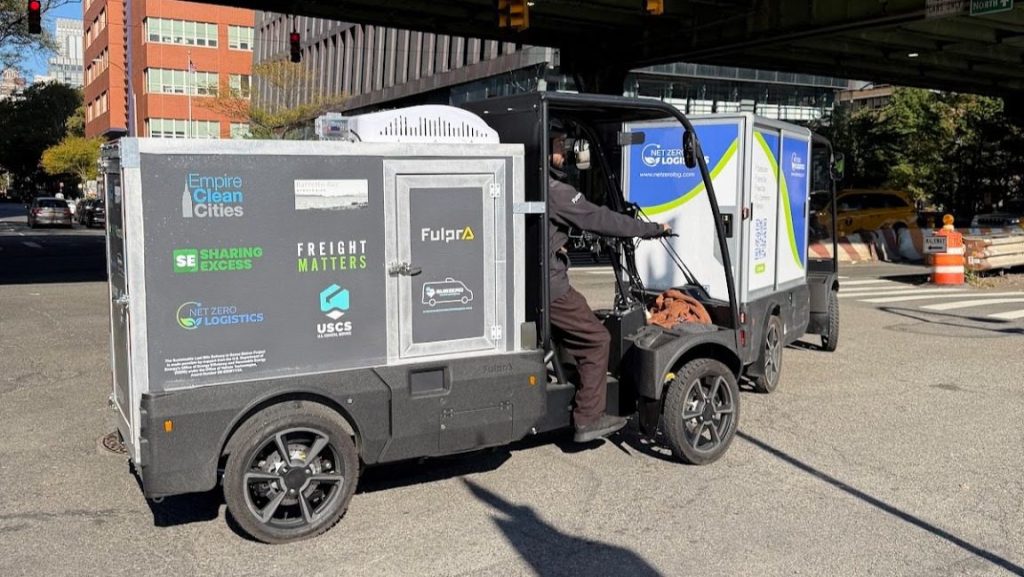
Ahead of congestion pricing’s launch in January 2025, the MTA committed $130 million to measures designed to reduce air pollution in the South Bronx and elsewhere. In Mott Haven and Hunts Point, those mitigation plans included funds for response centers, adding air purification to some school buildings and planting roadside vegetation. The same pot of money will also replace 100 diesel-powered truck refrigeration units in the Hunts Point market — which spew emissions all day long — with electric or hybrid TRUs.
Lieber announced the first 20 new truck refrigeration units last week and 75 more are on the way. The agency expects the new truck refrigeration units to reduce particulate matter by 99 percent and nitrogen oxide by 60 percent.
Rep. Ritchie Torres (D-Bronx), a congestion pricing supporter who pushed for the MTA to commit to the initial mitigation efforts, pledged to keep up efforts to cut pollution in the South Bronx.
“The South Bronx has carried a disproportionate pollution burden for generations, which is exactly why I’ve pushed for real mitigation efforts, from replacing diesel [truck refrigeration units] at Hunts Point, to capping the Cross Bronx, to building the green infrastructure these neighborhoods have been promised and denied for decades,” he said. “I will continue advocating for additional mitigation efforts to ensure our community is no longer left behind.”
Gov. Hochul’s office referred Streetsblog to Hochul’s statement last week calling electric refrigerators “a game changer.”
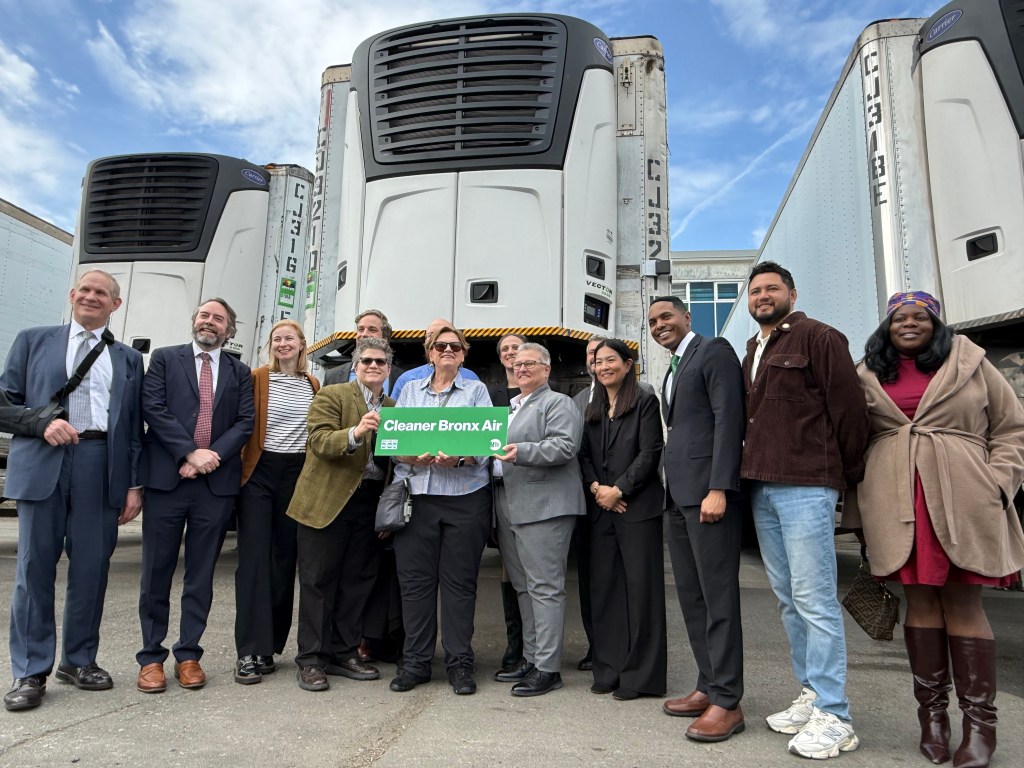
“We knew that to do this right, we had to bring real air quality improvements directly to parts of New York City that have been neglected for far too long,” said Hochul. “These new refrigeration units will be a game changer for Hunts Point market, with air quality improvements equivalent to removing thousands of truck trips on our roads every day, making the Bronx’s air cleaner and improving quality of life.”
Johnson said he’d like to see a longer mitigation timeline with more funding for efforts designed to protect more people breathing dirty air, as well as a more committed effort to remove cars from the road beyond congestion pricing.
“We’re making DIY air purifiers. We need our residents who live in these NYCHA developments to experience cleaner air where they sleep, where they live,” he said. “We want some of that mitigation money to go to actually making sure that all the schools are getting purifiers, we want to make sure people can get purifiers in their homes, where they live, who are deeply impacted.”
More parks and vegetation could significantly air quality outcomes in the area as well, Johnson said. The two air quality monitors that saw statistically significant drops in PM2.5 were located near by the El Coqui Community Garden and Latino Pastoral Action Center. The latter is surrounded by trees and sits across the street from two leafy parks.
“There are a number of possible explanations that factor into this decrease, but one possibility is that the growth of high quality vegetation at these community gardens across 2025, compared to 2024 when they were less developed, was able to act as a buffer [by] catching and absorbing some air pollution before it continued to mix in the neighborhood,” said De Jesus, the air quality researcher.
Will the Bronx get left behind?
Johnson’s quest to further reduce car and truck traffic in the Bronx goes to the heart of New York’s contradictory approach to the city’s northernmost borough over the last few years.
On the one hand, the state and city want to cap the Cross Bronx Expressway and are studying several proposals to make it easier to walk, bike and take the bus across the borough. Congestion pricing itself is funding a number of accessibility upgrades and station refurbishments in the Bronx and paying for the aforementioned TRUs and upgrades to bus depots to accommodate electric buses. And according to an analysis from transit expert Charles Komanoff, fewer trucks crossed the Bronx span of the Triborough Bridge last year compared to 2024, a phenomenon he attributed to the traffic toll.
On the other hand, the city abandoned its efforts to add better bus service for Bronx residents under the Adams administration — kiboshing plans for an offset bus lane on Fordham Road and a busway on Tremont Avenue. And Hochul may yet go ahead with her Cross Bronx Expressway proposal, which move bring the highway closer to NYCHA’s Bronx River Houses and increase truck traffic by up to 33 percent. The governor has now punted on two deadlines to decide whether to advance the plan for new shoulders on the highway.
“They’re not making it easier for people to get on the train or on a bus when they’re attempting to reduce the cost of driving through [Hochul’s] auto insurance initiative,” said Renae Reynolds, executive director of Tri-State Transportation Campaign. “It seems disjointed and counter to any sort of goal that is aiming at getting folks to use mass transit, to bike or walk. Then you have the reverse, where the mitigation plan is also investing in the transitioning of the truck refrigeration units — but it’s not helpful if you’re pouring millions and billions of dollars into car dependency. It doesn’t make any sense.”
South Bronx Unite’s data is not the first — and won’t be the last — look at the air quality impacts since the state began tolling vehicle trips into Manhattan below 60th Street. Last year, researchers at Cornell University analyzed data from 42 air quality monitors run by New York City and New York state and found “statistically significant decreases in PM2.5” inside the tolling zone — as well as the rest of the city and in the larger metropolitan area.
The city Department of Health will release its own before-and-after analysis later this year. In the MTA’s first-year report on congestion pricing, city Health Department monitors showed a general decrease in pollutants in 2025 compared to 2024, with spikes in PM2.5 in June and July due to Canadian wildfires during those months.
Advocates say that New York’s leaders have a special responsibility to address air quality in a borough where their predecessors regarded pollution as the cost of doing business — whether it’s to build major highways, trash incinerators or Fresh Direct warehouses.
“Everyone who lives in this community has lost someone due to a respiratory problem,” said Johnson. “This is a really hard place for people to live, and our children are suffering from it.”

Read More:
Streetsblog has migrated to a new comment system. New commenters can register directly in the comments section of any article. Returning commenters: your previous comments and display name have been preserved, but you'll need to reclaim your account by clicking "Forgot your password?" on the sign-in form, entering your email, and following the verification link to set a new password — this is required because passwords could not be carried over during the migration. For questions, contact tips@streetsblog.org.