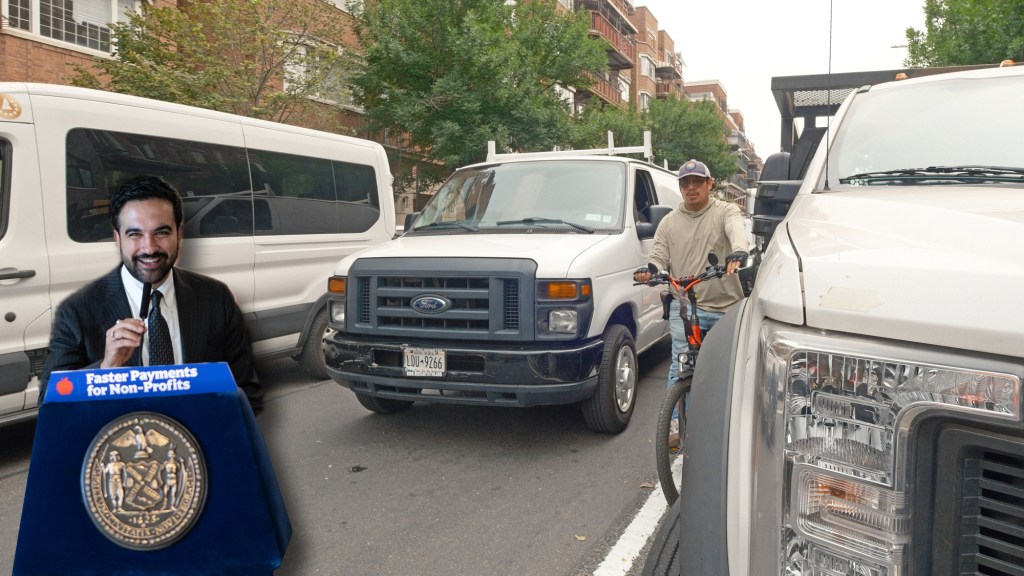
‘The Vibes Were Impeccable’: World Cup, Knicks Showed Promise of Livable Streets in New York City
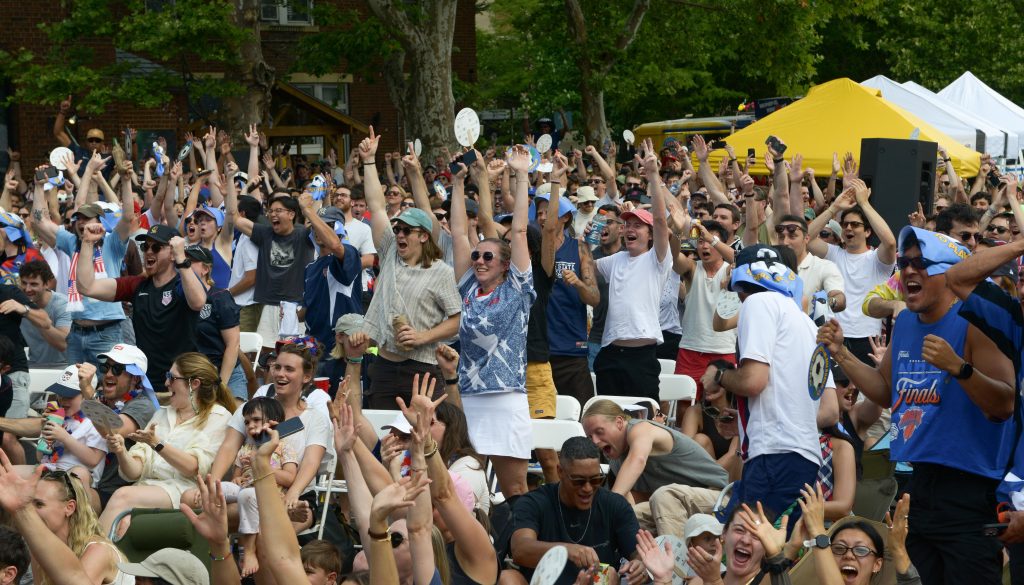
New Yorkers took back the streets from cars to celebrate the Knicks and watch the World Cup, and now it’s on Mayor Mamdani to seize and build upon the victories of this momentous summer.
The city quickly turned streets over to pedestrians, bike paths and bus lanes, while sports fans flooded roadways without asking anyone for permission. Both phenomena demonstrated the Big Apple’s desire to allocate less space for huge private vehicles and more space for people.
City officials, and the NYPD in particular, initially expressed anxiety about the influx of crowds descending on the city that never sleeps. Citing limited resources, the latter pushed to preemptively restrict many summer events. Festivities around America’s 250th birthday and Taylor Swift’s wedding bash at Madison Square Garden, only added to the sense of a city bursting at the seams.
But New Yorkers — including from the city’s many immigrant communities — took the big events in stride, said one organizer of watch parties, proving that more space for people is a good thing, not a threat.
“There was a lot of nervousness going into this year with the World Cup and how the city could best meet this moment in the public realm — and then you had the Knicks and then you had Swifty, and everything was on top of each other and we came out of it unscathed,” said said Katie Denny Horowitz, executive director of the North Brooklyn Parks Alliance, which hosted several match viewing parties. “What this has proven is that the desire and the dreams of our street can be realized without incident.”
Advocates agreed that Mamdani should stretch the enthusiasm beyond the marquee footie fest, and push for more spaces for people year-round. “The biggest World Cup win wasn’t on the field; it was showing what New York looks like when we prioritize streets for people,” said Jackson Chabot, director of advocacy and organizing at Open Plans (which shares a parent company with Streetsblog).
“The challenge now is making those investments permanent,” he continued. “We call on Mayor Mamdani to build on this momentum with more plazas, more Open Streets, and School Plaza Blocks so every New Yorker has a welcoming public space to enjoy, not just during global events, but every day.”
The city showed its best side as government made way for locals and visitors to come together in the streets, Mamdani extolled in a celebratory press release on Friday, promising to “keep what we built” after the Cup final wraps.
“This summer, strangers became neighbors on Open Streets and in free Fan Fests across the city because government made room for people to come together,” Hizzoner said in a statement on Friday. “And long after the confetti is swept away, New Yorkers will keep what we built: safer streets, faster buses, stronger protections, closer neighbors and the memory of a summer when the whole world felt at home here.”
If you screen it, they will come
Countless watch parties sprang up across the five boroughs for the major soccer and basketball games, including 100-or-so World Cup sanctioned viewings at public plazas and parks and more impromptu gatherings. Crowds materialized outside of restaurants and bars, behind the backs of people’s cars and beneath elevated subway stations.
For the World Cup, the North Brooklyn Park Alliance organized three watch parties at the Bankers Anchor plaza on the Greenpoint-Williamsburg border that drew more than 2,000 people, Denny Horowitz said.
The former slip lane attracted people who wanted to enjoy space in their area rather than travel across the city to large-scale designated fan zones in Times Square or Brooklyn Bridge Park, explained Denny Horowitz. “The city can come together and make it easier for communities to activate our streets,” she said. “I think the community is not going to go back to the days where our streets were quiet.”
“The vibes were impeccable,” she added.
Elsewhere, people took it upon themselves to set up screenings, like this one on Kenmare Street in Nolita.
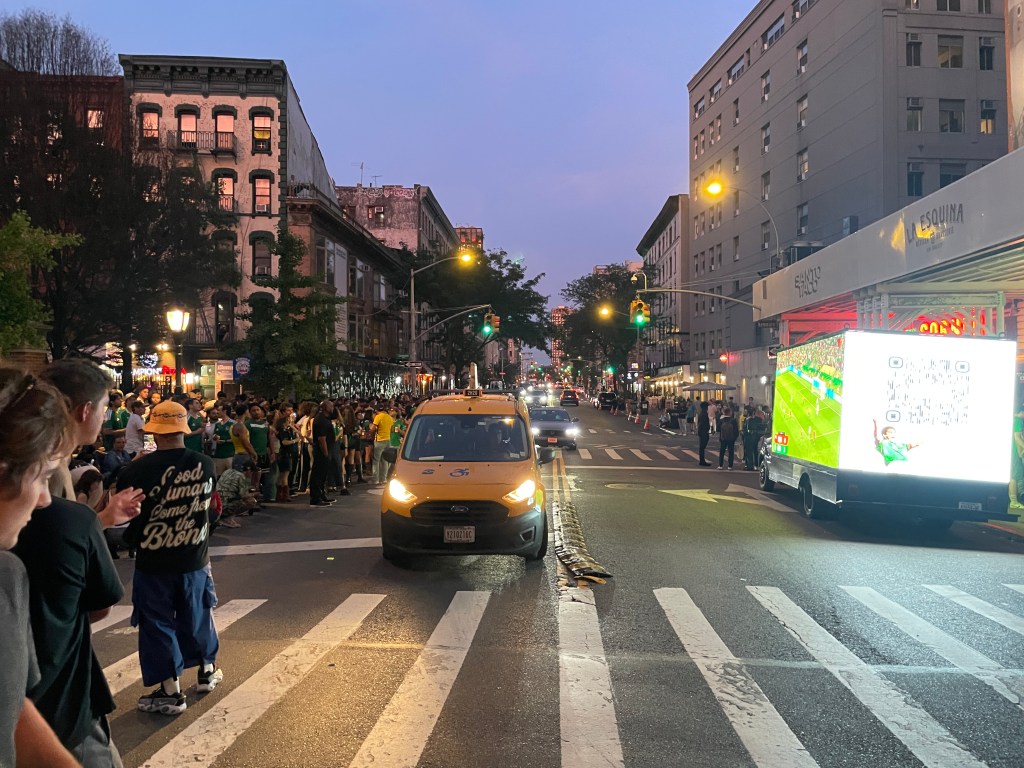
These improvised gatherings are clear signs that New Yorkers will embrace pedestrianized space not just as a means from getting from point A to point B, but also for lingering around and enjoying the company of other people.
New York is already a dense pedestrian city, making it easier to gather than elsewhere, so its officials should be bolder about reclaiming that area rather than continue caving to the minority of drivers, said one former transportation planner turned advocate.
“That’s the great thing about New York. You can’t do that in Dallas, you can’t do that in Atlanta. You can do it here and it’s a natural advantage and we still just keep whiffing at it,” said Jon Orcutt, a former Department of Transportation planner under former mayors Bloomberg and de Blasio, who now advocates for safer streets.
Beyond the watch parties, the Mamdani administration activated 50 car-free blocks outside schools as soccer pitches, art stations, and community celebrations. The mayor also adopted simpler solutions, like extending sports lighting in parks until 11 p.m. at 50 locations through Labor Day weekend, allowing more time for people to play sports.
Bus zones
Even though the actual games took place in New Jersey, Mamdani assisted commuters by issuing a Gridlock Alert on steroids to provide bus-only corridors during match days across the Hudson River. He also fast-tracked a humble bus lane in Queens to speed up commutes to LaGuardia Airport.
Mamdani temporarily carved out more space for surface transit in the usually clogged Midtown, most notably a river-to-river busway on 42nd Street, which sped up trips for straphangers in the area by 23 percent, even as a million more visitors moved through the area.
“The bus pilots passed all their tests with flying colors and they should be here to stay,” said Danny Pearlstein, the policy and communications director of the transit advocacy group Riders Alliance. “That’s something to be proud of and to build upon when the matches are over and to realize the benefits for New Yorkers and commuters everyday.”
Pearlstein said Gov. Hochul should have joined the city’s efforts by activating a surcharge in congestion pricing tolls, but the state’s chief executive has rejected calls to use her discretionary power to hike the price during gridlock days.
Car-free Lower Manhattan
The city trialed a car-free Manhattan below Canal Street during the ticker-tape parade for the Knicks’s historic victory over the San Antonio Spurs. More than two million Knicks fans descended on downtown, filling its winding streets with celebrations instead of noisy, polluting car traffic. The results were extremely popular with attendees:
The parade’s success should strengthen the case to restrict car access in neighborhoods like the Financial District, where city officials, residents, and mom-and-pop shops have pushed the idea for more than half a century.
Bicycle paths, pedestrian space
The city’s Department of Transportation tied some of its bike path and pedestrian space expansions to the World Cup, saying the lanes would provide better active transportation for New Yorkers and the crush of tourists.
These projects included a wider bike lane on Sixth Avenue, expanded sidewalks on Ninth Avenue, and a new two-way path on Lafayette Street that will connect to new crosstown bike lanes on 8th and 13th Streets.
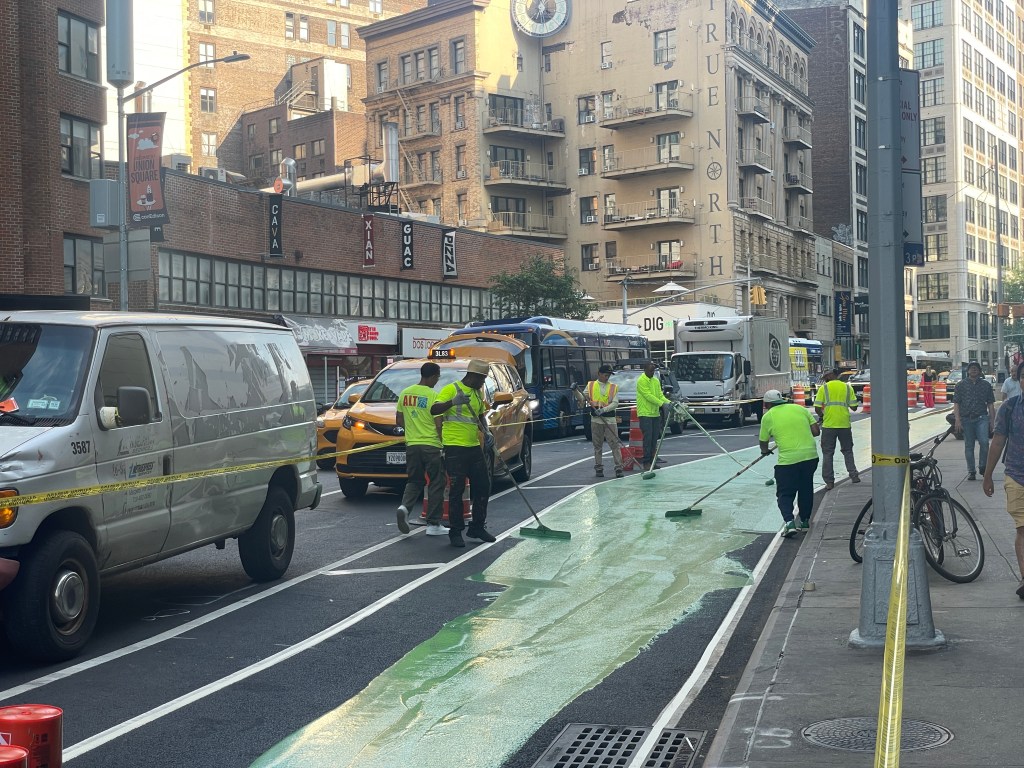
But Orcutt said that Mamdani’s DOT must get far bolder, and push hard for the safety infrastructure that isn’t tied to evanescent sporting events to truly fulfill the administration’s captivating promise of making the city’s streets the “envy of the world.”
“It was one glimmer of urgency we’re seeing out of Mamdani,” the ex-DOT official said. “I would like to see them unapologetically do much more of this stuff.”

Read More:
Streetsblog has migrated to a new comment system. New commenters can register directly in the comments section of any article. Returning commenters: your previous comments and display name have been preserved, but you'll need to reclaim your account by clicking "Forgot your password?" on the sign-in form, entering your email, and following the verification link to set a new password — this is required because passwords could not be carried over during the migration. For questions, contact tips@streetsblog.org.