PEDESTRIANIZE NOW! Financial District Businesses Want Space for People Not Cars
Bar the cars to fill the bars.
Lower Manhattan’s congested Financial District has a lot of foot traffic, but a lot of storefront vacancies — and area businesses hope limiting or banning private vehicle access could change that.
Private automobiles hog the scarce street scape of downtown’s narrow and windy roads, squeezing the growing population of people living and working there into tiny sidewalks. Mayor Mamdani should make good on his campaign promise to pedestrianize FiDi – a move that has boosted business elsewhere time and again, neighborhood merchants said.
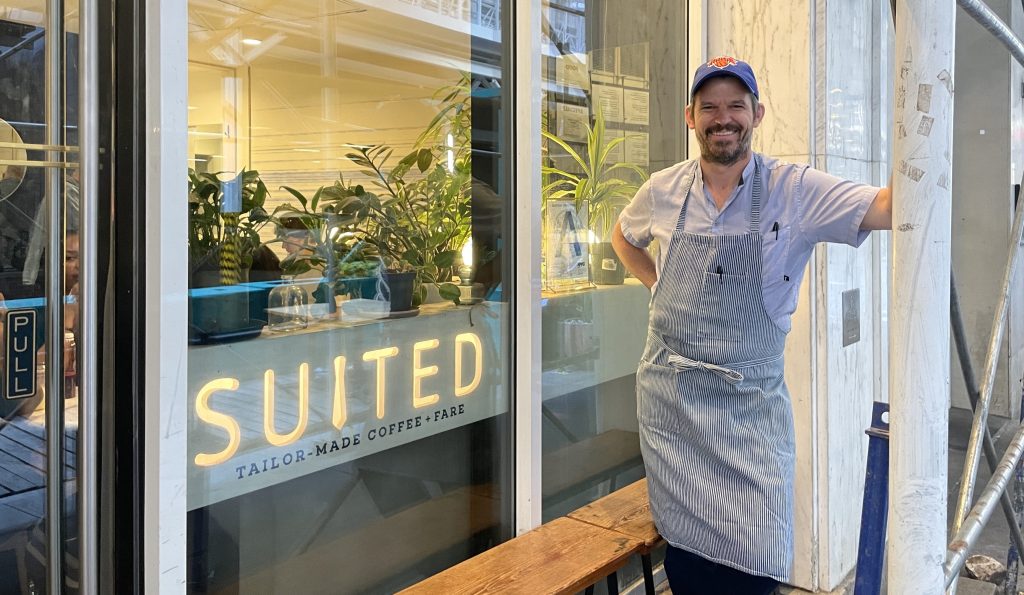
“It would be a much more enjoyable space to be, because it is a changing neighborhood,” said Wilson Johnson, who owns the coffee shop Suited on John Street. “If the car part can be ultimately limited, the pedestrian aspect of what’s possible with FiDi – I think – would make up for the joy in that.”
Owners of local establishments yearn for more car-free spaces like the booming examples that already exist in Lower Manhattan, such as Stone Street or the New York Stock Exchange, they told Streetsblog. The increasingly residential area is ripe for a major overhaul that prioritizes people, not the movement and storage of personal cars, merchants said.
Residents and local politicians have for years tried to curb the constant stream of cars, but mayoral administration after administration and the neighborhood’s influential business improvement district, the Downtown Alliance, have balked at bigger thinking, like pedestrianization or low-traffic neighborhoods.
The Financial District and nearby Battery Park City suffer the highest storefront vacancy in the entire city, according to a recent report by Comptroller Mark Levine from earlier this month, at 21.1 percent, nearly double the citywide average.
Meanwhile, the area’s foot traffic is among the highest in the city as well – second only to Midtown – with more than more than 2,000 people per hour on some thoroughfares, like Nassau, William and Fulton Streets, according to recent research.
City planners and business bigwigs could capture that heavy footfall by restricting vehicle movements and giving people some breathing room, according to a local pol.
“Having a low-traffic neighborhood down in the Financial District would be extremely welcome. The streets make for it,” Council Member Christopher Marte told Streetsblog. “This could be a huge boon for [businesses] as we’ve seen in European cities and all around the world.”
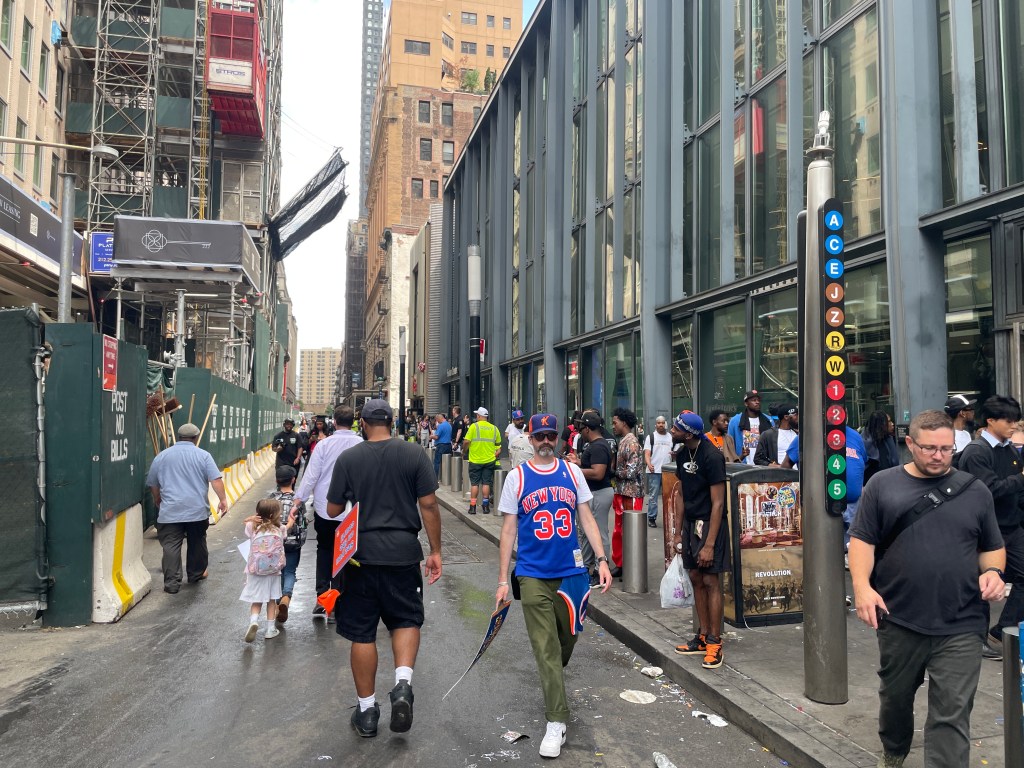
A gleaming example what’s possible when cars are out of the way came on Thursday, when Mayor Mamdani banished cars from Manhattan south of Canal Street, river to river, for the ticker-tape parade to celebrate the New York Knicks’ NBA championship.
The temporary car ban turned busy arteries like Fulton Street from this…
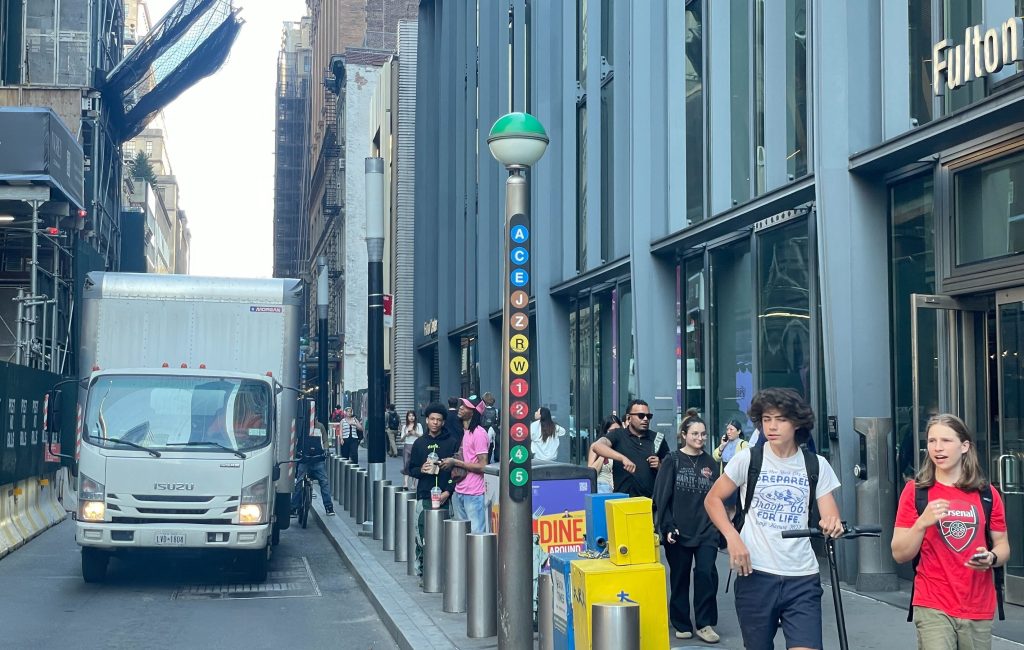
…into this:
Just a Stone’s throw away
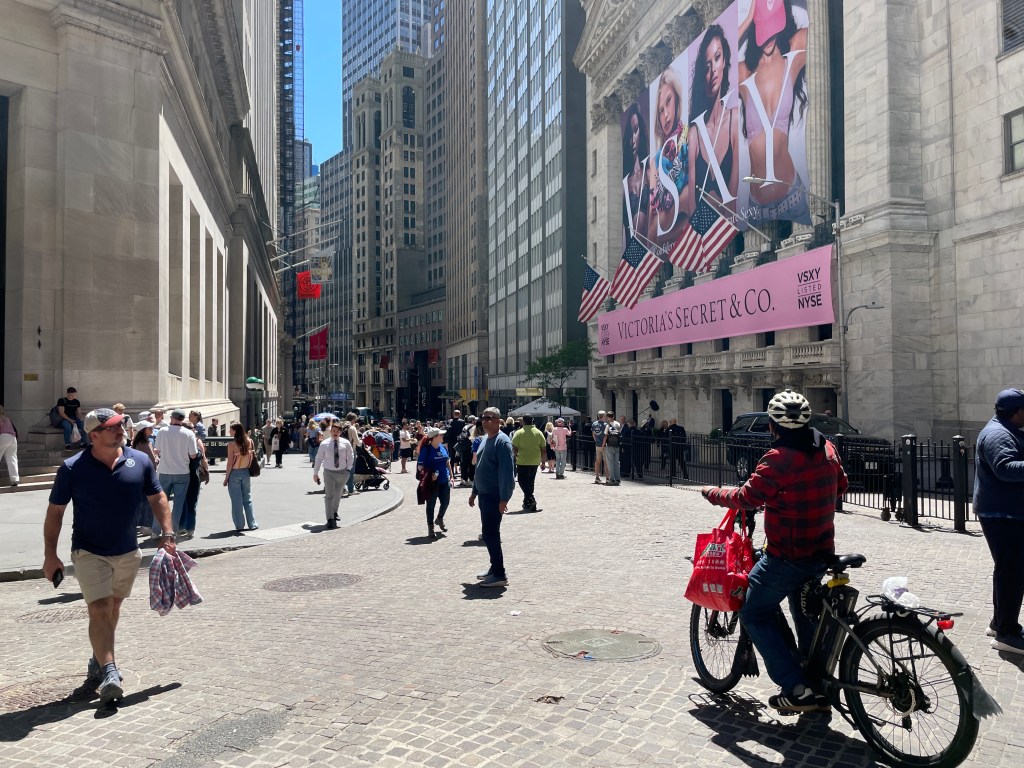
Lower Manhattan already has some marquee car-free areas, like the world-famous cross streets around the New York Stock Exchange and Federal Hall at Wall and Broad streets; the South Street Seaport; and the historic Stone Street – “Manhattan’s original open street” – where residents and the after-work crowd flock to enjoy the pubs and eateries lining the car-free cobblestone road.
The manager of La Parisienne, a French café on Maiden Lane, loved the idea of a pedestrian-first revamp for that street, which despite its quaint name is choc-a-bloc with cars and trucks.
“That would be huge for businesses like us,” said Phoebe Papademetriou. “[The street] doesn’t leave much space for people to walk around. And the street itself, for cars, takes up more space than the sidewalk.”
Low-traffic neighborhoods bar through-traffic while still allowing local drop-offs, deliveries emergency access. The neighborhood-wide design has long been popular in cities from London to Barcelona.
The Big Apple has rolled out elements of it on individual streets, like the successful bike boulevard on Berry Street in Williamsburg, and bike and pedestrian modal filters in Gowanus.
More neighborhood
The Financial District has seen a surge in residential population and tourism over recent years, topping 70,000 for the first time last year, according to a February report by the Downtown Alliance.
But its streetscape design has remained largely stuck in the 20th century of prioritizing the movement of trucks and cars, and the curbside is filled with parked cars, many with government parking placards.
“The residents are turning this place into more of a family-friendly pedestrian place that doesn’t have to require cars,” said Johnson. “I think [business occupancy] would go up and create even more community, were there more pedestrian areas.”
The manager of Lucky Tiger, a cocktail bar on Pearl Street, said eking out more space for people downtown would pull in more patrons and give the formerly office-only area more of a neighborhood feel.
“There’s a massive influx of people moving down to this area,” said Sam Murphy, a manager at Lucky Tiger. “The more that businesses like us can avail of outdoor seating and outdoor space for the people and the massive influx of people that are moving down to this area, the better.”
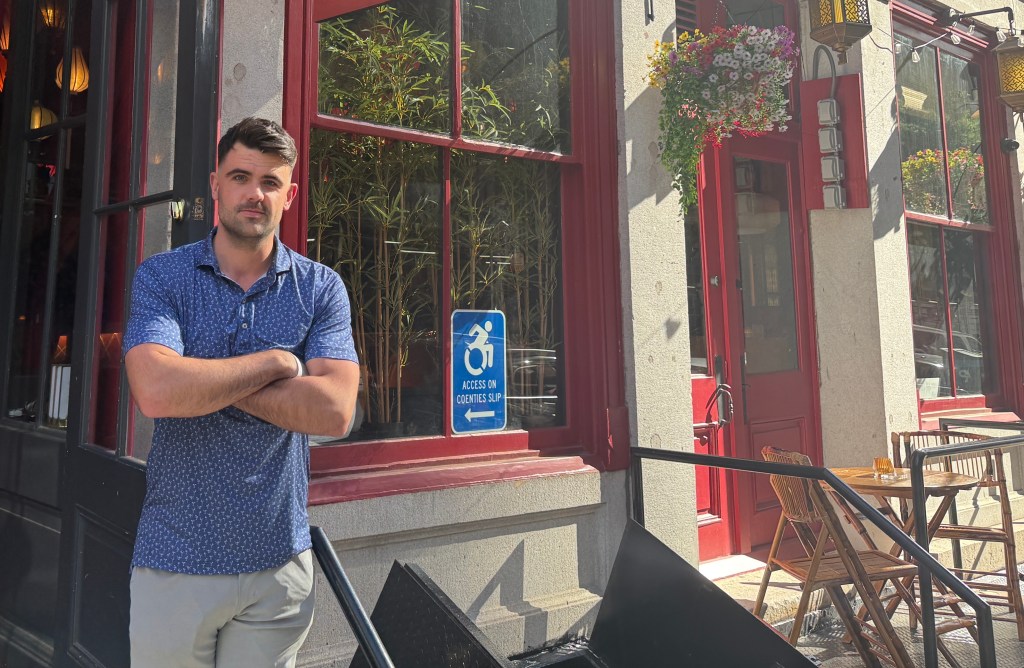
“Not only for businesses but also for the residents because it offers them more variety and gives them more opportunity to go ahead and explore the neighborhood,” Murphy added.
Some businesses could be worried about getting their deliveries could restrict those shipments to overnight, and have designated drop-off zones for people arriving in cars.
Marte cited pedestrian zones in London’s Chinatown as examples, where loading and unloading are strictly limited to early morning hours.
“There’s ways to do it, this is not a novel idea I think we just all have to get on the same page and try it out,” Marte said. “We have really tiny narrow streets that should just be completely walkable and have some sort of last-mile strategy to make sure these businesses can still have their deliveries.”
A spokesperson for the Downtown Alliance said in a statement that the group has pushed for creating more and better pedestrian space over the years, including plazas along Water Street and advocating for making the area around Wall Street less of a “drab security zone,” but “understands both enthusiasm for and trepidation about change.”
“The Alliance has long sought opportunities to improve the pedestrian experience downtown and understands both enthusiasm for and trepidation about change,” said Andrew Breslau. “[Lower Manhattan] is home to 70,000 residents, a hospital and medical facilities, storefront businesses, and countless commercial tenants who depend on vehicles for deliveries, services, workers and patrons.”
The rep called on the city to do its part by curbing the area’s rampant government placard parking.
“We are focused on tackling placard parking. Instead of free parking for city workers, which encourages them to drive downtown, our curb space can be put to much better use – to the benefit of workers, residents and businesses,” Breslau said.


Read More:
Streetsblog has migrated to a new comment system. New commenters can register directly in the comments section of any article. Returning commenters: your previous comments and display name have been preserved, but you'll need to reclaim your account by clicking "Forgot your password?" on the sign-in form, entering your email, and following the verification link to set a new password — this is required because passwords could not be carried over during the migration. For questions, contact tips@streetsblog.org.