Mamdani’s Path to Low Traffic Neighborhoods Could Run Through Queens
The dense districts of western Queens offer the best chance for Mayor Mamdani to introduce low-traffic neighborhoods to New York City, according to local advocates who discussed the car-light concept at a recent meetup in Mamdani’s former neighborhood.
Street safety boosters in Astoria, which Mamdani represented in the state Assembly before he moved to Gracie Mansion, gathered on Monday night to figure out how to bring low-traffic neighborhoods to the Big Apple — and their corner of the city in the particular.
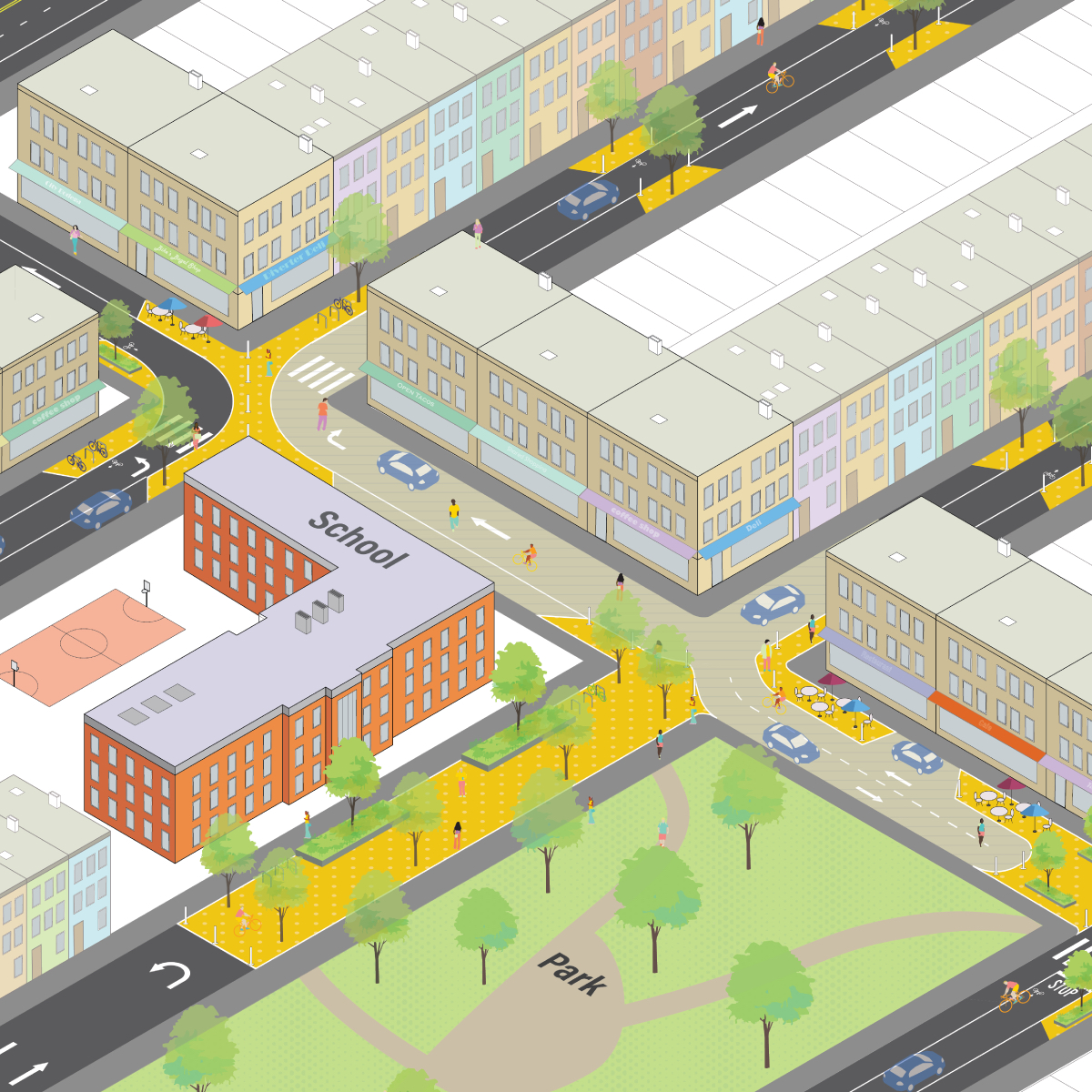
LTNs, which have long been common in cities like London and in Barcelona, use a suite of tools — such as gates, bollards, signage, and modal filters — to discourage internal car traffic while encouraging walking and cycling. They divert private car traffic away from quieter residential blocks onto peripheral roadways, while still allowing local access.
These comprehensive redesigns would build upon several prior interventions, in neighborhoods like Jackson Heights and Sunnyside, that improved safety and reduced through-traffic — and bring Mamdani even closer to fulfilling his promise of turning the streets of New York into the “envy of the world.”
“A low-traffic neighborhood design could help ‘level up’ these projects by calming cut-through traffic and adding pedestrian infrastructure, so more New Yorkers can enjoy their benefits,” said attendee John Surico, an Astoria resident who chairs the 31st Avenue Open Street Collective and contributes to Streetsblog.
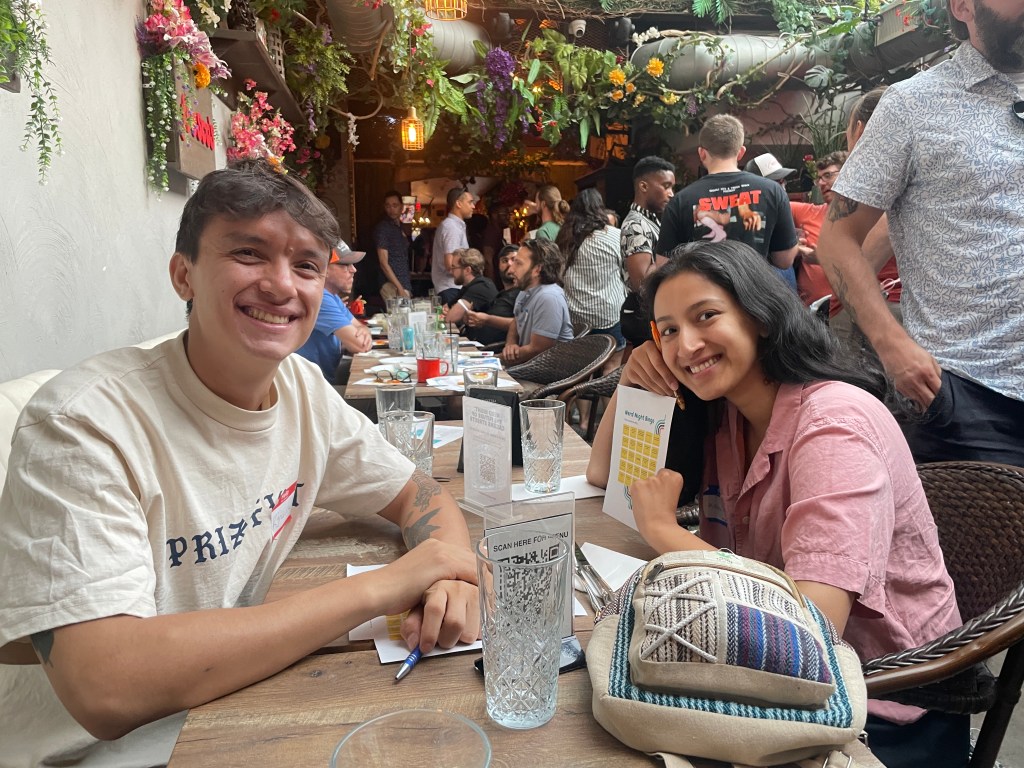
Several other open streets organizers and advocates spoke about the benefits of the design at an event on Monday night. The gathering was hosted by Open Plans, which shares a parent organization with Streetsblog.
“Western Queens has already shown what’s possible when neighbors lead the way,” said Emily Chingay, an advocacy and engagement associate at Open Plans. “Communities are eager for calmer, safer streets that bring people together. Low traffic neighborhoods build on that momentum.”
Decades of examples
The most prominent example of successful low-traffic neighborhoods is London, where British city planners have redesigned street networks since the 1970s. The city accelerated its efforts during the Covid-19 pandemic.
The redesigns include dead-ending streets, and blocking off most through-traffic while allowing for buses, emergency vehicles, commercial deliveries and cars driven by local residents. The last group relies on the Big Smoke’s residential parking permit system.
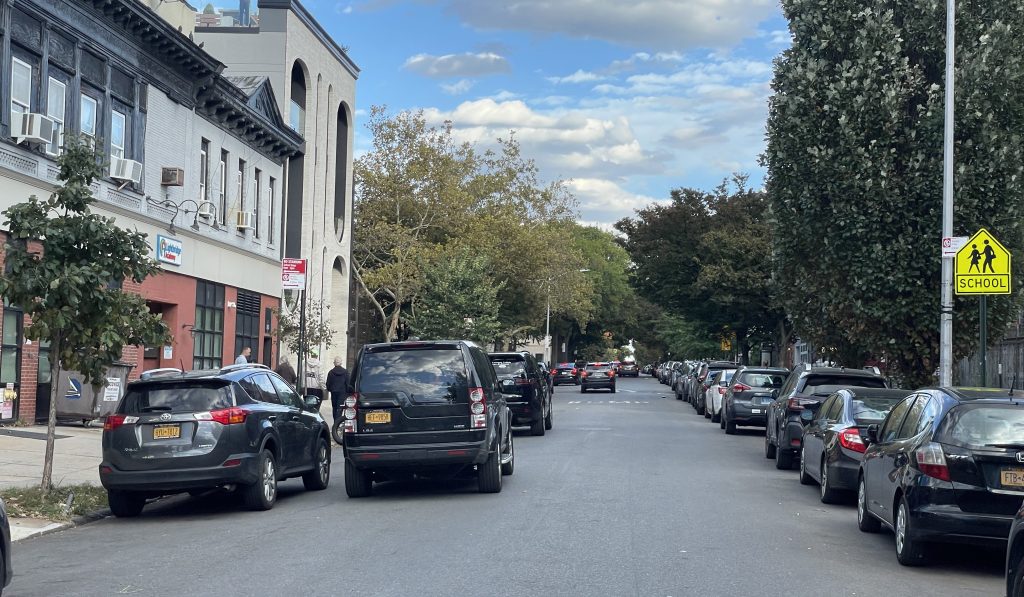
The revamps eliminated what the Brits call “rat runs,” which describes the tendency of drivers to take short cuts via residential streets, usually at the direction of their GPS navigation.
London Mayor Sadiq Khan rolled out around 100 LTNs across the British capital between 2020 and 2022, which looked like this:
The overhauls freed up more space for people to walk and bike safely, and speed up buses that no longer have to contend with all those automobiles. London used the space dividend to install thousands of secure bike parking “hangars,” an innovation Mamdani is eager to copy.
LTNs provoked some backlash, particularly from conservatives, but empirical studies showed they were popular, reduced air pollution, and cut deaths.
The new designs reestablished the streetscape as a place to hang out, rather than just pass through, said Surico, who lived in a low-traffic neighborhood in London while pursuing a graduate degree in transportation seven years ago. “People just returned to the street very naturally, because there was just way less traffic,” he said.
“Low-traffic neighborhoods offer the space to see our streets as both networks, but also places,” he told the audience in Astoria. “Not just the place to go through, but also to stay as well.”
Queens get the LTNs
So why start in Queens?
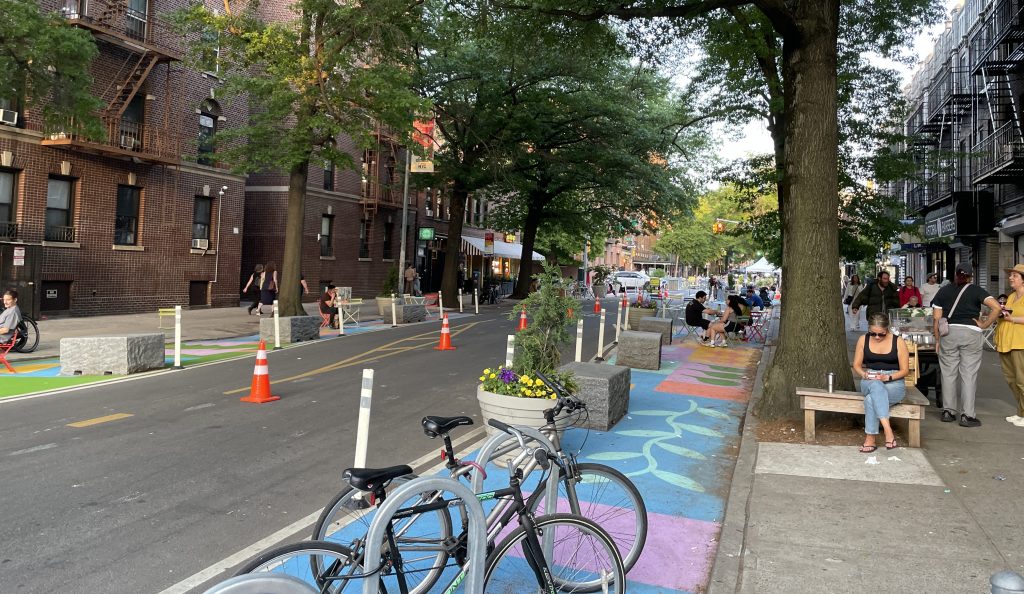
The Department of Transportation has introduced some of its boldest street safety projects in recent history in the borough, including the 31st Avenue bike boulevard in Astoria and the revolutionary linear park on 34th Avenue in Jackson Heights. Many of them already feature key elements of low-traffic neighborhoods.
Queens neighborhoods that turned out for Mamdani’s election also have a strong base of motivated advocates who support safer streets. Astorians in attendance on Monday said they were strongly encouraged to push for changes to their neighborhood’s streetscape.
“A lot of the things they mentioned seem pretty easy … in terms of cost, but also in terms of like political feasibility,” said Aastha Uprety. “Shutting down the streets next to schools should be easy to get buy-in for, because the kids need to be safe.”
Another attendee recognized Astoria’s hunger for change, and said advocates could persuade skeptics by showing them the positive changes that arise from low-traffic neighborhoods.
“I would ask them if they were really frustrated by a lot of honking that they hear throughout the day… I would also just ask if they feel safe when they’re crossing the road, because I know a lot of people don’t, ” said K’gnausa Yodkerepauprai. “[There’s a] willingness and appetite that neighborhoods in Queens – and specifically Astoria – have, and I think I feel really positively about it.”
Last year, DOT transformed Astoria’s 31st Avenue by installing major traffic-calming measures, altering the direction of traffic at key points to divert cars, and installing the widest bike lane in the entire city. The agency plans to extend the redesign to Woodside with a new traffic circle – or “circular traffic diverter,” as the agency prefers to call it — at Newtown Road.
The 26-block open street on 34th Avenue in nearby Jackson Heights represents the “gold standard” for the city’s car-free open street program. The city plans to fortify the open street’s temporary infrastructure over the coming years.
The city also debuted bike boulevards on 39th Avenue in Sunnyside in 2021, using traffic diversions and alternating traffic patterns, to transform the former automobile funnel into a calm two-way biking corridor.
The agency later expanded these effective redesigns to Brooklyn. Under Adams, DOT revamped Berry Street in Williamsburg and Underhill Avenue in Prospect Heights; under Mamdani, the agency will install lengthy bike boulevards on Dean and Bergen Streets that will link Brooklyn Heights to East New York.
These highly popular projects provide a “spine” around which DOT can build out low-traffic neighborhoods, said Jim Burke, who co-founded the 34th Avenue open street. The city could redesign side streets of that corridor to divert all the drivers who currently use them as short cuts from Roosevelt Avenue to Northern and Astoria Boulevards.
“That’s people saving two or three minutes off their time,” Burke said. “There’s really no reason to do it. I think that Jackson Heights would make the perfect first LTN here in Queens.”
“The DOT already has most of the things that we want in their toolkit, and they could probably do it tomorrow,” Burke added.
Queens is not alone in this fight. Just last month, a Manhattan community board begged DOT to pilot an LTN on the Upper West Side.
An agency spokesperson declined to say whether officials are looking into establishing any low-traffic neighborhoods, but thanked the community for their support.
“We appreciate the community’s support for the traffic safety projects we’re delivering in Western Queens and look forward to reviewing any community requests,” said Mona Bruno.

Read More:
Streetsblog has migrated to a new comment system. New commenters can register directly in the comments section of any article. Returning commenters: your previous comments and display name have been preserved, but you'll need to reclaim your account by clicking "Forgot your password?" on the sign-in form, entering your email, and following the verification link to set a new password — this is required because passwords could not be carried over during the migration. For questions, contact tips@streetsblog.org.