Mamdani’s DOT Responds to Astoria Bike Lane Backlash … With an Even Longer Bike Lane
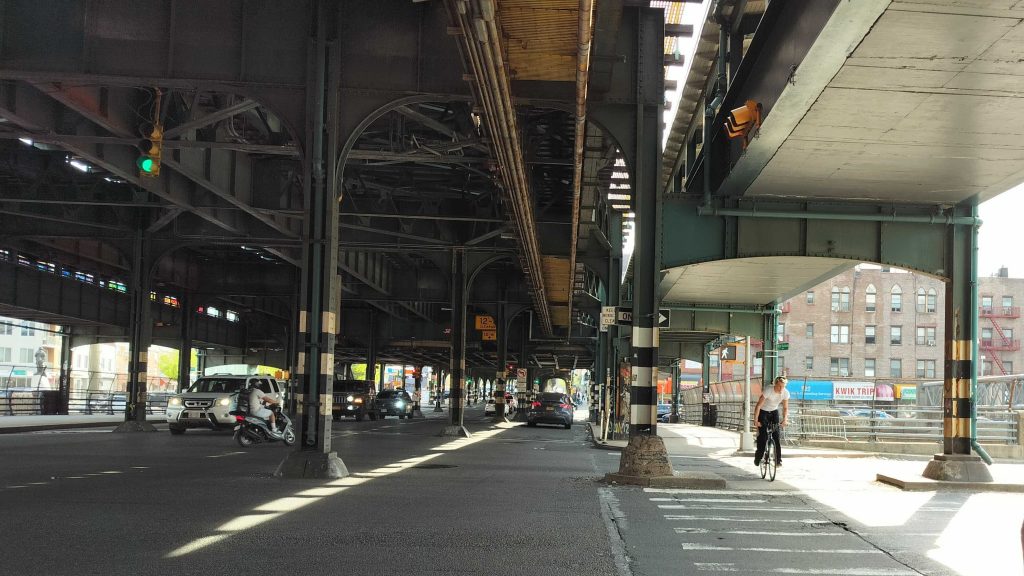
After an anti-bike lane lawsuit sent the Department of Transportation back to the drawing board on 31st Street in Astoria, the agency is responding… with a plan for an even longer bike lane on the deadly corridor.
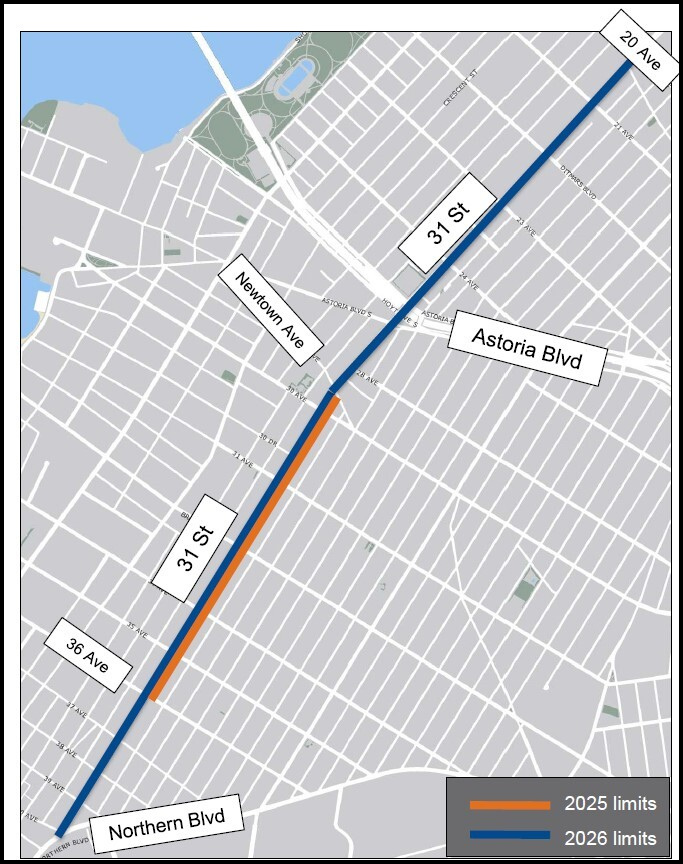
DOT’s latest proposal for 31st Street extends its plan for a protected bike lane all the way to the northern and southern tips of Astoria from its previously proposed termini of 36th Avenue and Newtown Avenue, city officials said.
The future bike lane will now stretch the entire length of the neighborhood from Northern Boulevard to 20th Avenue, as then-Assembly Member Zohran Mamdani and other Astoria elected officials envisioned back in 2023.
“A redesigned 31st Street will bring better organized traffic patterns, shorter and safer crossings, new bike connections and more pedestrian space to the heart of Astoria so you can stay safe and stay moving,” DOT Commissioner Mike Flynn said in a statement.
Now-Mayor Mamdani announced plans in January to restart the community outreach process for placing protected bike lanes on 31st Street. DOT began to install those lanes last August before a lawsuit from bike lane opponents put the project on ice. In December, Queens Judge Cheree Buggs disregarded years of legal precedent that gives DOT broad discretion over city streets and ordered the agency to nix the project.
Mamdani’s DOT Commissioner Mike Flynn pledged to appeal the ruling, but honor Buggs’s procedural concerns by starting the bureaucratic process for proposing and installing the project from scratch. Flynn committed to getting the certified sign-off from bureaucrats at the FDNY and other agencies, which Buggs cited as one of two main reasons for halting the project.
Buggs’s other reason defied legal precedent: The judge took issue with DOT’s expertise, siding with bike lane opponents who claimed that the new lanes, which follow a design DOT implemented in 2024 in the Bronx, “lacks a rational basis.”
But DOT’s traffic planners determine what’s rational — not FDNY or Judge Buggs — and the agency has used protected bike lanes for decades to calm traffic and increase safety on corridors like 31st Street, which runs beneath elevated subway tracks. From 2021 to 2025, NYPD reported 502 traffic injuries on 31st Street, including 23 severe injuries, plus two pedestrian deaths and one “motorized two-wheeler” death.
“For too long, New Yorkers have held their breath or said a prayer when crossing underneath the tracks at 31st Street with families and loved ones,” Flynn said. “When a street strikes fear into the hearts of New Yorkers, it is clear something needs to change.”
Despite that clear and present danger, a handful of 31st Street businesses vocally oppose the proposed bike lanes and traffic calming. They claim, without evidence, that DOT’s redesign will make the corridor less safe. In fact, DOT projects with protected bike lanes have reduced severe injuries and deaths by an average of 18.1 percent overall — and 29.2 percent for pedestrians in particular, according to the agency.
Rogue FDNY officials have buffeted the opposition. Last year, a local firehouse expressed concerns that DOT’s design did not leave enough room for its trucks to dispatch ladders under the elevated subway tracks. FDNY brass put their weight behind that firehouse-level opposition earlier this year when a top official told City Council members that the department is “against the protected bike lanes” when a project “reduces the real estate in that street.”
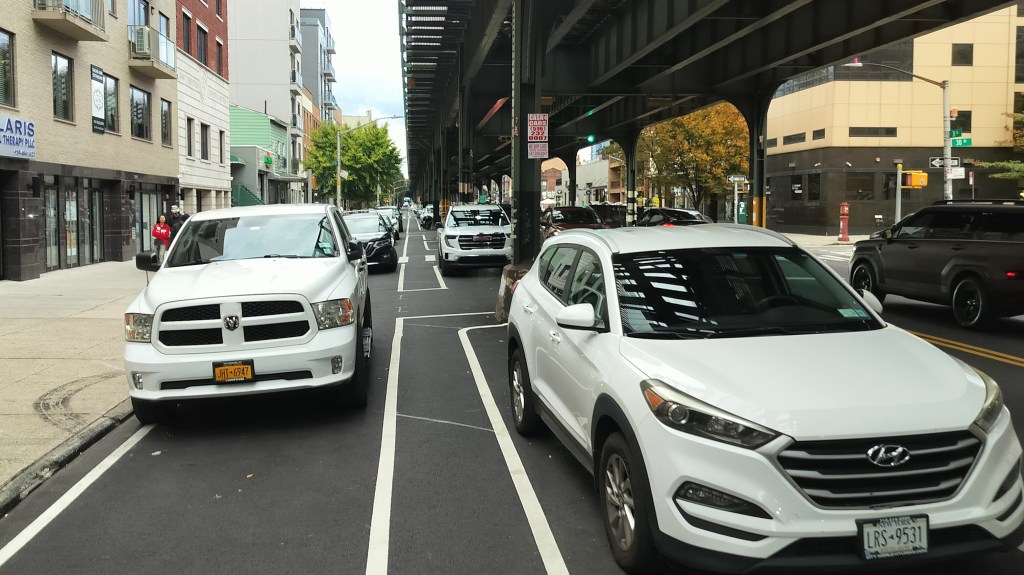
Reducing the space for drivers to speed, illegally park and take dangerous turns is a key element of the “traffic calming” strategy the city has practiced more the past two decades. City law requires DOT to collect input from FDNY, but does not give the Fire Department a veto power over street design.
Judge Buggs, however, placed FDNY’s judgment on equal footing with the judgment of DOT in her ruling — in direct contradiction of the city charter.
More legitimately, Buggs dinged DOT for not getting a certified sign-off from FDNY and other cities agencies affirming that DOT consulted those agencies on the project.
FDNY did not return a request for comment. A rep for DOT said the agency has secured the required certifications.
DOT also adjusted its initial design in response to FDNY’s concerns. On Wednesday, officials who presented the project to Queens Community Board 1 said the redesign now actually improves FDNY ladder access to building, which is impeded by wiring below the subway tracks. To help fire trucks get closer to the curb, DOT added buffered no parking zones, officials said.
“After the feedback we received from FDNY, we repurposed even more parking as a result of that feedback from FDNY,” DOT Queens Deputy Borough Commissioner Jason Banrey told CB1 members. “God forbid, if there was an emergency, now they have closer access to those buildings if needed.”
The city’s new expanded, 2.5-mile project has the support of the local City Council member, Caban, who called it “essential.”
“This bike lane is essential for making our streets safer. It is one of the most dangerous corridors for bikers in the city,” Caban said in a statement. “It’s time to build this protected bike lane and keep our neighborhood safe. If it saves lives, it’s worth doing.”
Mayor Mamdani represented the area in the State Assembly for five years, and worked with other elected officials in 2023 on the “Western Queens Street Safety Plan” that first proposed installing protected bike lanes on 31st Street.
“In order to create a comprehensive protected bike lane network, Western Queens needs a second North/South PBL, ideally East of 31st Street,” Mamdani, Caban, State Sen. Jennifer Gonzalez and Assembly Member Jessica Gonzalez-Roja wrote at the time. “This lane must extend from Long Island City past Astoria Boulevard to 20th Avenue.”
Queens CB 1 will take up the project, and vote on a resolution to support it, at its full board meeting on April 21.

Read More:
Streetsblog has migrated to a new comment system. New commenters can register directly in the comments section of any article. Returning commenters: your previous comments and display name have been preserved, but you'll need to reclaim your account by clicking "Forgot your password?" on the sign-in form, entering your email, and following the verification link to set a new password — this is required because passwords could not be carried over during the migration. For questions, contact tips@streetsblog.org.