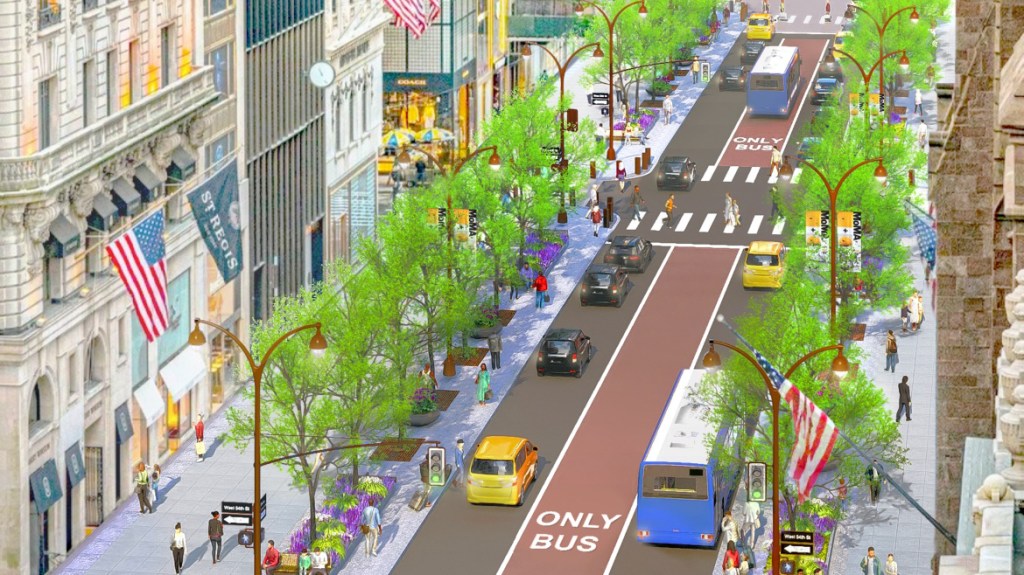
Eric Adams's vision for Fifth Avenue — wider sidewalks, but one fewer bus lane and no bike lane. Plus an extra lane for cars.
Editor’s note: Last month, Streetsblog published an op-edfrom two Manhattan community leaders calling on Mayor-elect Zohran Mamdani to scrap Mayor Adams’s proposal to maintain two lanes of car traffic on Fifth Avenuein Midtown. The writers support a previous design that would have reduced the street to just one lane for cars, kept two bus lanes and added a protected bike lane. The piece below is a rebuttal from the head of the Fifth Avenue Association, which had a hand in developing Adams’s plan.You can read the original op-ed here.
Designing streetscape and transportation improvements in New York, especially in Midtown, is no small task. Different uses and different users compete for precious space in the public right-of-way. While effective lobbies exist for cyclists, bus riders, taxi and truck drivers, the needs of the city’s greatest users — pedestrians — are often overlooked, if considered at all, despite efforts from a small number of pedestrian-first organizations.
The Future of Fifth Partnership between the city of New York, three business improvement districts and the Central Park Conservancy rightly places focus where it belongs: the hundreds of thousands of residents, commuters, retail and hotel workers and tourists who walk Fifth Avenue every day.
New Yorkers are, after all, walking beings. We clock between 6,000 and 10,000 steps every day, three times more steps than the average American. In fact, 31 percent of trips are made exclusively by foot, and 100 percent of trips involve some measure of walking, according to the city’s 2023 NYC Pedestrian Mobility Plan. Walking is the oldest and most equitable form of transportation, and creating safer, more vibrant streets is the first step toward prioritizing pedestrians throughout our city.
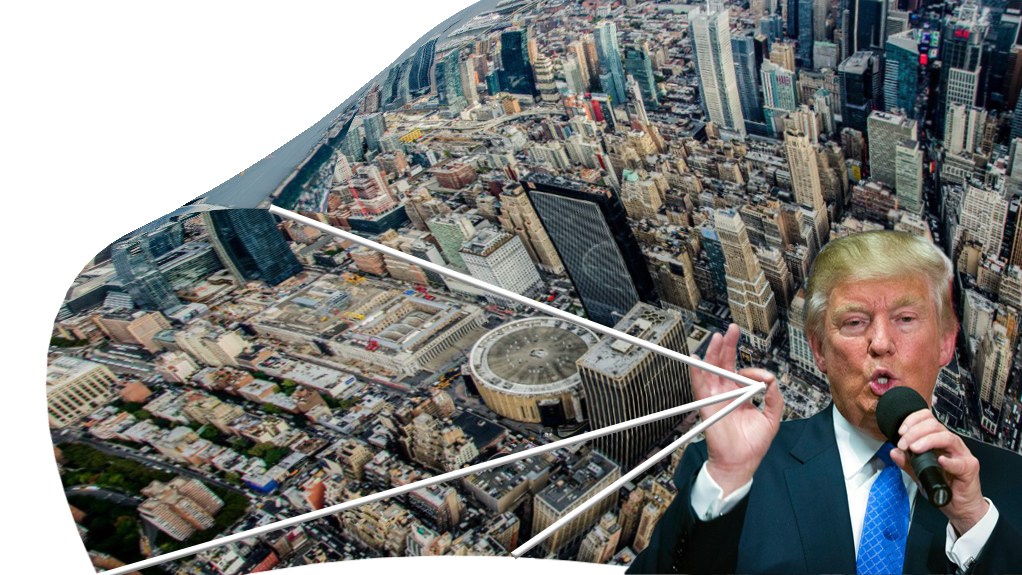
Fifth Avenue is the perfect place to elevate pedestrians — both in terms of priority and by physically raising crosswalks between Central Park and Bryant Park. During the weekday evening rush, a single block of Fifth Avenue accommodates 5,500 pedestrians, and during holiday weekends, a single block can see 23,000 people per hour — more than the capacity of Madison Square Garden. Put differently, pedestrians constitute nearly 70 percent of all traffic on Fifth Avenue, yet the sidewalks account for only 46 percent of the public right-of-way. Fixing this gap is the singular purpose of the Future of Fifth Partnership’s plan to transform Fifth Avenue into a world-class pedestrian-first boulevard.
The benefits gained by pedestrians will not come at the expense of bus riders or cyclists, only private vehicles. Transforming two existing lanes of traffic into expanded sidewalks will result in reduced private vehicular volumes and slower vehicular speeds — a victory that all safe street advocates should support and seek to replicate elsewhere. Reducing five lanes of traffic to three will also shrink pedestrian crossing distances by a third, making them safer and more inviting. New plantings and lighting will create a more walkable, welcoming and sustainable streetscape to stand the test of time and changing climate realities.
The Future of Fifth Partnership diligently studied conditions on the corridor, including needs of underground infrastructure. In contrast, previous plans to rethink Fifth Avenue were rushed and failed to reach consensus. The various modifications to the proposed designs and restrictions reflected confused priorities. This plan sets the clear goal of striking the best balance for the people who use Fifth Avenue. It does not elevate rich over poor; it elevates the pedestrian experience for all.
Bus riders are, of course, an essential user group along Fifth Avenue, and many riders are traveling to and from their jobs along the corridor. The planned roadway geometry maintains a dedicated 24/7 bus lane and access to bus stops along the western curbs, and the Future of Fifth Partnership has made no suggestions to reduce local bus service. Yet the data show that Fifth Avenue has become a highway for deadhead buses that travel without any passengers. Our call is for smarter service for buses with people, more sensible express bus routing, and re-routing empty buses off the corridor.
Another key focus of the plan is properly coordinating the replacement of 150-year-old underground infrastructure. The water, electrical and communications systems below Fifth Avenue need upgrades. The project will take a holistic and comprehensive approach to make sure all the work happens at one time, rather than opening up Fifth Avenue several times over the course of many years, saving public dollars and construction headaches.
No plan can satisfy every stakeholder, but this plan will deliver the greatest improvement to largest user group on Fifth Avenue: pedestrians. And this investment in our public realm will undoubtedly pay off. Fifth Avenue is responsible for 313,000 direct and indirect jobs, which in turn generate $44.1 billion in total wages and $111.5 billion in total economic output each year. By rebalancing Fifth Avenue in line with how it is used, the City will strengthen this economic engine that propels further growth.
Once the project is constructed, millions of New Yorkers and visitors from around the globe will flock to Fifth Avenue to experience unmatched history, culture, and commerce on a street made safer by wider sidewalks, shorter crossings, fewer vehicles, and slower speeds. The transformed avenue will be an attraction in its own right—and free for all New Yorkers and visitors to enjoy.
Streetsblog provides high-quality journalism and analysis for free — which is something to be celebrated in an era of paywalls. Once a year, we ask for your tax-deductible donations to support our reporters and editors as they advance the movement to end car dependency in our communities.
If you already support our work, thank you! If not, can we ask for your help?This year’s fundraiser includes a special gift for our biggest supporters. Don’t miss out.
Together, we can create a more livable, walkable, bikeable, equitable and enjoyable city for all. Happy holidays from the Streetsblog team!
Ed Pincar is the president of the Fifth Avenue Association. He spent nearly two decades at the New York City Department of Transportation, most recently as Manhattan Borough Commissioner.
Streetsblog has migrated to a new comment system. New commenters can register directly in the comments section of any article. Returning commenters: your previous comments and display name have been preserved, but you'll need to reclaim your account by clicking "Forgot your password?" on the sign-in form, entering your email, and following the verification link to set a new password — this is required because passwords could not be carried over during the migration. For questions, contact tips@streetsblog.org.