State Pols Seek To Close Loophole That Lets Retailers Sell ‘Illegal’ E-Motos
State lawmakers are pushing legislation to bar the sale of e-motos, closing a loophole that has allowed retailers to sell devices that are illegal to ride on roadways but are legal to own for private use — legislation that could shift the narrative from proposed restrictions on safe and legal e-bikes to focus on the more-dangerous high-speed two-wheelers.
State Sen. Kristen Gonzalez (D-Long Island City) introduced the bill to establish a clear definition for these overpowered vehicles, and explicitly prohibit companies from not only selling them, but from falsely advertising them as legal, a common practice that results in unsuspecting consumers purchasing devices they can’t legally use.
“By banning the sale of illegal e-motos … we’re bringing safety and transparency to our neighbors, while stopping deceptive business practices,” she said.
Gonzalez represents both sides of the Queensboro Bridge bike path, where two men – one on the type of device she wants to ban and one on a traditional bike – collided head on and died earlier this year. After the crash, Streetsblog identified the device as a Teverun Blade GT II, which was not legal to ride on city streets or bike lanes due to its speed capabilities.
Lawmakers all over the country are grappling with this issue and some states, like New Jersey, are making it harder to ride a regular, legal e-bike instead of going after the out-of-class vehicles. New Jersey’s messy e-bike registration law, which went into affect in July, has had a chilling effect on sales of e-bikes, which are far safer, less polluting and cause less congestion than the cars they often replace.
New York State legalized e-bikes in 2020, but most of the vehicles involved in crashes can go faster than what state and city law allows, according city data.
From 2017 to 2025, 54 percent of the people killed on e-bikes were riding e-motos that can go over 25 miles per hour, and 52 percent of people killed on stand-up scooters were riding a vehicle like the Teverun that can reach speeds well over 20 miles per hour, the legal limit for a stand-up scooter.
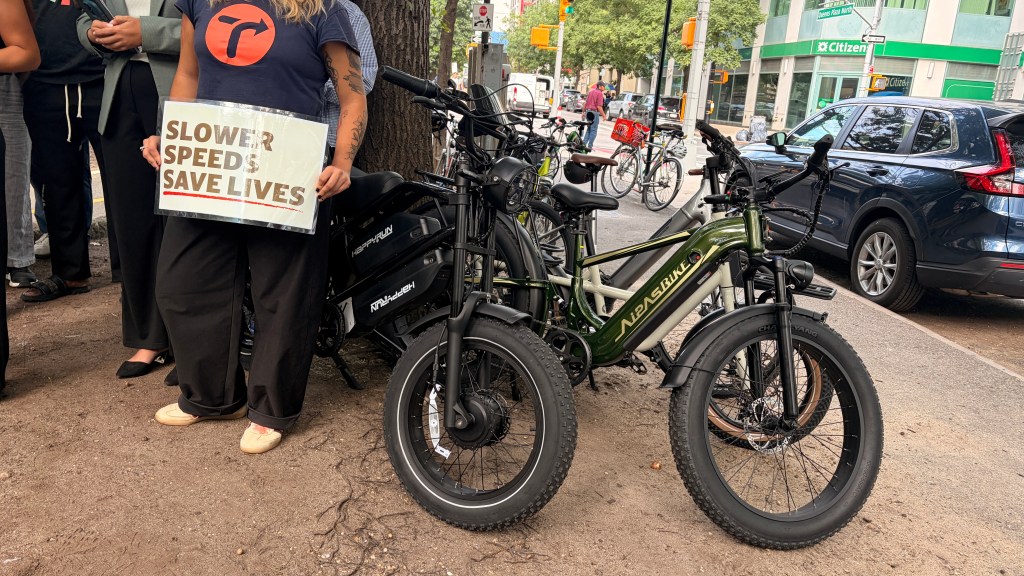
Many of online retailers falsely advertise illegal e-motos as “e-bikes,” creating a freewheeling bazaar where consumers are not entirely sure which electric machine is an illegal e-moto and which is a regular legal e-bike, as Streetsblog previously reported.
But even the illegal e-motos are still legal to be sold because they exist in a grey area: illegal to ride on the street, but legal to own for use on private property.
The legislation would clearly define this class of vehicles as “e-motos” and make it explicitly illegal to sell them at stores in New York State and online to New York addresses. The bill would also make it illegal to advertise one of these bikes or scooters for use on the street.
“Biking is the primary way that I get around my neighborhood,” Assembly Member Diana Moreno (D-Astoria), who is introducing the same bill in the Assembly. “I have been considering purchasing an e-bike … but the in the current legislative environment I could unknowingly purchase an e-bike that puts my family in danger.”
Moreno and Gonzalez join a growing list of politicians who are trying to tackle the e-moto issue. On July 29, teenager Gabriel Nacato, who was riding an illegal e-moto on Centre Street, was killed in a crash with an SUV driver. Nacato’s Deepower e-moto had a 1,500-watt motor, double the legal maximum, and was advertised by its manufacturer as reaching 30 mph with a throttle. The Deepower website offered detailed instructions on how to “effortlessly” override the bike’s speed limiter so that the machine could get up to 50 mph.
After Nacato’s death, Attorney General Letitia James warned sellers and consumers of the illegal vehicles masquerading as legal e-bikes. But in order to truly take legal action against these sellers, the loophole has to be closed. That’s where the bill comes in.
“A statewide bill is necessary because many online retailers continue to sell and ship these devices, these illegal devices, to all parts of New York State,” Moreno said at Wednesday’s press conference. “Some websites even mislead their customers by passing e-motos off as legal e-bikes or e-scooters, they fail to mention that these products are illegal to ride on New York streets. The bill clarifies that these practices are illegal, and they empower the attorney general to take action against retailers.”
And, also inspired by Nacato’s tragic death, Mayor Mamdani’s law department sent cease-and-desist letters to more than 40 online retailers in early August. Big players like Amazon and Temu complied quickly, but some small direct-to-consumer companies are still shipping e-motos and high-speed scooters to the city, a Streetsblog review of the list found.
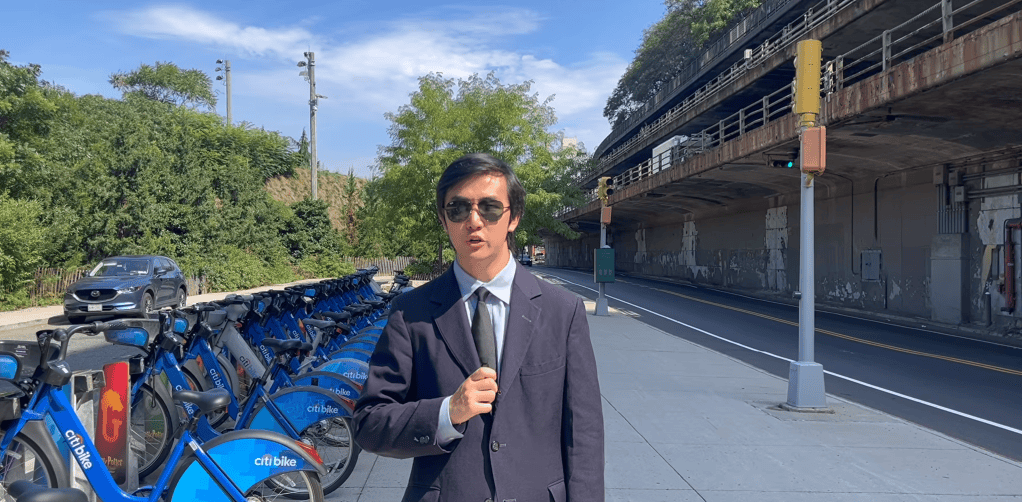
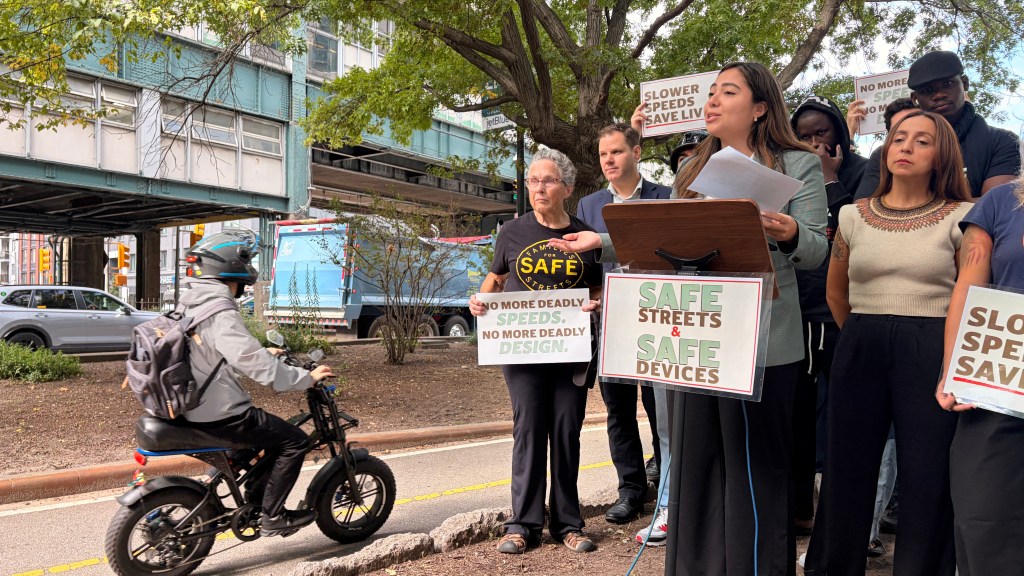
During Wednesday’s announcement the advocates and politicians were set up along the bike path that leads to the Queensboro Bridge, which is used by thousands of cycling New Yorkers to get into Manhattan from Queens every morning.
Notably, the majority of vehicles whizzing past were e-bikes, and many were delivery workers. When e-bikes were legalized in New York by then-Gov. Andrew Cuomo in 2020, a specific category was created for New York City – the “Class 3” e-bike with a throttle that propels the bike up to 25 miles per hour. A pending City Council bill with broad support would ban Class 3 e-bikes in the city.
The Gonzalez-Moreno bill would take the pressure off individuals to understand the regulatory system and put the onus on those who profit off the sale of the devices, one advocate said.
“Too often in the conversation about regulation we are pointing the finger at individuals,” said Alex Morano, cochair of the NYC-DSA’s Transit Working Group. “The larger systemic issue are sellers who are pushing dangerous, illegal devices that are hurting and killing New Yorkers.”

Read More:
Streetsblog has migrated to a new comment system. New commenters can register directly in the comments section of any article. Returning commenters: your previous comments and display name have been preserved, but you'll need to reclaim your account by clicking "Forgot your password?" on the sign-in form, entering your email, and following the verification link to set a new password — this is required because passwords could not be carried over during the migration. For questions, contact tips@streetsblog.org.