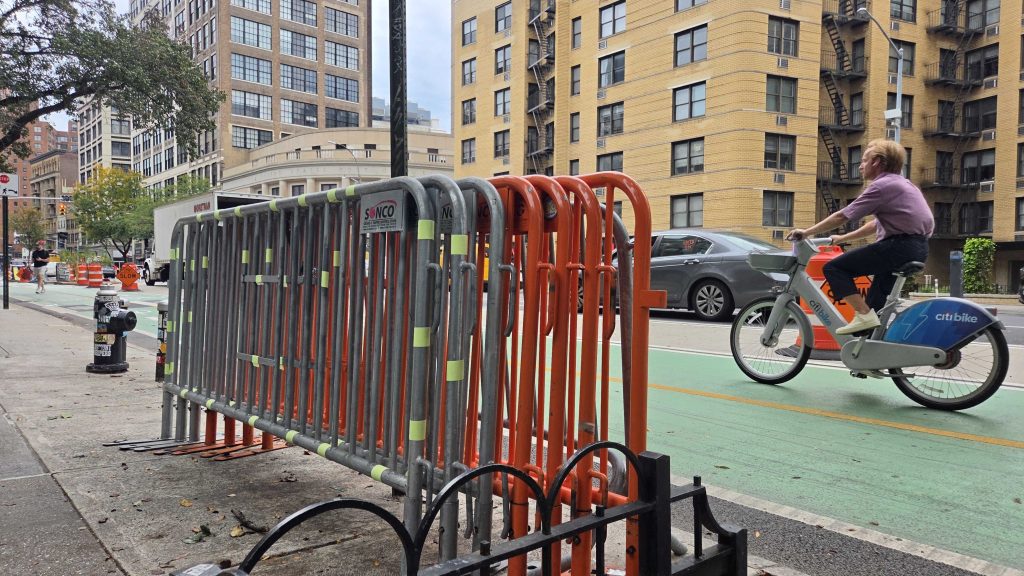
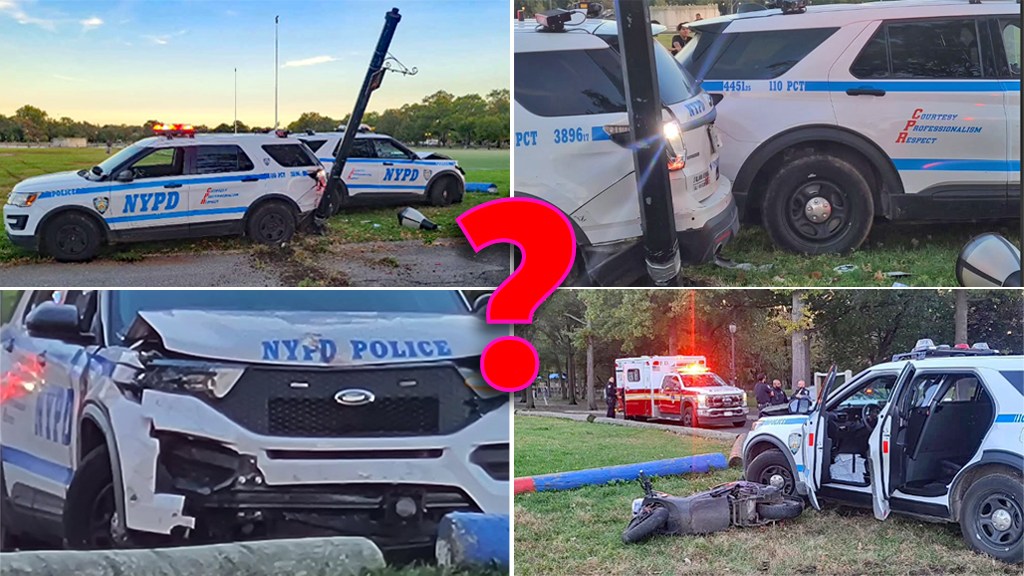
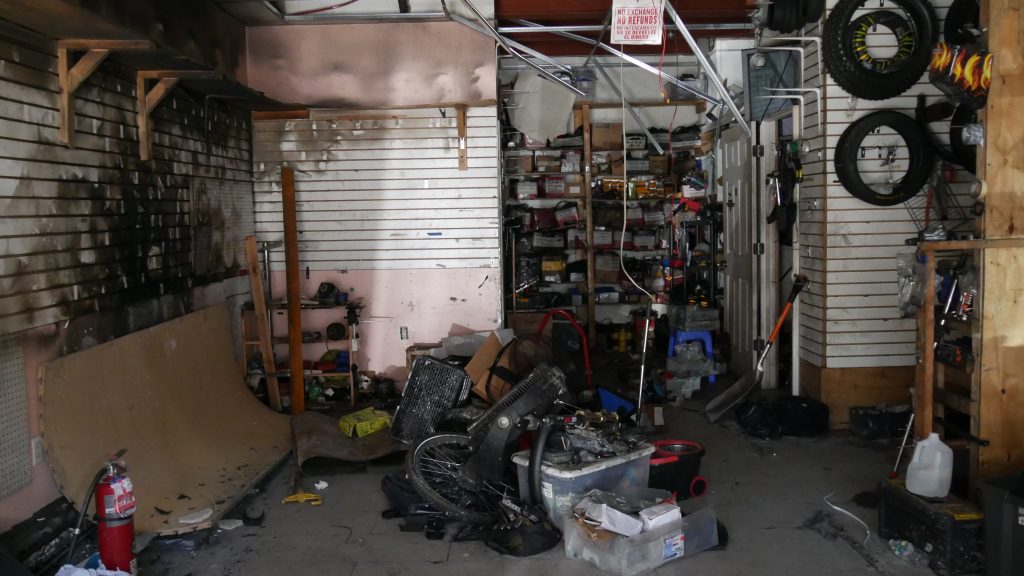
Firefighters Flex Union Muscle In Bid To Keep Deadly Astoria Corridor Unsafe
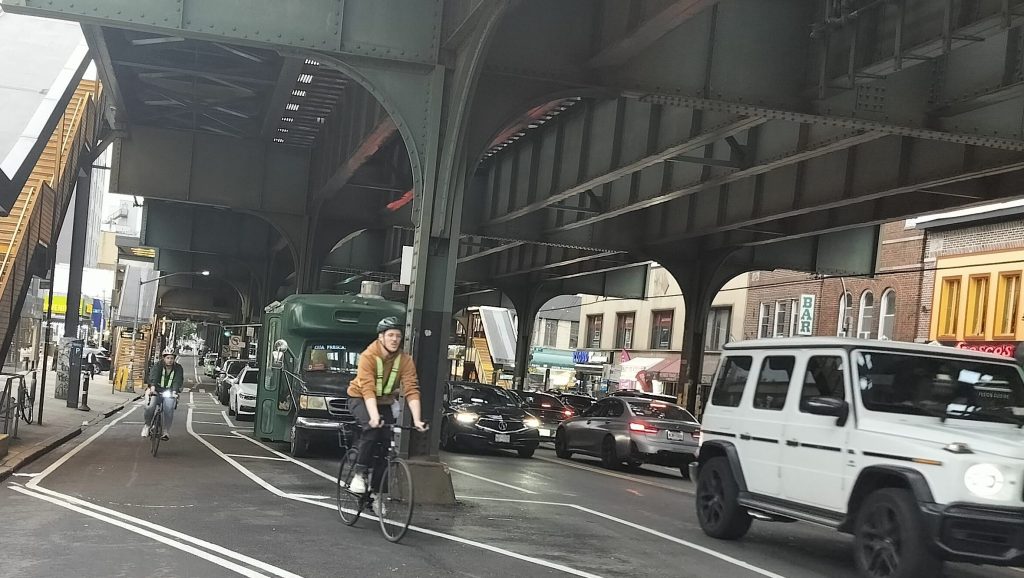
It’s Fahrenheit 31!
Rogue firefighters are attempting to kill a protected bike lane on 31st Street in Astoria, even though the Fire Department, the Department of Transportation and the mayor himself have approved the life-saving and long-overdue redesign of the deadly corridor.
DOT began installing bike lanes and traffic calming on 31st Street on May 12, months after a Queens judge ordered the agency to halt, in part because it had failed to document its consultations about the project with other city agencies, including FDNY. Mayor Mamdani then expanded the length of the project to encompass the whole neighborhood, and DOT got its bureaucratic ducks in order.
But a coalition of 31st Street businesses continues to fight the bike lane in court. This week, the group accused DOT of acting in contempt of Judge Cheree Buggs’s December ruling ordering it to halt installation of the first incarnation of the bike lane project, which only ran six blocks from 36th Avenue to Newtown Avenue.
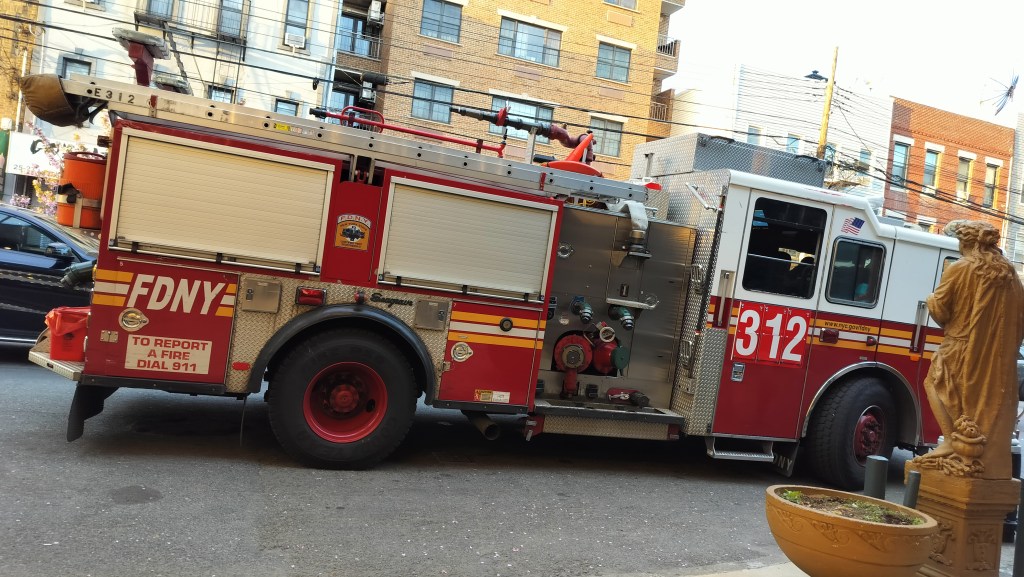
That opposition has been buffeted by firefighters who work in the area, who made a show of force at a recent community board meeting. The firefighters from FDNY Battalion 46, Engine 312 rolled up to the meeting in FDNY trucks and uniforms, but left before the public comment section — leaving it to union reps to express opposition to the project.
NYPD and DOT data identify 31st Street as one of the most dangerous corridors in Queens. As part of the latest attempt to keep the street unsafe, opponents submitted to the court a letter from the Uniformed Firefighters Association accusing DOT of not contacting local FDNY firehouses about the 2026 iteration of the project.
But DOT did give two local firehouses the ability to comment on the project in March, according to the city’s court filings — which also forcefully pushed back on the firefighters union’s claims that the redesign will make it harder for FDNY to fight fires. Confusingly, Engine 312 was not among the firehouses DOT consulted about the project.
In its letter, the union also claimed that the protected bike lanes would push fire trucks “19 feet off of the curb and underneath the elevated subway structure, restricting the deployment of tower ladders” — but the project does the opposite, the city’s response noted.
“The width of the bicycle lane and adjoining buffer lane was designed specifically to provide sufficient space for emergency vehicles to drive into the bicycle lane to obtain direct curb access, in contrast to the pre-existing configuration, where emergency vehicles would have a row of parked cars between them and building,” wrote city attorney Kevin Rizzo. [Emphasis added.]
In Ray Bradbury’s dystopian 1953 novel Fahrenheit 451, firefighters deliberately endanger the public by setting blazes in order to rid the world of certain literature. More than 70 years later, the union claimed in its letter that 31st Street is “unique” because it runs under an elevated subway line — a point made moot by a similar project under the elevated tracks on White Plains Road in the Bronx, the city argued. That project led to a 10-percent drop in crash injuries and 41-percent drop in injuries to motor vehicle occupants in particular, according to Rizzo and DOT.
“Petitioners set forth no expert testimony or other evidence to support their claims that the redesign of these streets will make the corridor more dangerous,” Rizzo wrote. “In contrast, DOT, the expert agency in transportation and traffic safety, has found that this plan will enhance safety on a corridor with undisputed safety concerns.”
The city’s response this week contrasted with the city’s lackluster defense of the first iteration of the project when Eric Adams was still mayor. For example, the city’s earlier defense under Adams didn’t even bother to mention the successful White Plains Road project.
Buggs based her ruling on both DOT’s failure to certify that it had consulted with FDNY and other city agencies as required by law, and her personal opinion of the project’s “rationality.” Essentially, Buggs privileged her own views over how DOT’s expertise.
In seeking to find DOT in contempt of Buggs’s order to nix the first iteration of the project, opponents went out of their way this week to remind the judge of her negative view of “DOT’s treatment of the core safety and operational issues,” quoting extensively from her December ruling. But city attorneys insist they are in the right, since Buggs stopped the project “pending any new, lawfully adopted determination,” i.e. the new project.
The falsehoods parroted by opponents don’t stop there, however.
In his filing, opponents’ attorney Hartley Bernstein also claimed that DOT made “no significant changes” to the project. In fact, the agency adjusted the project’s length, added new painted areas and delineators to improve curb access for emergency vehicles and added a new crosswalk, pedestrian signal and school bus boarding zone outside St. Demetrios School at 30th Drive.
Alex Duncan, the Astoria micromobility activist who uses the online moniker Miser, fired back that Bernstein and his ilk are “lying.”
“I don’t use that word lightly, but there’s just no way you can make the case that it’s easier to drive a fire truck between parked steel than through an empty bike lane,” he said. “It’s very bizarre that we’re still having this fight at all. It really is a battle just against ignorance. There’s no logic on their side at all, it’s just culture war grievance.”
DOT’s 31st Street redesign has the support of every elected official representing the project area as well as the local community board.
A DOT spokesman said FDNY approved and signed off on the redesign.
“We stand by this safety project and outreach process and look forward to defending our work in court,” the rep, Will Livingston, said in a statement. “We are grateful for FDNY’s continued collaboration in keeping New Yorkers safe. “
Attorney Peter Beadle, who sued the city and DOT last year when then-Mayor Adams removed three blocks of the Bedford Avenue bike lane in Brooklyn, said DOT is well within its right to install protected bike lanes, whether or not Buggs agrees with the agency’s judgment.
“She’s created litmus tests that the law doesn’t require. They consulted with FDNY, they consulted with firehouses in the area. They’ve taken that feedback and used it to make adjustments to the project,” Beadle said. “DOT is well within its purview to move forward with a design that saves lives.”
Beadle said DOT appeared to take its defense more seriously under Mamdani after being caught flat-footed by Buggs’s previous ruling.
“DOT last time kind of figured they’re going to win [so they] took it a bit for granted. Although I thought they were right on the law back then, it was surprising that they didn’t write more forceful papers, because I know they’re capable of, it because they’ve done it against me,” he said.
“The Adams administration was not looking to fight these fights as strongly, except when they were denying street safety to satisfy Eric Adams’s political needs,” Beadle added. “Now that the Mamdani administration has made it clear that they want to put safe street design front and center.”

Read More:
Streetsblog has migrated to a new comment system. New commenters can register directly in the comments section of any article. Returning commenters: your previous comments and display name have been preserved, but you'll need to reclaim your account by clicking "Forgot your password?" on the sign-in form, entering your email, and following the verification link to set a new password — this is required because passwords could not be carried over during the migration. For questions, contact tips@streetsblog.org.