Tech Industry Group: NYC’s Delivery Minimum Wage Worked — But That’s Bad!
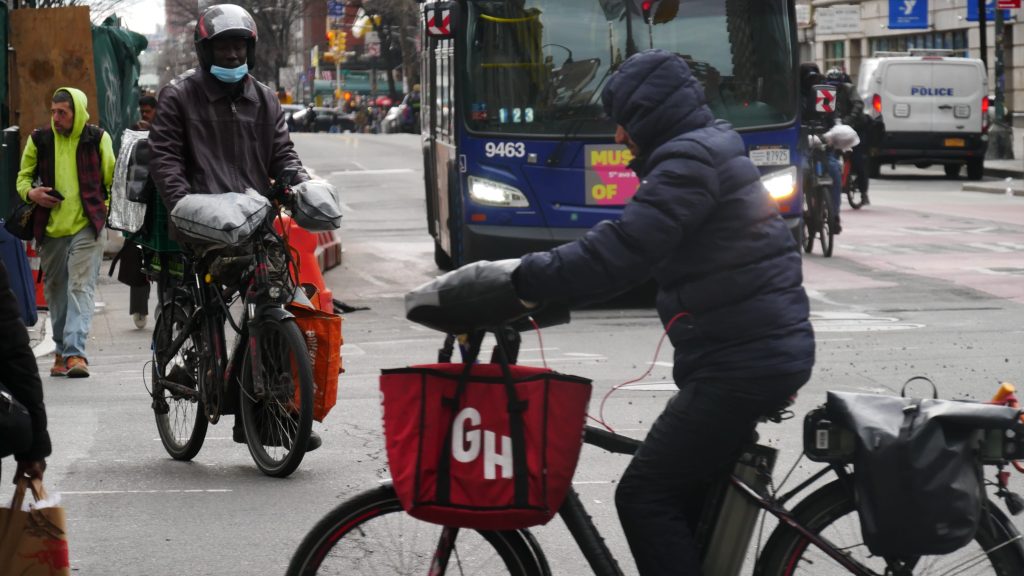
New York City’s delivery minimum wage more than doubled worker earnings without any adverse impact on industry revenues, according to a new report by a tech-aligned think-tank that nonetheless chides policymakers for messing with the industry’s “gig-based” employment model.
The report from the industry-affiliated Chamber of Progress, titled “From Pickup Game to Starting Lineup,” confirms what the city Department of Consumer and Worker Protection has already shown: Wages surged after the minimum pay standard went into effect in July 2024, along with the total number of deliveries and revenue from deliveries.
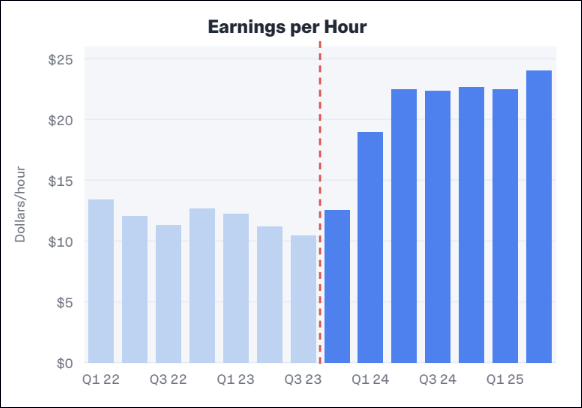
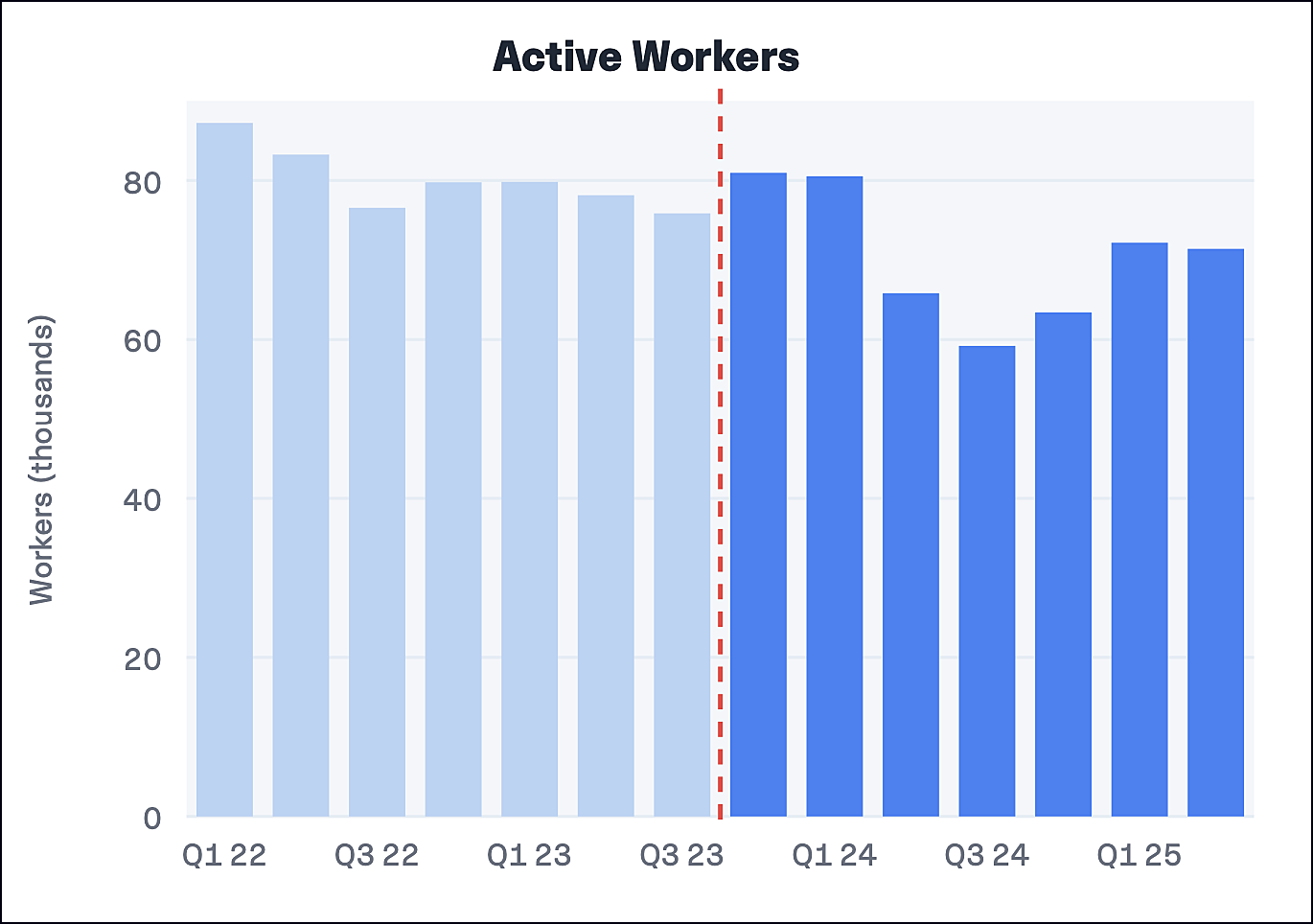
But Chamber of Progress said that those gains came at the “cost” of a much smaller delivery workforce, which it called the “central mechanism through which higher per-worker earnings were achieved.”
The self-described “left-leaning tech industry policy coalition,” whose supporters include Uber, DoorDash, Grubhub and Instacart, launched a website to go along with the report that says, in bold letters, “NYC raised delivery pay. It locked out over 42,000 workers.”
Worker groups have criticized the app companies for saying the minimum wage rules forced the companies to block workers from the apps or deactivate their accounts without giving a reason or notice. The City Council last year passed a law restricting deactivations, but not temporary lockouts. Industry representatives argue that limiting app access is necessary in order to pay the required minimum wage.
“When labor costs rise under a binding wage floor, firms have incentives to cut excess supply and minimize idle time,” the Chambers of Progress report said. “In practice, platforms responded by limiting simultaneous log-ins, tightening scheduling and concentrating orders among a core group of workers.”
The industry-backed report singled out economist and DCWP consultant James Parrott, accusing him of downplaying the “trade-off” of shutting part-time workers out of the industry.
Parrott told Streetsblog said the app companies should never have contracted so many workers in the first place.
“We would never have gotten to workers being locked out of the platform if the companies had better managed their service so that they didn’t bring on a surplus number of workers,” he said. “It’s up to the companies to manage the size of their workforce to keep it aligned with the scale of consumer demand.
Parrott called the report “remarkable” for its acknowledgement that the minimum wage law, which the app industry fought for years, improved per-worker earnings and productivity.
“It’s very clear that if you don’t limit the number of workers seeking a finite number of delivery orders, the individual drivers who rely on this as their main source of income has to go down,” he added. “It was irresponsible for these companies to lure an excess amount of workers to their platform in the first place.”
Worker advocates, meanwhile, argue that the threat of possible deactivation pressures delivery workers to ride dangerously to hit a certain number of deliveries.
What’s more, the contracting of the workforce has not been linear — as the Chamber of Progress report confirms, that number of active delivery workers actually grew in the first half of 2025.
Mayor Mamdani and his DCWP Commissioner Sam Levine have emphasized the importance of regulating the app delivery industry since taking office in January. Under Mamdani, UberEats, Fantuan and Hungry Panda all agreed to repay $4.6 million in wages to workers the companies had unfairly deactivated or underpaid in 2023 and 2024.
In January, the city began requiring grocery delivery companies like Instacart to pay the minimum pay standard and prohibited app companies from put the option to tip after checkout. Other regulations passed by the Council go into effect early next year.
For years, DCWP officials have asked for more money meet the demands of the laundry list of industry regulations passed by the City Council — including the minimum pay standard — but Mayor Mamdani’s executed budget proposes to cut the agency’s funding by 8 percent.
The Chamber of Progress report urged the City Council not to enact any further regulations. Uber contributed $143,129 to Council Speaker Julie Menin’s reelection campaign. DoorDash, meanwhile, spent big opposing the Mamdani’s mayoral campaign.
Representatives for DCWP and Mayor Mamdani did not return requests for comment.

Read More:
Streetsblog has migrated to a new comment system. New commenters can register directly in the comments section of any article. Returning commenters: your previous comments and display name have been preserved, but you'll need to reclaim your account by clicking "Forgot your password?" on the sign-in form, entering your email, and following the verification link to set a new password — this is required because passwords could not be carried over during the migration. For questions, contact tips@streetsblog.org.