Mamdani’s Regulatory War on Delivery Apps Under Threat Amid Budget Crunch
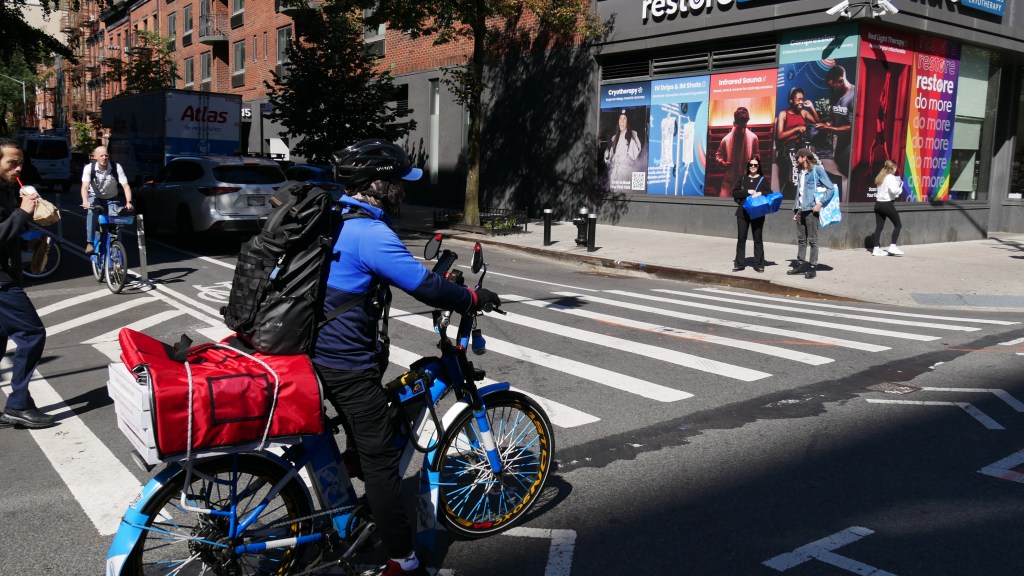
Mayor Mamdani’s preliminary budget falls short of providing the resources necessary to fully enforce delivery worker protection regulations passed by the City Council last year, the city’s top consumer regulator conceded on Thursday.
“With respect to how we can effectively implement these laws, there are significant additional [budget] needs,” Mamdani Department of Consumer and Worker Protection Commissioner Sam Levine told Council members during a preliminary hearing on his agency’s budget, which the mayor’s proposed budget would cut by 8.5 percent.
Levine later clarified the agency’s commitment to implement the law effectively regardless of its budget — to the skepticism of Council leadership.
“I know there’s some limitations on what you can say here today, I have no limitations,” Council Majority Leader and Transportation Committee Chair Shaun Abreu told Levine. “Seriously, we need to get you the resources that you need, and we need to get all those lines that you need to do your job.”
As a candidate for mayor last year, Mamdani campaigned to double DCWP’s budget — but his preliminary budget for the 2027 fiscal year allocated $74.7 million for DCWP, down from $81.7 million in fiscal year 2026.
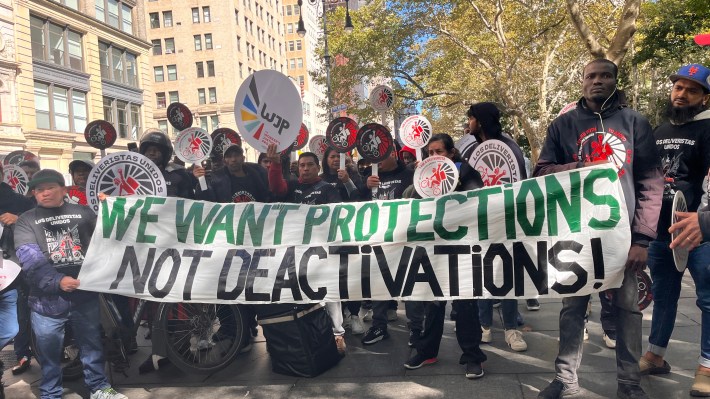
The Council passed a slew of delivery worker protections in the last year — including new laws to expand minimum wage rules, require apps to provide the option to tipping before checkout, protect app workers and for-hire vehicle drivers from “deactivation” without cause, and more.
The deactivation bans go into effect for delivery apps in December and ride-share drivers this summer. Street safety advocates and workers justice advocates who worked for years to pass them say that the constant threat of deactivation pushed for-hire drivers and food delivery workers to ride or drive recklessly, making the streets less safe and more chaotic.
DCWP expects an onslaught of complaints from workers about alleged violations of the new deactivation laws.
“They do require significant resources in order to do analysis,” Levine told legislators.
In order to enforce the new deactivation bill, DCWP needs 34 new employees in the fiscal year that starts on June 1, Levine said. For the ride-share deactivation bill, DCWP needs 170 new employees. The total cost of all that hiring is $5.5 million.
None of that made it into Mamdani’s budget, however — meaning DCWP wouldn’t even be able put up a web portal for workers to file complaints when the laws take effect or even to track the cases that come in, Deputy Commissioner Elizabeth Wagoner testified.
DCWP has faced underfunding for years as the City Council dumped more regulations on its desk. The agency’s response times have increased — it takes six months for a complaints to turn into an investigation, Wagoner said.
A former DCWP commissioner said the agency is only as good as its staffing levels.
“There is only so much you can keep adding before you start seeing really long investigations,” said Lorelei Salas, who ran the agency from 2016 to 2021. “You can have amazing protections on the books but they mean nothing if there is no one out there to enforce them.”
Facing a budget shortfall, Mayor Mamdani has ordered city agencies to cobble together savings. The citywide budget picture may be “difficult,” but it is crucial that the city think critically about where to make cuts, Salas said.
“It doesn’t make sense that you would cut an agency that generates revenue and also that this year alone has already given back more than $5 million to consumers and workers,” she said. “Yes, we have a difficult budget situation in the city, but you need to cut agencies that can best afford it. A proportional cut across all agencies just means a lot more to small agencies.”
Beyond what’s already on the books, Mamdani on Wednesday proposed to require third party app delivery companies — like GrubHub, UberEats, DoorDash and Instacart — to provide trip level data to the city, instead of just the aggregate data required by the 2021 minimum pay standard law. Hizzoner also wants to authorize the city to set delivery time standards, regulate penalties imposed on workers, require enhanced training for delivery workers who repeatedly ride recklessly and expand commercial delivery training requirements to cover mopeds and motorcycles in addition to e-bikes — all of which would likely fall under DCWP’s purview.
City Hall spokesperson Cassio Mendoza reiterated that the administration is committed “to protect working people and crack down on corporate abuse [and] to increasing DCWP’s funding so it can hire more attorneys, expand its enforcement teams, and build the capacity required to hold bad actors accountable.”

Streetsblog has migrated to a new comment system. New commenters can register directly in the comments section of any article. Returning commenters: your previous comments and display name have been preserved, but you'll need to reclaim your account by clicking "Forgot your password?" on the sign-in form, entering your email, and following the verification link to set a new password — this is required because passwords could not be carried over during the migration. For questions, contact tips@streetsblog.org.