The Mamdani Effect: Three Delivery Apps Must Pay $5M In Minimum Pay Settlement
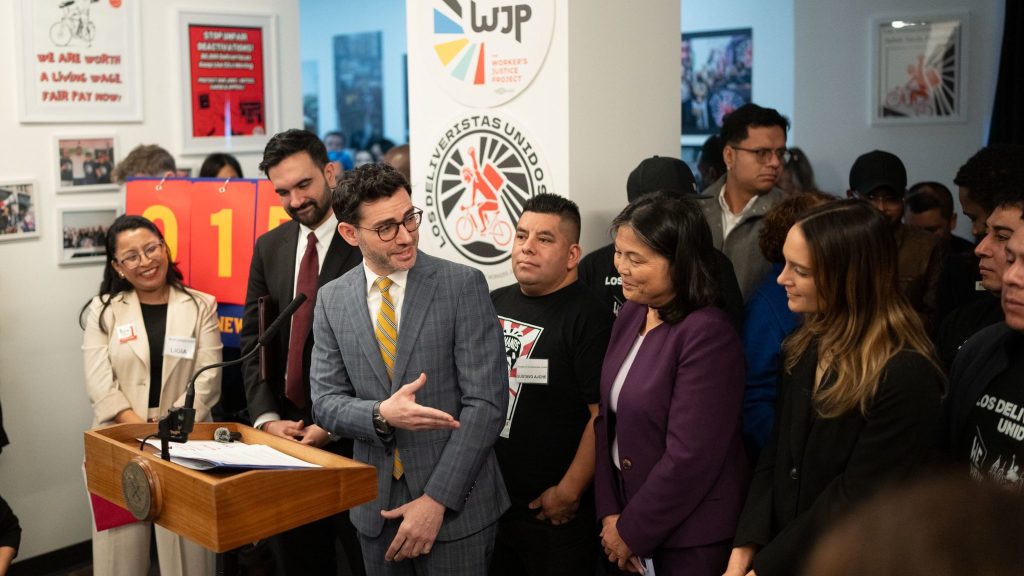
Three delivery apps accused of “cheating workers” will repay $4.6 million in wages that it held back from deliveristas in violation of the city’s landmark minimum pay law for deliveristas, the Mamdani administration will announce this morning.
Friday’s announcement by Mayor Mamdani and Department of Consumer and Worker Protection Commissioner Sam Levine, alongside delivery workers in Long Island City, is the latest indication that the new administration is focusing on strict enforcement of delivery worker protections created to rein in large technology companies.
“The era of giant corporations juicing profits by underpaying workers is over,” Levine said in a statement. “I’m proud that this agency is not only returning full back pay, but is recovering damages and penalties to send a strong message that cheating workers will not be tolerated.”
The enforcement action cites practices by UberEats, Fantuan and Hungry Panda – with UberEats being the biggest player and the biggest offender.
According to the Mamdani administration, the app-giant unfairly deactivated and underpaid some workers between Dec. 4, 2023 and Sept. 2, 2024. The company now owes $3,150,000 in worker relief to 48,602 workers, in amounts that vary from $8.79 to $276.15. The city also slapped UberEats with $350,000 in civil fines and administrative fees.
UberEats operates in over 40 countries and raked in over $3.4 billion in revenue in just the third quarter of 2025, according to its investor reports.
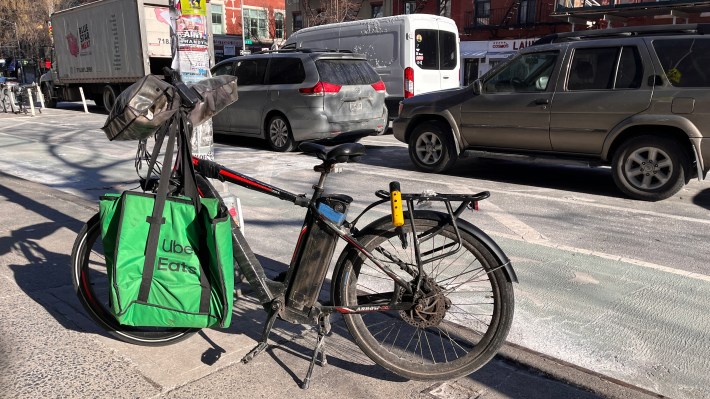
Despite the massive wage shortfall and penalties, the city said UberEats is “mostly compliant” with the minimum pay rate and incurred the wage debt only in weeks where workers had a delivery canceled and did not receive the owed minimum wage from Uber.
When DCWP notified Uber of the issue, the company complied.
“We’re glad to have this resolved,” said Uber spokesman Josh Gold. “After DCWP notified us of the issue in August 2024, we immediately corrected it, agreed to pay more than the amount owed, and appreciate the new administration moving quickly to bring this to a fair conclusion.”
But HungryPanda, the largest food delivery company in Asia, ignored the minimum pay standard from Dec. 1, 2023 to Jan. 7, 2024 — and owes workers more than $1 million in lost wages. One worker was denied $13,000 after logging an average of 43 hours per week at just $7.84 per hour, far below the $17.96 per hour minimum pay rate at the time (the minimum wage is now $21.44).
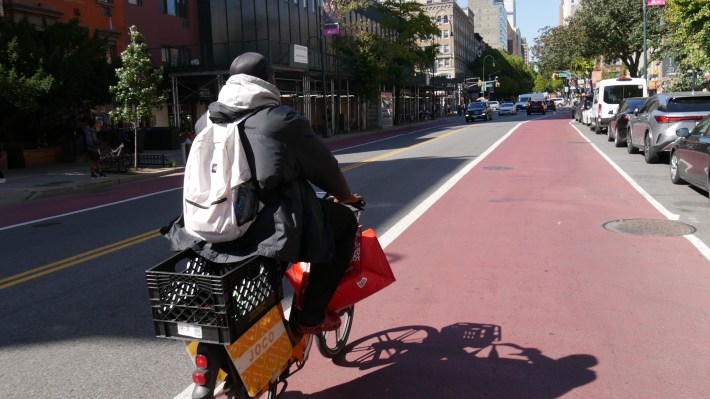
But investors are hungry for more. Last year, the company raised $55 million to expand its U.S. food operations. The company’s director of public affairs, Kitty Lu, told Food On Demand that she considers HungryPanda a “cultural ambassador” and that the company wants to “help workers in their day-to-day life.”
HungryPanda’s biggest competitor in the city, Fantuan, also deprived workers of more than $400,000 in wages for failing to pay the minimum wage, the city said.
Fantuan has grown significantly since entering the U.S. market in 2019 and now operates in 50 cities, its co-founder Yaofei Feng told CNBC. The company also bought delivery company Chowbus last year.
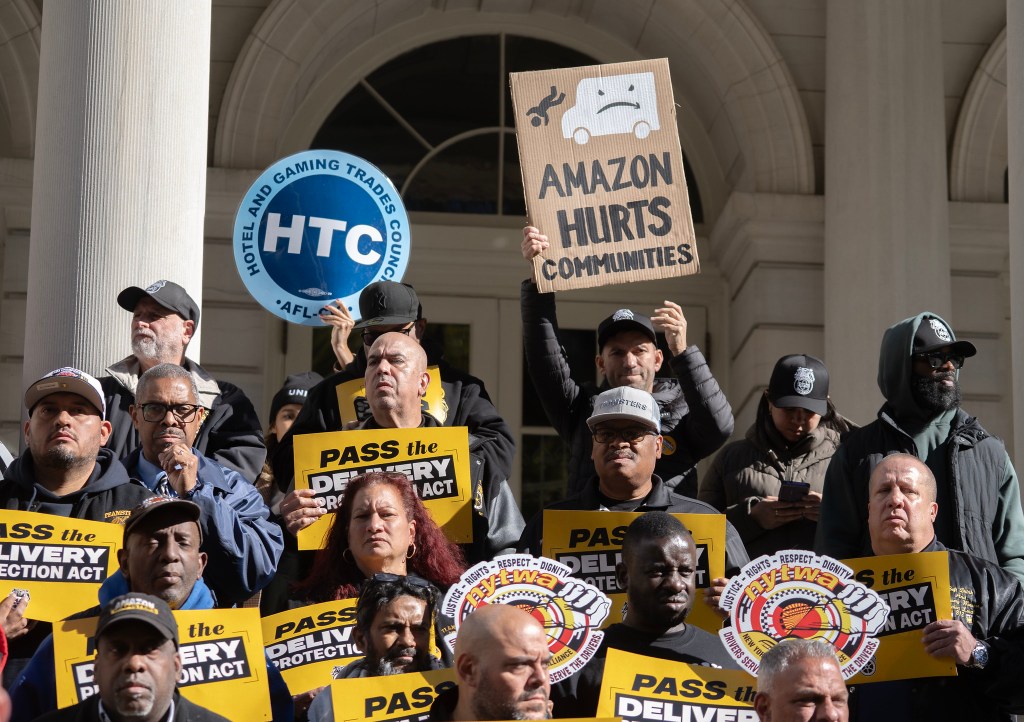
Advocates for delivery workers praised the administration for the enforcement, and warned that exploitation is a part of the industry players’ playbook.
“For years, app companies treated the law as optional – hiding behind algorithms, stealing wages, and deactivating workers without consequence,” Ligia Guallpa, executive director of Worker’s Justice Project and co-founder of its Los Deliveristas Unidos, said in a statement. “The scale of these abuses proves what deliveristas have been saying for years: exploitation is not an accident — it’s baked into the app delivery business model.”
James Parrott, a senior fellow at the Center for New York City Affairs at The New School, said he is encouraged by the new approach.
“For far too long, delivery and other online labor platform companies have not only underpaid workers, but deactivated them with abandon, denying workers the ability to make a living,” said Parrott, who consulted with the city on the minimum pay law. He said the city is “leading the way nationally with innovative gig company regulations to counter old-fashioned worker exploitation practiced by the online labor platforms.”
DCWP told Streetsblog the settlements came from a close examination of the records submitted to the department by UberEats, GrubHub, DoorDash, Fantuan, and HungryPanda.
And more action is likely. On Jan. 26, a new round of worker protection laws went into effect. Now, it’s not just restaurant apps that need to pay their workers $21.44 per hour, grocery apps like Instacart must comply as well. In addition all app companies need to offer customers the option to tip their delivery worker at or before checkout, something DoorDash and Uber changed in response to the minimum pay law.
Instacart is responding by implementing what the multi-billion-dollar company calls a “regulatory response fee.” The company’s move to push the burden of paying workers fair wages onto the customers did not sit well with Council Member Sandy Nurse (D-Bushwick), who introduced the legislation to force Instacart to pay workers more in the first place.
“The CEO wants consumers to eat the cost of paying fair wages to their workers so that they can keep earning millions,” said Nurse in a statement. “At any time, the CEO could offer to earn slightly less than a base salary of $1.37 million and $30 million in stock awards. Instacart adding a deceptive ‘Regulatory Response Fee’ to orders shifts costs onto consumers unnecessarily.”
These new protections will require more enforcement from the underfunded department — whose budget Mayor Mamdani has pledged to double so it will have the resources to enforce the new protections.
Former DCWP Commissioner Lorelei Salas says that even more might be needed.
“Unless enforcement is visible and ongoing and you have the resources, a lot of companies end up choosing to wait it out and hope that you arent going to come knocking on their doors,” said Salas, the City College Powell School’s leader-in-residence. “DCWP still has a very small staff for the amount of work that they are supposed to be doing. If resources aren’t invested into enforcement, some businesses are going to just take the risk. Basically they see it as the cost of doing business.”
Mayor Mamdani will release his preliminary budget on Feb. 17.
HungryPanda and Fantuan did not respond to Streetsblog’s request for comment.

Streetsblog has migrated to a new comment system. New commenters can register directly in the comments section of any article. Returning commenters: your previous comments and display name have been preserved, but you'll need to reclaim your account by clicking "Forgot your password?" on the sign-in form, entering your email, and following the verification link to set a new password — this is required because passwords could not be carried over during the migration. For questions, contact tips@streetsblog.org.