Have Cake, Eat It Too: Delivery Workers Earning More, Industry Booming With Minimum Pay Standard
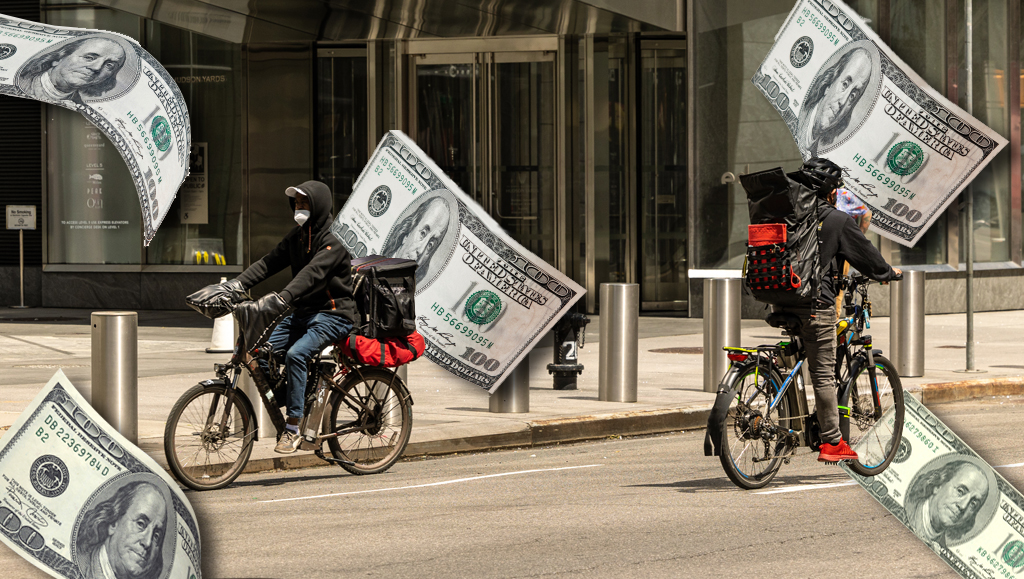
The city’s first-of-its-kind “deliverista” minimum wage is working: previously underpaid gig-workers are taking home more money per hour and delivery app companies are getting more orders than ever.
New data from the Department of Consumer and Worker Protection shows an all-time high of $120.2 million in consumer spending in the first quarter of 2025 — up 13.4 percent from the same period last year. The data reporting was a requirement of the 2021 bill that created the deliverista minimum wage.
And the amount of orders has risen, too — up 4.2 percent over the past four quarters. Economists see this as a sign that minimum pay is not having a negative impact on business.
“Whatever has happened to worker pay has not diminished, literally, the appetite of consumers for food delivery,” said James Parrott, the director of economic and fiscal policies at the Center for New York City Affairs at The New School, who consulted with the city on the original minimum pay law.
Instacart’s last ditch efforts
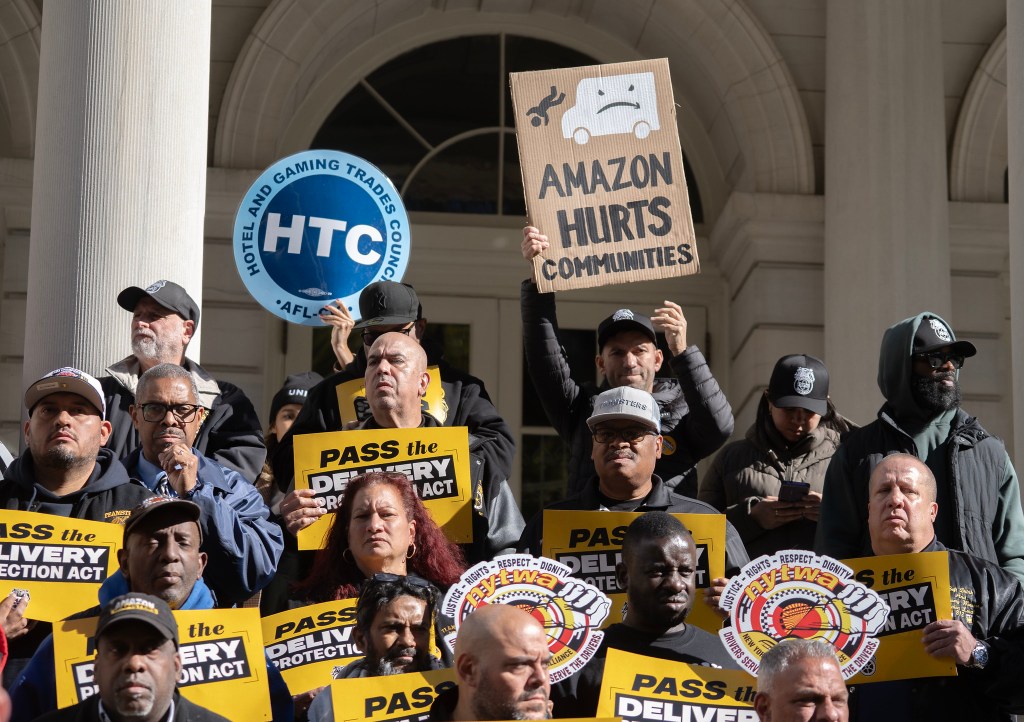
In July, the City Council passed two bills that would expand the minimum pay standard from just restaurant delivery app workers to all contract gig workers in the five boroughs, including those working for grocery giant, Instacart. The laws were meant to close the “Instacart loophole” that allowed grocery delivery apps to pay workers less than their restaurant counterparts, even though the job is largely the same.
An all-out campaign against the bills worked on Mayor Adams, who vetoed the bills after originally supporting their intent. But Speaker Adrienne Adams has vowed to override the vetoes at the upcoming stated meeting on Sept. 10, and cited Streetsblog’s coverage in her decision.
Even so, Instacart continues to lobbying against the bills. In a new op-ed in Politics NY that closely mirrors a letter sent to Speaker Adams last week, Instacart’s Chief Corporate Affairs Officer Dani Dudeck argued that “the cost of food deliveries surged 10 percent, tips fell by 68 percent, and fees on restaurants surged 13 percent” during the period covered by the city data.
Focusing on tips ignores the fact that workers are making significantly more money and are therefore less reliant on tips to supplement low wages.
“While tips-per-order fell, what’s critical for workers is their total earnings per delivery and that increased by 21 percent,” said Parrott. “When the apps more efficiently operate their business to bolster worker productivity, worker pay per hour more than triples, and earnings per hour nearly double.”
The aggregated combined pay was at $21.11 per hour in the first quarter of this year. Before the minimum wage went into effect, that number was as low as $10.87, not including tips.
And highlighting consumer and restaurant fees misses the point, Parrott added.
“It is quite disingenuous for Instacart to say that restaurant fees ‘surged’ by 13 percent,” said Parrott. “The apps would have increased fees even more were it not for the fee cap, and the recent settlement will allow the apps to get their way so they can increase fees more.”
A recently passed Council bill, which was a part of the legal settlement around the minimum pay law, would lift the fee cap for restaurants, meaning the apps would be able to take a cut of up to 43 percent of each order.
The apps charge consumers and merchants a fee, which total $13.24 per order, of which the companies keep 40.5 percent or $5.36. That’s down from the 60 percent that the apps kept before minimum pay, but it’s still significant.
“It’s hard to feel any empathy for the companies at all. They are still taking a huge share of these fees even when they’re required to pay the workers. [Minimum pay] hasn’t threatened in any way the app delivery business model,” said Parrott. “The app delivery experience shows that the apps had considerable leeway to reduce their take per order and Instacart will have that same leeway, probably more so since they are a much more dominant player in the grocery delivery business.”
Flexing flexibility
Instacart has also started recycling the same argument that restaurant apps used before the 2021 bill passed, mainly that a minimum pay rate would result in a decrease in “flexibility.”
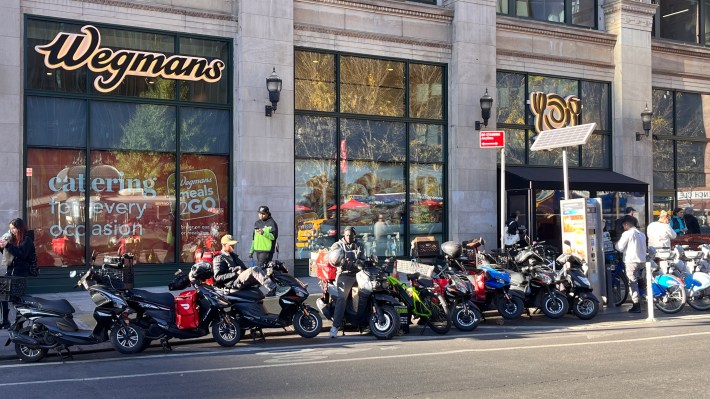
“For these New Yorkers, the ability to earn money on their own time and their own terms is not just a preference — it is essential. It allows them to log on to work — and log off — at any moment they choose,” Dudek wrote.
But that’s a specious argument; after the minimum wage went into effect, the average hours per worker remained pretty much unchanged.
“That doesn’t suggest any impingement of flexibility at all,” said Parrott. “With the seasonal rebound in orders, the number of workers increased in response to that. The labor force remains flexible in response to changes in consumer demand.”

Read More:
Streetsblog has migrated to a new comment system. New commenters can register directly in the comments section of any article. Returning commenters: your previous comments and display name have been preserved, but you'll need to reclaim your account by clicking "Forgot your password?" on the sign-in form, entering your email, and following the verification link to set a new password — this is required because passwords could not be carried over during the migration. For questions, contact tips@streetsblog.org.