At Last: Council To Pass Delivery Worker Deactivation Protections
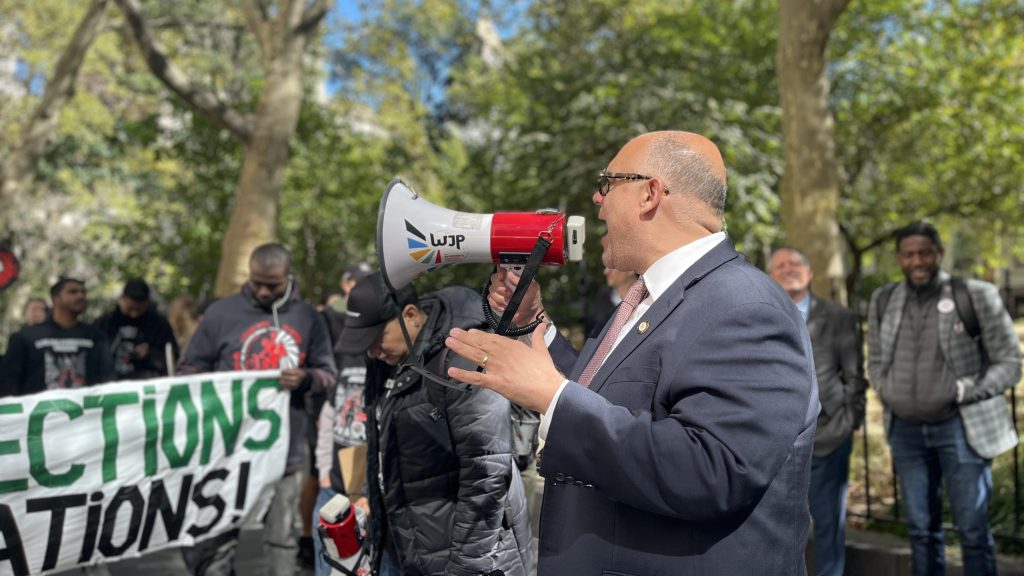
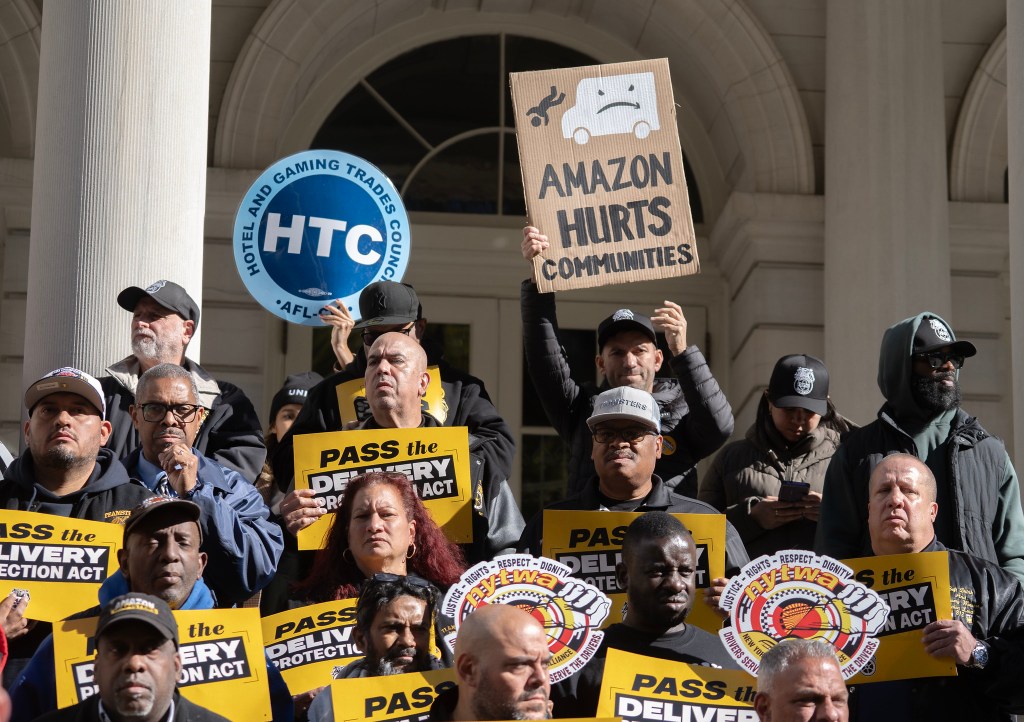
App companies will be forced to stop firing workers without cause under a Council bill expected to pass today, ushering in a change that workers say will improve safety on the streets because they will no longer fear losing access to their livelihoods if they don’t deliver food fast enough.
During its last full meeting of the year, the Council will pass Intro 1332, introduced by outgoing Council Member Justin Brannan (D-Bay Ridge), which will allow app-delivery companies to deactivate workers’ accounts only for a stated reason, require apps to give workers 120 days of notice before permanent removal, and allow workers to appeal deactivation.
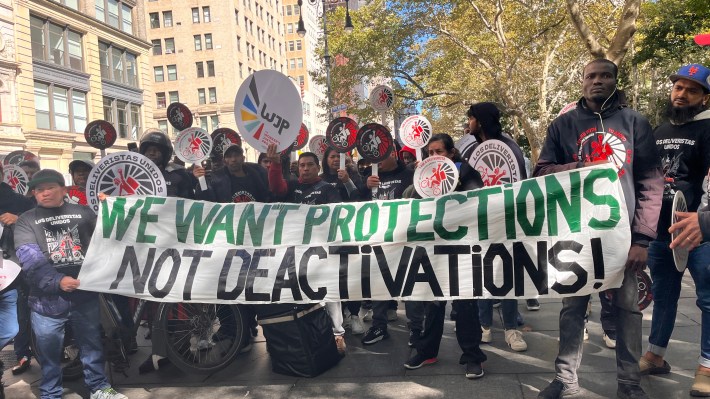
App-based workers who crisscross the city for DoorDash, Seamless, Relay, GrubHub, Uber Eats and Instacart have been sounding the alarm about pervasive and baseless deactivation followed by an intractable appeals process. Workers live in fear of their job being lost in an instant, causing them to prioritize speed over safety, advocates say.
“In the past three years we have seen how the apps have gone from using deactivation as a disciplinary tool, not to incentivize safety, but to force workers to speed faster … because they are under the constant threat of deactivation,” said Ligia Guallpa, whose organization, the Workers Justice Project, supports the bill.
The backstory
Upon the adoption of the city’s minimum pay law, app companies began blocking access at certain times and deactivating accounts for reasons that were unclear, affected workers said. This not only caused confusion, but it created a backlash among some workers, who blamed the minimum pay law for the new reality.
The bill that will pass on Thursday is a far cry from the original proposal that Brannan introduced in July. That version would have protected workers from both “deactivations” – being permanently removed from the app – and “lockouts” – being temporarily blocked from signing in.
To the bill’s sponsor, the removal of the “lockout” language doesn’t take away from the importance of the strong deactivation protections provided by the new legislation.
“The bill we’re passing today is stronger because it turns that intent into something that will actually take effect and withstand legal challenge,” said Brannan. “The A-version adds enforceable notice requirements, transparency into how deactivation decisions are made, retroactive relief for workers who were already deactivated, and real oversight through DCWP. “
The app companies have long maintained that the frequent use of lockouts is a consequence of the city’s minimum pay standard that passed in 2021, but labor economists disagree, pointing out that there is nothing in the pay standard that forces companies to manage workers this way.
“The companies maintain this fiction that they don’t control the workers. Of course they control the workers, when they lock them out they’re unilaterally controlling the workers in the interest of company profits,” said James Parrott, the director of economic and fiscal policies at the Center for New York City Affairs at The New School, who consulted with the city on the minimum pay law. “They always could’ve more effectively regulated the number of workers so they don’t have an excess.”
The watering down of the bill isn’t particularly surprising, given the amount of money that delivery app companies have spent to curry favor with powerful elected officials. In her failed mayoral run, Speaker Adrienne Adams, who decides which bills get voted on, was supported by “Competent New York,” a super PAC funded by DoorDash, which threw millions at city races.
And Uber spent $143,129 on incoming Council Speaker Julie Menin’s reelection campaign. Menin chaired the Consumer and Worker Protection Committee.
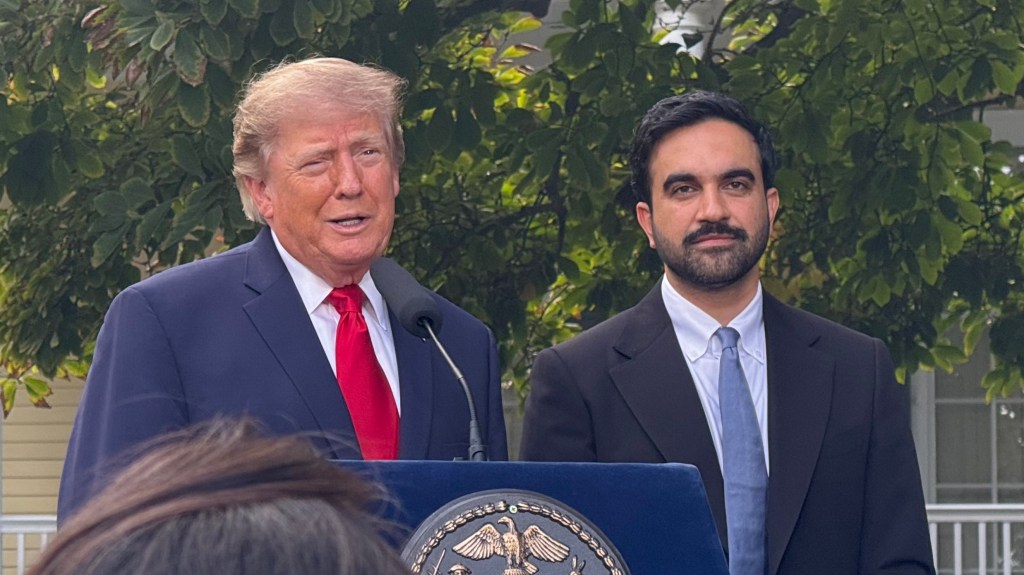
A Mamdani administration, advocates hope, may be less beholden to corporate power.
“People need to understand that apps are going to find another way to push workers,” said Guallpa. “Since that language was removed, the companies will continue to use temporary lockouts. That loophole needs to be closed. We are hoping the new mayor will understand.”
Guallpa’s hope is not far-fetched: Mamdani’s transition co-chair is Lina Khan, former chair of the Federal Trade Commission and a notorious anti-trust scholar. Parrott believes Mamdani is doing more than virtue signaling, but will truly take on the big corporations.
“There’s always been this less-than-robust willingness to advance regulations in the face of opposition from the companies [under Adams],” said Parrott. “Lina Kahn gives one hope that there will be a systematic and firm approach to rein these companies in.”

Read More:
Streetsblog has migrated to a new comment system. New commenters can register directly in the comments section of any article. Returning commenters: your previous comments and display name have been preserved, but you'll need to reclaim your account by clicking "Forgot your password?" on the sign-in form, entering your email, and following the verification link to set a new password — this is required because passwords could not be carried over during the migration. For questions, contact tips@streetsblog.org.